Wednesday's economy & business stories

Airbnb valued at $47 billion in IPO

Airbnb on Wednesday raised $3.5 billion in its IPO at a fully diluted valuation of around $47.3 billion, and will begin trading Thursday on the Nasdaq under ticker symbol ABNB.
Why it matters: This is the culmination of a remarkable rebound for the hospitality giant, which many counted out once the pandemic began its rampage.
Breaking up Facebook
Facebook on Wednesday was hit with landmark antitrust lawsuits, with the Federal Trade Commission and 48 states suing to force the Big Tech giant to spin off its Instagram and WhatsApp units.
Axios Re:Cap goes deeper in a special pop-up episode, with Axios tech reporter Ashley Gold and editor Scott Rosenberg.
Axios Pro Rata fundraising ride for restaurant workers
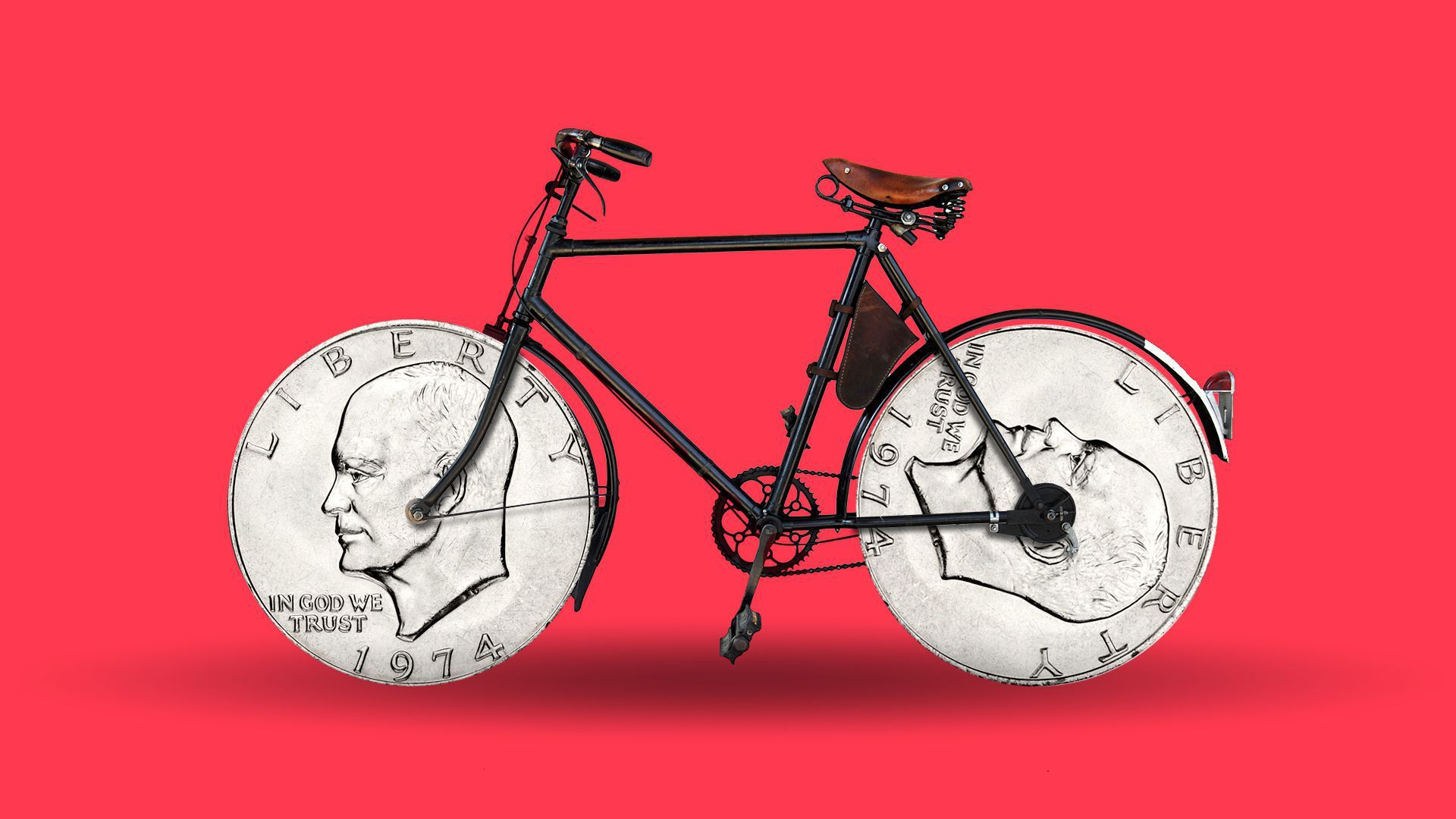
Axios Pro Rata, our daily deals newsletter, on Saturday morning will host its last Peloton fundraising ride of 2020, with proceeds to benefit Restaurant Strong, a fund that provides cash grants to full-time restaurant workers who have been negatively impacted by the pandemic.
Why it matters: We can help feed those who have always helped feed us.
Calm co-CEO on the rise of mental wellness apps
The market for mental wellness products and services is booming, as the pandemic has gotten on just about everyone's last nerve.
Axios Re:Cap goes deeper with Michael Acton Smith, co-founder and co-CEO of meditation app Calm, which was just valued at $2 billion. The discussion includes how mental wellness differs from mental health, the B2B of the industry and those election night ads on CNN.

Mercato Partners: Public financial markets have adopted a venture mentality

Public markets have adopted a venture capital mentality during the coronavirus pandemic, Mercato Partners' director Joe Kaiser said on Wednesday during an Axios virtual event.
The big picture: The divergence between capital markets and the "real economy" — defined by mass unemployment and Americans lining up at food banks — can be seen in highly optimistic fund managers and BlackRock's latest forecast that expects stocks to keep rallying into 2021.

Cruise unleashes driverless test cars in San Francisco
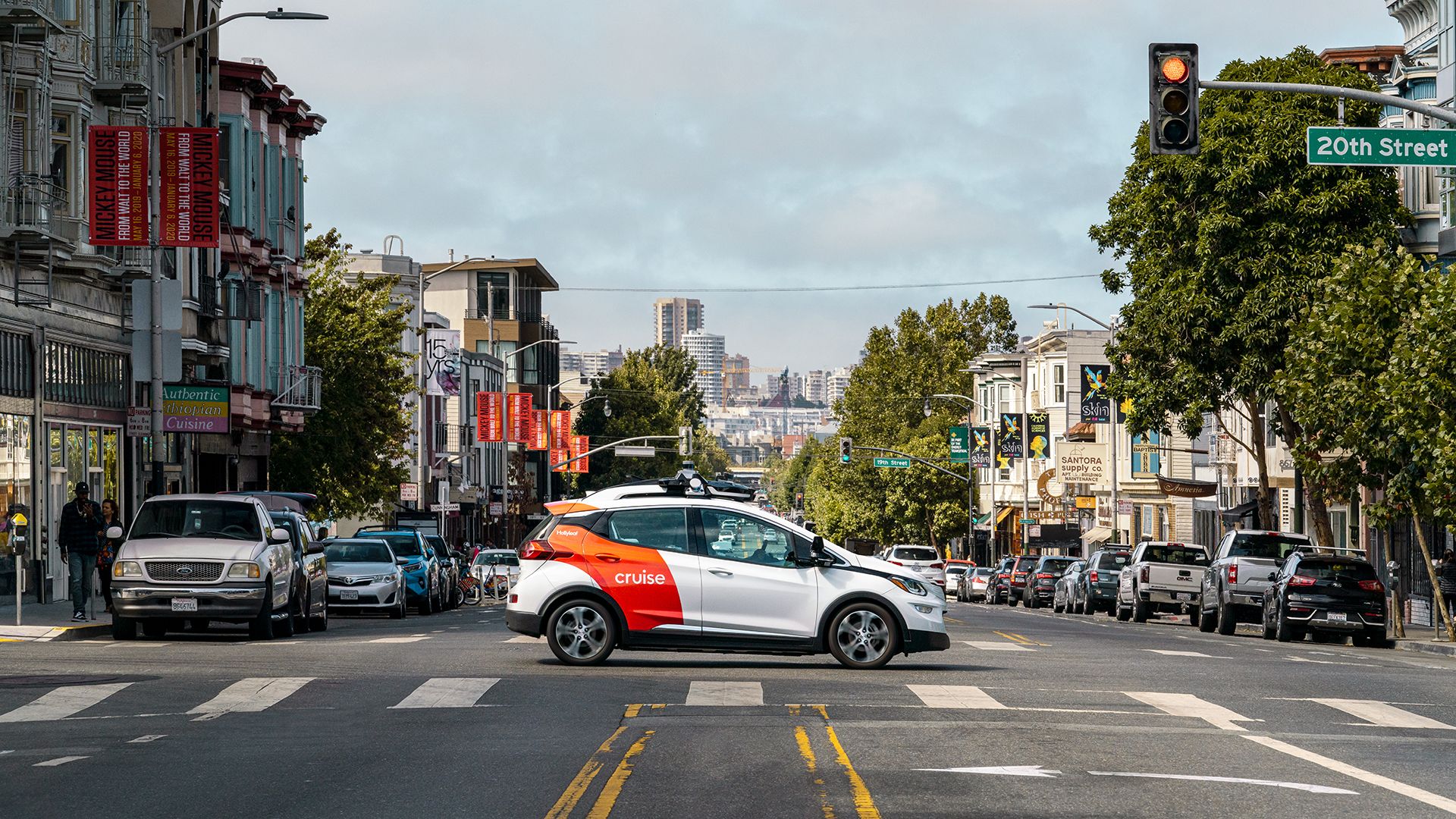
Cruise, the self-driving technology company backed by General Motors and Honda, has begun testing cars in San Francisco with no human behind the wheel.
Why it matters: The driverless tests represent a small but important step toward the future deployment of autonomous vehicles, said Cruise CEO Dan Ammann.
- "What we’re witnessing here is the move of real self-driving out of the R&D lab and on to the path to being a commercial product that everyone can use."
Upfront Ventures: Pandemic has made many startups stronger
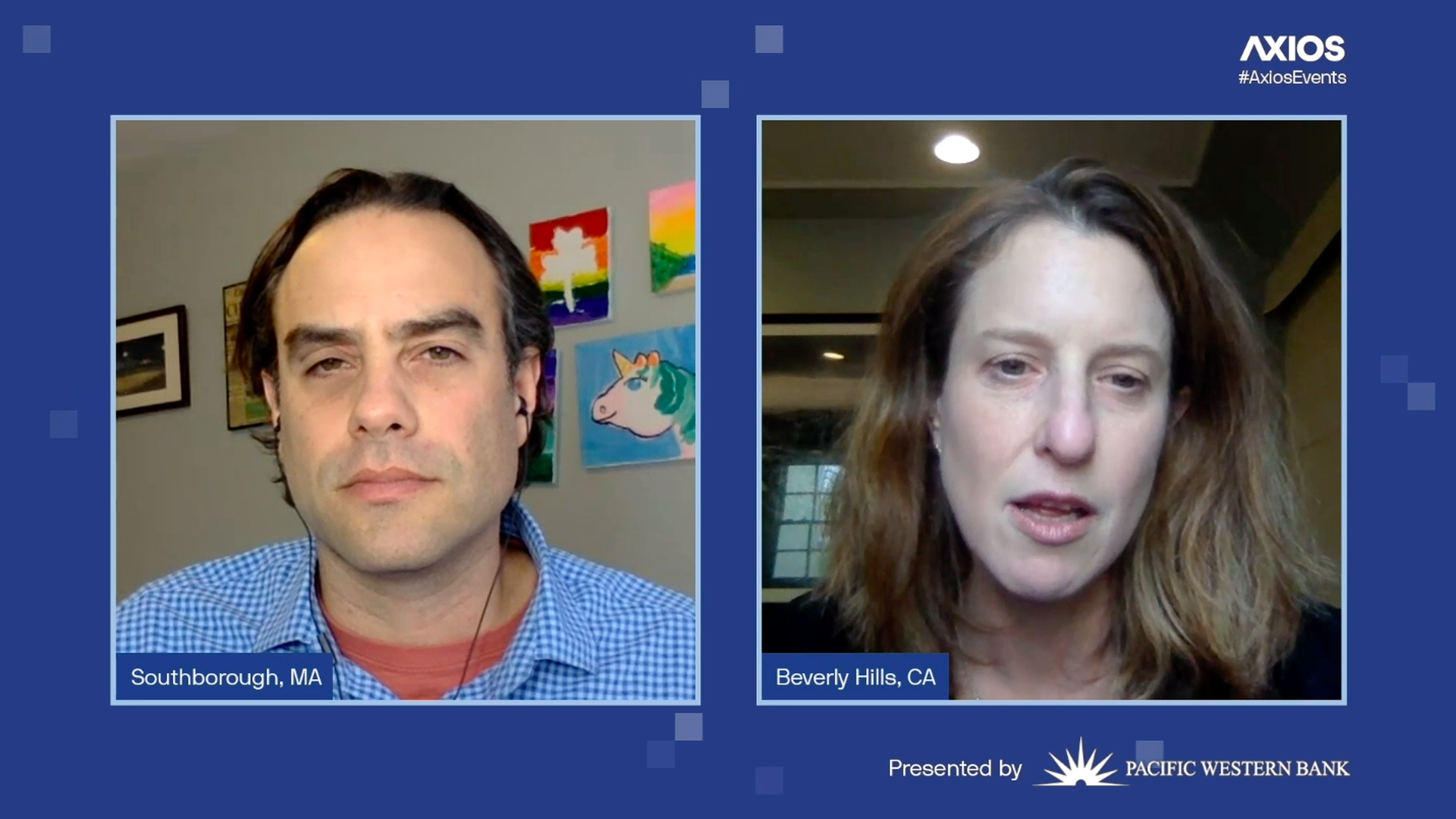
Venture capitalists are working in "one of the hottest markets I think any of us have ever operated in our lifetime," Kara Nortman, managing partner at Los Angeles-based Upfront Ventures, said on Wednesday during an Axios virtual event.
The big picture: The industry expected a major slowdown in deal-making at the onset of the coronavirus pandemic, but reality did not meet the dismal expectations.
Forbes names world's 100 most powerful women

Forbes on Wednesday released its annual list of the 'World's 100 Most Powerful Women," with history-making figures like Vice President-elect Kamala Harris and New Zealand Prime Minister Jacinda Ardern among those featured.
Zoom in: 13 of the women named "helm some of the world’s biggest banks and financial institutions, positions they’ve leveraged to effect change in the world," Forbes' Samantha Todd writes.

Powering economic opportunity
This channel features content produced by the Axios Brand Studio and Google.
Welcome to this recap of conversations from Google’s Powering Economic Opportunity: Digital Skills for the Future Workforce Expert Voices Live event.
How to develop new skills for a post-pandemic America
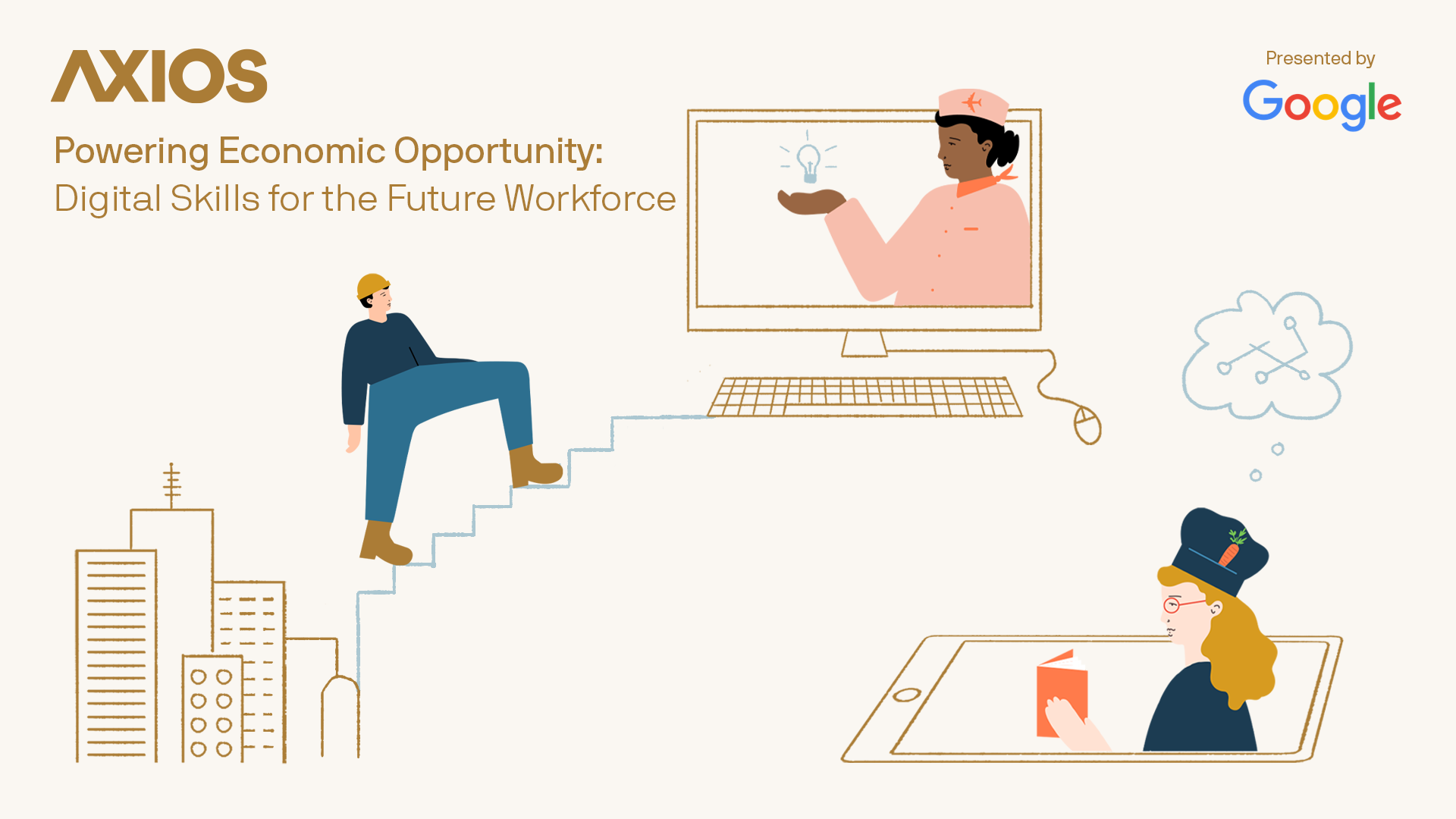
The digitized workforce has arrived much earlier than experts previously thought.
What this means: Millions of Americans workers, particularly the nearly 70% who do not have a college degree, could be shut out of America’s fast-changing, techno-centric, post-pandemic economy.
At Google’s Powering Economic Opportunity: Digital Skills for the Future Workforce event, policy makers, thought leaders and experts came together to discuss how companies, nonprofits and governments can future-proof workers.
Key numbers: The Council on Foreign Relations reports that two-thirds of the 13 million jobs created in the U.S. since 2010 require a medium- to advanced-level of digital skills.
The solution, according to several policy makers and experts at the event: Alternative pathways to good-paying, fast-growing jobs.
Their top three potential fixes:
1. Expanding access to technology.
Participants agreed: Broadband access should be treated as a human right, and not a luxury accessible only to the few or to people living in large cities.
The reason: Reliable, affordable internet rests at the center of the future of work – and to economic recovery during and after COVID-19. And closing the digital divide – with more access to technology, for example – between under-resourced communities and their wealthier counterparts is key.
- But there’s more behind this, as one event guest noted.
Enhancing access to broadband – and other key technologies like laptops and software – is just one step in the right direction. Training adults, not just children, to use these tools is the next.
2. Stepping up efforts to upskill or reskill Americans.
Some companies are already empowering people to develop digital skills that can help them transition into higher-paying, high growth jobs. Here’s how:
- Training on digital fundamentals, like free Applied Digital Skills courses from Google, to help job seekers establish a foundation upon which they can build on to learn more advanced digital skills.
- Creating alternative pathways to jobs that go beyond a traditional four-year college degree. Higher education institutions, government, and employers need to work together to give low wage workers access to higher-paying careers, like how the Markle Foundation’s Rework America Alliance and Skillful Initiative support local organizations, employers and governments to connect individuals to good jobs.
- Developing avenues for employment with private companies after workers have completed skilling programs like Google’s IT Support Certificate, which includes a Hiring Consortium to help workers gain entry into IT Support, a critical job of the future.
What Google is saying:
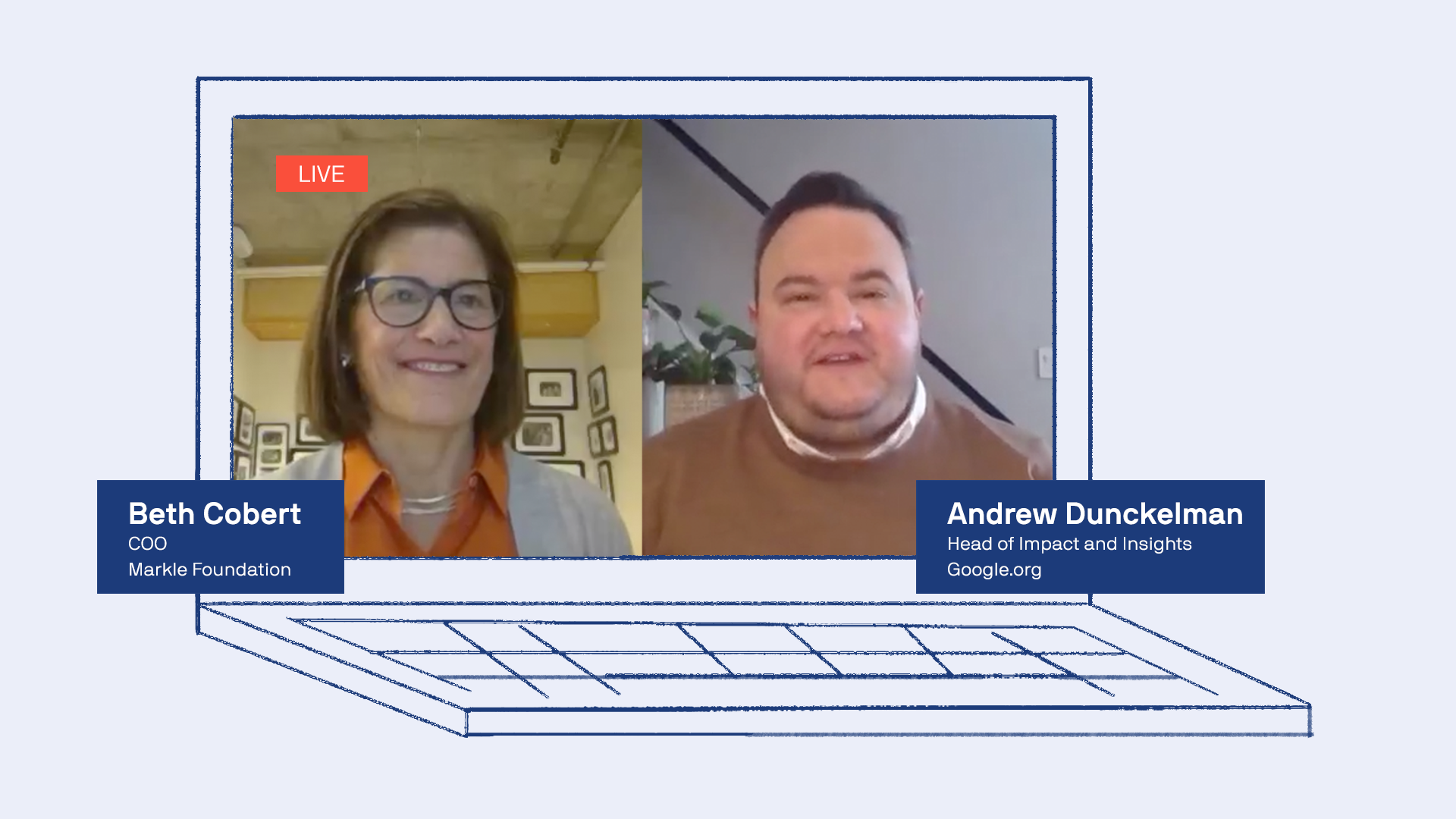
“There are other Google career certificates coming out that help people move into these high-growth, good-paying jobs with less than a college degree. It's not the only solution, but I think it's one thing we're really excited about.”
– Andrew Dunckelman, Head of Impact and Insights, Google.org.
Why it’s important: Modern technologies, including AI and even cellphones, have slowly uprooted many jobs, leaving the workers with fewer options for work.
- And this sudden shift is disproportionately impacting women and Black and Latino workers, especially those working in retail, experts at the event said.
3. Developing public-private partnerships that support a well-skilled workforce.
To advance economic recovery, many policy makers and experts at the event outlined the benefits of nonprofits, governments and companies working together to build up America’s digital skills.
- For example, Google has partnered with different organizations to upskill Americans, like Per Scholas, the American Library Association and Goodwill.
The result: “We've trained more than 5 million Americans on digital skills,” says Andrew Dunckelman. “As we look ahead to recovery, you know, we think that we can help our economy recover quicker by expanding access to digital skills and technologies that Americans need.”
The takeaway: Although the pandemic has accelerated the start of the digitized workforce, together corporations, digital skilling programs and technology can help create better opportunities for all Americans. Learn more.
1. First things first: America’s changing job market
COVID-19 has caused the future of work to arrive years earlier than expected, a fact that could leave many of America’s workers jobless.
The reason: The nature of work is becoming more digitized—something we saw even before the pandemic—and many in the U.S. labor force aren’t yet equipped to succeed in a job market that demands a new set of skills.
2. The future of work requires more than technology
The next big thing in redeveloping the U.S. workforce is digital skills training.
Why it’s important: Simply giving workers access to critical technologies isn’t enough if they struggle to use them.
3. The next big thing in education: accessible job-training solutions

Employers need to rethink credentialing for the in-demand jobs of today.
- Traditional degrees may not be the answer for everyone.
The idea: With four-year degrees out of reach for so many, the traditional definition of “higher education” needs to be expanded to include technical training, two-year degrees, and certificate programs that have been designed to help fill the roles in fields with the most openings.

CFOs' stock market warning


80% of CFOs say the stock market is overvalued, according to Deloitte's quarterly survey of Fortune 500 executives out this morning.
Why it matters: The share fell by 4 percentage points from last quarter. Still, it remains among the highest levels in the survey’s history.
Public companies’ share sale palooza
The number of U.S. public companies turning to the equity markets to raise cash is at the highest level in at least 10 years, according to data by Dealogic provided first to Axios.
Why it matters: The frenzy comes as companies (battered by the pandemic or not) seize on soaring stock prices to shore up cash.


The great power shift
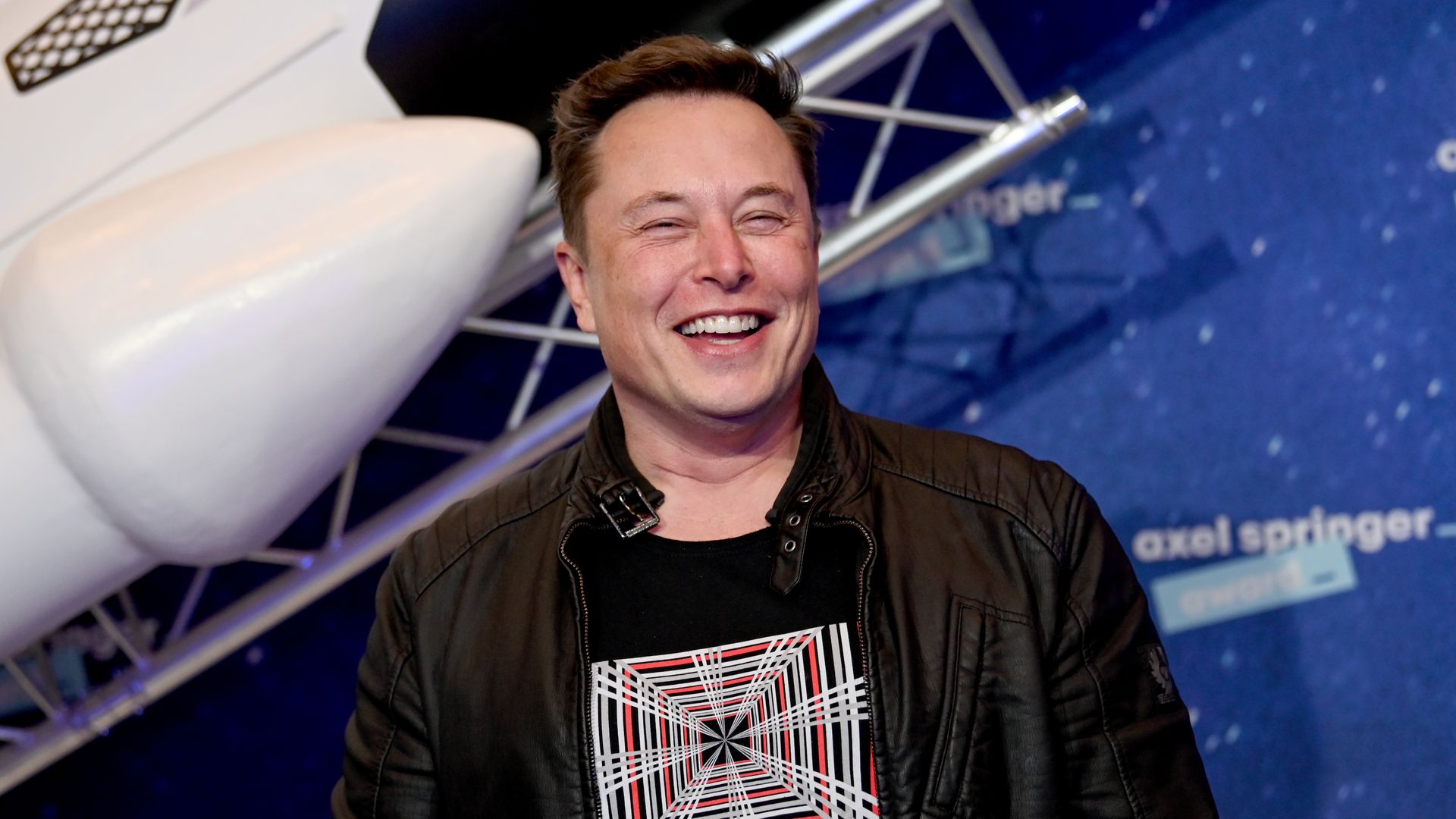
America’s entrepreneurial and technology power is dispersing beyond Silicon Valley and New York — a trend greatly accelerated by two Cs: coronavirus and California.
The big picture: Elon Musk is the latest high-profile business leader to bolt from California because of its governance and cost.

America's new news war

President Trump's election loss has upended America's news landscape, cementing a parallel universe on the right where even Fox News isn't Trumpy enough for millions of his diehards.
Why it matters: The coming diffusion of news across many easily-accessible streaming channels will likely cause Americans to become even further entrenched in their own, partisan filter bubbles. This could lead to the most profound change in news consumption that America has seen in decades.