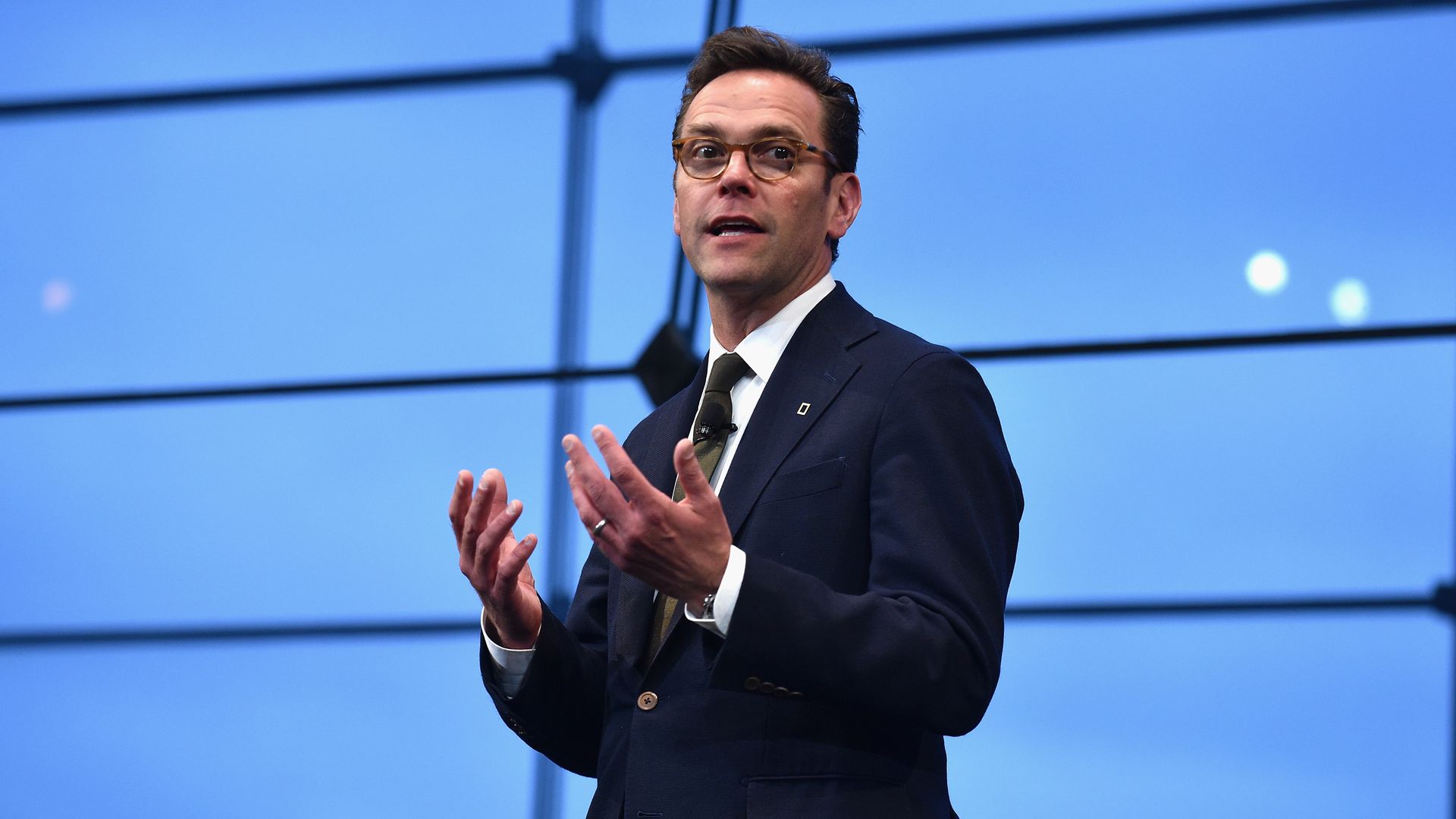
Former 21st Century Fox CEO James Murdoch filed a letter of resignation from the board of News Corp. on Friday in light of disagreements over editorial content published by the company-owned news outlets, including the Wall Street Journal and New York Post.
What he's saying: “My resignation is due to disagreements over certain editorial content published by the Company's news outlets and certain other strategic decisions," Murdoch's letter reads.
Fitch Ratings maintained the United States' AAA credit rating but revised the country's outlook to "negative" from "stable" to "reflect the ongoing deterioration in the U.S. public finances and the absence of a credible fiscal consolidation plan," the credit agency announced on Friday.
Why it matters, via Axios' Dan Primack:Fitch is not only worried about the current U.S. economic deterioration, but also its belief that we don't have a plan to deal with our ballooning debt once the coronavirus crisis has waned. High fiscal deficits and debt that was increasing before the pandemic have begun to wear down the traditional credit strengths of the U.S., the agency noted.
SenseTime, a Chinese developer of facial recognition technologies, is wrapping up a $1.5 billion funding round at a $10 billion valuation and is in talks to list on China’s STAR market, per Reuters.
Why it matters: This is the company’s first fundraise since being placed on a U.S. blacklist for alleged involvement in human rights abuses against Uyghur Muslims in China. It previously raised nearly $3 billion, including from U.S.-based firms like Fidelity, Glade Brook, Qualcomm Ventures, and Silver Lake Partners.
The IPO market has boomed during the pandemic era, both for real companies and shell companies, reflecting the broader decoupling of the equity economy and real economy.
Reality check: Things could soon change. And fast.
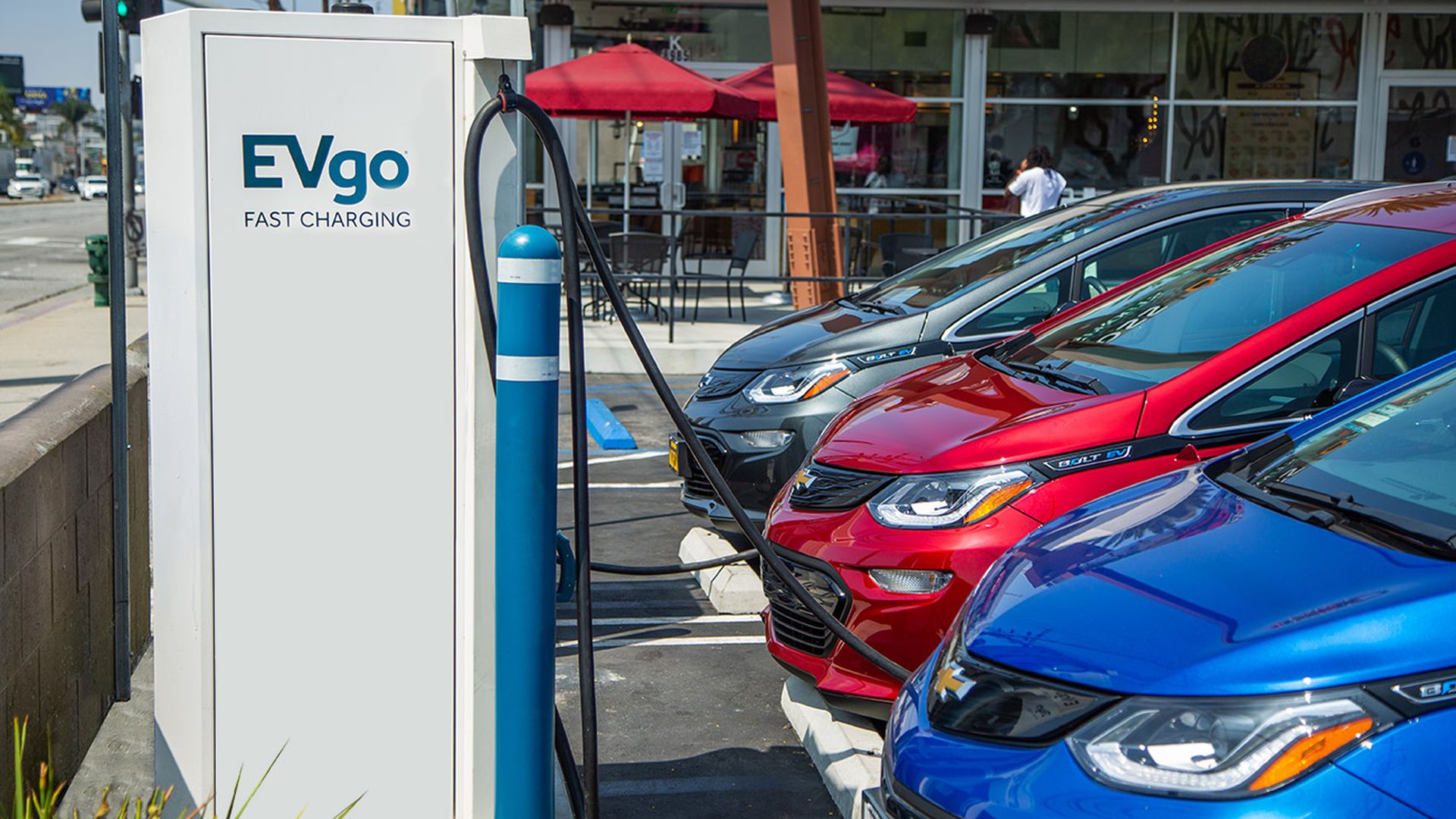
General Motors and EVgo plan to add more than 2,700 new public fast-charging stations in the next five years as a way to help accelerate widespread electric vehicle adoption.
Why it matters: Automakers are bringing out scores of new battery-powered models, but before they buy, consumers want confidence that they'll be able to charge even when they're away from home.
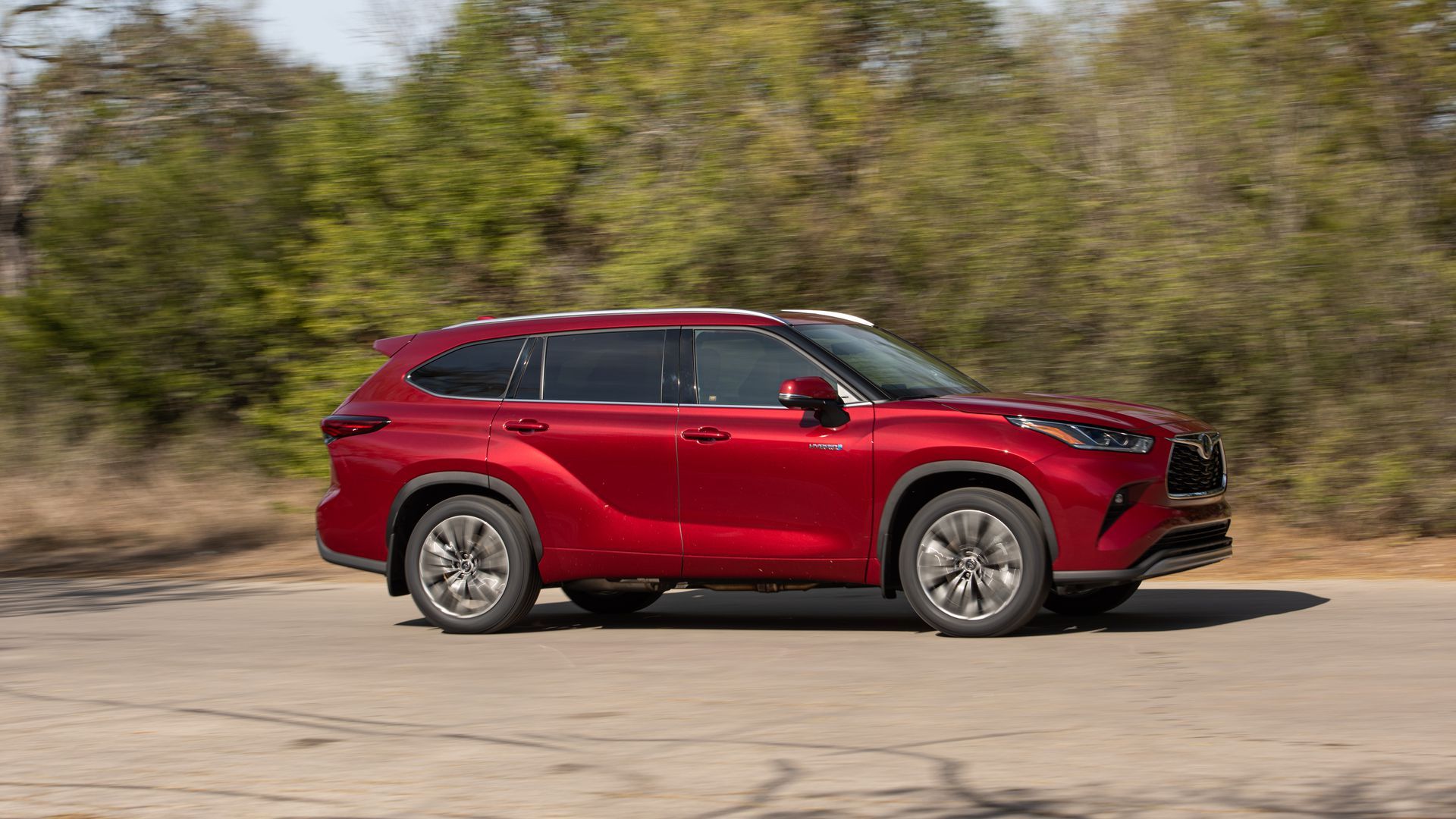
This week I'm driving the 2020 Toyota Highlander hybrid, a stylish family hauler that also gets great gas mileage — perfect for a summer road trip.
The big picture: While there are plenty of three-row SUV models on the market, only two — the Highlander and the Ford Explorer — are available with a gas-electric hybrid powertrain.
The pandemic threatened to decimate the American auto industry, but Detroit's three carmakers posted better-than-expected financial results for the second quarter, despite two-month factory shutdowns.
The big picture: The industry burned through cash while its factories were shuttered, piling up billions of dollars in losses between them. But they rebounded fairly quickly in June after restarting production while scrambling to restock dealer lots.
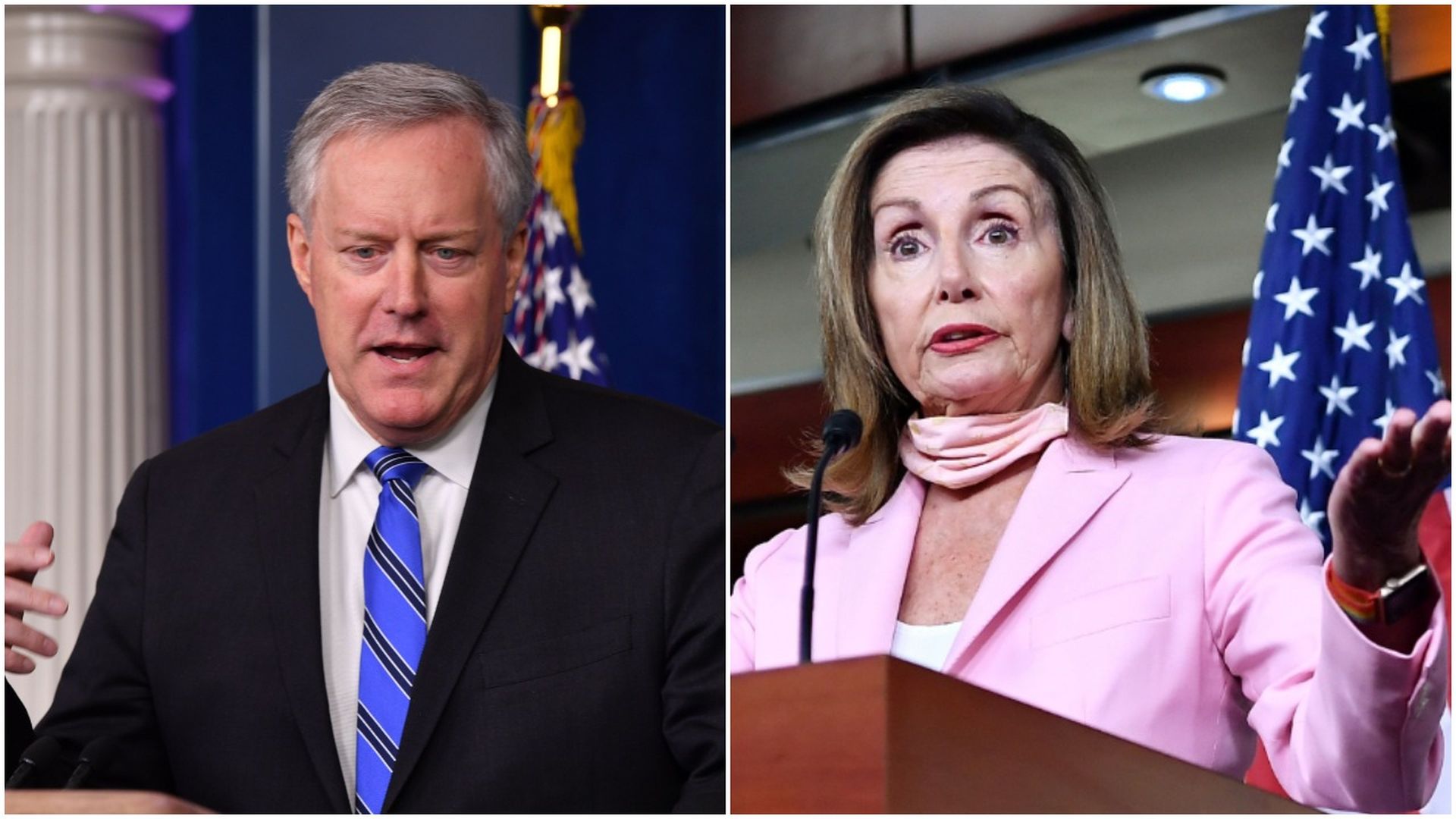
White House chief of staff Mark Meadows and House Speaker Nancy Pelosi — speaking simultaneously at podiums on opposite ends of Pennsylvania Avenue Friday morning — painted a bleak picture of their stalled coronavirus stimulus talks, making clear that they are still a long way from striking a deal.
The bottom line: Everyone who matters in these talks is sending out dismal signals. Many important benefits, including enhanced unemployment insurance for millions of Americans, expire today — and those in charge of bringing relief admit they're nowhere close to finding common ground.
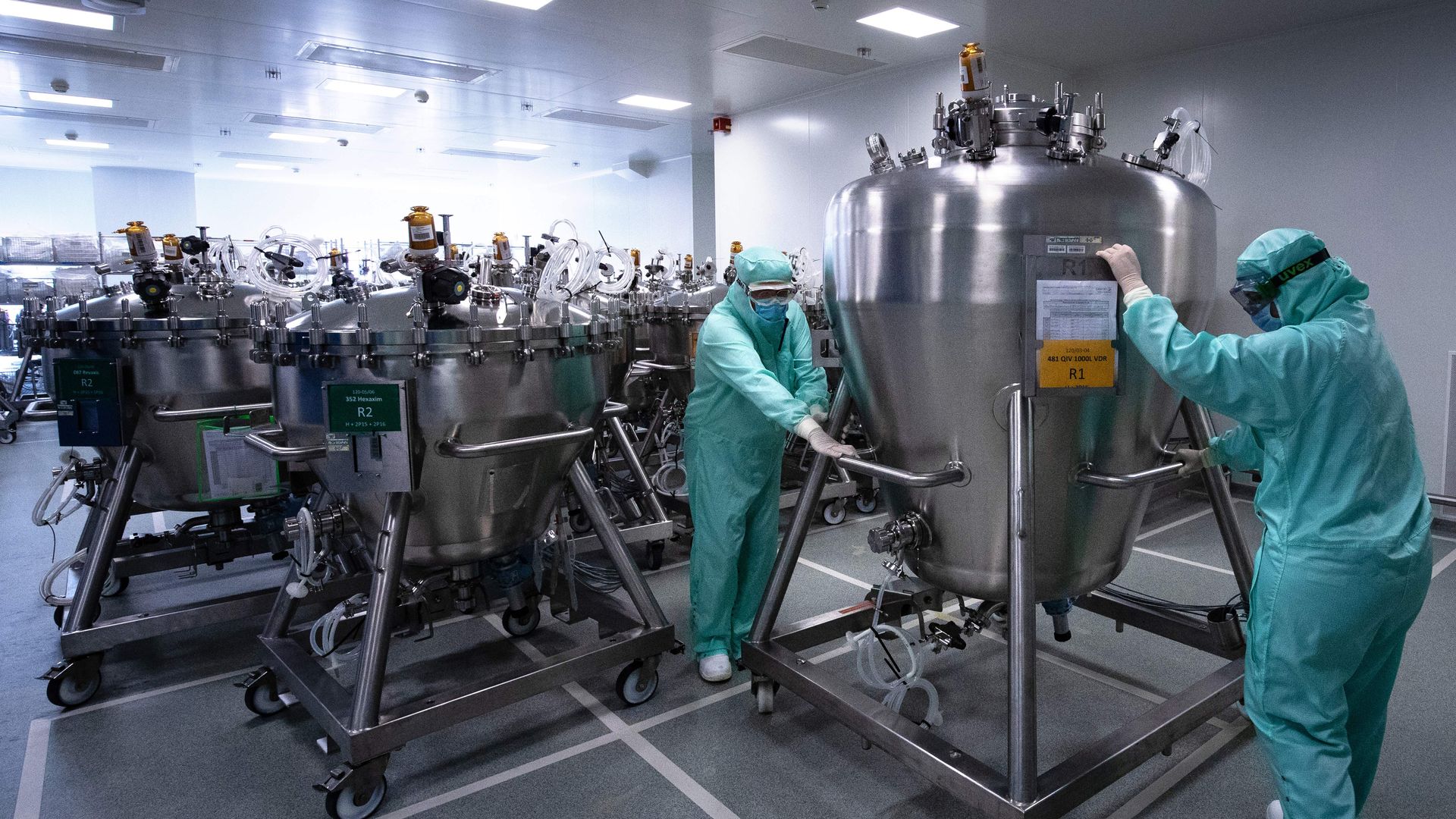
The Trump administration is paying GlaxoSmithKline and Sanofi $2.1 billion to help the companies get their coronavirus vaccine through clinical trials, cover some manufacturing costs and purchase an initial batch of 100 million doses.
The big picture: The deal, which also includes the option of buying another 500 million doses, is part of the federal government's plan to accelerate the development of as many promising vaccine candidates as possible.
While the rest of the U.S. economy was falling off a cliff, Big Tech saw its business soar.
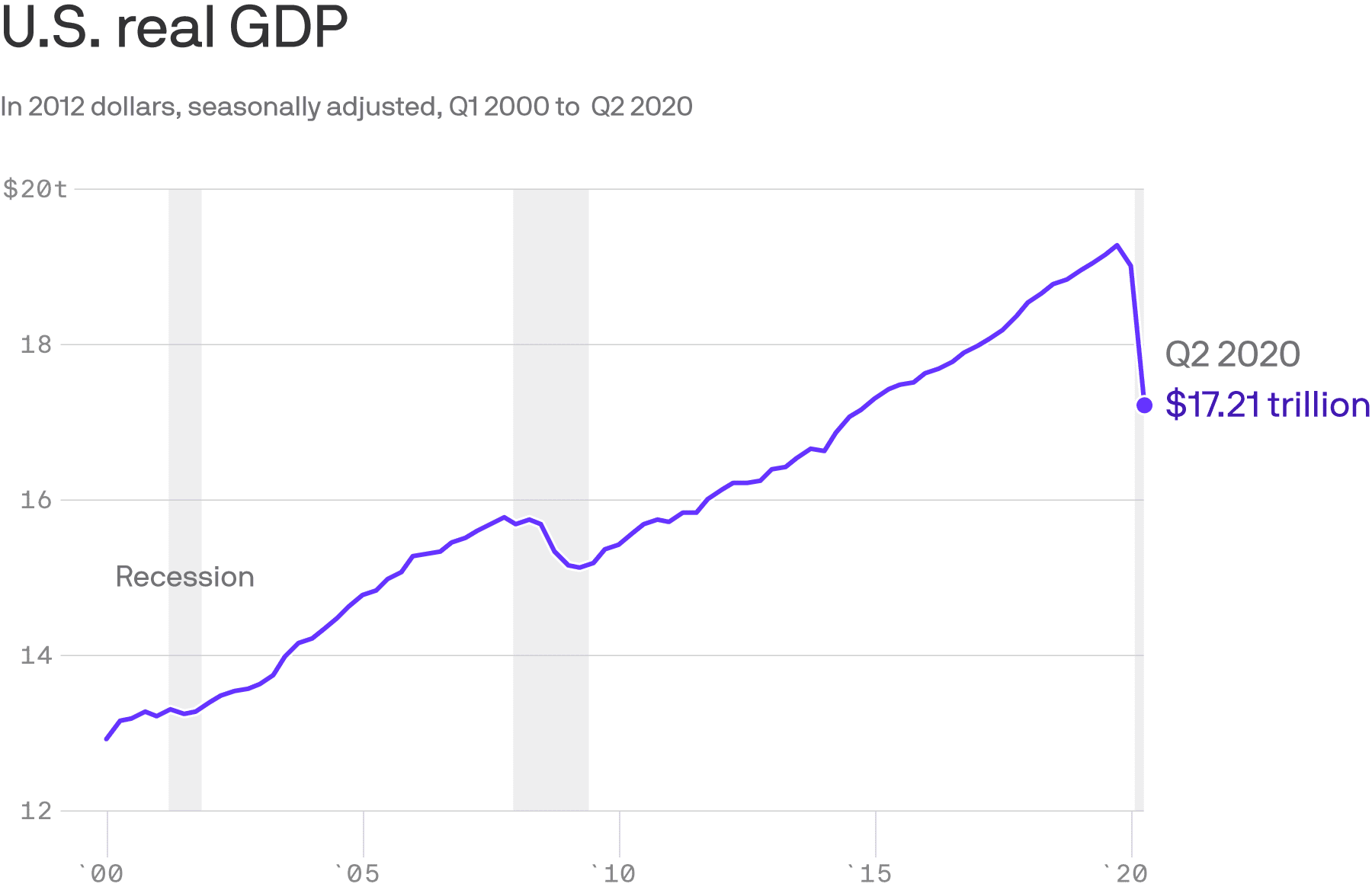
The big picture: Thursday morning, government economists reported a 30% drop in GDP for the second quarter — the largest decline, by far, since the numbers have been reported.
It's hardly the biggest regulatory fight of the Trump era, but there's an important battle raging over plans to restrict sustainable investing that also distills the energy and climate politics of the moment.
Driving the news: The Labor Department is planning to limit private retirement plan managers' leeway to invest based on ESG — environmental, social and governance — factors.
The two largest U.S.-based multinational oil-and-gas giants both announced billions of dollars in second-quarter losses Friday in results that show the pandemic's toll on the industry.
Driving the news: ExxonMobil, citing "global oversupply and COVID-related demand impacts," reported a $1.1 billion loss, compared to $3.1 billion in profits the same period last year.
The coronavirus pandemic's forced work-from-home phenomenon cuts across education levels, race and gender, according to data from the Bureau of Labor Statistics.
By the numbers: Looking at the latest figures from June, more educated workers were more likely to have teleworked because of the pandemic. A measly 5% of workers with less than a high school diploma worked from home versus 54% of workers with a college degree or higher.
There's more evidence that the government’s flagship small business loan program was distributed unequally across racial lines.
Why it matters: Minority-owned companies are faring much worse — and the fate of their businesses is much more bleak — than white-owned ones, as the pandemic slams Main Street.
Data: Bureau of Economic Analysis vis FRED; Chart: Andrew Witherspoon/Axios
The economic decline between April and June caused by the coronavirus pandemic brought the U.S. GDP back to levels last seen in 2015, according to data released Thursday.
Why it matters: While we fell into the hole swiftly, economists are dashing hopes of an equally swift recovery. They warn it could take years for the U.S. to recover.
Big Tech was buoyed by the exact thing that prevented the dreadful GDP report from being even worse in the second quarter: the pandemic stimulus measures.
Why it matters: The stimulus is in the spotlight as its key expanded unemployment benefits provision is set to lapse despite coronavirus cases surging across the country, reimposed lockdown measures and more businesses shuttering.
A new draft code of conduct released on Thursday by officials in Australia would require tech giants like Google and Facebook to start paying news companies to distribute their content.
Why it matters: If Australia adopts the plan and it becomes a model for others around the world, such measures could offer a significant boost to the news industry, especially local news, as it faces financial decline.
Passenger airlines devastated by the decline in air travel during the pandemic are making up some of their lost revenue by strapping cargo into passenger seats and overhead bins of planes that would otherwise be grounded.
The big picture: It could be several years before passenger air traffic returns to normal, but the global demand for medical supplies, along with disruptions in manufacturing supply chains and increased e-commerce, means airlines have a chance, at least temporarily, to offset some of those losses by transporting more freight.
Doctors, nurses and hospitals have experienced a greater increase in consumer trust and confidence than any other industry during the coronavirus pandemic, according to a new Axios/Harris poll.