Right now, there's no public database to see which hospitals and other health care providers have received federal coronavirus bailout funds, but the Department of Health and Human Services is "in the process of establishing a database to disclose the entities that have attested to the receipt of their distributions and the amounts they receive," a spokesperson told Axios.
Why it matters: This is public funding, but today the public can't see where the money is going. Axios has compiled a hospital funding database, based on voluntary financial disclosures, in the interim.
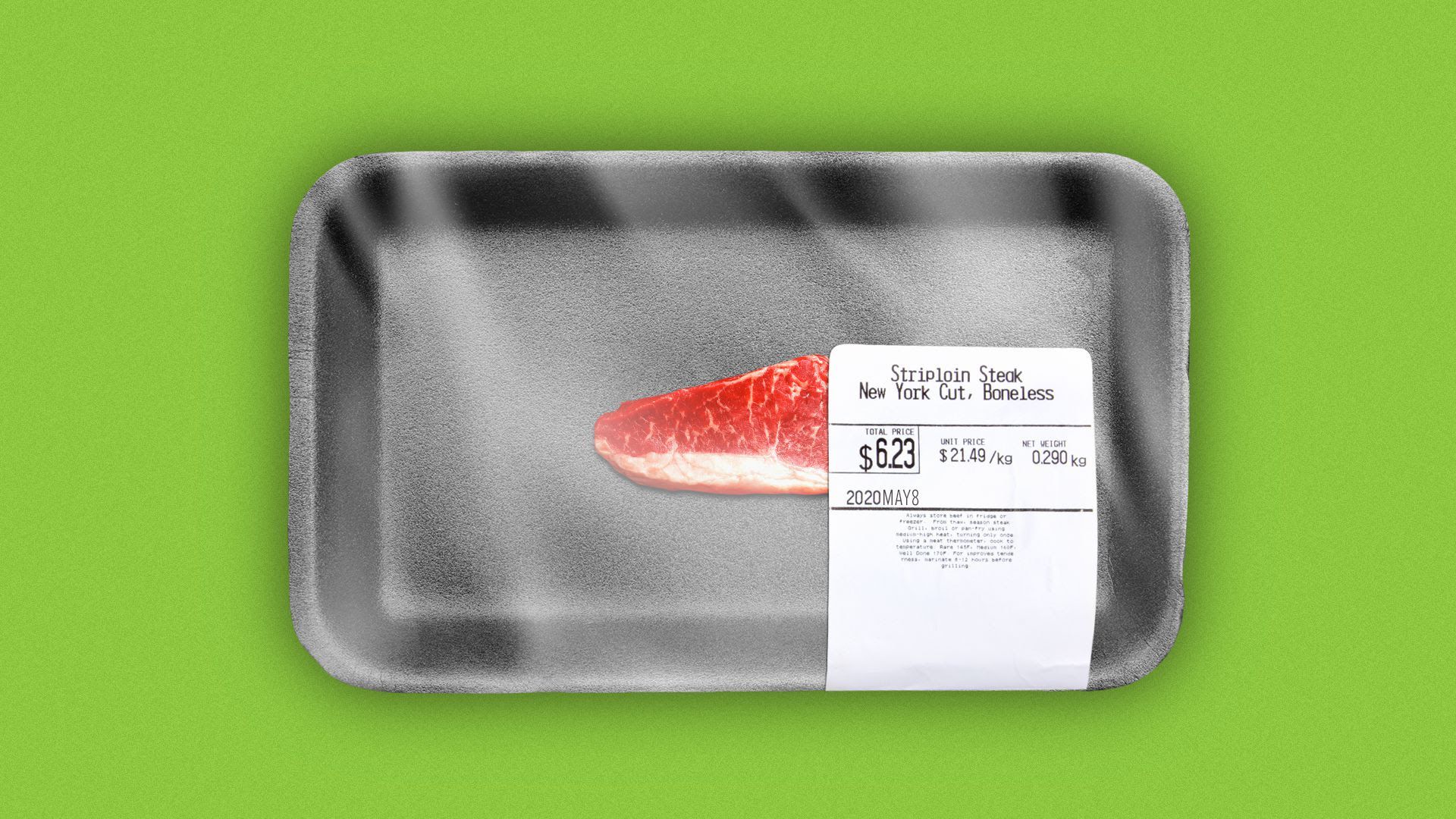
America's food supply chain is in trouble because of coronavirus outbreaks in rural meatpacking plant communities.
Why it matters: For consumers, this means less meat at the grocery store. For many farmers, this means the prospect of financial ruin. For many animals, this means euthanasia instead of slaughter.
The Small Business Administration, which resumed accepting applications from small businesses for Paycheck Protection Program loans on Monday, says it is seeing double the volume as it did in the opening hours of the PPP's initial rollout.
By the numbers: The SBA says it had processed more than 100,000 loans from over 4,000 lenders as of 3:30pm ET.
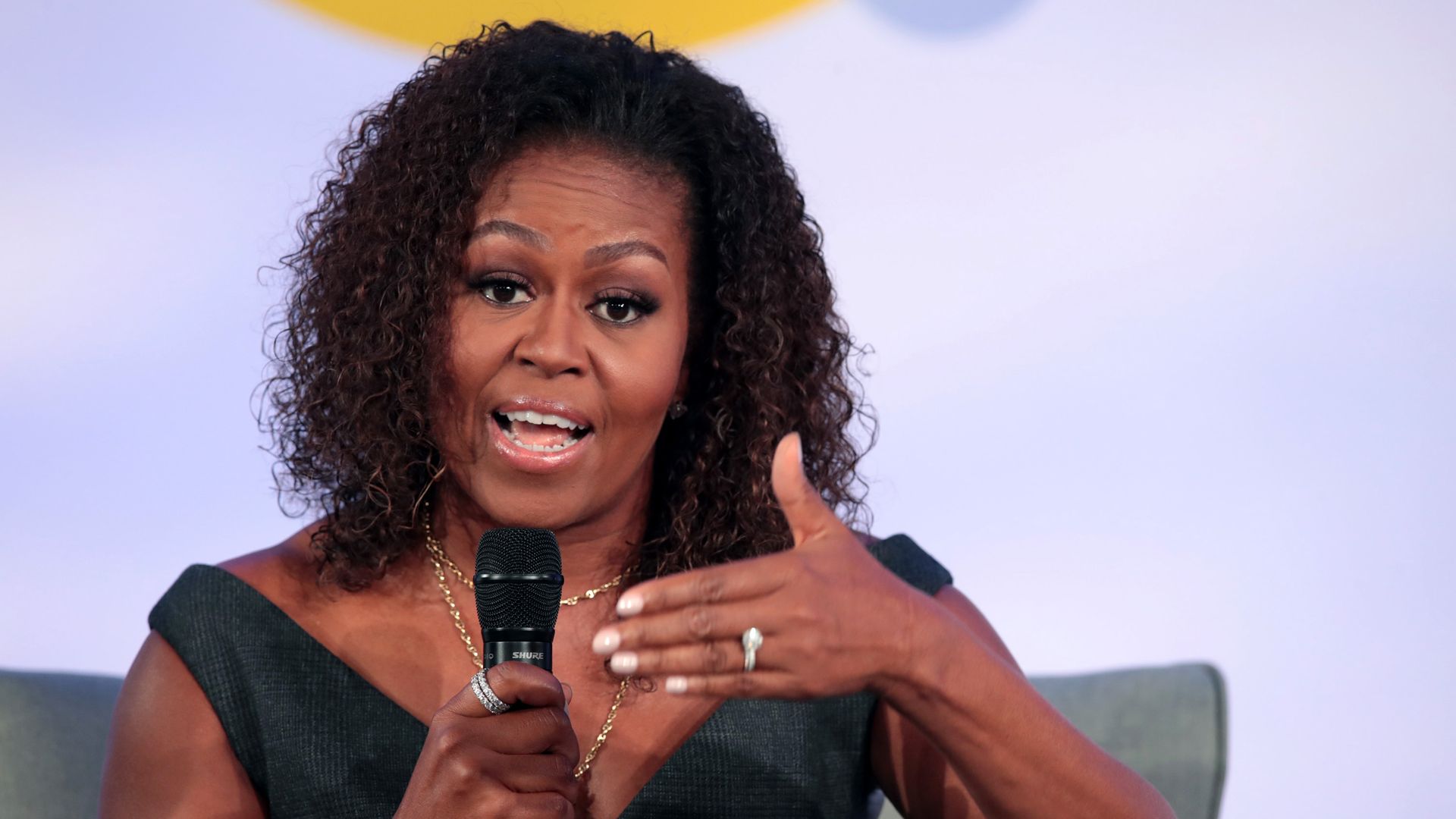
Netflix will debut "Becoming," a new documentary centered on former first lady Michelle Obama, on May 6, the streaming platform announced Monday.
The state of play: The film, which had been kept under wraps and is titled after Obama's 2018 book, recounts her life and follows along on her 34-city book tour.
States are starting to reopen parts of their economies, but the initial closures weren't uniform. Dan and Axios' Courtenay Brown dig into what constitutes an "essential business," and where.
Automation Anywhere, a robotic process automation company valued at $6.8 billion last fall by venture capitalists, began laying off hundreds of employees on Monday, Axios has learned.
Why it matters: The coronavirus pandemic will push more enterprises toward automated software, but the shift isn't happening fast enough to stem top-line losses for Silicon Valley companies like AA.
Twin River Worldwide will pay $180 million to buy a pair of casinos from Eldorado Resorts and one from Caesars Entertainment, as Eldorado inches closer to its $17.3 billion purchase of Caesars.
Why it matters: These are penny-slot prices, even in the context of appeasing antitrust regulators and pandemic-related closures.
With the Paycheck Protection Program (PPP) portal expected to reopen Monday, the Small Business Administration has explicitly prohibited "hedge funds and private equity firms" from receiving loans, and it also reaffirmed "affiliation" rules for private equity-owned companies.
Wait, what? Yes, there have been anecdotal reports of alternative investment firms at least inquiring about PPP loan eligibility. It's unclear if any such loans were made.
Banking giant Morgan Stanley updated its environmental policy late last week, vowing that it will not "directly finance new oil and gas exploration and development in the Arctic."
Why it matters:Per Bloomberg, they're now the fifth major U.S. bank to say they will not back drilling in the region.
European Union advisers are recommending that economic recovery measures for the coronavirus pandemic be in line with climate policy with low-carbon investments, Reuters reports.
Why it matters: It's the latest wrinkle in growing calls to orient huge financial recovery packages in Europe and elsewhere toward low-carbon industries.
Kevin Hassett, a senior economic advisor to President Trump, told CNBC's Squawk Box Monday that the U.S. is likely to experience a GDP decline of between 20% and 30% in the second quarter.
Why it matters: Hassett said the decline, driven by the coronavirus pandemic, will be the "worst since the Great Depression."
Projections of deep pain in the oil sector are increasingly materializing on the ground amid the pandemic-fueled collapse in oil prices and consumption.
What's happening: The combination of years of oversupply and plunging demand means oil wells are filling up quickly.
After seeing IHS Markit's readings on the depths of the decline in Britain's manufacturing and services sectors, Bank of England governor Gertjan Vlieghe warned that the U.K. may be in the grips of an economic contraction for the ages.
What they're saying: “Based on the early indicators, and based on the experience in other countries that were hit somewhat earlier than the U.K., it seems that we are experiencing an economic contraction that is faster and deeper than anything we have seen in the past century, or possibly several centuries,” Vlieghe said in a speech.
The Congressional Budget Office estimated Friday that the U.S. budget deficit will be roughly $3.7 trillion for fiscal year 2020, with public debt projected at 101% of GDP — and that was before the "phase four" $484 billion relief package passed by Congress late last week.
Why it matters: In a world of historically high income inequality and historically low productivity and growth, in which debt levels were already historically high, the U.S. and the world at large are in wholly unprecedented territory.
Christina Paxson, the president of Brown University, argues in a New York Times op-ed that reopening college campuses this fall "should be a national priority."
Why it matters: Paxson says university administrators around the country have found that the financial impact of the pandemic has already exceeded the $14 billion set aside for colleges and universities in the coronavirus stimulus package.
A Goldman Sachs survey of 1,790 participants in the firm's 10,000 Small Businesses program, conducted by Babson College and David Binder Research, found that 68% said the coronavirus crisis will likely change their business models for good.
The big picture: 93% of small businesses said the virus will impact the way they operate, and 69% believe that large corporations will have a bigger advantage over them than before the pandemic.
Axios Markets Editor Dion Rabouin explains the historically lucrative Wall Street strategy of “buying the dip.” Now, with the coronavirus, some are employing the same strategy, but there’s no telling if it’ll be as successful.
As Google, Facebook, Apple, Amazon and Microsoft all report their first set of pandemic-era earnings this week, the industry will get a clearer fix on just how much pain the falling-out between the U.S. and China will inflict.
The big picture: For decades, tech's leaders have bet big on China as a manufacturing hub, supply chain provider and, increasingly, a lucrative market — but trade frictions, national-security tensions and now coronavirus blame games are imperiling that partnership.
More than $8 billion in federal bailout funds have been disclosed by hospitals and health systems as of June 3, according to an Axios review of financial documents.
Why it matters: Hospitals do not have to repay these taxpayer funds, which are supposed to offset the lost revenue and higher costs associated with handling the coronavirus outbreak. HHS has released two datasets on the bailout money — one on the general allocation and another on the money that went to coronavirus hotspots — but the general allocation one is incomplete.













/2020/04/24/1587756575669.gif?w=3840)