Why it matters: The data reflects a hiring boom in industries that are female-dominated, while sectors that are more likely to employ men are lagging in job gains. The last time women overtook men in payrolls was “during a stretch between June 2009 and April 2010,” according to the Wall Street Journal, which first reported the milestone.
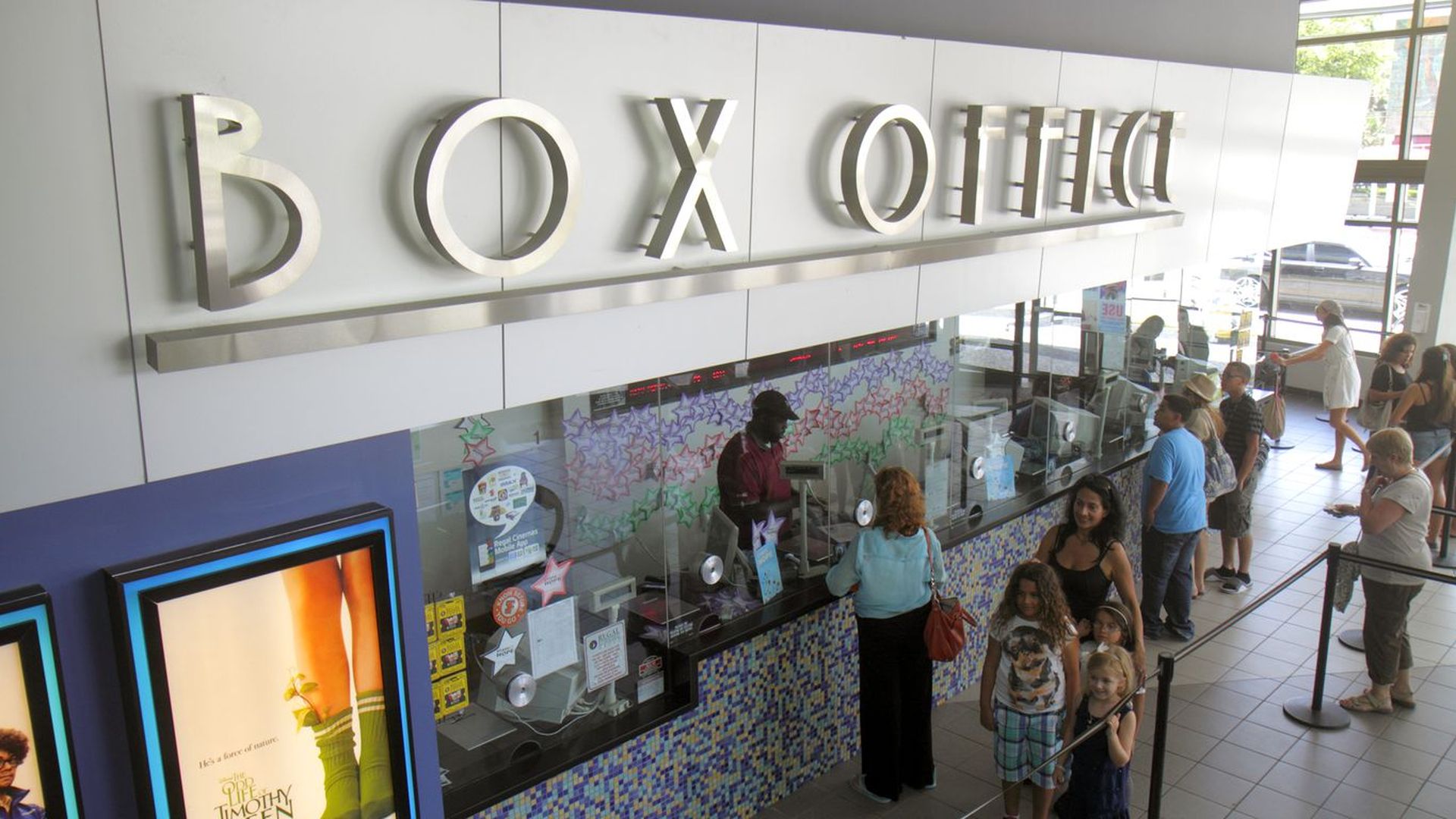
The global box office hit an all-time high of more than $42 billion, according to numbers released Friday by Comscore.
Why it matters: That success can be attributed to monster growth in movie-going overseas. The international box office was up 4% in revenue last year, while the North America box office was down 4% from its record high of $11.88 billion in 2018.
Upstart mattress maker Casper filed Friday for an initial public offering.
Why it matters: This will be the next public market test of a consumer products company that venture capitalists have arguably valued like a tech company.
The U.S. economy added 145,000 jobs in December, the government said on Friday, below economists’ expectations of 160,000. The unemployment rate held at 3.5% — a 50-year low — while wages grew 2.9% from a year earlier, the smallest gain since July 2018.
Why it matters: The U.S. job market held up in the final month of 2019, but heads into the election year with a slowing pace of job creation and wage growth.
Facing unprecedented wildfires that have claimed at least 27 lives, destroyed more than 2,000 homes, and scorched much of the country's southeast, Australia's stock market has somehow been one of the world's top performers, and touched a record high today.
By the numbers: The benchmark S&P/ASX 200 index rallied nearly 1% to close at 6929, surpassing the previous intraday record high.
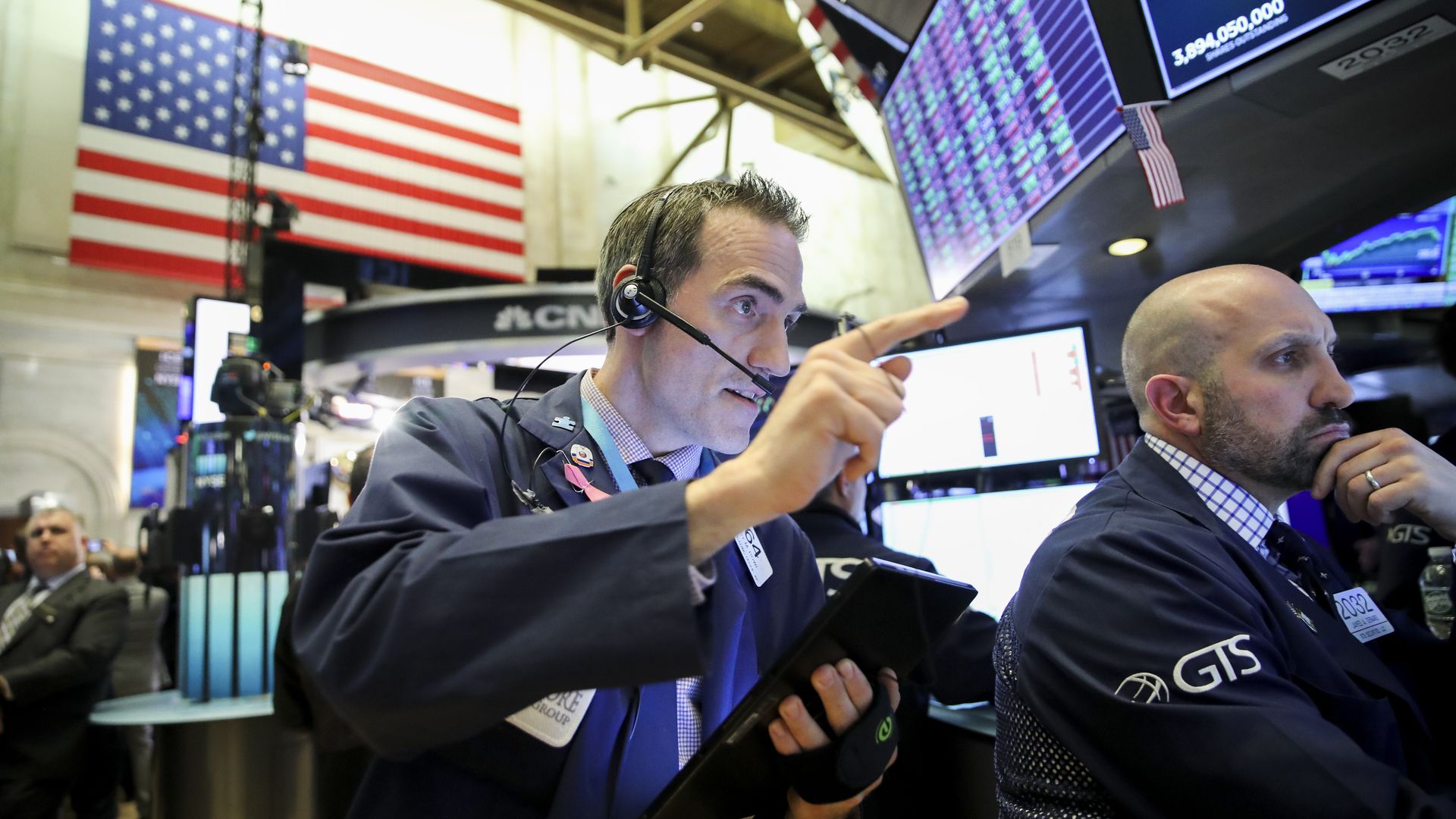
The U.S. stock market rose broadly on Thursday, but a number of retail stocks went south after companies revealed distressing news about their holiday sales.
What happened: J.C. Penney and Kohl’s reported lower sales during the critical months of November and December, and Macy's announced poor holiday sales and the closure of several stores.
The New York Fed added $83.1 billion in temporary liquidity to financial markets Thursday, and the U.S. central bank looks primed to keep pumping cash for at least the next few months.
Why it matters: The stock market's 30% gain in 2019 was in no small part backed by the Fed's decision to cut U.S. interest rates three times and inject more than $1 trillion of temporary financing into the repo market. It also added more than $400 billion to its balance sheet in the fourth quarter.
President Trump has shrunk America's global presence in many ways, but he has also at times placed high-risk bets on its superpower status.
Driving the news: Trump didn't want war with Iran, yet he ordered the killing of Iran's top commander. That requires enormous faith in the shield of American military superiority.
Iraq War veteran Sen. Tammy Duckworth (D-Ill.) hit back at Rep. Doug Collins (R-Ga.) on CNN Thursday over the GOP lawmaker's insinuation that Democrats are sympathetic to terrorists, including the recently killed Iranian Gen. Qasem Soleimani.
What they're saying: "I'm not going to dignify that with a response. I left parts of my body in Iraq fighting terrorists. I don't need to justify myself to anyone," Duckworth said on CNN Right Now.
The wine industry descended on Capitol Hill this week in a last-ditch attempt to avert 100% tariffs on all EU wines — as well as cheeses, cosmetics and other consumer products.
Why it matters: The U.S. has declared its intention to impose these tariffs as retaliation against the way that European nations illegally subsidized Airbus. But if they go into effect, the brunt of the pain will be borne not by European companies, but by Americans.
A whopping 532 original scripted television series were created last year, according to the latest data from FX Networks Research, up 7% from the year before.
Reproduced from an FX Networks Research report; Chart: Axios Visuals
Why it matters: In recent years, experts wondered if the TV market would eventually reach "Peak TV," or a point of total saturation. The new data suggests that hasn't happened yet.
The S&P 500 is too rich on a number of levels, according to calculations in a new paper from Ned Davis Research that examines the index's price to earnings, profits and price to sales.
What's happening: Not only is the benchmark stock index's current P/E ratio "well above fair value," S&P companies' prices relative to sales is at a record high, “well in excess of what they were in 2000 or 2007 at those peaks,” Ned Davis, the company's senior investment strategist, says in a note to clients.
U.S. stocks have already recovered their losses from tensions in the Middle East that flared when a U.S. airstrike killed Iranian Gen. Qasem Soleimani last week. The same is largely true for crude oil, which has erased all of its gains since the incident, and a number of other risk assets.
What's happening: "Welcome to the brave new world where it appears that little short of full-fledged world war between nuclear-armed powers would be required to have a durable impact on financial markets. And even then, some begin to wonder," Reuters' Sujata Rao and Dhara Ranasinghe write.
Raising the minimum wage by just $1 in each state could have prevented more than 27,000 suicides between 1990 and 2015, according to a new report in the Journal of Epidemiology & Community Healthreported on by NPR.
Between the lines: Increasing the minimum wage would be especially helpful when unemployment is high, the authors found.
Two-thirds of the 68 health care companies that went public in 2019 traded above their IPO price by the end of year — many of which provided huge initial returns to owners and outside investors.
The big picture: The vast majority of health care companies that go public are biotechnology firms. Several of those biotechs in the 2019 class benefited from some promising, but extremely early, clinical trial data.
In 2020, malls are trying to make a comeback — but with a twist.
Why it matters: Over the past few years, experts warned of a retail apocalypse and a massacre of malls that hasn't really happened — at least not the way they said it would. While the retail bastions of the 20th century, like Sears and Macy's, are hurting, America's big malls and shopping centers are still alive and finding new ways to get people through the door.
The World Bank cut its global growth forecast for the fourth straight time on Wednesday, reducing expectations by 0.2 percentage points each year for 2019, 2020 and 2021.
"Global economic growth is forecast to edge up to 2.5% in 2020 as investment and trade gradually recover from last year’s significant weakness but downward risks persist. ... U.S. growth is forecast to slow to 1.8% this year, reflecting the negative impact of earlier tariff increases and elevated uncertainty."
— World Bank statement on its Global Economic Prospects report