Iraq War veteran Sen. Tammy Duckworth (D-Ill.) hit back at Rep. Doug Collins (R-Ga.) on CNN Thursday over the GOP lawmaker's insinuation that Democrats are sympathetic to terrorists, including the recently killed Iranian Gen. Qasem Soleimani.
What they're saying: "I'm not going to dignify that with a response. I left parts of my body in Iraq fighting terrorists. I don't need to justify myself to anyone," Duckworth said on CNN Right Now.
The wine industry descended on Capitol Hill this week in a last-ditch attempt to avert 100% tariffs on all EU wines — as well as cheeses, cosmetics and other consumer products.
Why it matters: The U.S. has declared its intention to impose these tariffs as retaliation against the way that European nations illegally subsidized Airbus. But if they go into effect, the brunt of the pain will be borne not by European companies, but by Americans.
A whopping 532 original scripted television series were created last year, according to the latest data from FX Networks Research, up 7% from the year before.
Reproduced from an FX Networks Research report; Chart: Axios Visuals
Why it matters: In recent years, experts wondered if the TV market would eventually reach "Peak TV," or a point of total saturation. The new data suggests that hasn't happened yet.
The S&P 500 is too rich on a number of levels, according to calculations in a new paper from Ned Davis Research that examines the index's price to earnings, profits and price to sales.
What's happening: Not only is the benchmark stock index's current P/E ratio "well above fair value," S&P companies' prices relative to sales is at a record high, “well in excess of what they were in 2000 or 2007 at those peaks,” Ned Davis, the company's senior investment strategist, says in a note to clients.
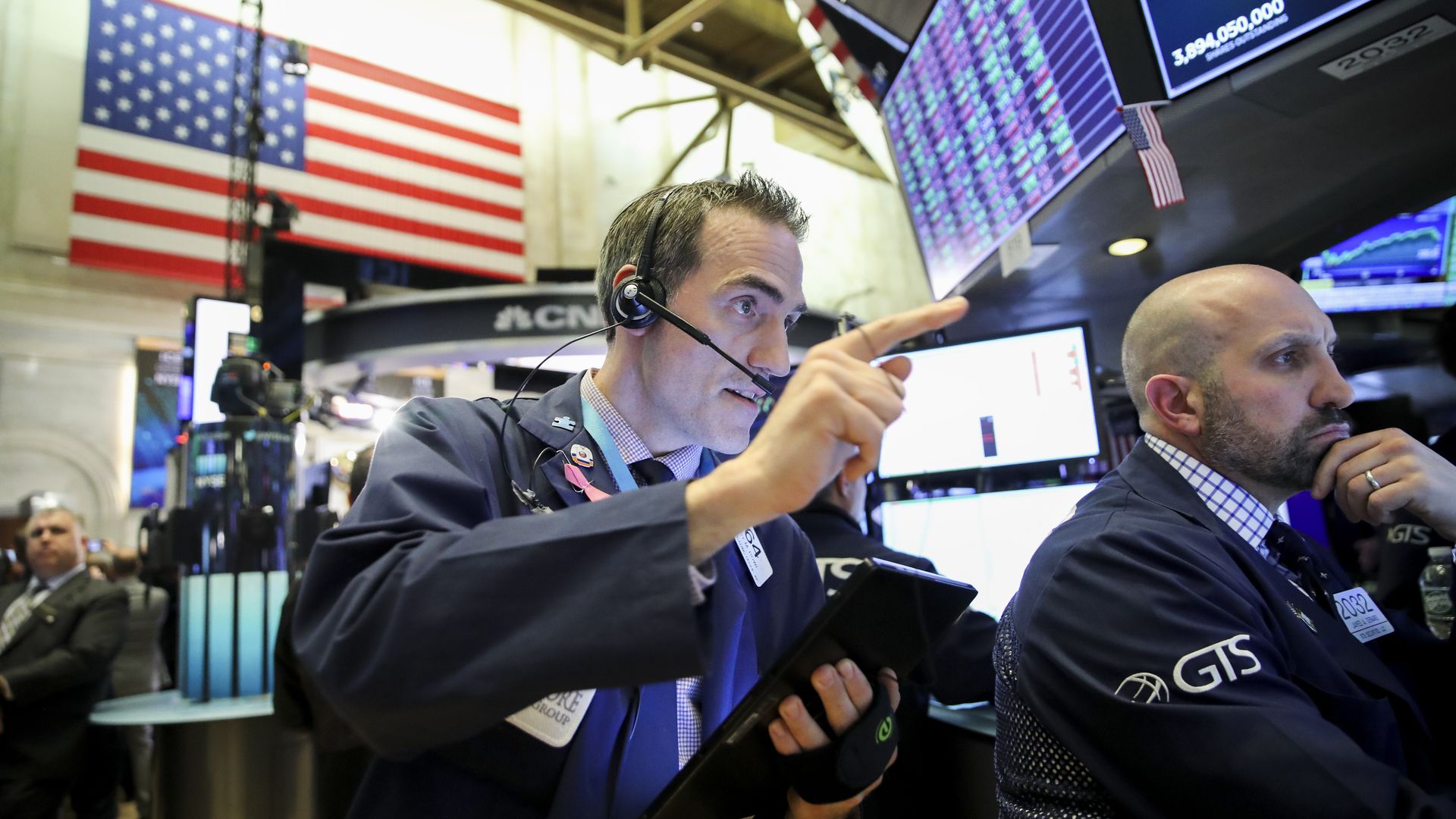
U.S. stocks have already recovered their losses from tensions in the Middle East that flared when a U.S. airstrike killed Iranian Gen. Qasem Soleimani last week. The same is largely true for crude oil, which has erased all of its gains since the incident, and a number of other risk assets.
What's happening: "Welcome to the brave new world where it appears that little short of full-fledged world war between nuclear-armed powers would be required to have a durable impact on financial markets. And even then, some begin to wonder," Reuters' Sujata Rao and Dhara Ranasinghe write.
Raising the minimum wage by just $1 in each state could have prevented more than 27,000 suicides between 1990 and 2015, according to a new report in the Journal of Epidemiology & Community Healthreported on by NPR.
Between the lines: Increasing the minimum wage would be especially helpful when unemployment is high, the authors found.
Two-thirds of the 68 health care companies that went public in 2019 traded above their IPO price by the end of year — many of which provided huge initial returns to owners and outside investors.
The big picture: The vast majority of health care companies that go public are biotechnology firms. Several of those biotechs in the 2019 class benefited from some promising, but extremely early, clinical trial data.
In 2020, malls are trying to make a comeback — but with a twist.
Why it matters: Over the past few years, experts warned of a retail apocalypse and a massacre of malls that hasn't really happened — at least not the way they said it would. While the retail bastions of the 20th century, like Sears and Macy's, are hurting, America's big malls and shopping centers are still alive and finding new ways to get people through the door.