Apprenticeship programs are no longer just for plumbers and electricians. They are an increasingly popular way to groom workers for technical roles.
Why it matters: A number of metro areas (and suburbs) are leveraging their community colleges to create a pipeline of workers in tandem with wooing companies to set up shop there. Apprenticeships are more frequently part of those efforts.
Cities and companies need the same thing: skilled workers.
Driving the news: The metro areas that are more likely to benefit from a skilled workforce have populations that are less inclined to get additional education, per the Strada-Gallup Education Consumer Survey.
The suburbs are becoming cool again — as long as they resemble inner city downtowns.
What's happening: As millennials settle down, have kids and look for cheaper houses and good schools, they're migrating out to the suburbs — and creating a different type of live-work-play district that developers are calling "hipsturbia."
The average cost of family health insurance offered by companies climbed 5% this year, exceeding $20,000 for the first time, according to the newest annual survey of employer health benefits from the Kaiser Family Foundation.
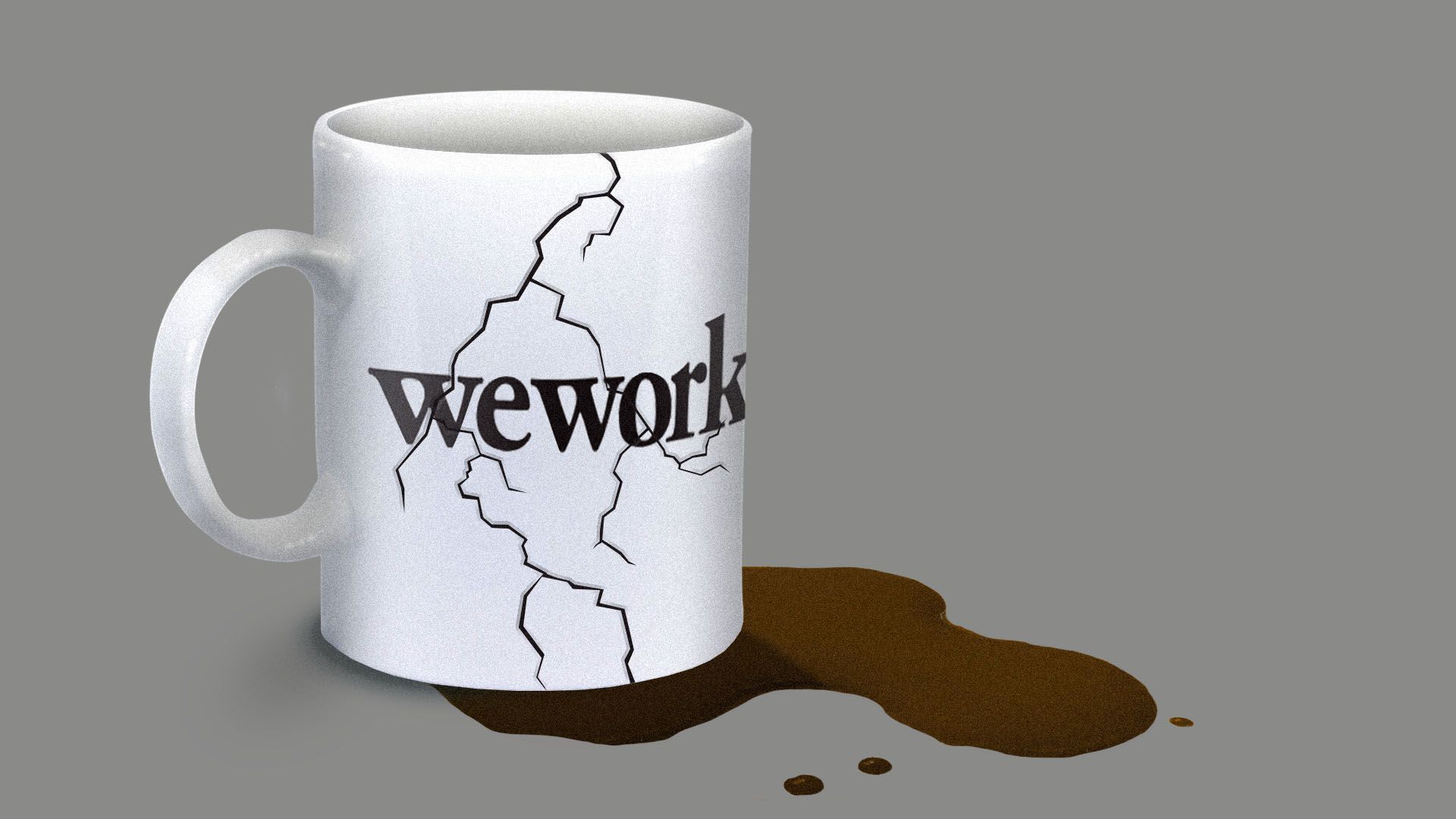
When someone makes the inevitable WeWork movie, consider it a remake of the end of Quentin Tarantino's 1992 film Reservoir Dogs. Almost all of the major characters die. The exception is Mr. Pink, who seems to escape, but then we hear police sirens and his fate is left ambiguous.
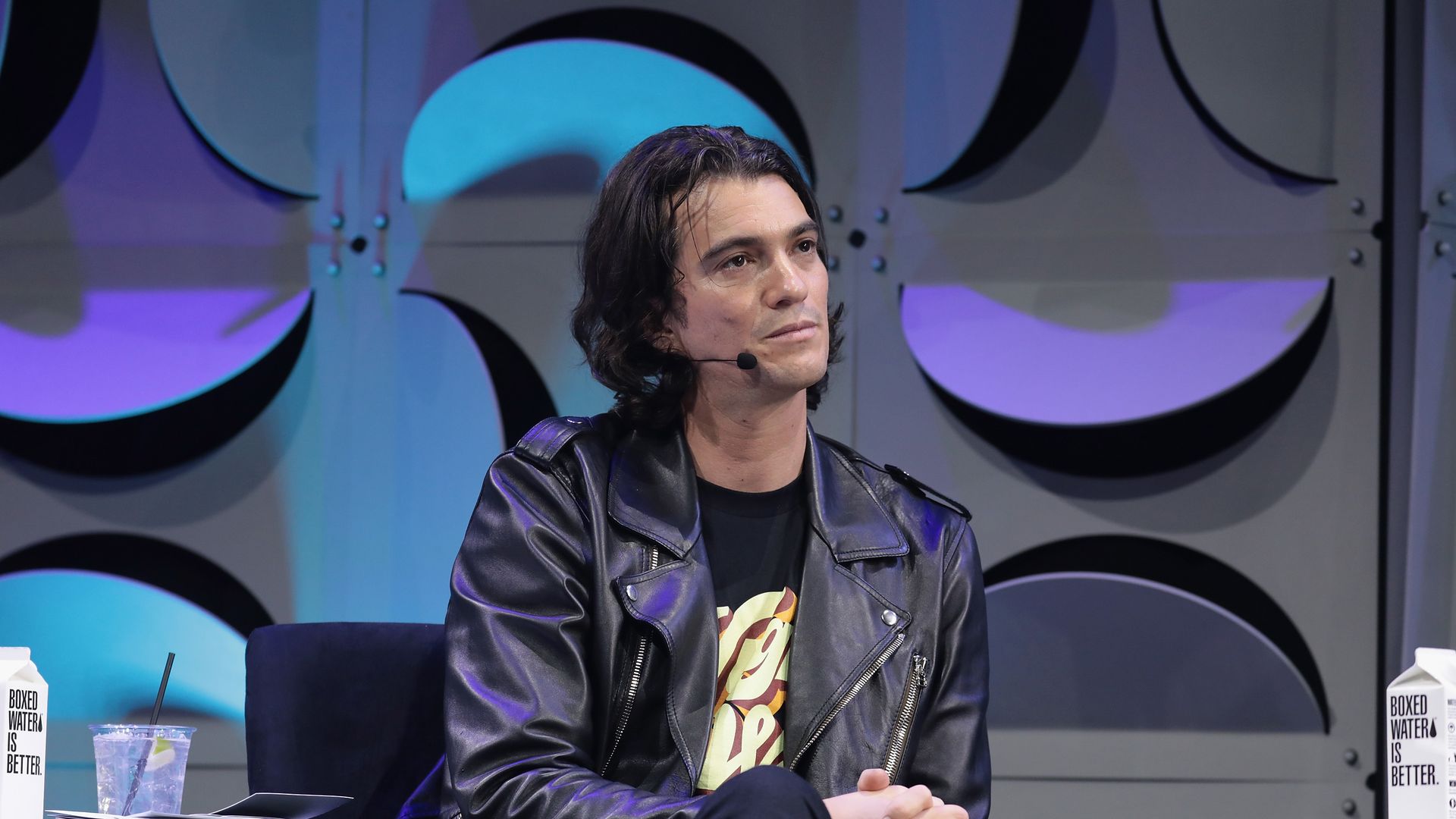
Driving the news: Founder and CEO Adam Neumann was fired on Tuesday in a boardroom coup that he enabled by recently changing governance terms.
The stock market was also stung by a weak U.S. consumer confidence report from the Conference Board on Tuesday.
By the numbers: The index fell to 125.1 in September from a downwardly revised 134.2 in August. That was the biggest drop in 9 months, and the most the index has missed versus economists' expectations since 2010, according to Reuters.
Stocks have steadily risen over the course of September, with the S&P edging up by around 3% month to date, while safe-haven U.S. Treasury prices have fallen, pushing yields higher, in a sign of investors' increasing appetite for risk.
Why it matters: The pickup in stock buying so far this month has been a major reversal of the trend seen in markets for most of the year. Capital flows had largely been going into bonds and money market funds and out of stocks.
Bullish stock traders have taken just about every opportunity to buy U.S. equities after positive news about developments in the U.S.-China trade war this year, but both the S&P 500 and Nasdaq had their worst day in a month on Tuesday as obstacles to that deal mounted.
What's happening: Stocks reversed earlier gains after President Trump addressed the UN and accused China of failing to keep its promises and engaging in predatory practices that had cost millions of jobs in the U.S. and other countries.
Vox Media, the D.C.-based digital media company that's home to several popular internet brands, like Polygon, Eater, SB Nation and others, agreed to acquire New York Media, the parent company to New York Magazine, on Tuesday in an all-stock transaction. Deal terms were not disclosed.
Why it matters: New York Media has been in the hands of a private family trust for years. Its sale underscores a growing trend of media companies consolidating either for stability, survival or growth.
Adam Neumann, co-founder of WeWork, is stepping down as chief executive of its parent company, the We Company, Axios has confirmed. He will become the non-executive chairman of the company while two executives take over as co-CEOs.
Why it matters: For a decade, Neumann was the face of the office co-working company, leading the business to a massive $47 billion valuation before it struggled to get its IPO off the ground over the last couple of weeks.
The Aurora, Colo., movie theater where a 2012 mass shooting took place during a screening of "The Dark Knight Rises" will not show the forthcoming "Joker," reports the Hollywood Reporter.
What's happening: Relatives and friends of those killed also penned a letter about their concerns to Warner Bros. regarding the new film's premiere. It states that they are "calling on [the studio] to be a part of the growing chorus of corporate leaders who understand that they have a social responsibility to keep us all safe."
Heading into Advertising Week, The ad market is healthy and is forecasted to grow slightly higher than expected during the second half of the year due to positive economic growth.
The big picture: It's still mostly controlled by Google and Facebook, and after years of trying to figure out how to take on the "duopoly," publishers have mostly resorted to the same thing they've been trying to do for years: team up.
The Federal Communication Commission's vote to relax decades-old broadcasting ownership rules was struck down Monday by a federal appeals circuit court, dealing a massive blow to local broadcasters looking to consolidate to survive.
Why it matters: It's unclear what the ruling means for the state of current transactions, or the many other companies looking to buy or sell stations based on the new ownership cap that has been struck down by the 3rd Circuit.
The Information has held talks with Bloomberg Media about a bundled subscription, sources tell Axios.
Why it matters: While the talks were preliminary and a potential partnership is not confirmed, both businesses cater to a high-end business consumer, so the audience alignment makes sense.
More than half of money managers think a global economic downturn is likely next year, a survey of 200 institutions that oversee $4.1 trillion in assets found.
Why it matters: It was the first time the survey conducted by Absolute Strategy Research has shown a recession likelihood greater than 50% since the survey began in 2014.
Gold mining companies are on the list of industries wary of spending in this economy.
The big picture: The trade war has dented CEO confidence and many companies are holding off on capital expenditures and large investments, but gold mining companies have typically splurged when prices of the precious metal have risen.
European Central Bank President Mario Draghi and a spate of data releases from IHS Markit on Monday painted an incredibly somber picture of the economic situation in the eurozone.
Why it matters: The eurozone looks like it's headed for recession, if it isn't in one right now. And, as Draghi pointed out, there's little on the horizon that gives much hope for the future.
ROVINJ, CROATIA — Streaming giants looking to grow overseas are shelling out billions to local content producers, fueling a new production economy all over the world.
Why it matters: Companies like Amazon and Netflix need local languages and storylines that are native to the regions where they need to win over subscription budgets. They can't do that from Hollywood.