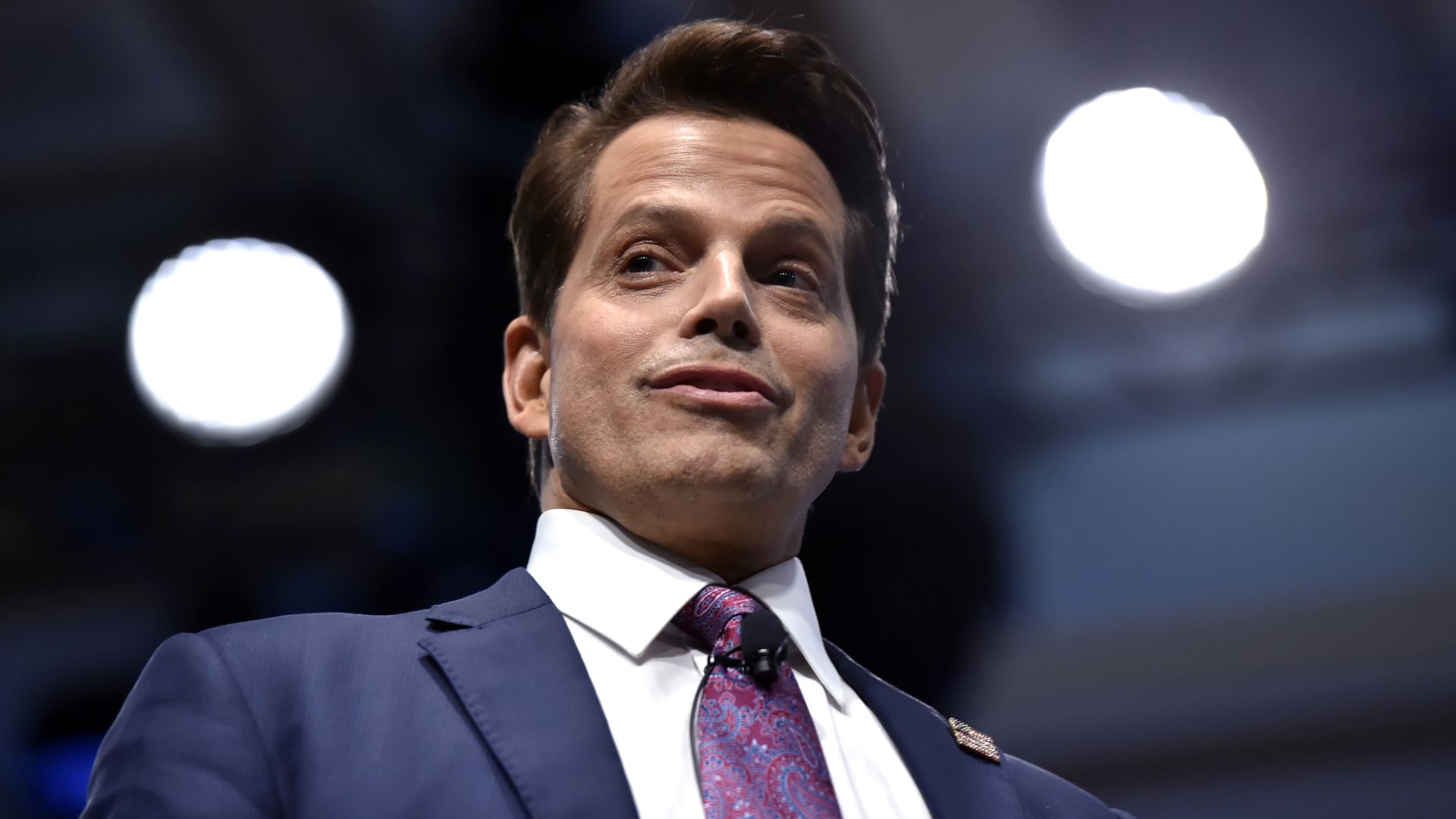
Former Trump aide-turned-critic Anthony Scaramucci told Axios' Dan Primack in the Pro Rata Podcast on Monday that President Trump's "America First" strategy could result in the U.S. losing the trade war with China.
The big picture: Scaramucci, who was a short-lived White House communications director, had always supported Trump's decision to take on the Chinese and use tariffs as a negotiation tool. What Trump has failed to do, he said, was get European allies on board. Scaramucci told Axios earlier this month that if Trump "doesn't reform his behavior, it will not just be me, but many others will be considering helping to find a replacement in 2020."
President Trump may be serious about trying to push U.S. companies out of China, but businesses have already seen that getting out is easier said than done.
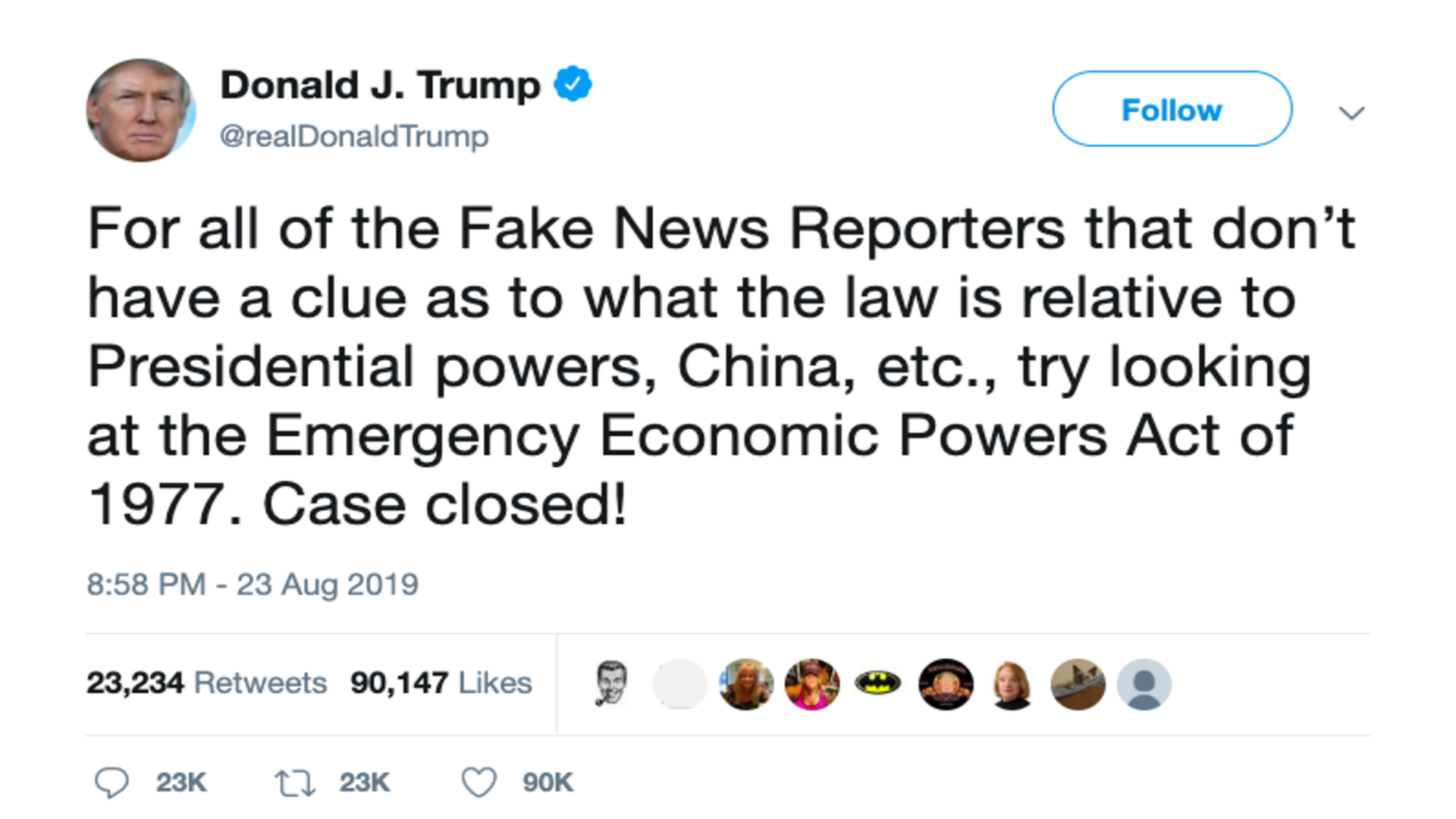
Driving the news: In renewing his call for companies to leave China in recent tweets, Trump cited the International Emergency Economic Powers Act of 1977, a law that was passed to allow a president to isolate rogue or criminal regimes.
In his speech at Jackson Hole on Friday Fed Chair Jerome Powell effectively acknowledged that the world has reached the end of monetary policy as we know it.
What's happening: While central banks could rest assured they had the tools to rein in inflation and unemployment in the old days, that's now uncertain in this new world.
Major conservative media outlets are still growing in the U.S., even in the Trump era, by broadening their coverage areas and audiences to reach as many people as possible.
Why it matters: It's a reversal of the more typical pattern in which ideological media outlets take off when a president from the other side is in power.
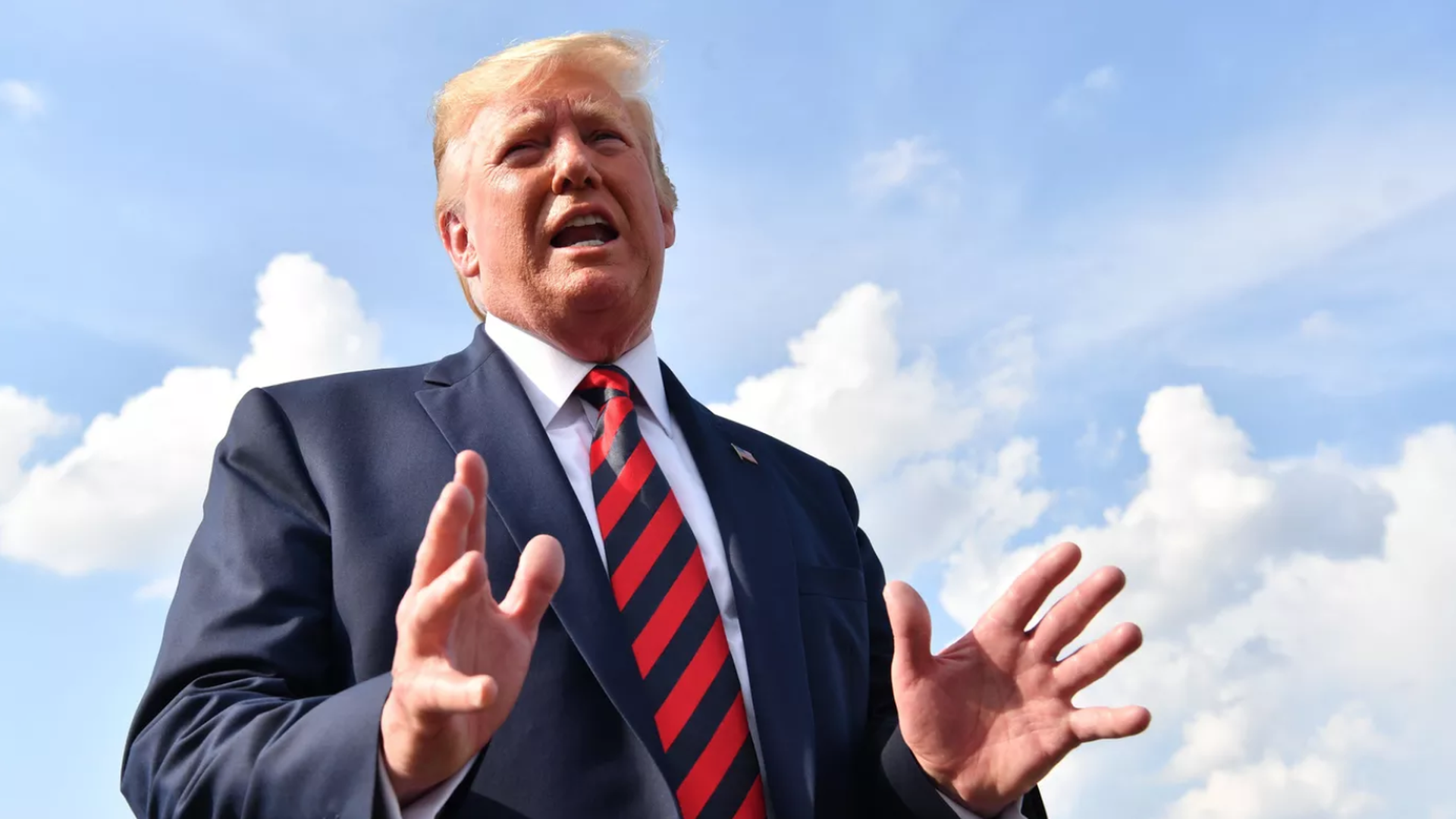
President Trump said on the sidelines of the G7 summit in Biarritz, France, Monday that China has contacted his administration to request for trade talks to resume.
A pro-Trump network of conservative operatives has been compiling dossiers of potentially damaging public comments and social media posts by journalists who have produced unfavorable coverage of the administration, the New York Times' Ken Vogel and Jeremy Peters report.
The big picture: The group has already released information on journalists at CNN, the Times and the Washington Post, but sources say the operation has only disclosed a fraction of its dirt. More is set to be disseminated as the 2020 election campaign ramps up, including potentially "fireable" information on "several hundred" journalists, according to one source. The research is also said to include information on journalists' families and any "toxic" political affiliations.
Democratic presidential candidate Sen. Bernie Sanders told CNN's Brianna Keilar on Sunday that "of course" he would use tariffs as president, but only if used in a "rational way within the context of a broad, sensible trade policy" — unlike what he believes President Trump is doing in his trade war with China.
An overwhelming majority of Americans feel angry and marginalized by a political system that "seems to only be working for the insiders,” according to an NBC News/Wall Street Journal poll released Sunday.
Why it matters: The percentage of angry Americans remains virtually unchanged from when the same question was polled in October 2015, a year before the political system was seemingly upended by the anti-establishment, "Drain the Swamp" message of then-candidate Donald Trump. Four years later, 2020 candidates Sens. Bernie Sanders and Elizabeth Warren are using a similar populist message to win back the confidence of Americans by promising to fight for the forgotten worker.






/2019/08/25/1566754030318.gif?w=3840)