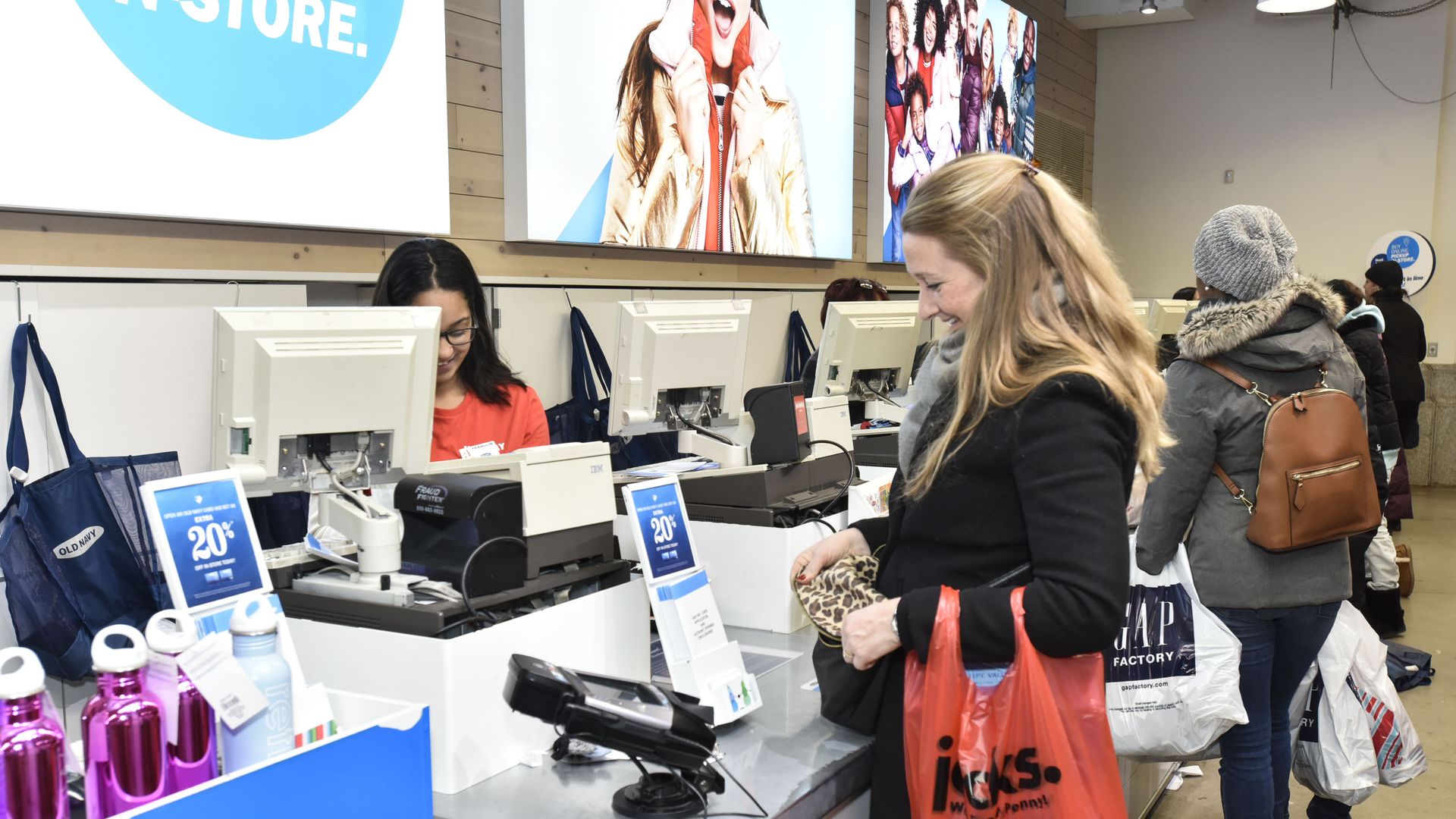
Gap Inc. announced Thursday that it will split itself into two companies — Old Navy as a standalone storefront, and Gap, Banana Republic, Athleta and its other brands together as a separate business. (It’s yet to be named, though the obvious name would be ... Gap.)
Why it matters: This could finally make shareholders happy. Gap Inc. has been struggling to balance its successful Old Navy retailer (alone, it has $8 billion in annual revenue, nearly as much as the others combined) with the rest of its brands, including namesake Gap, which has struggled in recent years.
Google, Microsoft, Apple and Amazon are each reportedly working on their own versions of a "Netflix for games," as the tech giants enter a heated battle to own the subscription business for video games.
Yes, but: It's easier said than done. Netflix rose to the top in part because it was able to exploit a gap in the market years ago around content licensing. An exact parallel to that doesn't exist in the gaming industry.
HBO CEO and Chairman Richard Plepler and Turner President David Levy are stepping down, according to multiple mediareports.
Why it matters: The move comes amid reports that NBC Entertainment chairman Bob Greenblatt has been in talks with WarnerMedia CEO John Stankey for a position to oversee all of AT&T's media assets, including HBO, Turner and WarnerMedia’s news streaming service.
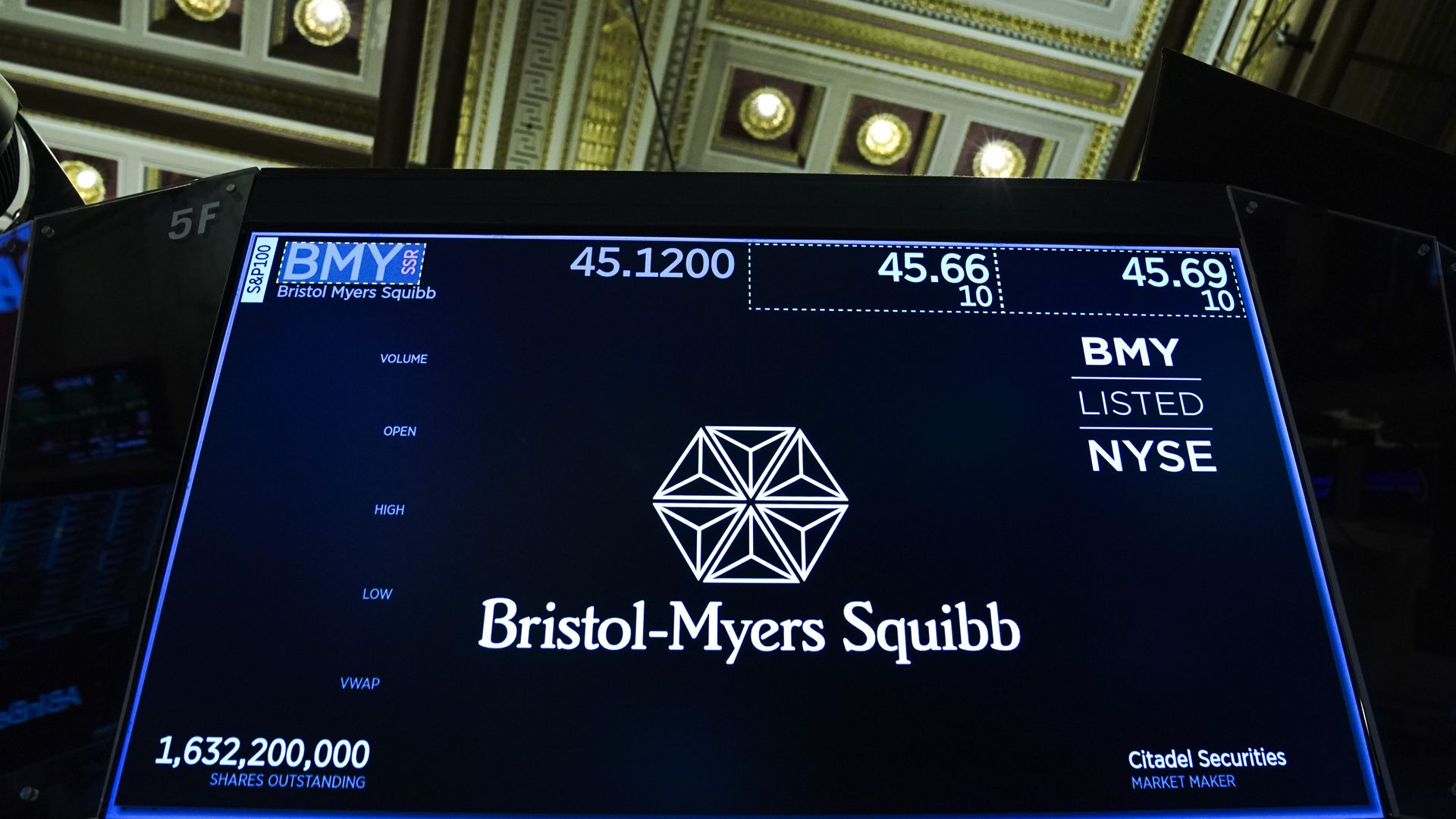
Why it matters: Bristol-Myers CEO Giovanni Caforio said in response that buying Celgene "is the best path forward for our company." But this mega-merger has a serious chance of failing if Bristol-Myers can't assuage investors' concerns about the "massive patent cliff" from Celgene's blockbuster drug Revlimid and the strength of its development pipeline.
Businesses are not abandoning China in droves as a result of President Trump's trade war. But business leaders are annoyed and making changes.
By the numbers: In a recent Bain & Co. survey of more than 200 senior executives at U.S. multinational companies with operations in China, 60% of respondents executives largely support tariffs on China — while 60% also said they expect their business to face cost headwinds due to the U.S. tariffs on Chinese goods.
While U.S. trade negotiators continue to push for a trade deal with China that includes "significant structural changes" to its economic model, investors are putting the trade war behind them, pushing forward into Chinese assets and being rewarded handsomely.
Why it matters: A growing chorus of investors don't see this as a short-term theme, but the beginning of a new cycle where the growth dynamics in countries like China, India and others in Asia, Africa and Latin America drive not just the lion's share of the world's gross domestic product but also its market performance.
After gaining 7.8% in January, the S&P 500 has added another 3.3% so far in February for a year-to-date return of 11.4%.
The state of play: Barring a more than 3% drop today, the S&P will finish the month higher again. That's a strong historical indicator that the market will end higher for the year.
Jonah Goldberg is leaving National Review in the coming months to start a new conservative media company with Steve Hayes, who was editor-in-chief of The Weekly Standard when its owner shut it down in December.
Details: Goldberg and Hayes tell me they plan a reporting-driven, Trump-skeptical company that will begin with newsletters as soon as this summer, then add a website in September, and perhaps ultimately a print magazine.
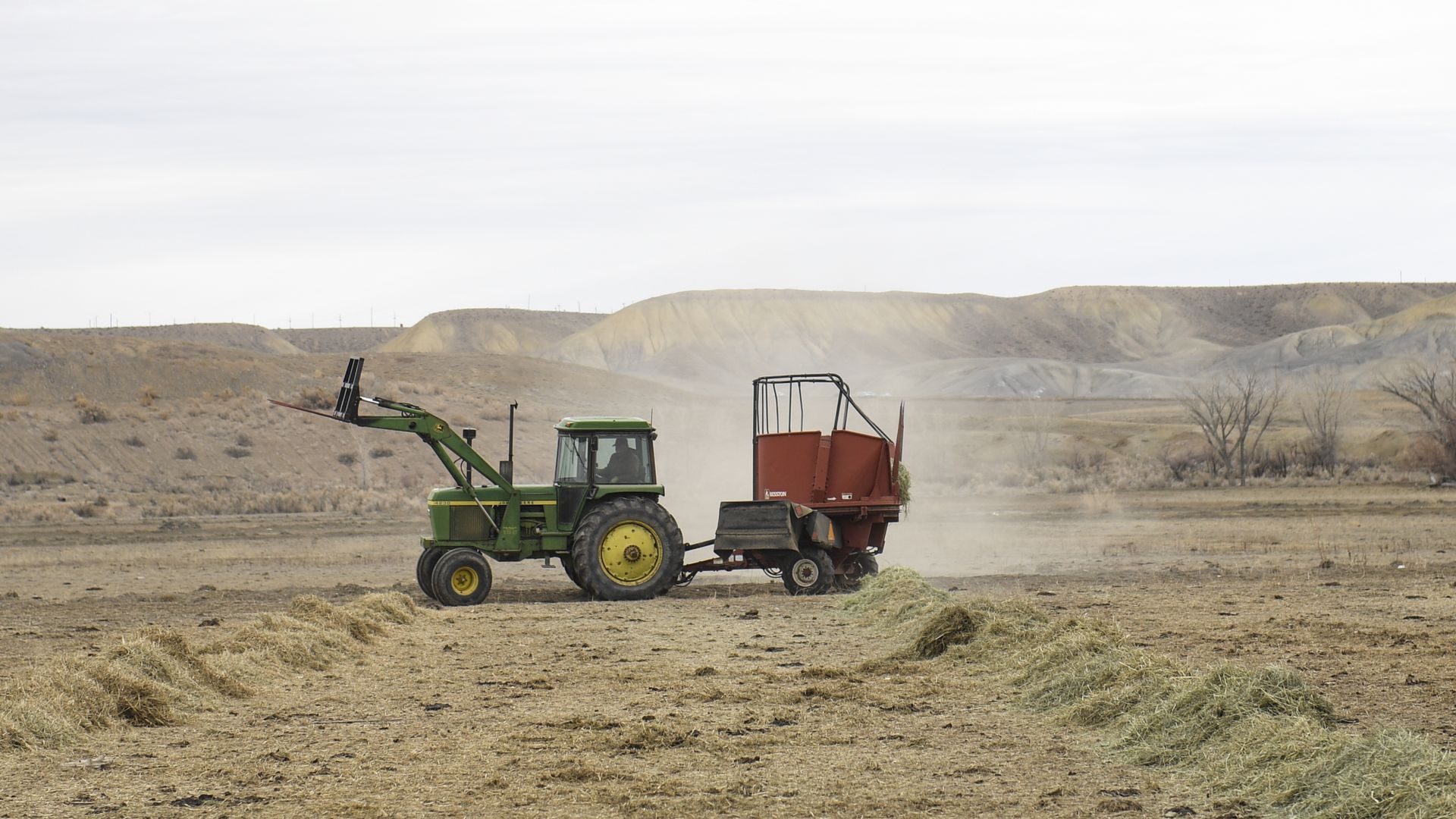
Low crop prices and President Trump's tariffs' impact on export markets are hurting U.S. farming. The number of farmers defaulting on Agriculture Department’s Farm Service Agency loans has reached a nine-year high, the Associated Press reported Wednesday night.
The big picture: The Department of Agriculture has disbursed $7.7 billion in aid to farmers in an attempt to reduce the negative effects of retaliatory tariffs stemming from Trump's trade war. January figures delayed by the federal government shutdown show 19.4 percent of FSA direct loans were delinquent, compared to 16.5 percent for January 2018, Kansas-based Farm Service Agency executive director David Schemm told the AP.








/2019/02/28/1551358636195.gif?w=3840)