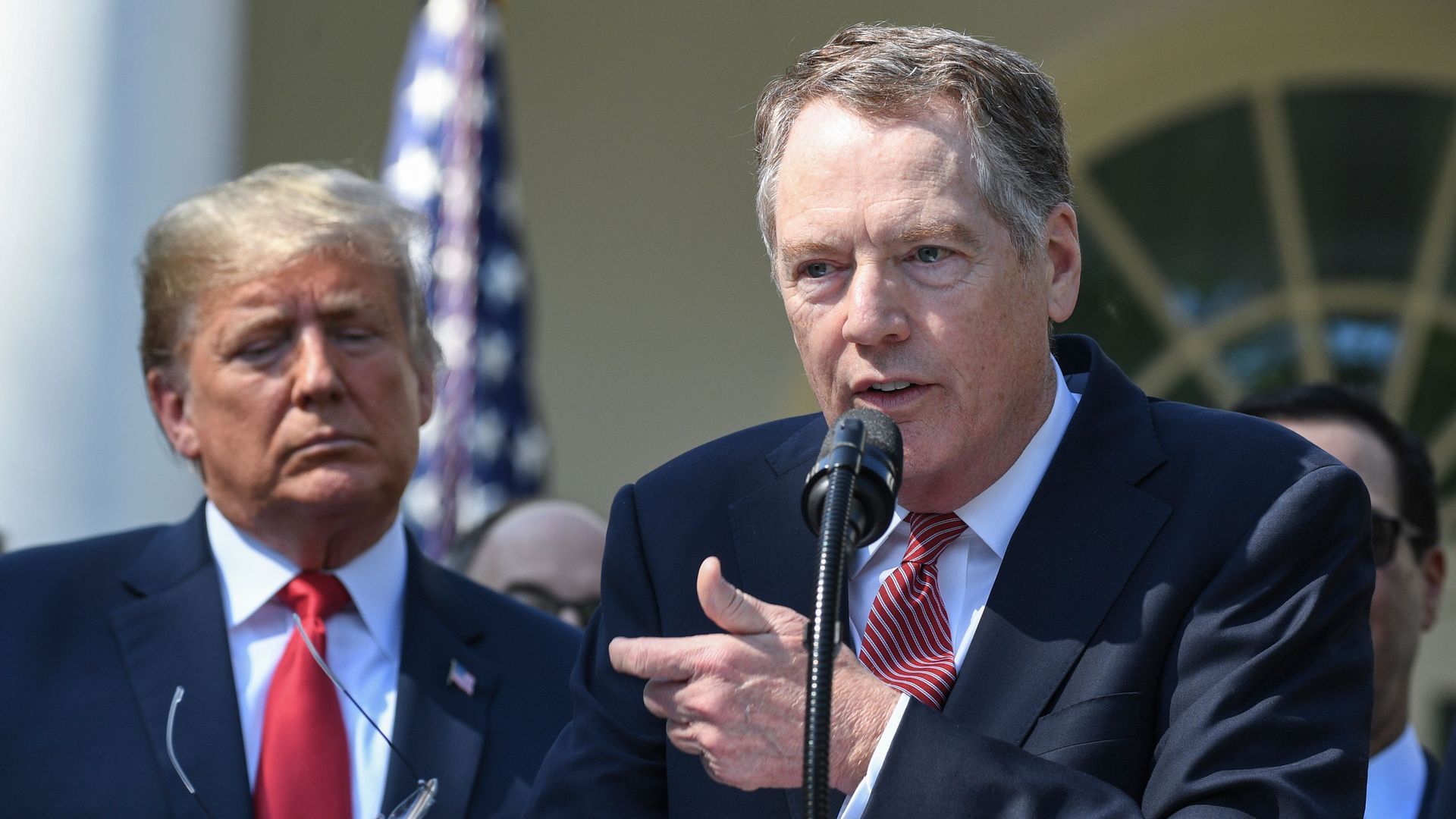
Following testimony on Capitol Hill Wednesday, U.S. Trade Representative Robert Lighthizer said the U.S. will take steps to abandon its plans to increase tariffs on $200 billion of Chinese goods, the WSJ reports.
The big picture: President Trump announced this week that the scheduled hike would be delayed due to “substantial progress” in trade talks with China. Lighthizer's revelation that the U.S. could formally abandon any tariff hike could be seen as a further indication that talks are going well. However, as one of the enforcement mechanisms that a trade deal would include, Lighthizer testified that officials from both countries would meet frequently for "consultations" on potential violations, and that tariffs could be reimposed if China fails to live up to its pledges.
Fiat Chrysler announced a $4.5 billion investment plan to build its next generation of SUVs in Detroit, a move that would open 2 new plants and add 6,500 jobs to the city and its surrounding areas, the AP reports.
Why it matters: The plan would open the first new auto plant in Detroit, the traditional heart of the U.S. automotive industry, since 1991. It also highlights the unyielding demand for SUVs, which accounted for 72% of new vehicles sold in the U.S. last month and — along with trucks — could make up as much of 80% of Fiat Chrysler's revenue by 2022, according to the company's CFO.
Investigative reporting from news outlets over the past 2 weeks has led to some swift changes from some of the biggest tech companies.
Why it matters: Despite an onslaught of hearings and statements from Washington, virtually no regulation has actually passed in the past couple of years to significantly address the potentially harmful practices of tech companies. Media reports have driven most of the changes to date, especially around privacy.
The total number of pay-TV subscribers, or people who buy cable or satellite TV packages, dropped 4.1% year-over-year last quarter, according to research firm MoffettNathanson.
Facebook users want more local news, Facebook's director of new initiatives Anne Kornblut tells Axios. But the local news ecosystem that Facebook and other platforms have relied on to distribute that content is evaporating.
Why it matters: In an effort to build better communities on its platform, which is both a business and moral objective for Facebook, the company needs to make sure local news on its platform flourishes. But many blame the businesses of big tech companies like Facebook for the fall of the local news ecosystem, creating a complicated trust dynamic.
Winning Best Picture at the Oscars is a prestigious milestone, but it doesn't necessarily drive people to the theaters. Data from Comscore shows that most Best Picture winners make the majority of their revenue between the time of the nomination and the Academy Awards telecast — not after they win.
Bleacher Report, the millennial and Gen-Z focused digital sports franchise owned by Turner, has no plans to put its free app — which is accessed by millions of people — behind a paywall, the company's new CEO Howard Mittman tells Axios.
Why it matters: Mittman believes people will pay for live sporting events, but not necessarily sports journalism and analysis. For this reason, he doesn't expect to ever build a subscription model for the 20 million people that have downloaded the Bleacher Report app, which drives 50% of the company's traffic and revenue.
You may not have heard of SmartNews, but the Japanese news discovery app has quadrupled its U.S. audience over the past two years and now drives more traffic to publishers than Apple News, according to traffic news referral service Parse.ly.