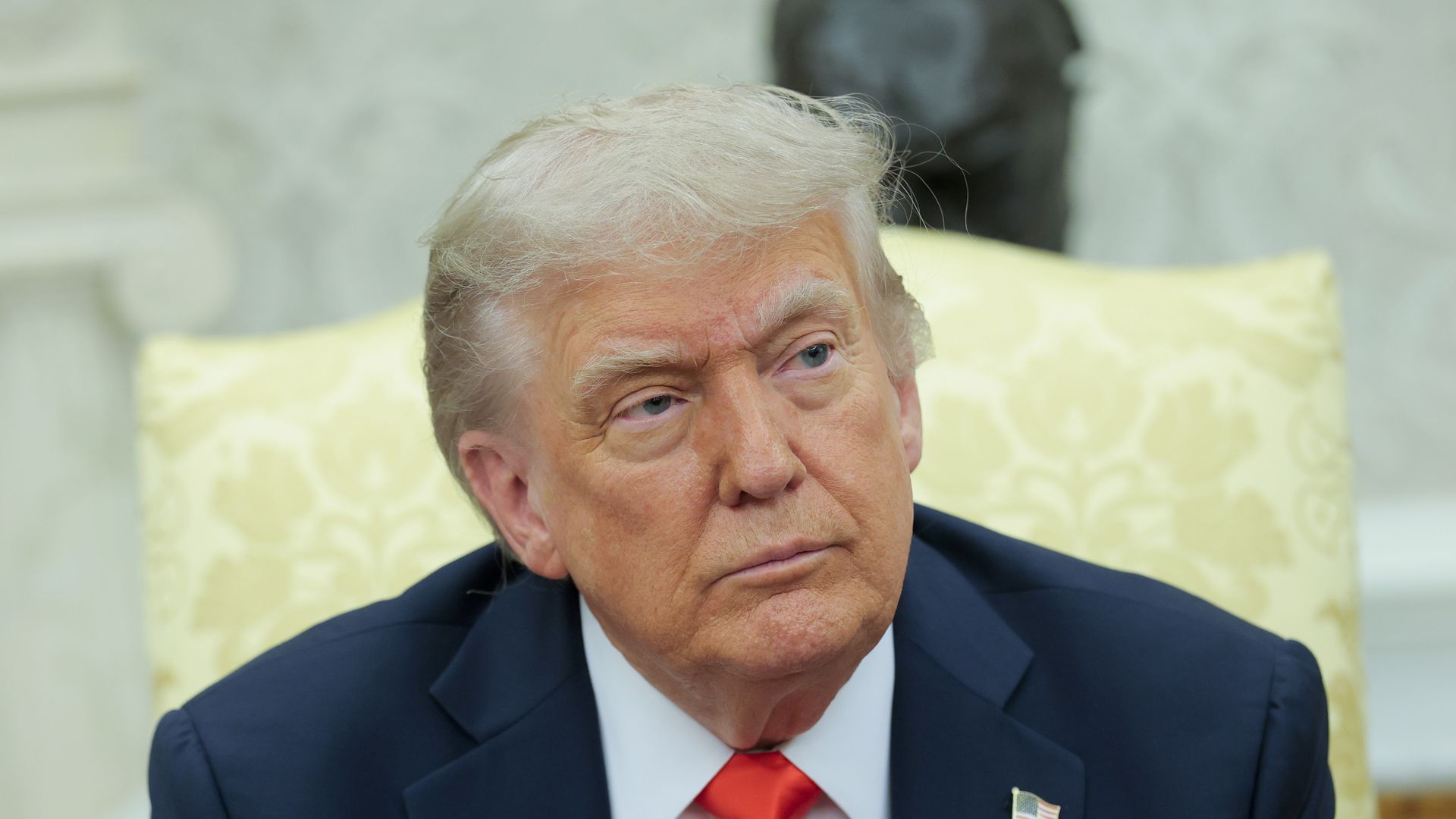
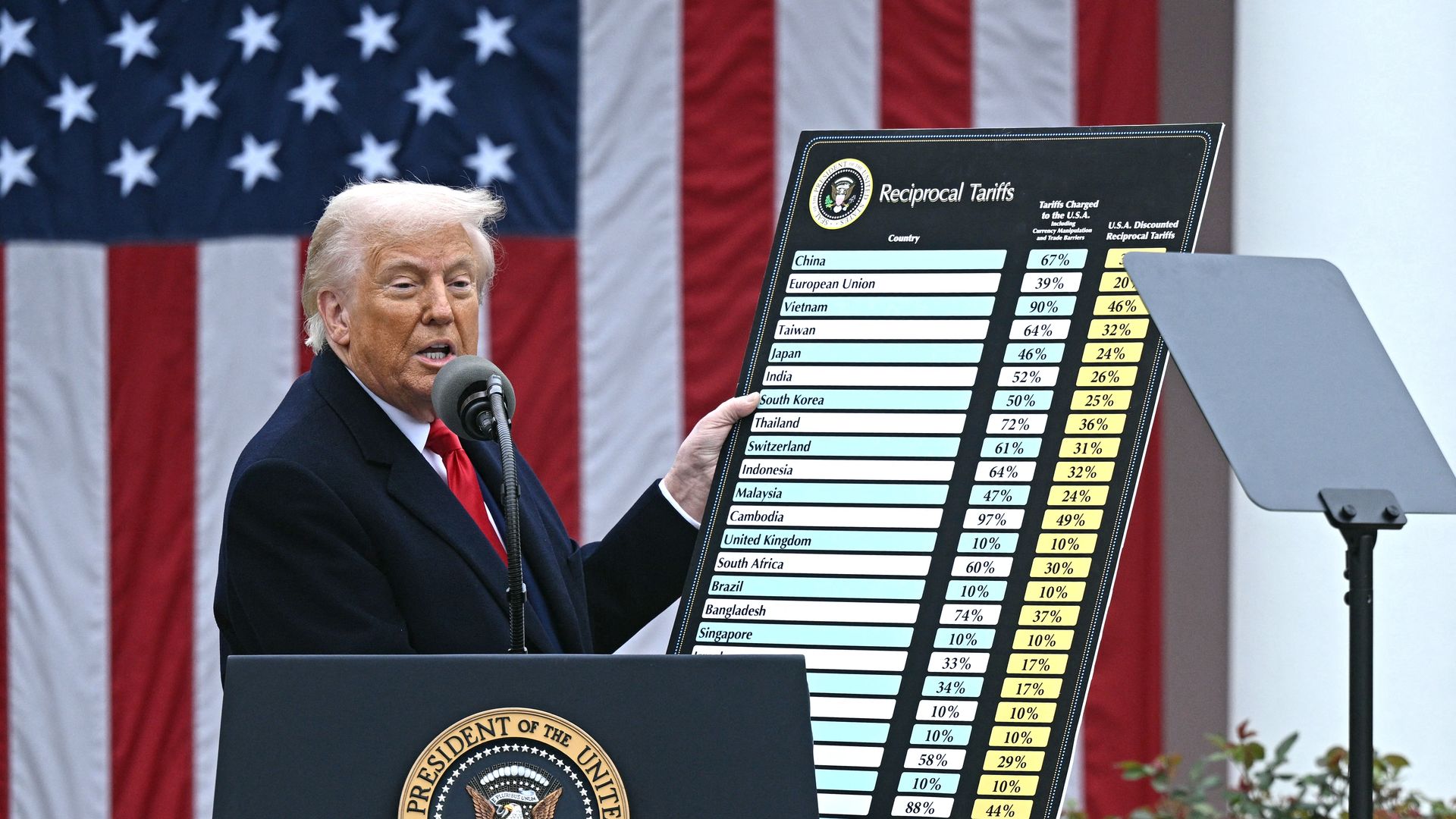
The U.S. will send take-it-or-leave-it trade offers to dozens of countries within the next two weeks, President Trump said Wednesday.
Why it matters: Trump is suggesting time is running out for nations to make trade deals, even as both he and his Treasury secretary indicate existing deadlines are also fungible.
The Senate on Wednesday rejected a Democratic push to cancel over $3 billion worth of arms sales to Qatar and the United Arab Emirates.
Why it matters: The bid to ax the arms sales came in response to Qatar's offer to gift President Trump a $400 million plane and the UAE's billion-dollar cryptocurrency deal involving a company owned by the president.
LAS VEGAS — Starbucks crowned its first global barista champion Wednesday in a competition that tested coffee knowledge, technical skills and customer connection.
The big picture: The three-day competition held in Las Vegas featured 12 baristas from around the world, narrowed down from over 84,000.
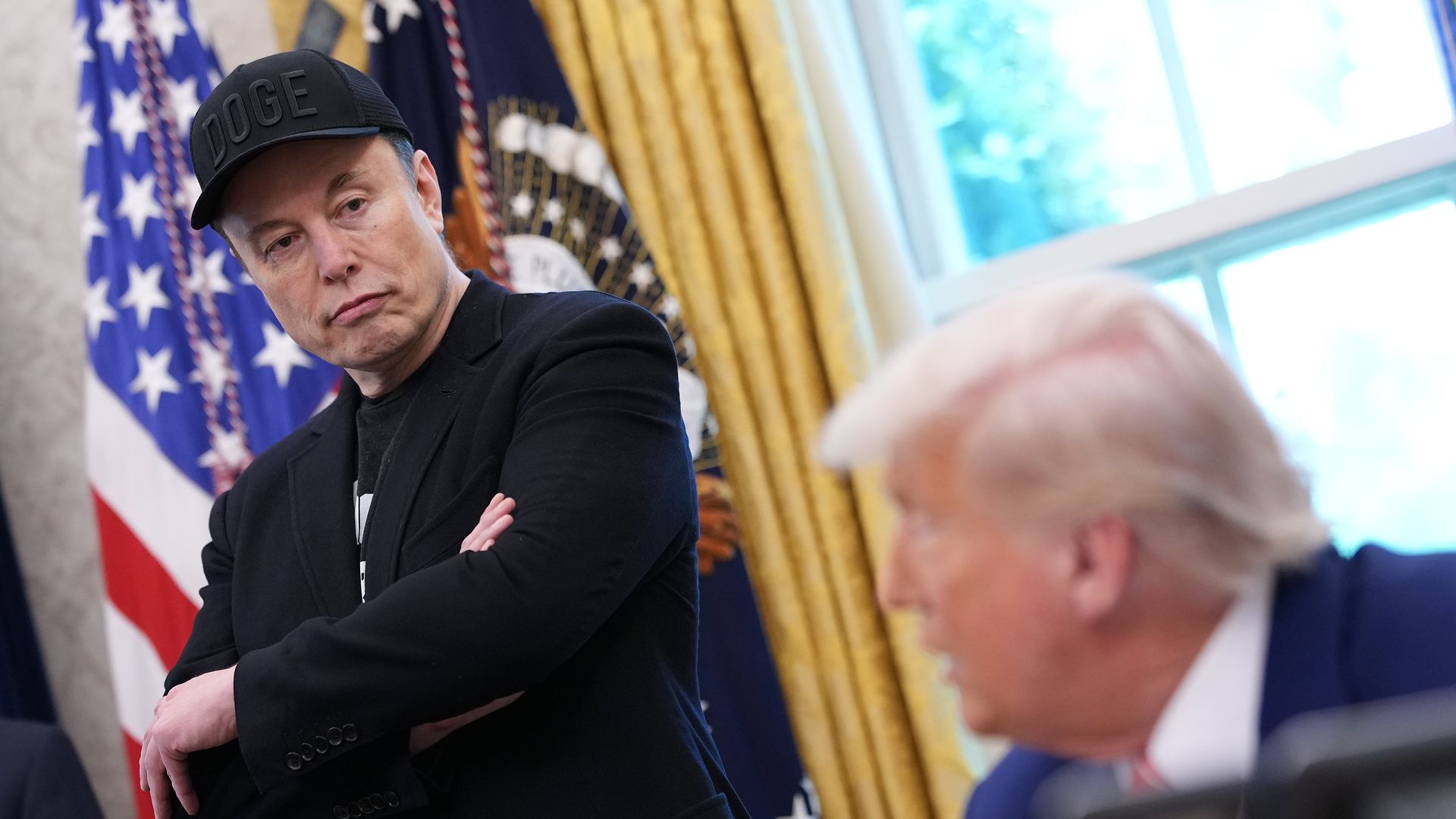
Elon Musk's early morning tweet Wednesday saying he regretted going "too far" in criticizing President Trump came after a phone call with Trump late Monday, sources tell Axios.
Musk's effort to make amends began Friday, when he spoke by phone with White House Chief of Staff Susie Wiles and Vice President Vance, three people familiar with the discussions said.
Why it matters: The calls signaled an effort by Musk to cool tensions with Trump after a week in which they'd feuded on social media, particularly over Musk's objections to Trump's signature tax and budget bill in Congress.
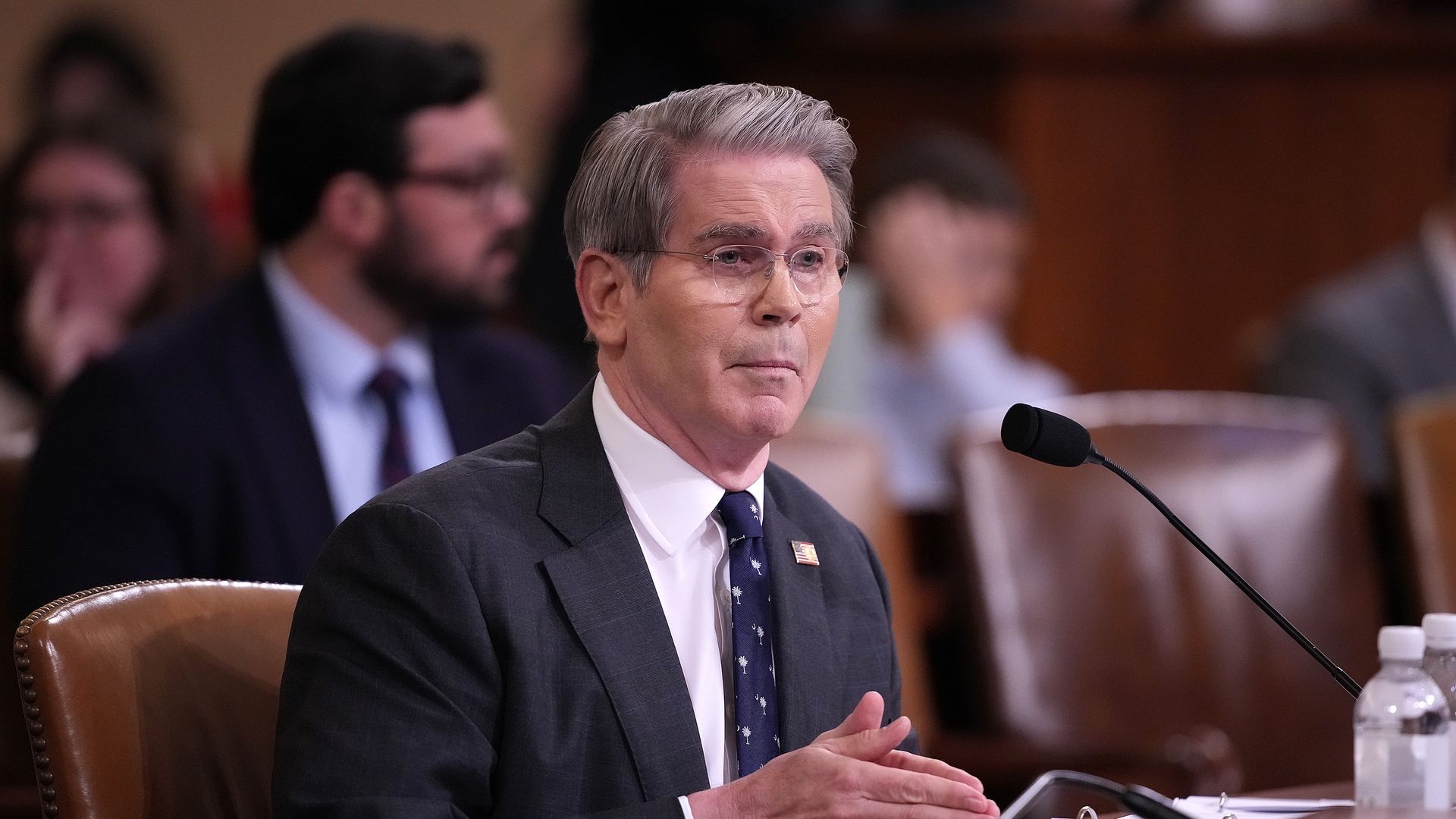
It is "highly likely" that tariffs will be delayed for countries involved in good-faith trade talks with the United States, Treasury Secretary Scott Bessent said on Wednesday.
Why it matters: Bessent's comments signal to the world — again — that U.S. tariff deadlines are fungible.
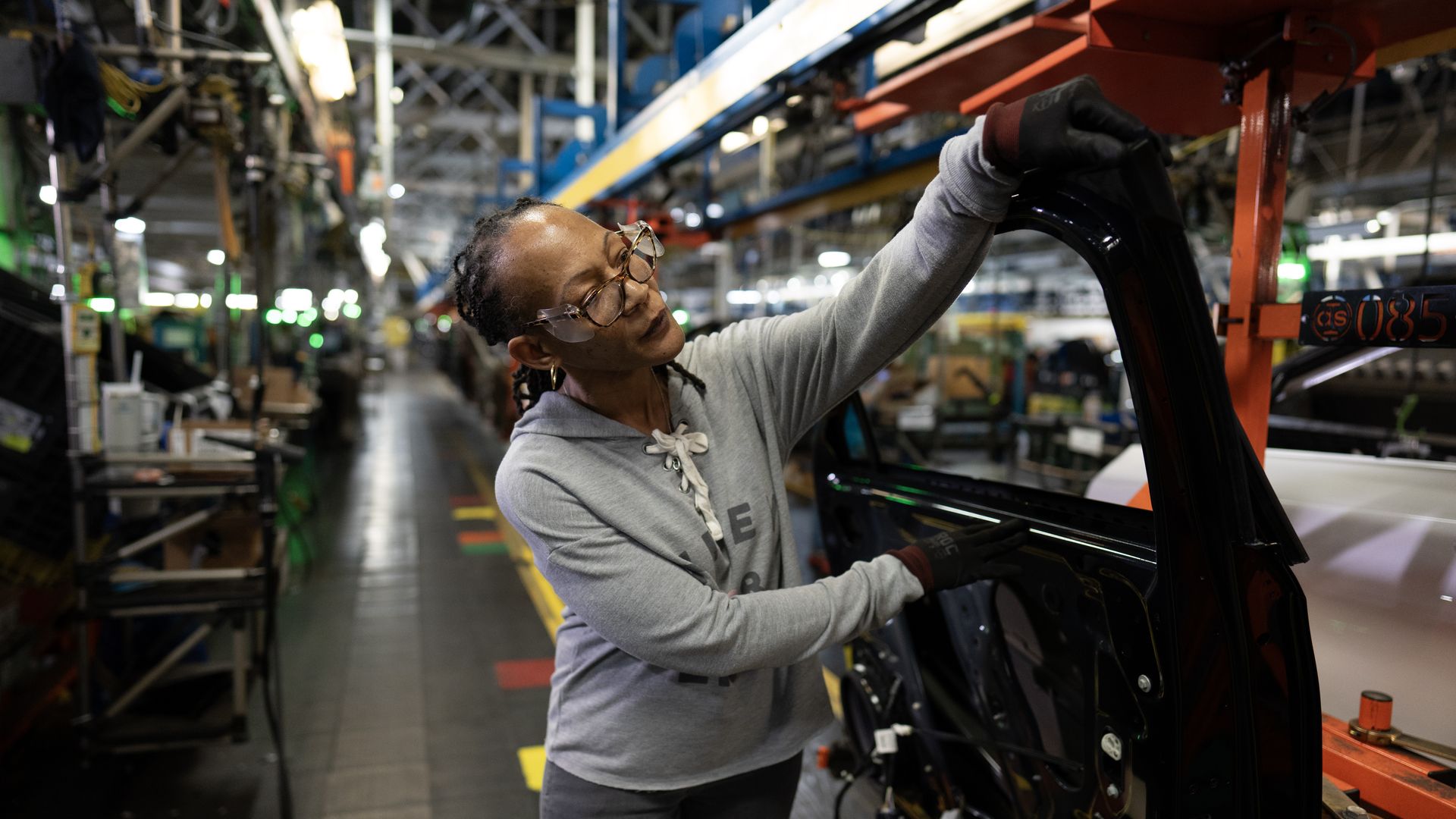
General Motors is investing $4 billion to produce more gasoline vehicles in the U.S. to cope with the twin challenges of high tariffs and low demand for electric vehicles.
Why it matters: The plan — which includes shifting some production from Mexico — will no doubt be viewed as a win for President Trump's tariff policies.
Regulations that have held back commercial drones in the U.S. are easing, which could soon unleash a swarm of low-altitude autonomous aircraft crisscrossing the sky.
Why it matters: Using a 4,000-pound vehicle to deliver a 2-pound burrito is incredibly inefficient. Shifting small package deliveries to the sky could help ease road congestion and cut tailpipe emissions.
Regulations that have held back commercial drones in the U.S. are easing, which could soon unleash a swarm of low-altitude autonomous aircraft crisscrossing the sky.
Why it matters: Using a 4,000-pound vehicle to deliver a 2-pound burrito is incredibly inefficient. Shifting small package deliveries to the sky could help ease road congestion and cut tailpipe emissions.
With fewer restrictions, drones could also be used more widely for things like infrastructure inspections, agriculture, public safety and filmmaking.
The big picture: The U.S. isn't the aviation leader it used to be, in part because of stifling regulations, at least according to the White House.
While the U.S. tries to ease an immediate shortage of rare earth magnets from China, the Trump administration is scrambling to line up viable alternatives that would reduce America's reliance on its chief economic rival.
Why it matters: Small-but-powerful rare earth magnets are essential to high-tech products, from cars and robots to electronics and weapons. But China controls 90% of the world's supply of the critical components.
The contentious trade relationship between the U.S. and China has amplified the economic and security risks of that reliance.
Global automakers are "in full panic" that China's limits on rare earth exports will trigger supply chain shocks like the pandemic-related semiconductor shortages that occurred in 2021 and 2022.
Tesla faces fresh risks to a big income stream: sales of regulatory credits to other automakers under vehicle emissions and efficiency rules, Axios Generate author Ben Geman writes.
Why it matters: Regulatory credits represent big money for the electric car maker, which earns them for exceeding government emissions standards and then sells them to rivals whose gas-powered models fall short.
Since 2012, Tesla has made $15 billion from credit sales — $595 million in the last quarter alone.
The latest: Republicans on the Senate's commerce committee late last week proposed ending civil penalties under the Transportation Department's fuel economy rules.
🇺🇸 GM's response to tariffs on Mexico, as well as slow EV sales, is to boost U.S. production of high-profit gasoline-powered trucks and SUVs. (Axios)
🧯 Waymo cut off robotaxi service in parts of Los Angeles after five of its self-driving vehicles were torched during weekend protests. (The Washington Post)
🤑 Carmakers are using stealth price hikes to cope with Trump's tariffs. (Bloomberg)
🇬🇧 Uber and Wayve Technologies agreed to test self-driving vehicles in London. Wayve is on a mission to prove its AI technology can operate anywhere, sight unseen. (TechCrunch)
I spent a week recently with Lexus' flagship luxury SUV, which is available for the first time with a hybrid powertrain and a new Overtrail package for "refined" outdoor adventures.
Why it matters: If you're glamping, you might as well travel in style.
Alas, I merely drove in and around Detroit, where the pocked pavement can sometimes make it seem like you're off-roading.
The specs: The LX700h combines a 3.4-liter, twin-turbo V-6 engine with an electric motor, but gets a mediocre 20 mpg for a hybrid.
You can run just on the electric motor for better throttle control while crawling on challenging paths, but as with most Lexus vehicles, the hybrid is really about extra performance for daily driving.
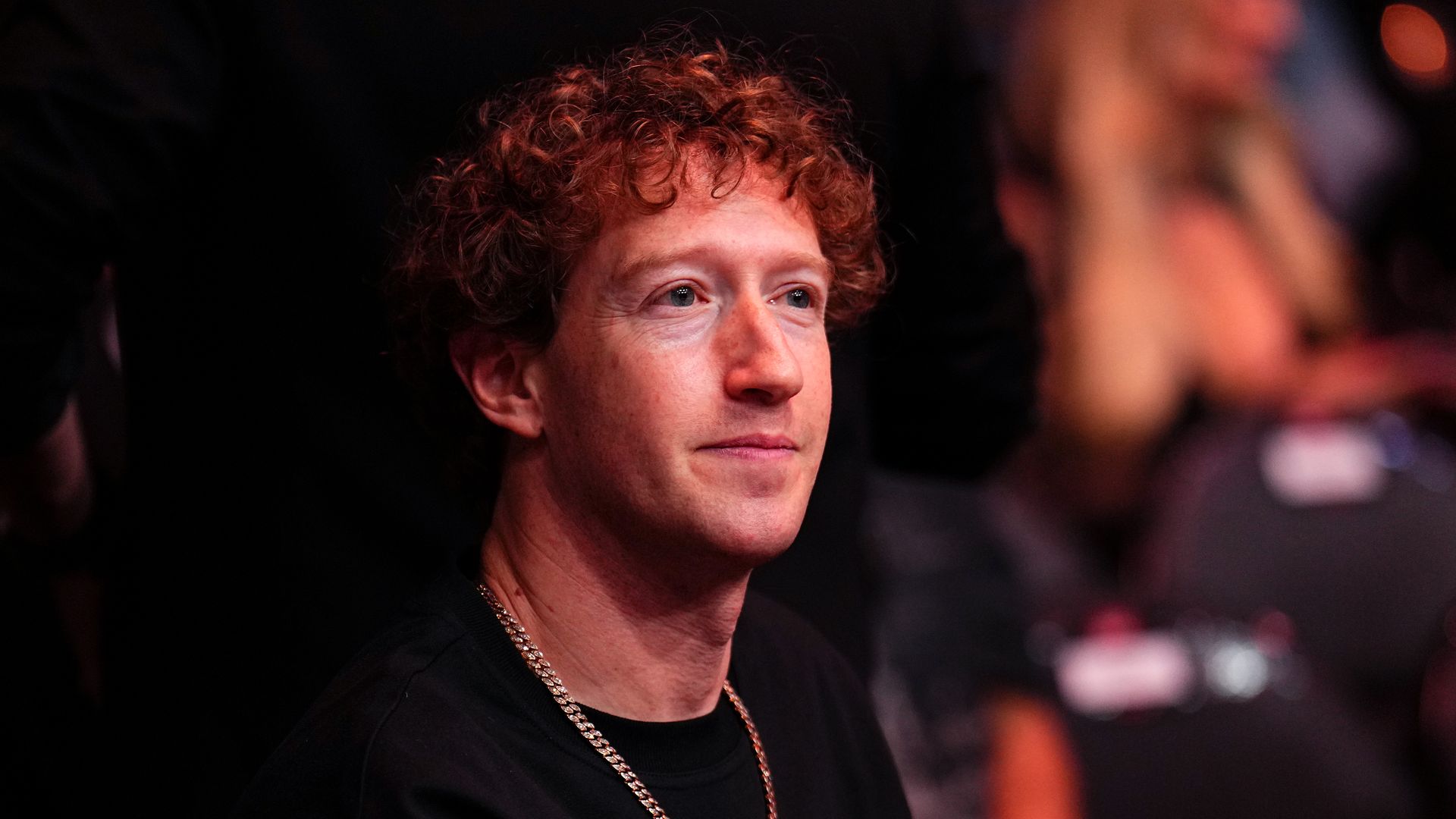
Meta reportedly is planning to invest around $14.8 billion for a 49% stake in Scale AI, with the startup's CEO to join a new AI lab that Mark Zuckerberg is personally staffing.
When the news broke yesterday, albeit still unconfirmed by either side, lots of commenters suggested that the unusual structure was to help Meta sidestep antitrust scrutiny.
Disney and NBCUniversal have teamed up to sue Midjourney, a generative AI company, accusing it of copyright infringement, according to a copy of the complaint obtained by Axios.
Why it matters: It's the first legal action that major Hollywood studios have taken against a generative AI company.
A monthslong streak of cooler inflation trends continued in May, the Bureau of Labor Statistics said on Wednesday.
Why it matters: Many economists project that President Trump's tariffs will reignite inflation this year, but so far effects from the trade war are not apparent in official economic data.
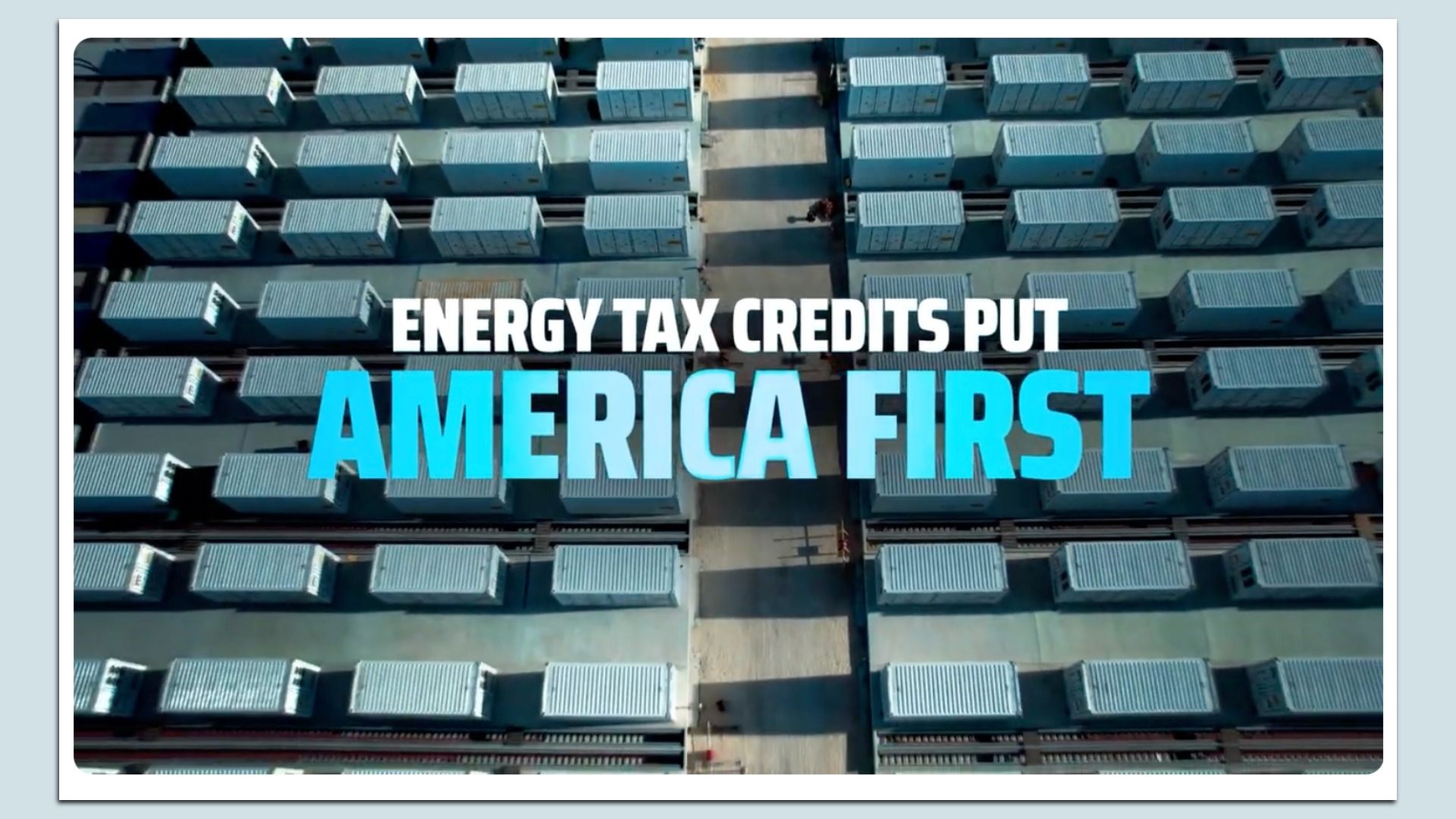
A new business-backed group with GOP ties just launched a $2 million, three-week ad blitz to preserve IRA tax credits — and the framing is very Trump-y.
Why it matters: It comes during crunch time for hundreds of billions of dollars of tax incentives on the chopping block in the budget reconciliation fight.
Data: U.S. Energy Information Administration; Chart: Axios Visuals
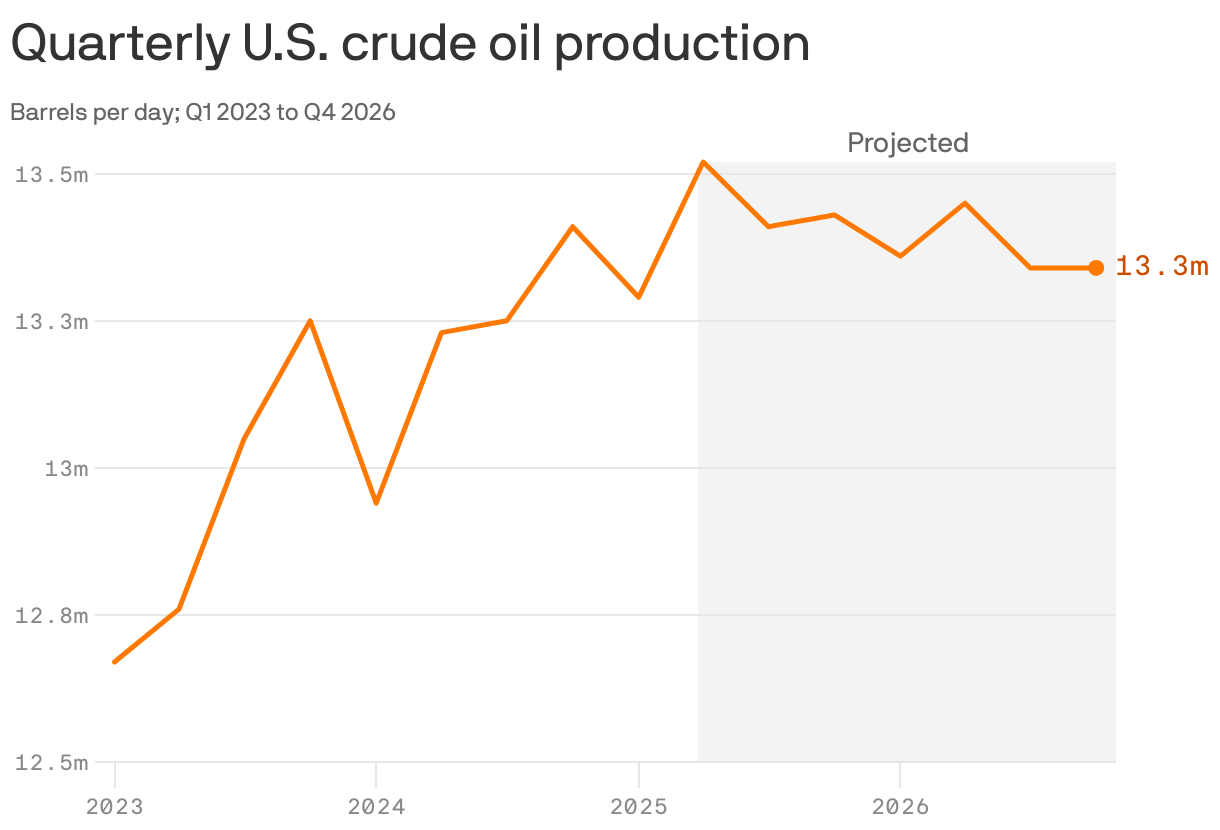
Fresh projections add weight to a problem for President Trump's "drill baby drill" push — many companies won't follow along in this price and tariff landscape.
The big picture: A revised outlook from DOE's independent stats arm shows U.S. crude output sliding in the second half of 2025, and a small year-over-year drop in 2026.
President Trump on Wednesday said the newest trade deal with China would provide the U.S. the full necessary supplies of rare earth materials, and also permit visas for Chinese students.
Why it matters: The rare earths, crucial for hundreds of technology products, had become the sticking point that derailed the tariff truce the two countries struck in May.
Ad giant Taboola is rolling out its own generative AI search engine called DeeperDive for its publishing partners to use on their websites, its CEO and founder Adam Singolda told Axios. Its debut publishing partners are Gannett/USA Today and The Independent.
Why it matters: With over 9,000 publishing partners, Taboola is one of the largest native advertising platforms serving the open web.
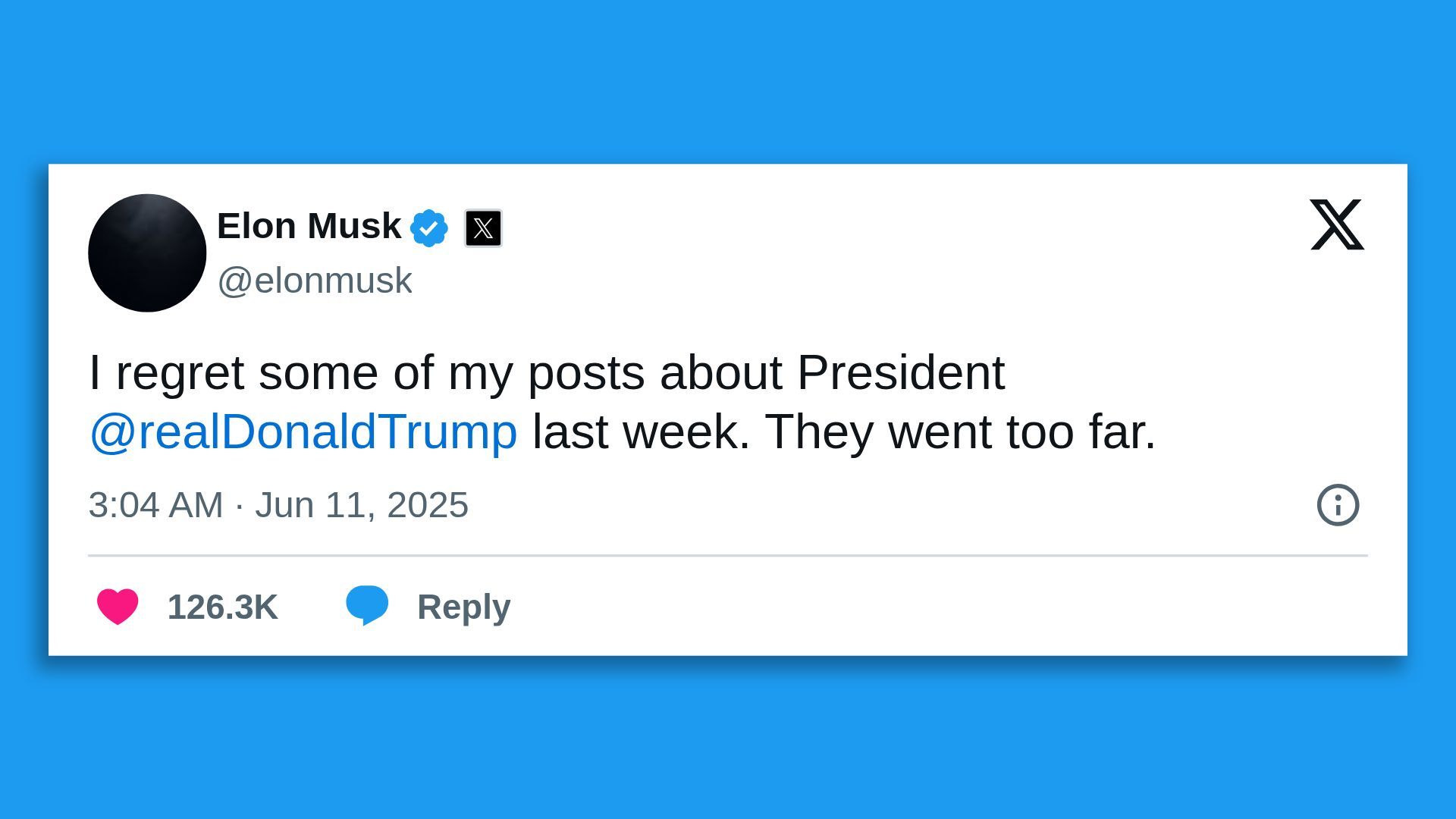
Elon Musk appeared to wave the white flag Wednesday in his extraordinary feud with President Trump, tweeting that he regrets some of his posts last week about the man he spent nearly $300 million to elect.
"They went too far," Musk acknowledged at 3:04 am ET.
Why it matters: The world's richest man and former special government employee went nuclear on Trump after a dispute over the "One, Big, Beautiful Bill," which Musk fears will add trillions to the deficit.
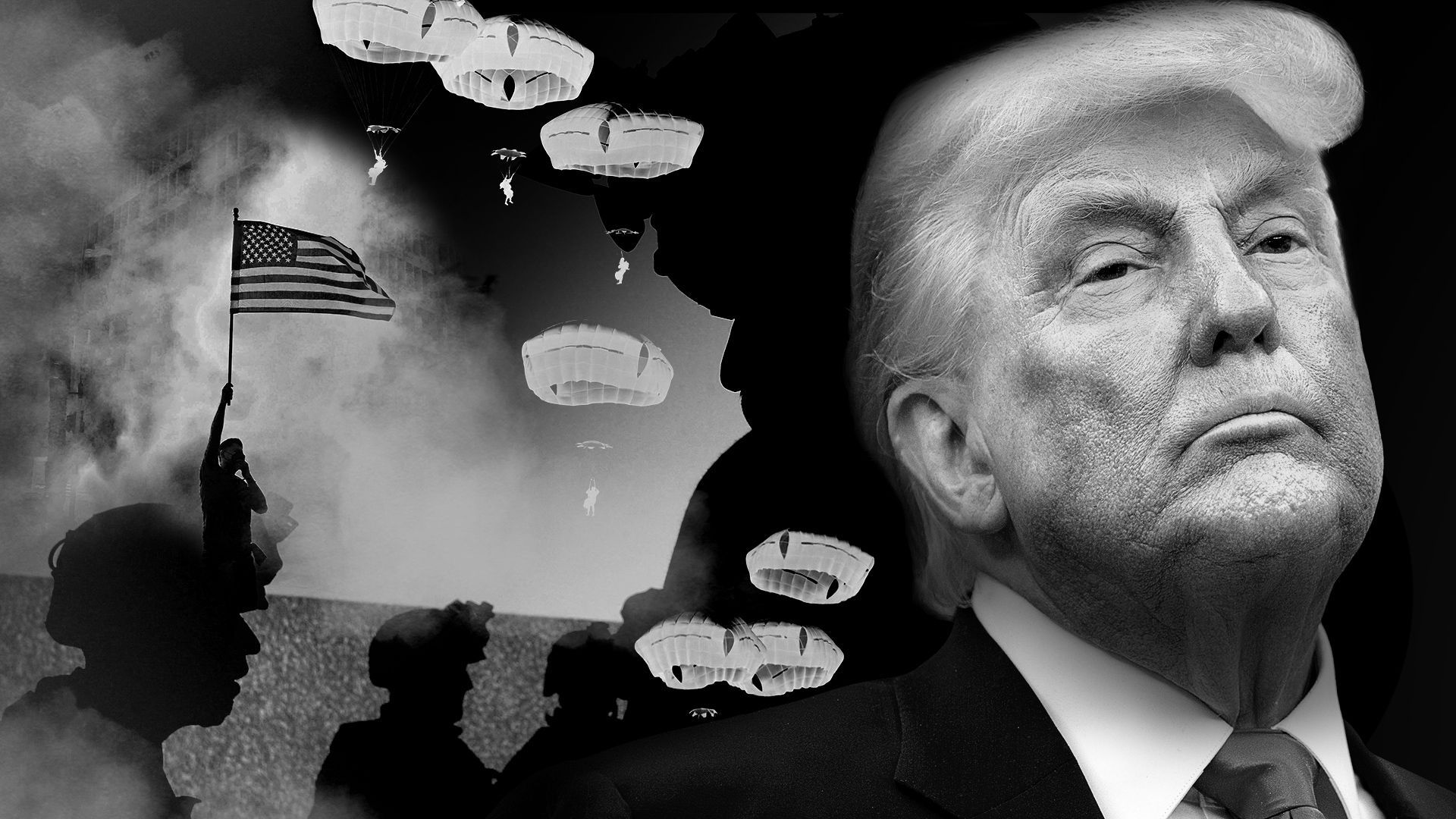
Troops deployed to Los Angeles. Paratroopers dropping from the sky before a partisan speech to troops at Fort Bragg. A military parade in D.C. that will coincide with the president's birthday.
Call it President Trump's Strongman Week. Trump is making a point of showing executive force at a level he only dreamed about during his first term.
Why it matters: Trump's swift militarized response Saturday to the Los Angeles protests marks a defining moment in his presidency, as he uses his military authority to juice his immigration crackdown and hammer Democrats — all with a mix of pomp and threats.
While U.S. trade negotiators work to ease an immediate shortage of rare earth magnets from China, the Trump administration is scrambling to line up viable alternatives that would reduce America's reliance on its chief economic rival.
Why it matters: Small-but-powerful rare earth magnets are essential to high-tech products, from cars and robots to electronics and weapons. But China controls 90% of the world's supply of the critical components.
A federal appellate court issued a stay Tuesday night freezing a lower court's ruling that had invalidated most of President Trump's tariffs.
Why it matters: The ruling preserves, for now, Trump's sweeping efforts to reorder international trade, but will also prolong the uncertainty over their impact.
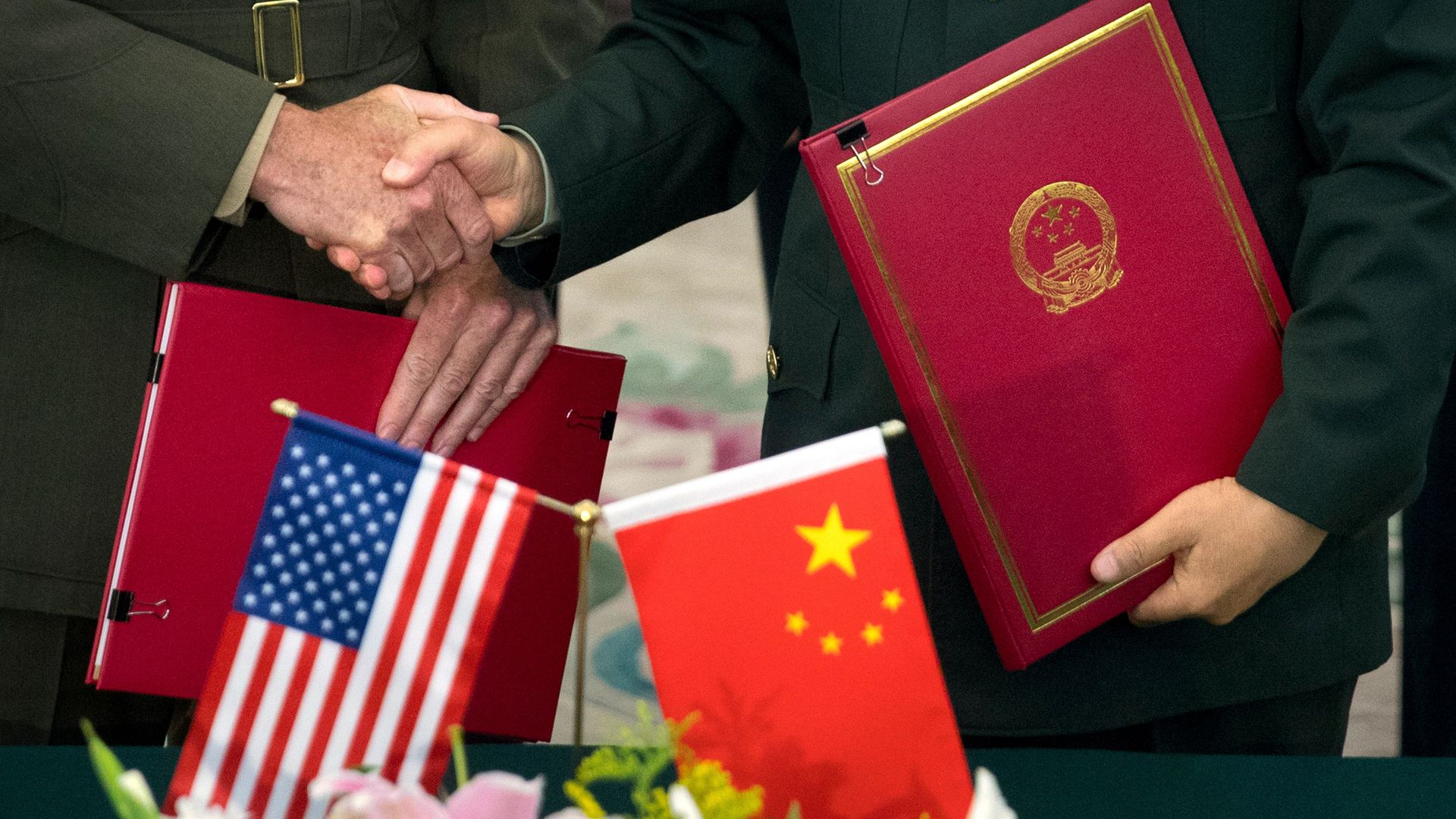
After two days of talks in London, the U.S. and China agreed late Tuesday on a "framework" to implement a trade deal struck last month, pending approval from both countries' leaders, Commerce Secretary Howard Lutnick said.
Why it matters: Progress on trade peace with China, particularly if it resolves the issue of crucial Chinese rare earth minerals exports, would be a boon to an economy and markets that have struggled for months with the impact of President Trump's tariff program.