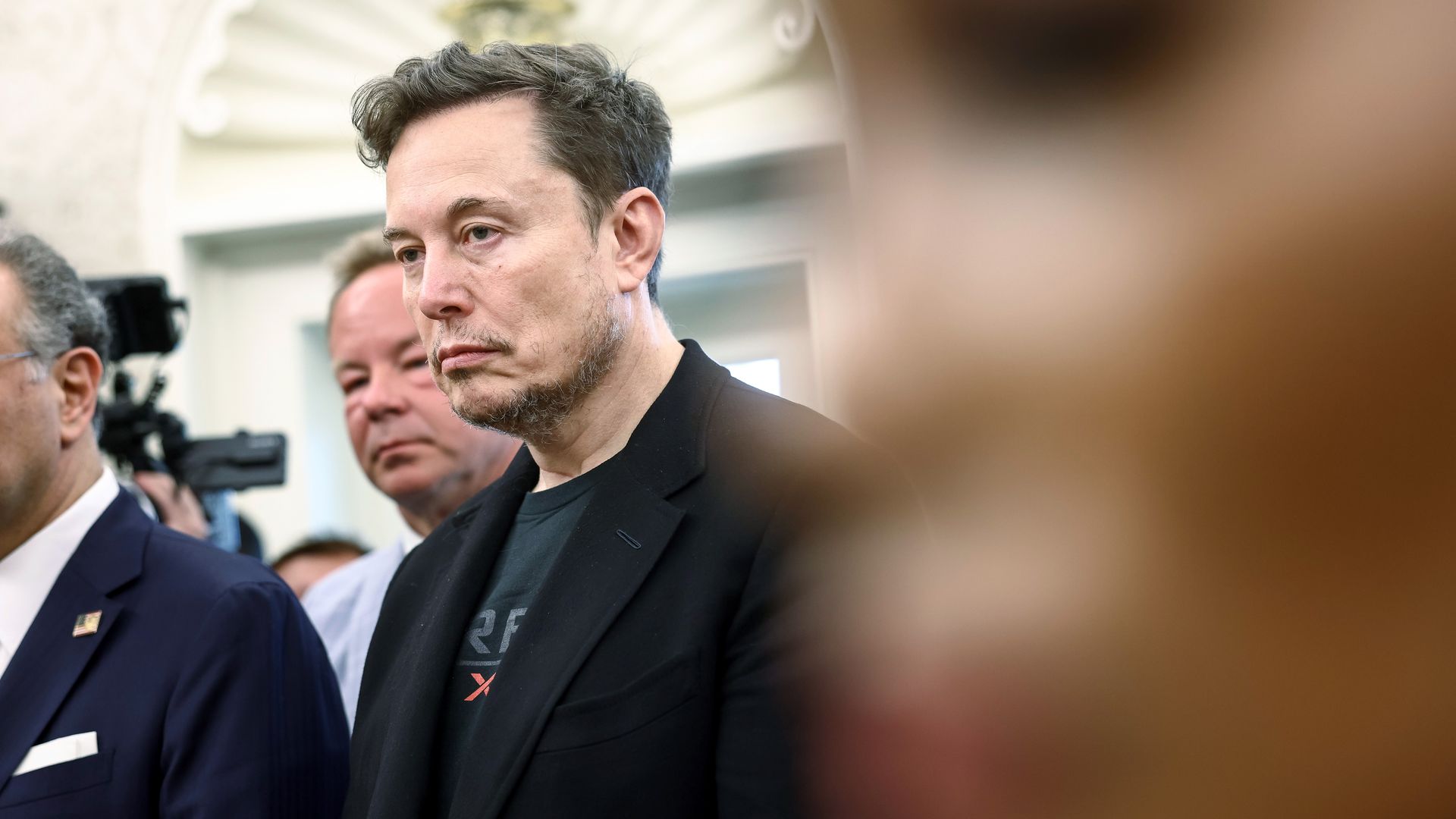
The Department of Defense has officially ended Elon Musk's "what did you do last week" emails, a Pentagon spokesperson said in a statement on Wednesday.
Why it matters: In the wake of Musk's short but consequential time leading DOGE, the move suggests elements of the government are starting to move on from some of his more controversial policies.
Why it matters: Depending on who you ask, it's either another symptom of America's loneliness epidemic or it's healthy YOLO move for people who just need a break from the craziness of daily life.
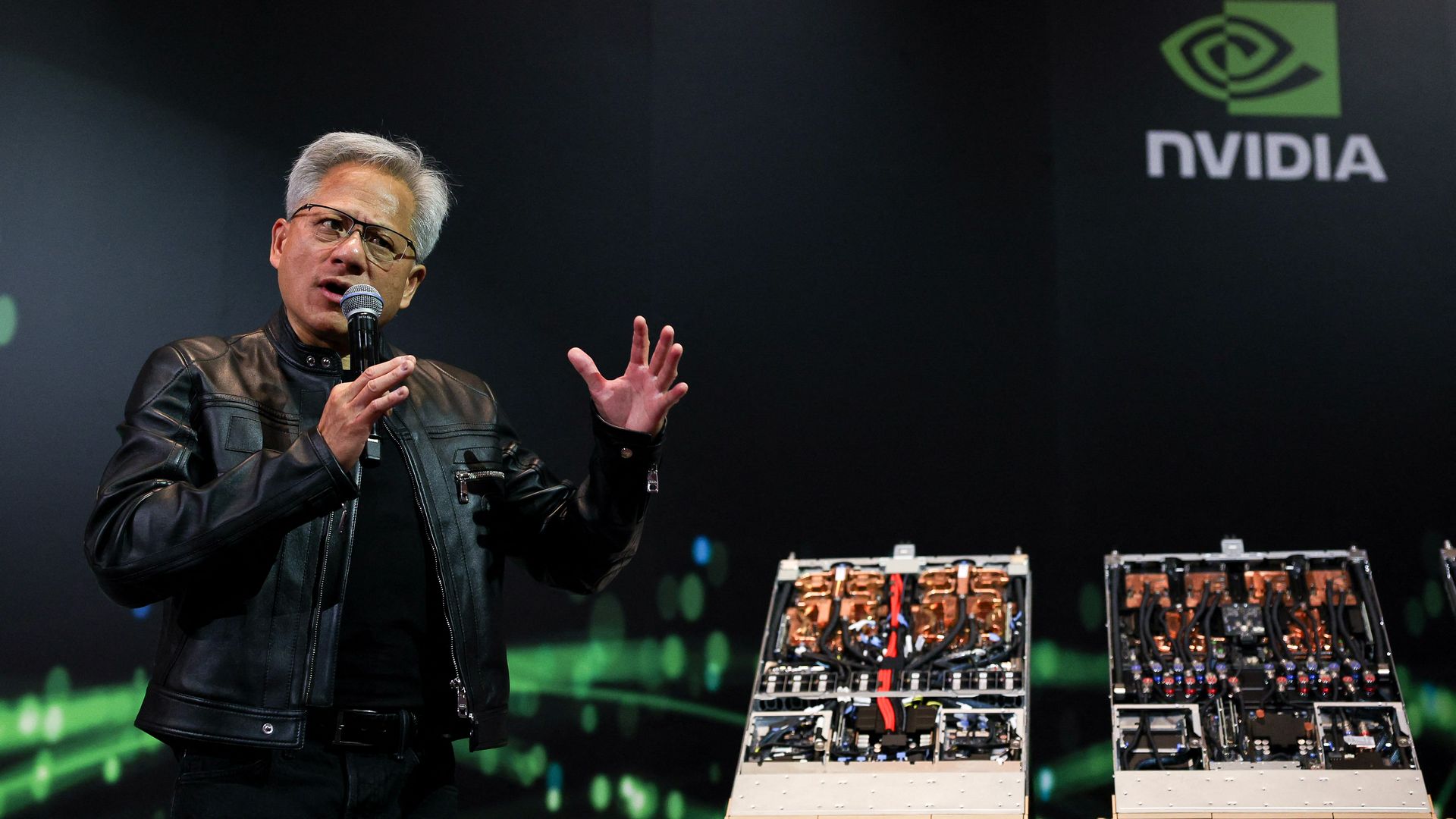
Nvidia topped earnings expectations in its most recent quarter as AI chip demand continues to fuel growth for the company despite concerns about mounting U.S.-to-China export restrictions.
Why it matters: Nvidia has become a bellwether stock for the AI economy as tech companies invest heavily in product development and data center capability, powering Nvidia's rise.
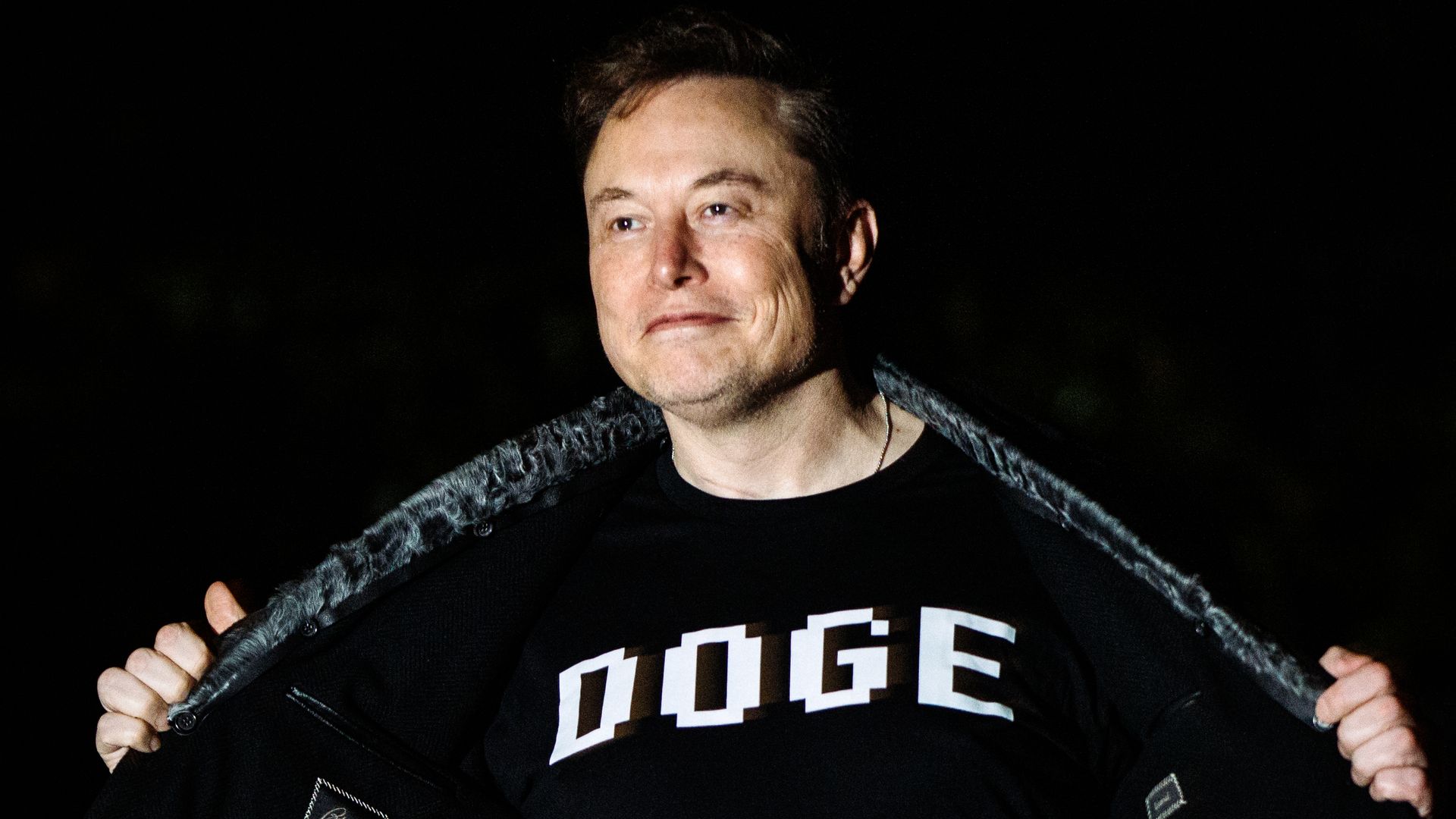
A federal judge allowed a lawsuit accusing Elon Musk and the Department of Government Efficiency of illegally exerting power over government operations to move forward Tuesday.
The big picture: The suit filed by more than a dozen Democratic state attorneys general alleges the billionaire and DOGE violated the Constitution by accessing government data systems, terminating federal employees and canceling contracts at federal agencies.
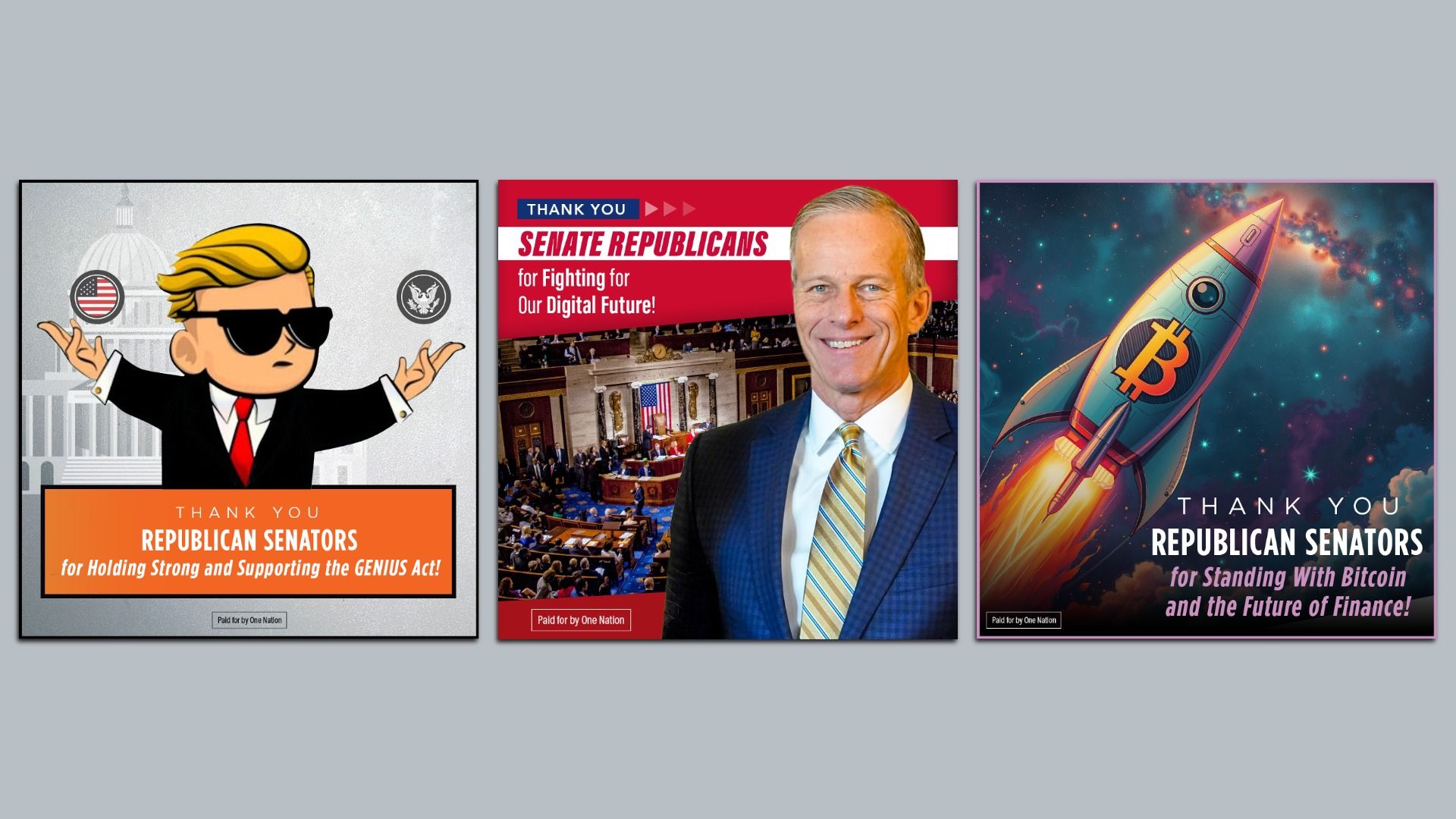
A group linked to the Senate GOP's super PAC is running a series of ads in Las Vegas during the Bitcoin 2025 conference, while major politicians descend on the city to address fans of the oldest cryptocurrency.
Why it matters: It reflects a belief by the GOP that cryptocurrency is an issue that they can use to create a wedge with the Democrats, who, on balance, have been more reluctant to support the digital asset industry.
While everyone else in the stablecoin industry has its eyes on big banks and hedge funds, the issuer of the world's largest stablecoin, tether, is watching a much older business: commodities.
Why it matters: Stablecoins are the biggest story in crypto policy right now — and may well be the biggest story in finance before long.
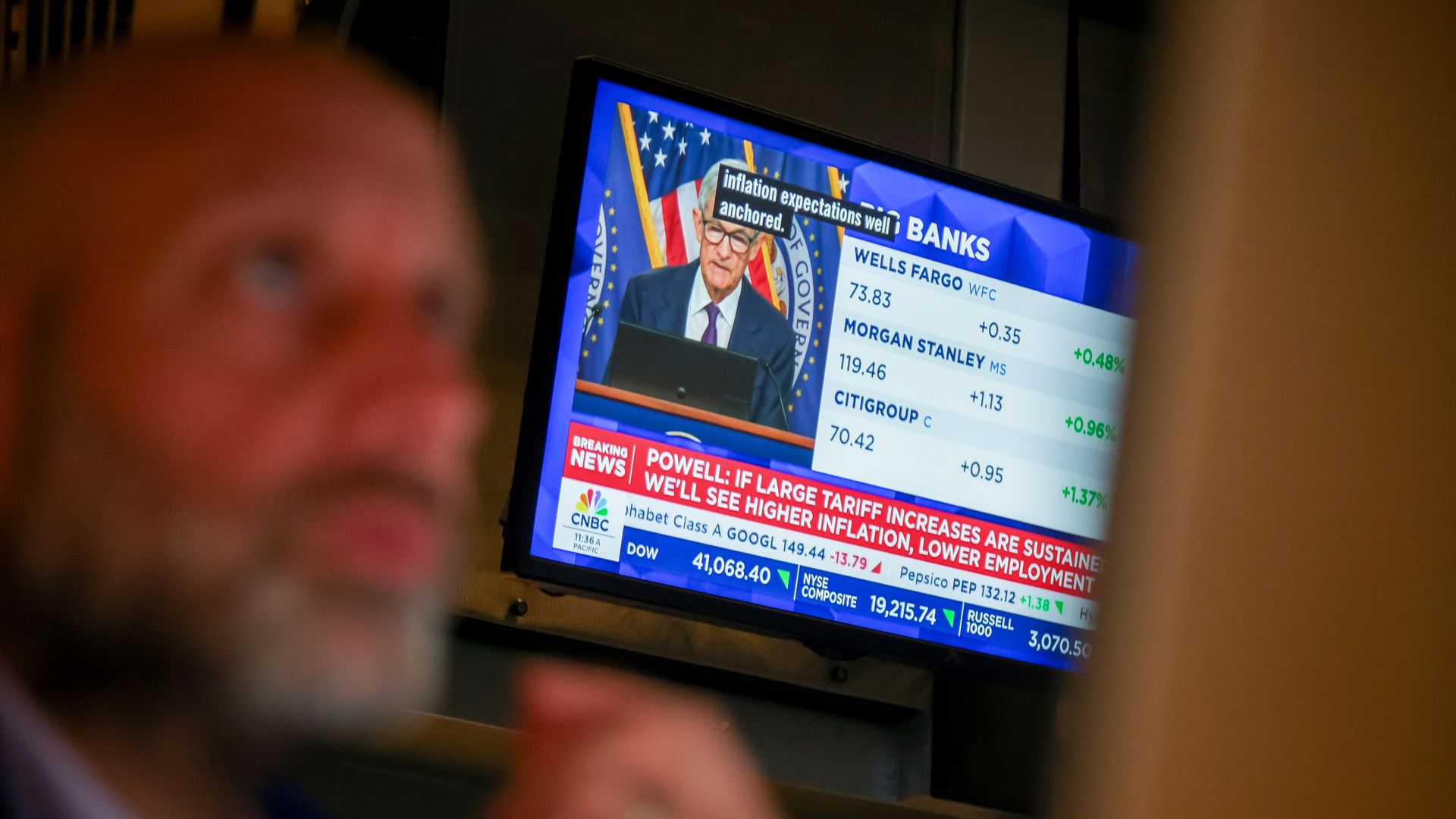
Some officials at the Federal Reserve warned about "vulnerabilities to the financial system" as President Trump's trade war caused sharp swings in stock and bond prices, minutes from the central bank's May 6-7 policy meeting show.
Why it matters: The central bank said the heightened volatility could cause market stress that would expose underlying concerns about the financial system, while noting that a so-called Sell America trade could take a toll on the economy.
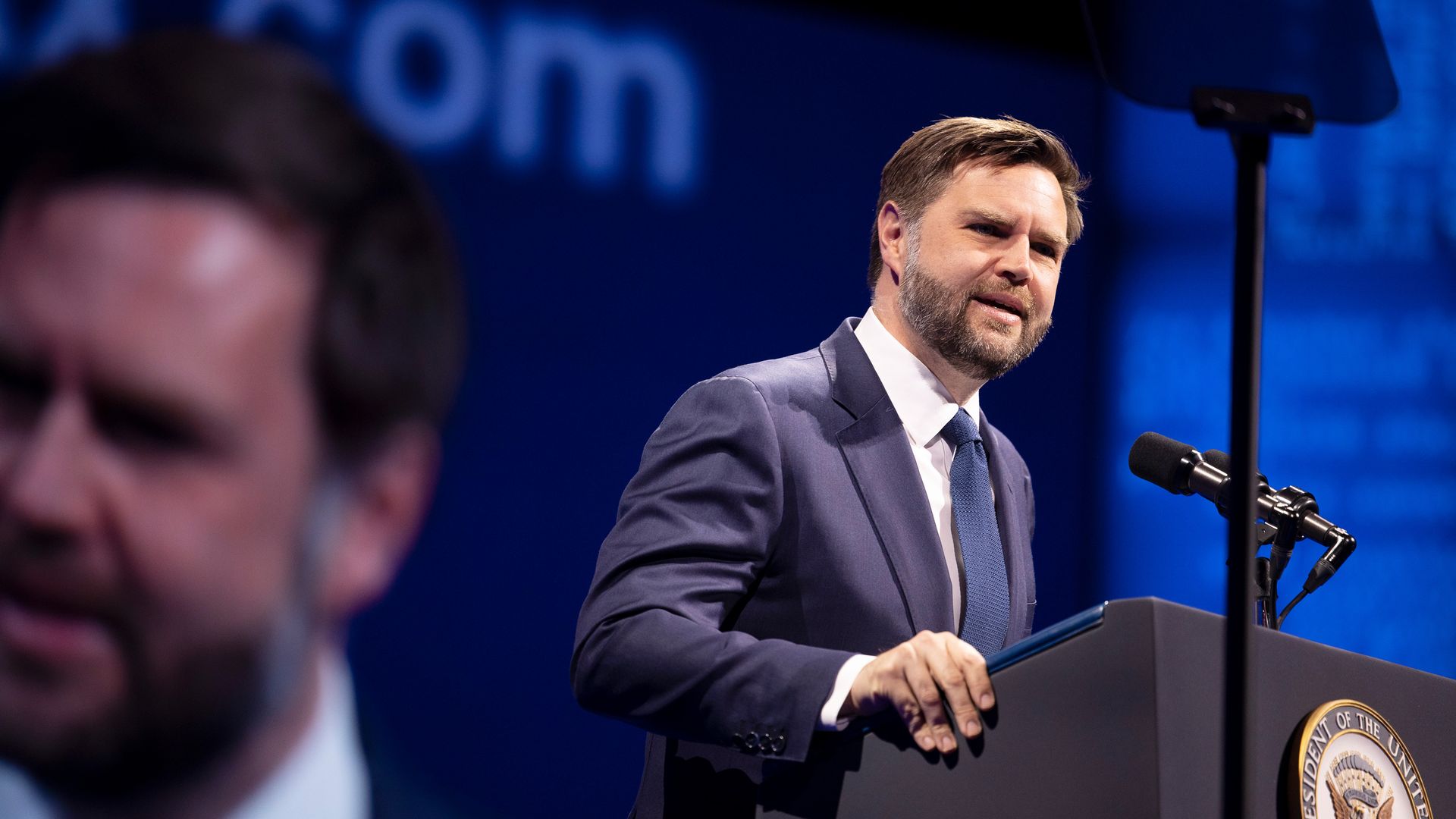
Vice President Vance addressed the Bitcoin 2025 conference in Las Vegas Wednesday, promising to eliminate aggressive regulation of the crypto industry and promote a pro-growth legal framework for stablecoins.
Why it matters: Last year then-candidate Donald Trump cemented the Bitcoin community's support for his re-election by becoming the first presidential candidate to appear at the world's largest Bitcoin-focused event.
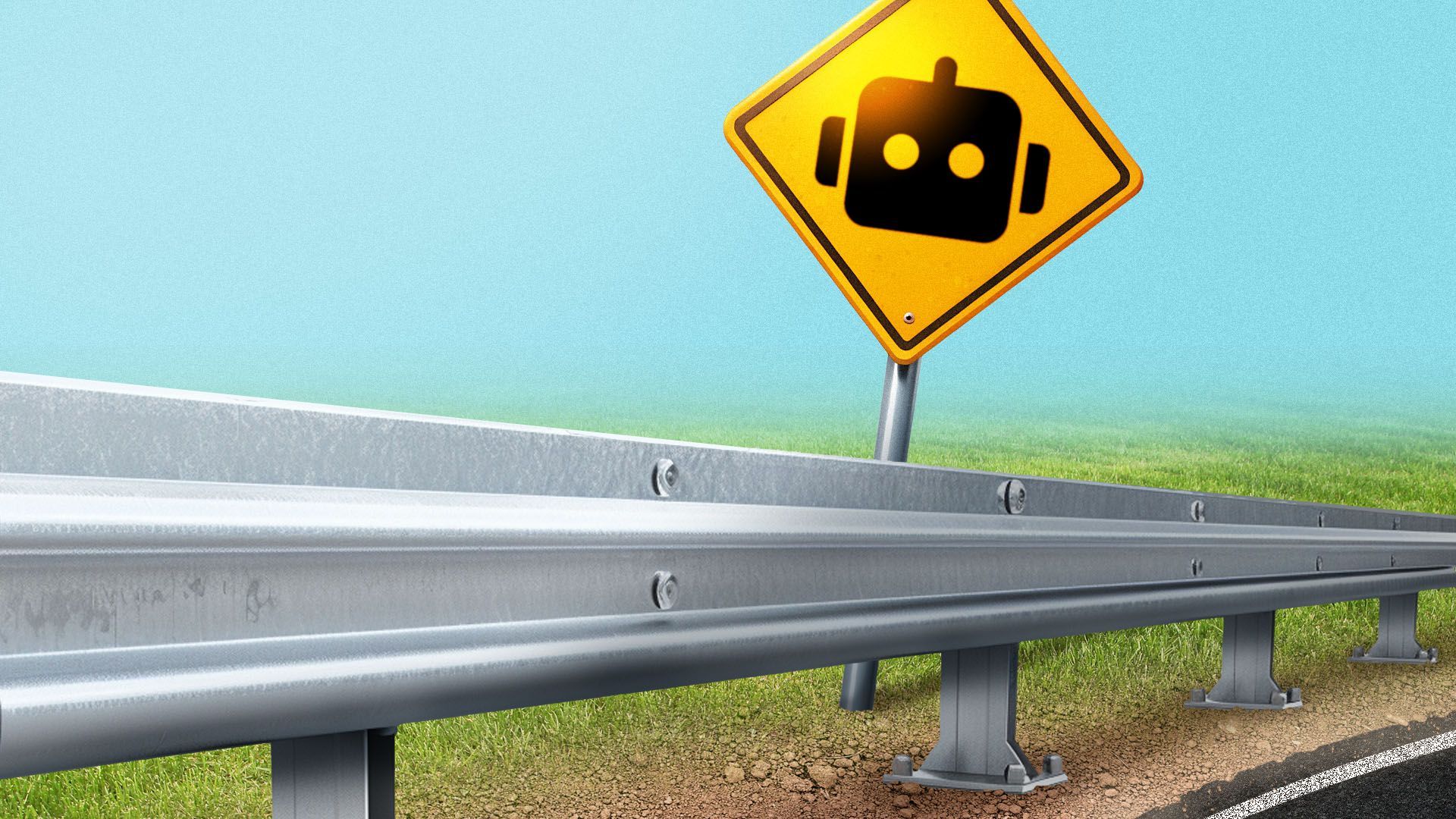
AI-driven creatures — whether they're autonomous vehicles, delivery bots or humanoid robots — aren't ready to be unleashed freely into the wild.
That's why robotaxis today only operate in certain neighborhoods and humanoids are being tested inside factory cages where they can't hurt anyone.
Why it matters: Unlike chatbots, which can learn to talk simply by scraping information from the internet, AI robots are expected to move fluidly through unstructured environments, communicate with people, manipulate things and make reasoned decisions.
Swiss robotics company Rivr is partnering with Veho, a gig-based delivery company, to test its wheel-legged robot in Austin, Texas.
Why it matters: By starting with last-mile package delivery, Rivr says it's "laying the groundwork for a powerful data flywheel" that will accelerate robotic intelligence for other use cases.
Between the lines: General robots face a tougher challenge than self-driving cars, Marko Bjelonic, Rivr's co-founder and CEO, tells Axios.
Human-driven vehicles at least have cameras that collect data that can be used to train virtual drivers, he said.
"In the robotics world, it's a chicken and egg problem. We don't have data readily available and we don't have robots out doing meaningful work in the real world to collect data," he told Axios.
Zoom in: In Austin, Rivr's robot will begin gathering critical data by learning how to navigate stairs, porches, and uneven terrain, not just sidewalks.
Working alongside a human driver, the robot will handle real Veho e-commerce deliveries from retailers such as Macy's and Lululemon.
While the driver completes one drop-off, the robot will deliver another, navigating from the delivery vehicle all the way to the customer's doorstep, placing parcels according to the customer's instructions, and using the Veho app to send a photo of each successful delivery.
The robots won't replace human delivery drivers. Rather, they are intended to enable humans to deliver more parcels, faster, with less physical strain.
Where it stands: The pilot involves just one robot for now, but as more data is collected and the robot gets smarter, Rivr and Veho expect to have a fleet of 100 doing deliveries by next year.
"I can't just go in today and deploy a million robots and hope it works," says Bjelonic. "There's a natural scaling effect."
The bottom line: Bringing a package to someone's doorstep seems simple for a human. But navigating gravel driveways, climbing steps or opening gates is a monumental challenge for a robot.
A couple of developments this week in intelligent transportation provide a glimpse of America's future highways.
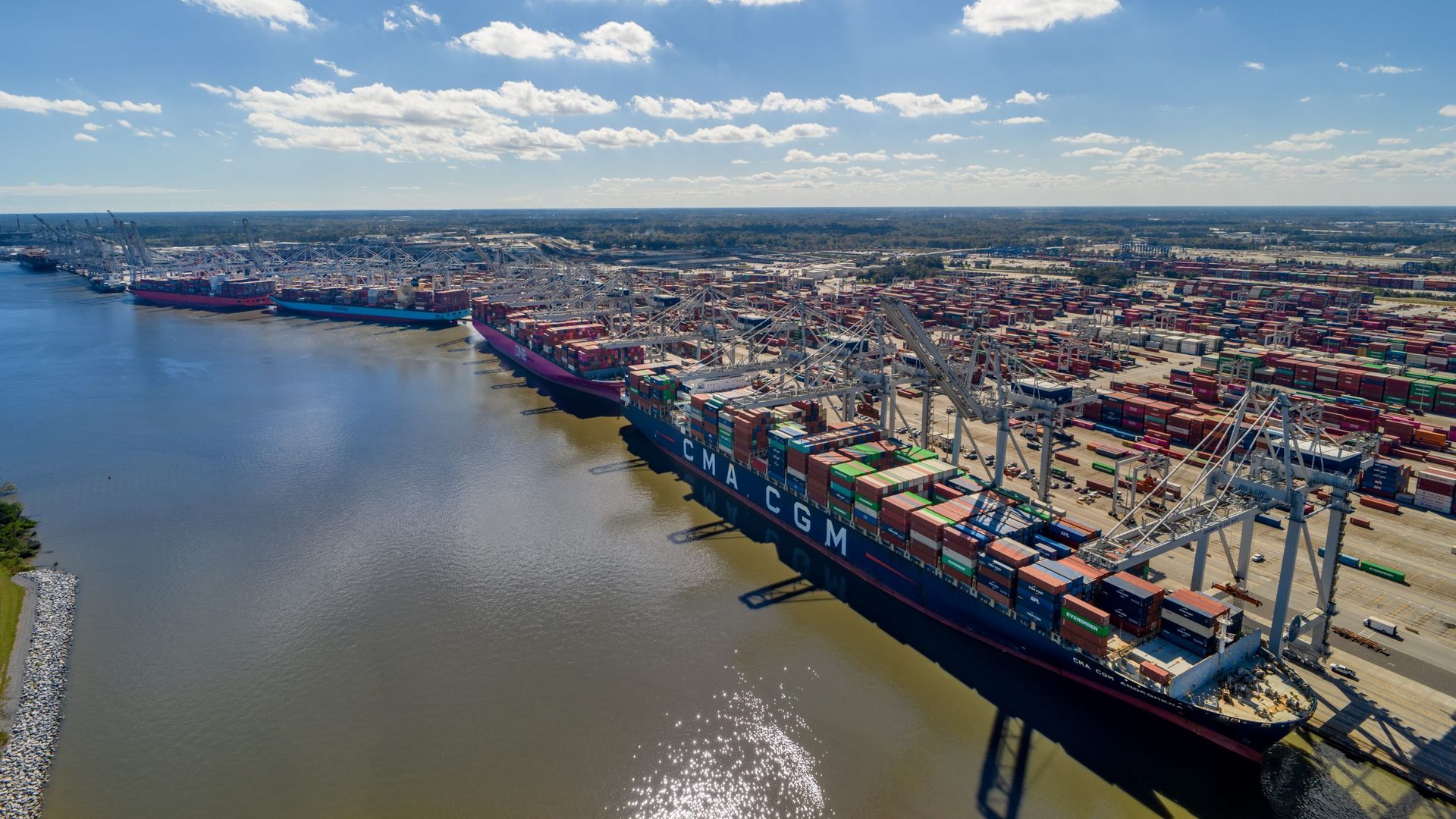
Cavnue is bringing its smart road technology to one of America's busiest freight corridors at the Port of Savannah.
Haas Alert, whose digital notifications let drivers know about road hazards like emergency vehicles or construction, has a new deal with AI-powered dashcam company Nexar to enhance its services.
Why it matters: Both technologies are designed to enable collaboration between vehicles and roads for safer, more efficient transportation.
Zoom in: Cavnue plans to transform State Route 307 — the critical artery feeding the nation's third-largest container port — into a smart freight corridor that could one day enable automated trucking.
Catching you up on worthy news you might have missed ...
⚡️ Electric cars struggled to gain market acceptance and were undermined by politics once before. A timely read as Republican leaders look to undo most of the Biden administration's policies favoring EVs. (The New York Times)
🇨🇳 Competition among Chinese EV manufacturers is beginning to look like a bloodbath after BYD slashed prices, triggering a new price war. (Reuters)
🚙 Stellantis named North American boss Antonio Filosa as its new chief executive, succeeding Carlos Tavares. (CNBC)
While some of you spent Memorial Day weekend watching cars race over 200 mph at the Indy 500 or the Monaco Grand Prix, I was cruising Michigan's Lake Saint Clair at a leisurely 5 knots and loving every minute of it.
Our 1984 sailboat — a 22-foot O'Day, or "Slow Day," as we like to joke — is my idea of a Sunday drive.
Outta the Blew is a modest vessel, but she's simple to rig and easy to sail.
And if the wind dies — nature's version of "range anxiety" — we've got a Honda outboard engine to get us back to the dock.
The bottom line: Sometimes, it's way more fun to drive with a tiller in your hand than a steering wheel.
New York City's pension systems yesterday announced a $5 billion sale of private equity stakes, with Blackstone as the lead buyer.
Why it matters: This appears to be the largest PE secondaries deal ever, in terms of dollar value, and highlights how large limited partners are seeking to streamline their manager rosters.
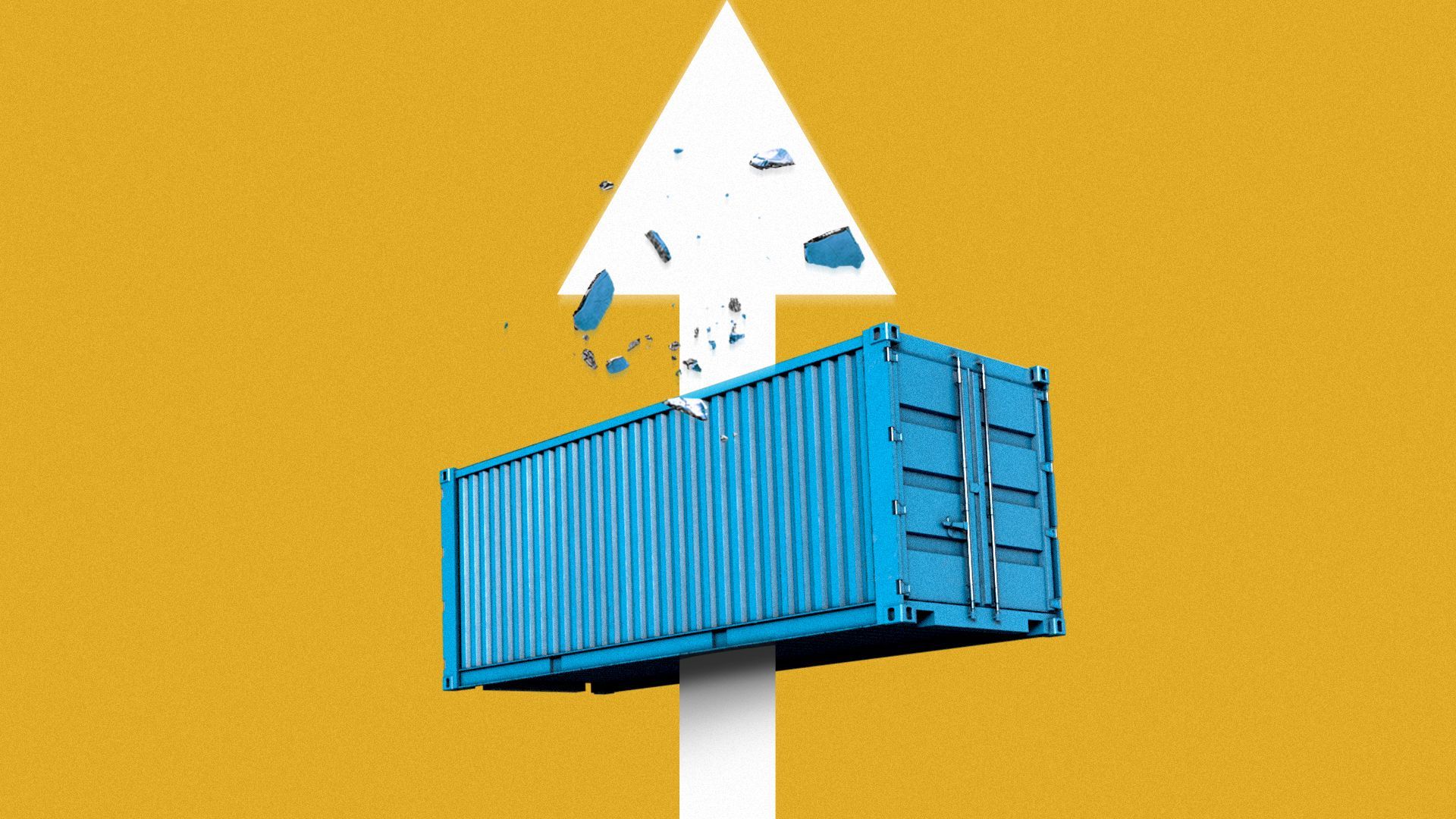
Cavnue, a developer of intelligent road technology, is launching a smart highway project along one of America's busiest freight corridors that connects to the Port of Savannah, Axios is first to report.
Why it matters: The project to transform State Route 307 — the critical artery feeding the nation's third-largest container port — into a smart freight corridor could help ease congestion and reduce accidents.
The difference between trade wars and trade peace (or something close) could sway global oil demand by millions of barrels per day this decade, the research firm Wood Mackenzie finds.
Why it matters: Its oil estimates are part of a wider report that shows how trade policy is a powerful variable that will shape the energy future.
More than 70% of U.S. small and mid-sized businesses say tariffs have already increased their operating costs — but almost all still expect to be able to grow internationally in the coming years, per a new HSBC survey shared exclusively with Axios.
Why it matters: In an increasingly volatile and uncertain environment, corporate leaders are staying optimistic, even while they concede that it's getting more expensive to do business.
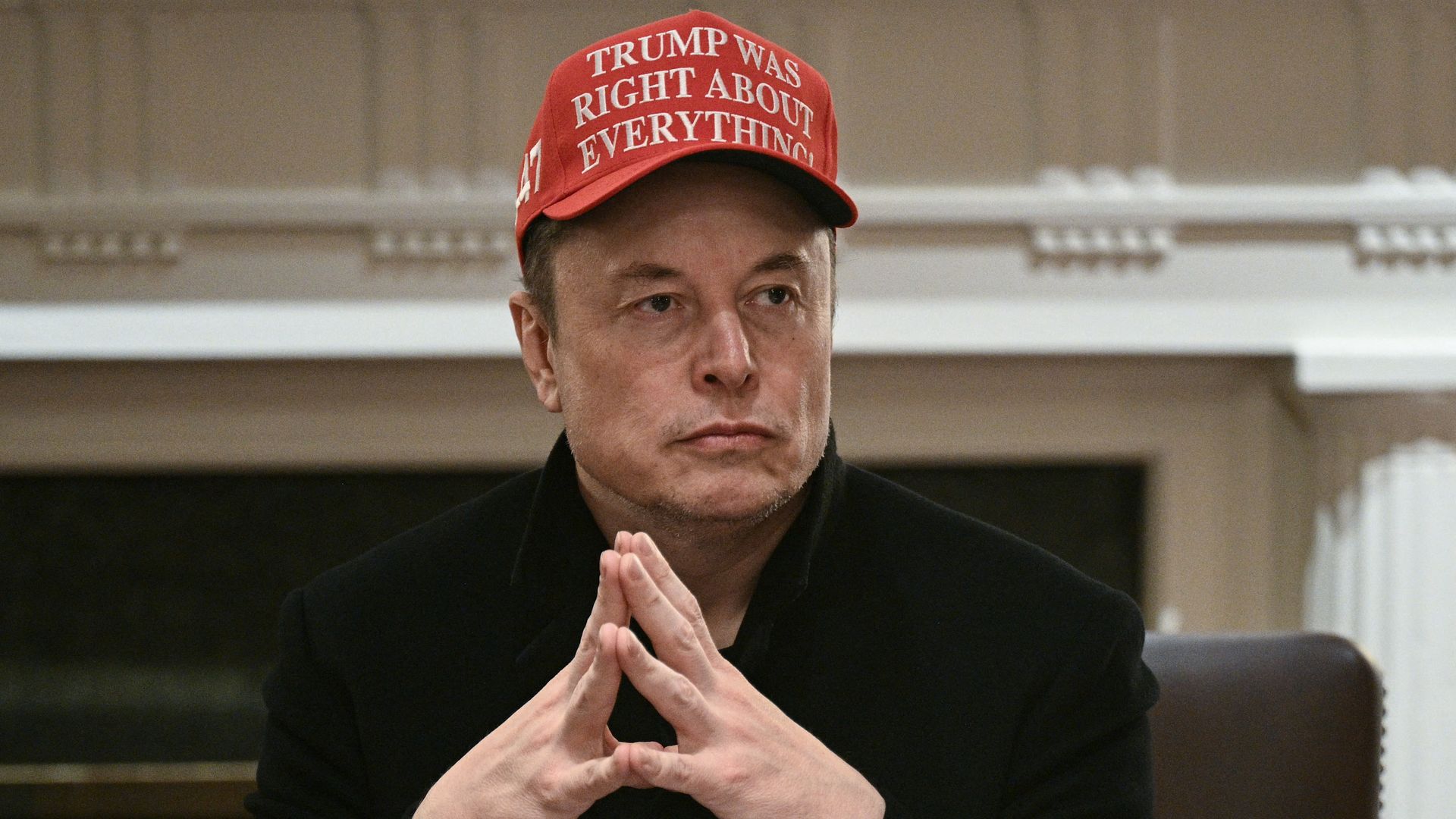
Elon Musk said President Trump's "big, beautiful bill" "undermines" DOGE's cost-cutting, per an excerpt of CBS News' interview with the businessman that was released Tuesday.
Why it matters: Musk has been a key Trump ally during the president's second term after donating millions of dollars to his 2024 election campaign, leading efforts to reduce government spending until the Tesla CEO stepped back from DOGE after the EV firm's sales took a hit from his close ties to the administration.
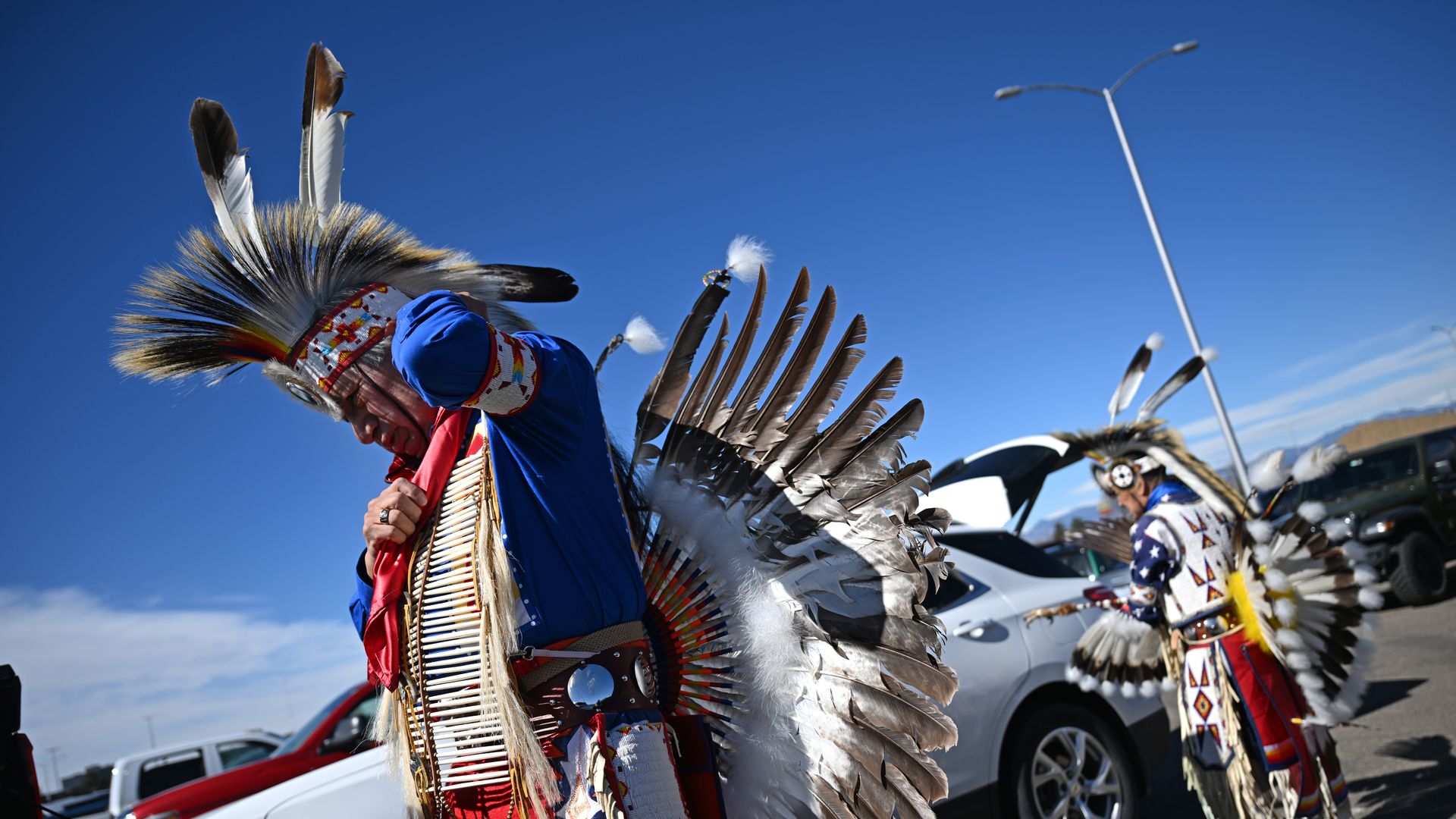
Some Native American programs are exempt from President Trump's executive order targeting diversity, equity, and inclusion (DEI) initiatives, according to at least three federal agencies.
Why it matters: The U.S. federal government has several treaties with more than 500 tribal nations, and many involve promises based on race, culture, and equity with Native Americans and Alaska Natives.
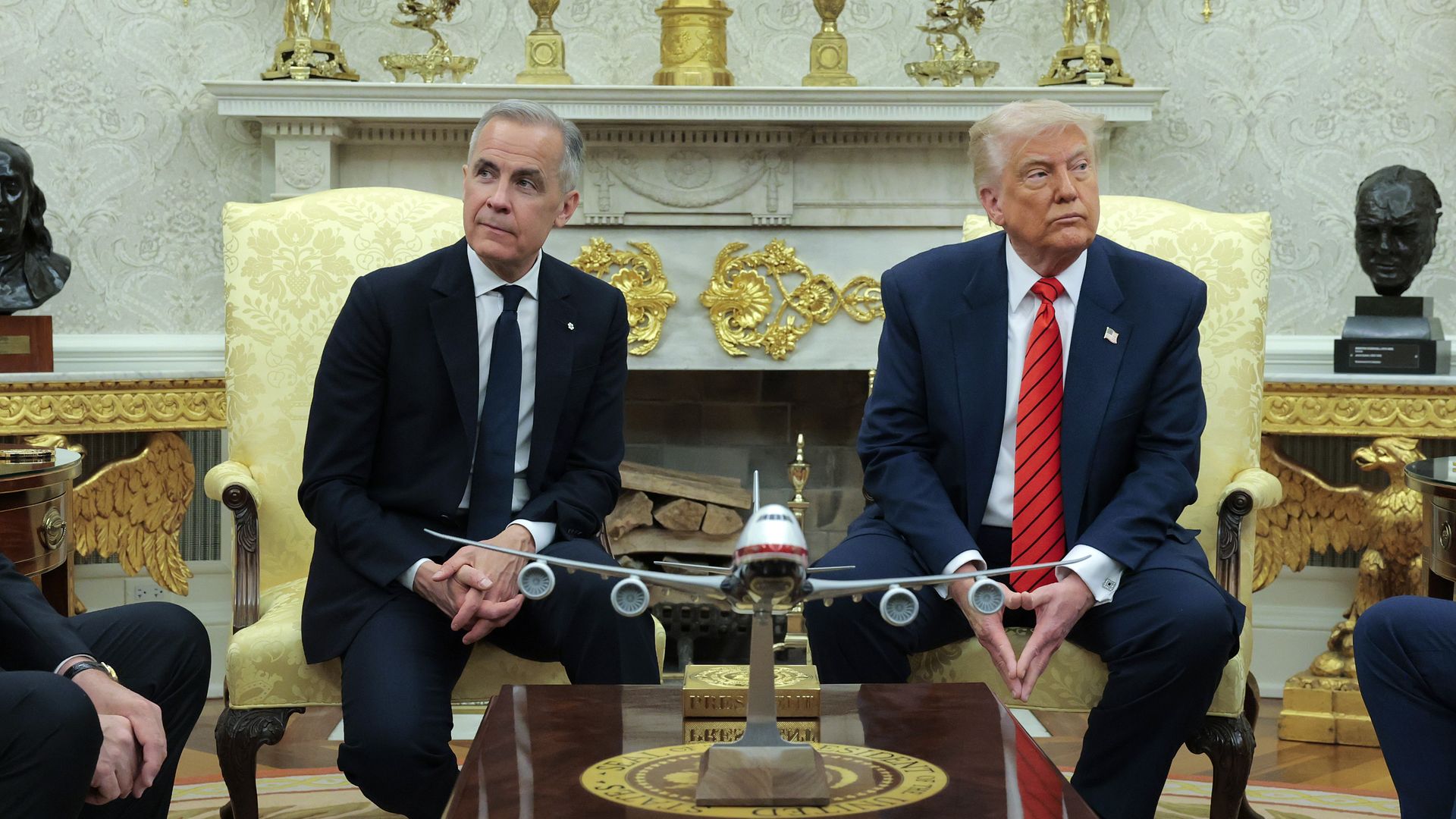
President Trump claimed Tuesday Canadian officials were considering his proposal for Canada to contribute $61 billion toward his proposed "Golden Dome" missile defense shield versus paying nothing if it became the 51st U.S. state.
The big picture: Trump, who has repeatedly threatened Canadian sovereignty, made the comments soon after Canadian Prime Minister Mark Carney outlined plans for closer defense ties with the European Union.











/2025/05/27/1748383106178.gif?w=3840)