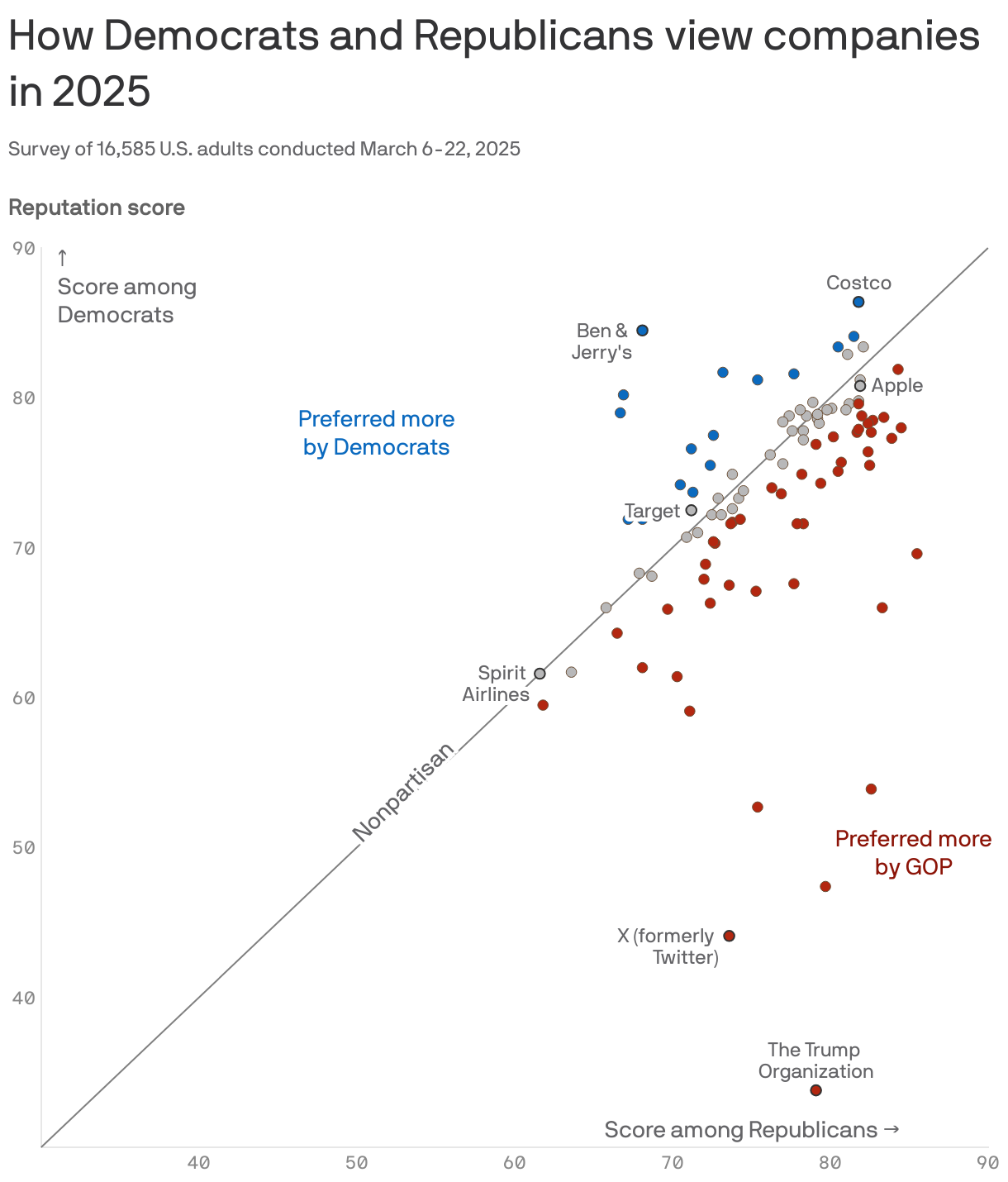
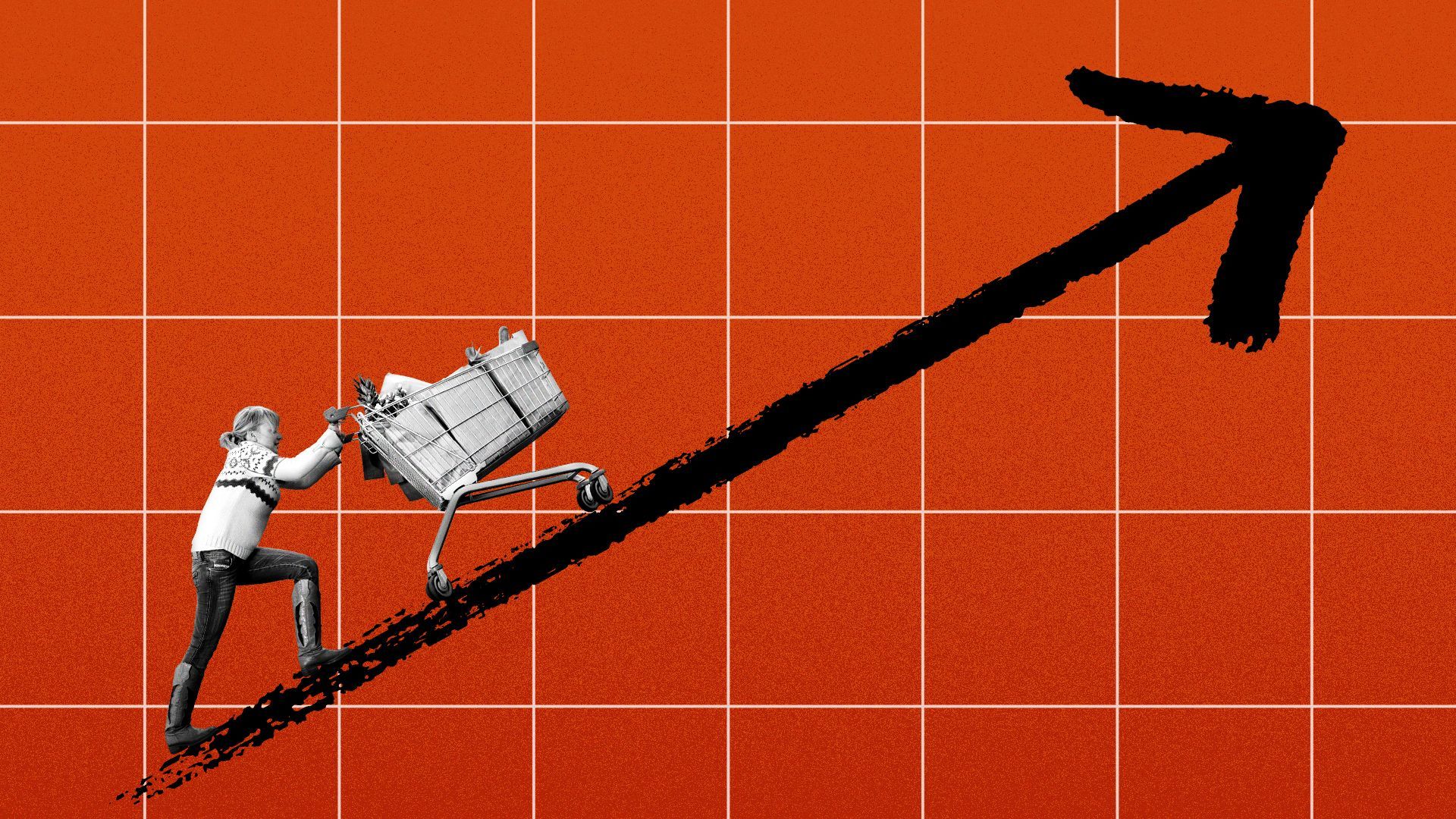
Prices — not politics — are driving most brands' reputations in this year's Axios Harris Poll 100 rankings, with the election in the rear-view mirror and tariffs and inflation top of mind.
The big picture: The average polarization score — the gap between how Republicans and Democrats view a brand's reputation — dropped to 2.55 points among the 10 highest-rated companies in this year's survey, down from 3.4 a year ago.
Travelers are using social media platforms like TikTok and Instagram to plan their trips, ditching the traditional travel agent.
The big picture: The travel agent industry expects to experience slow demand this year as travelers are booking independently with the help of online platforms, including social media.
Two days after threatening to impose a 50% tariff on imports from the European Union, President Trump on Sunday paused the levies until July and said talks would start "rapidly."
Why it matters: The threat of such a large tariff, on more than $600 billion of goods, sent a chill through markets that feared a sudden re-escalation of the trade war.
What do luxury apparel fans and little kids have in common?
Their favorite brands may have to hike prices due to tariff strain.
The big picture: From Ralph Lauren to Barbie maker Mattel, several household names have recently announced they're looking at higher prices in an effort to offset tariffs.
President Trump may paint China as the enemy, but lately he's been awfully fond of their command-economy playbook.
Why it matters: Trump's extraordinary interventions — which dovetail with what some critics have labeled "MAGA Maoism" — are rattling businesses, consumers and investors, and throwing global markets into turmoil.
The Trump administration's vision for a U.S. manufacturing renaissance includes highly automated factories and a more efficient American workforce — all of which will still require tons of foreign robots.
Why it matters: The administration is trying to fix decades of disinvestment in domestic manufacturing, but can't, for now, without relying on foreign companies to supply the advanced robotics needed to catch up with the rest of the world.
The Class of 2025 is begrudgingly entering a job market that is not welcoming them with open arms.
Why it matters: New grads are pessimistic entering the workforce, as the economy could slow. History shows that people who started their careers during economic downturns struggle throughout their lives.