Online resale platform Mercari announced today that it will no longer take a cut of sales, Hope writes.
Why it matters: The pressure is on for peers, including Poshmark, ThredUp and The RealReal, to follow suit as competition for sellers and inventory grows.
By the numbers: Mercari previously grabbed a 10% commission.
ThredUp and The RealReal have tiered payouts based on what's sold.
Poshmark takes about $3 for items under $15 and a 20% commission for items that are $15 or more.
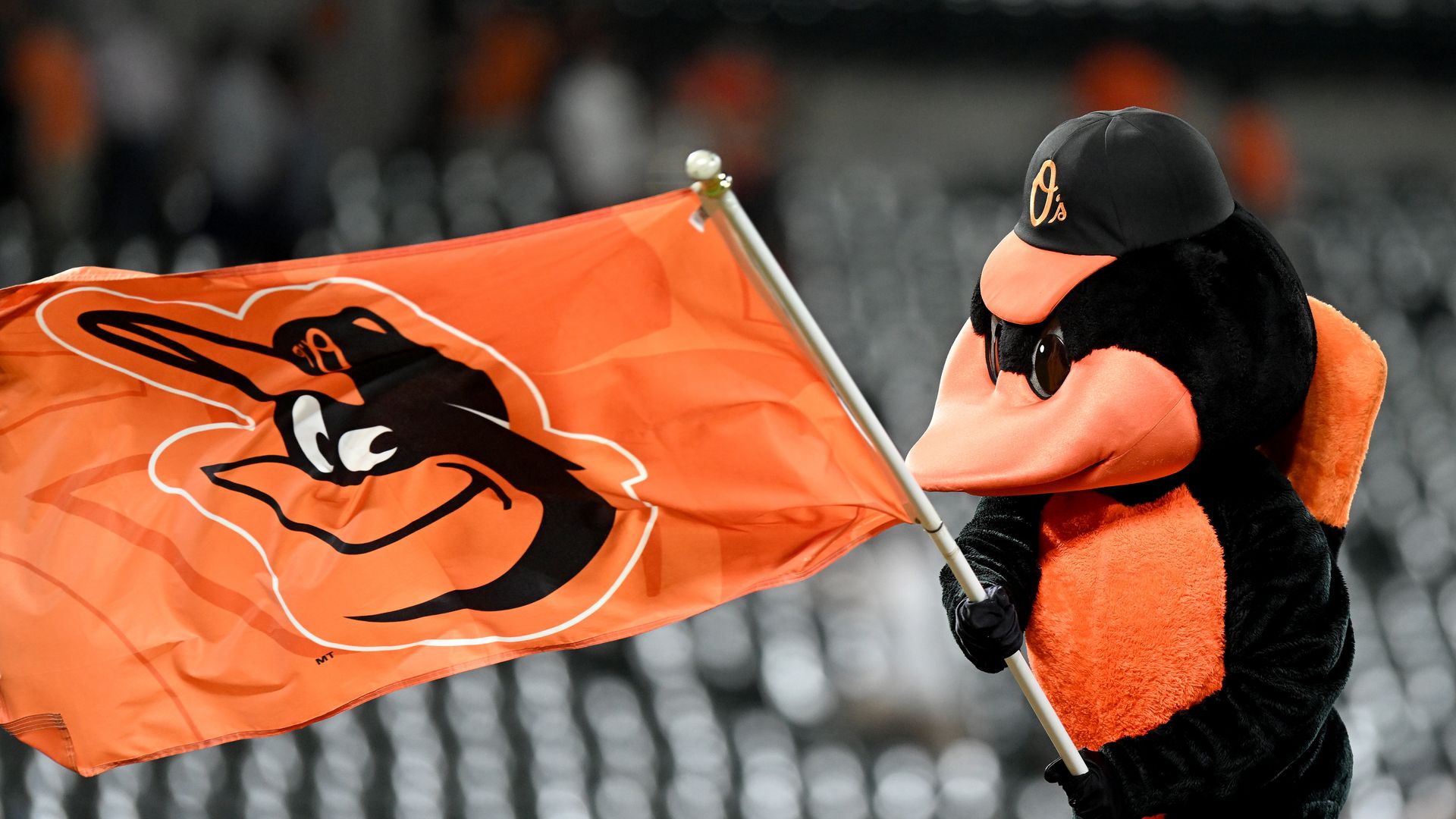
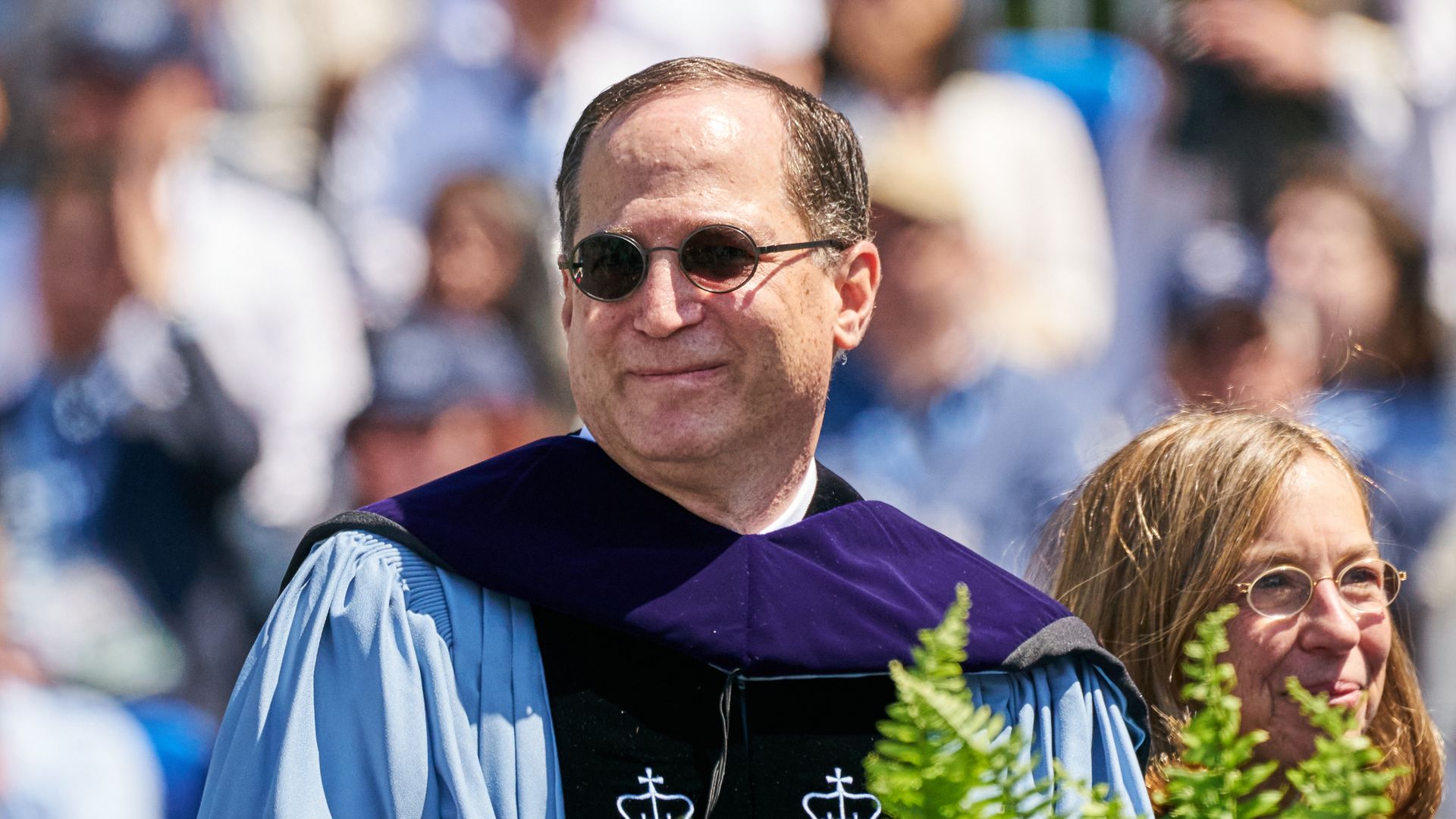
Private equity billionaire David Rubenstein purchased The Baltimore Orioles on Wednesday after getting unanimous approval from Major League Baseball.
The big picture: He becomes the club's first new owner in more than three decades and only its fifth since 1954. He tells Axios that his "job is to stand out of the way."
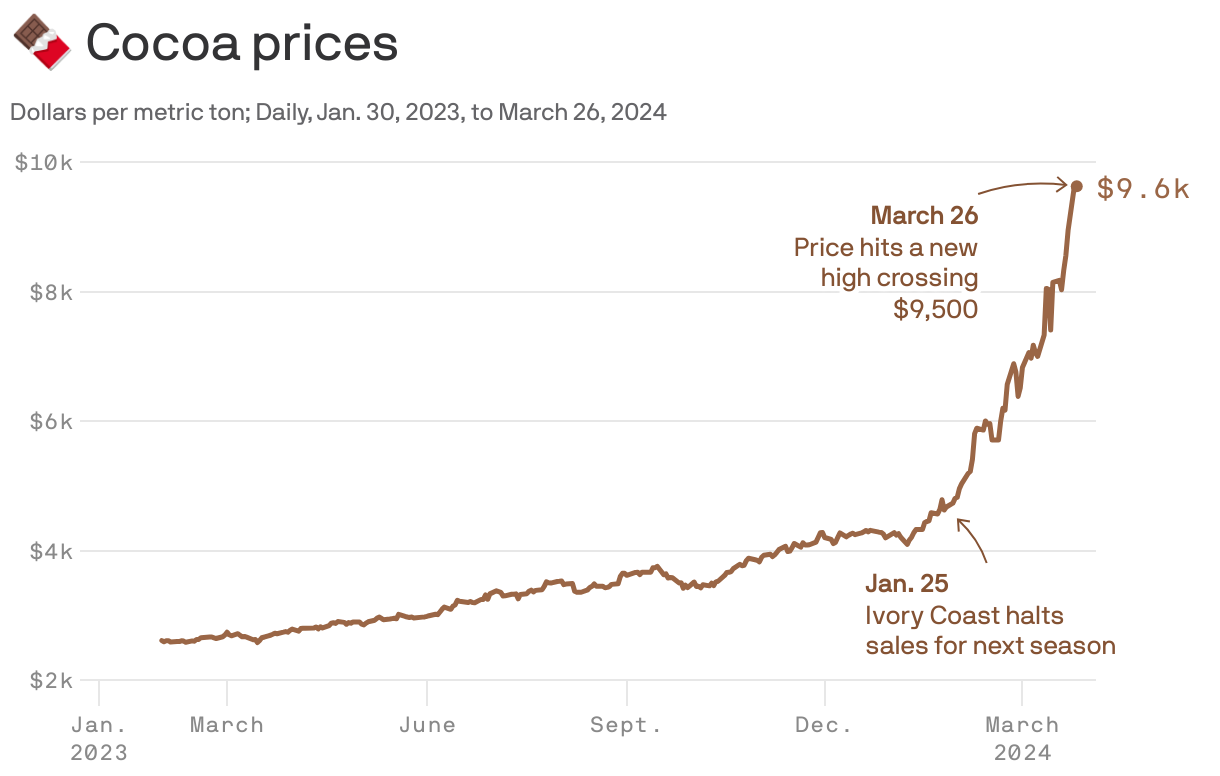
Cocoa prices extended a torrid rally, briefly setting a new record above $10,000 in a move that makes sweet treats pricier for consumers and chocolate makers alike.
According to Reuters, major cocoa plants in Africa reduced processing because they couldn't afford to buy beans.
The crisis is likely to intensify, with Ghana set to lose key funding access allowing it to buy beans, Bloomberg reported.
By the numbers: In the past six weeks, prices of wholesale beans traded in New York have doubled, trading just above $10k per metric on Tuesday before closing slightly below that level — a250 percent jump from last year.
At the time of writing, the cocoa price was around $9,700 per metric ton.
Deep dive: The cocoa crisis has been in the making for a long time, according to Tedd George, founder and chief narrative officer at Kleos Advisory. "We saw it coming and unfortunately, it's played out exactly as everyone said it would."
George says climate change and changing weather patterns turbo-charged the financial crisis in Ghana, threatening cocoa production.
He says local Ghanaian farmers have been unable to restore old trees because it costs too much to buy pesticides; this in turn led to the spread of black pod disease and swollen shoot virus during the last quarter of 2023.
This may lead to farmers resorting to smuggling beans to profit from higher prices, because many are currently locked into fixed contracts.
State of play: The Ivory Coast cocoa regulator, Le Conseil Cafe-Cacao, recently stopped selling contracts for cocoa exports forward sales for the 2024-25 season as production numbers drop.
Reuters reports that in normal times, the heavily regulated market allows buyers to set pre-agreed prices a year in advance.
However, in times of shortage, "the system breaks down" and dealers buy the beans at higher than the pre-agreed prices to secure the delivery.
What they're saying: "At the moment, both Ghana and Cote d'Ivoire are scrambling for beans to meet contracts some even from last season," says George. "That's where there's a real problem."
To reduce the cost burden, some candy makers are replacing the ingredient, cutting down on packaging and bar sizes, or using new technologies to make cocoa-free chocolates.
Adam Maxwell, whose food tech startup, Voyage Foods, has also reverse-engineered coffee and peanut butter to make said in an emailed statement:"While we can't say for certain, if you look at long-term historical cocoa pricing data, it's not crazy to think prices will be where they are today or even higher."
Yes, but: Approximately 92 percent of Easter-celebrating Americans are still set to purchase candy and chocolate this year, contributing to over $5 billion in confectionery sales during the Easter holiday season, according to the U.S. National Confectioners Association.
What we're watching: Whether chocolate remains affordable for everyone, or ends up becoming a luxury item.
Coinbase notched a very minor win against the U.S. Securities and Exchange Commission on Wednesday, but the essence of the agency's case against the nation's largest cryptocurrency exchange will proceed.
Why it matters: If the SEC's argument that most cryptocurrencies are securities under U.S. law prevails in court, it would limit who can hold them, or use the new asset class.
It would also be an existential threat to the exchange — and, in fact, the cryptocurrency industry itself (at least, within the United States).
"When intermediaries don't register, it's investors who get hurt and the American financial markets that suffer. We will continue to protect investors against risks in the crypto markets when, as here, the securities laws are implicated," the SEC said in a statement sent Axios.
One of Silicon Valley's most successful founders and investors just got accused of insider trading.
Driving the news: The SEC on Tuesday alleged that Andy Bechtolsheim confidentially learned of Cisco's plans to buy Acacia Communications, shortly before the $4.5 billion deal was announced in 2019, and then traded Acacia options by accessing brokerage accounts of a relative and associate.
International Paper said it's offered to buy British paper and packaging firm DS Smith for around £5.72 billion in stock.
Why it matters: This may set up a bidding war for DS Smith, which three weeks ago agreed to be acquired by local rival Mondi for £5.14 billion in stock.
Global losses from natural catastrophes in 2023 amounted to about $280 billion, according to new data from the Swiss Re Institute.
Why it matters: The reinsurance giant's report warns that global insured disaster losses are sharply increasing, and climate change is a small but growing driver.
One part of financial literacy banks don't usually push is the ability to notice when banking products are unattractively priced.
Driving the news: Varo Bank announced on Tuesday a new product called "Varo Line of Credit," which is advertised in the neobank's app as giving customers the opportunity to borrow up to $2,000 instantly for an "affordable fee" and "0% APR."
The cost of providing child care benefits to employees — like stipends and onsite day care — is an investment with outsized returns, finds an intriguing new study from Boston Consulting Group (BCG) and nonprofit Moms First.
Why it matters: The increasing cost of child care in the U.S., along with a shortage of providers, keeps parents out of the workforce — a drag on the economy overall and a hit to employers in a tight labor market.
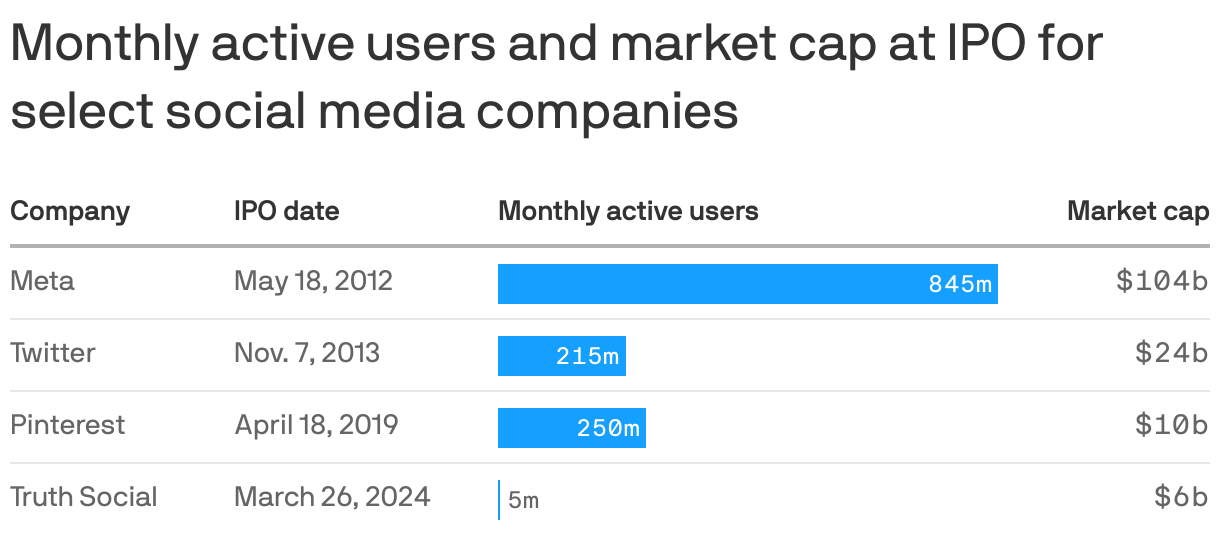
Trump Media & Technology Group — trading under the ticker symbol DJT — is America's newest meme stock, boasting a market capitalization, at the close of trade on Tuesday, of $7.9 billion.
The big picture: That's astonishingly high for a company that brought in a mere $3.4 million in revenue over the first nine months of 2023, losing a total of $49 million.
Data: Company reports and SimilarWeb; Note: Truth Social's total reflects monthly website visits globally in February 2024, according to SimilarWeb data. It does not reflect app users. Truth Social has not publicly reported the actual metrics; Table: Alice Feng/Axios
Truth Social — the Trump-owned social media platform that started trading yesterday — currently has far fewer users and less income than any social network that has gone public before.
Why it matters: While the app does sell some ads, its business is practically non-existent.
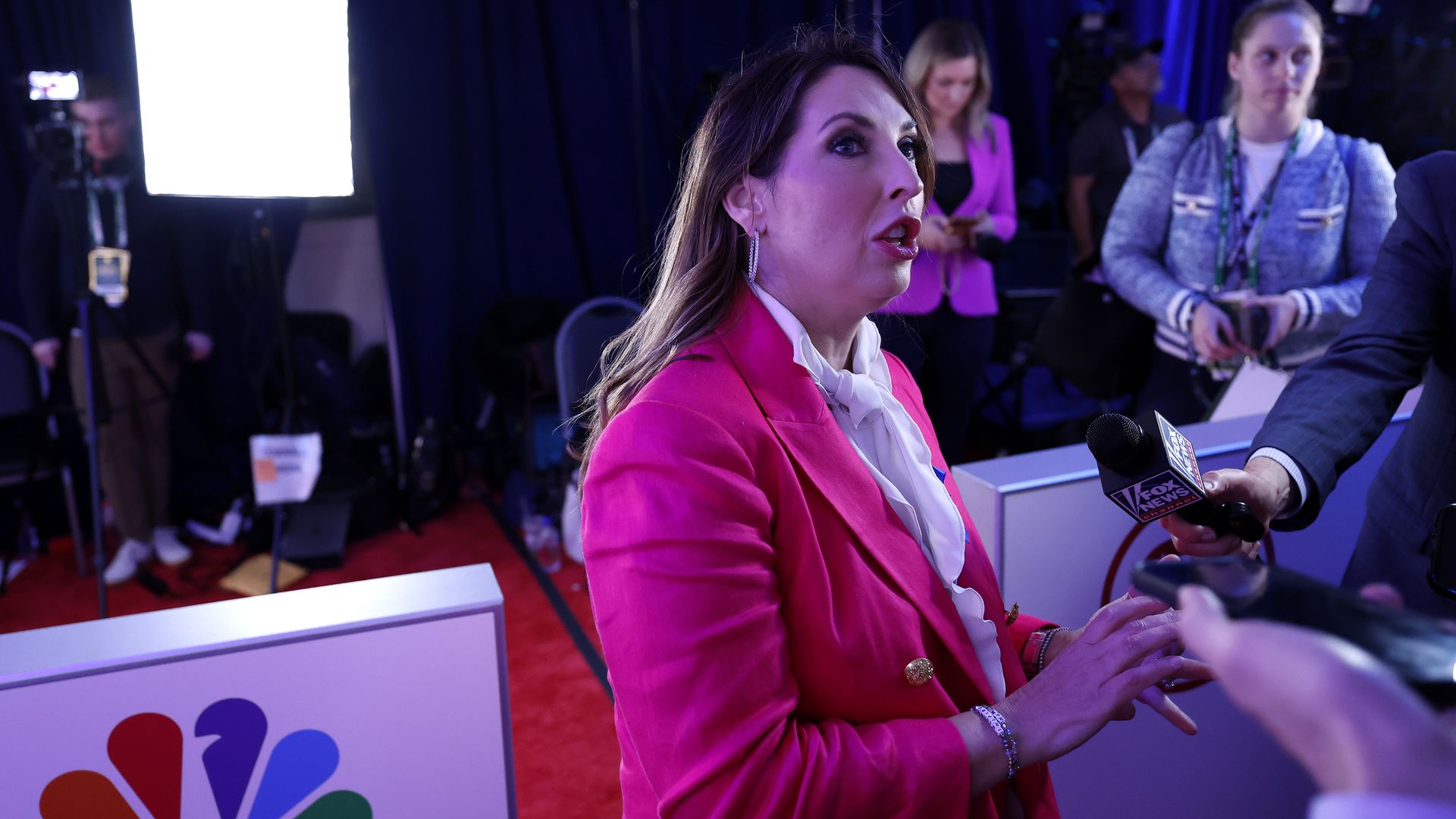
NBC has dropped Ronna McDaniel as a paid contributor, NBCU News Group chair Cesar Conde confirmed in a memo to staff following backlash from some of the network's journalists.
Why it matters: The ex-RNC chair's hiring set off a rare on-air protest over the weekend from top network talent, renewing criticism over cable news' lucrative — and often controversial — alliance with former government officials and party flacks.