The House on Tuesday voted 406-3 in favor of a bill to ban products made with forced labor in China's mass detention camps.
Why it matters: The U.S. has ramped up pressure recently on China to address human rights abuses in the Xinjiang region, where the Chinese government has engaged in a campaign of cultural and demographic genocide against Uighur Muslims and other ethnic minorities.
Democrats and Republicans have sharply differing views on some aspects of foreign policy and national security. But when it comes to China, there is some degree of consensus, according to a new survey by the Chicago Council on Global Affairs.
Details: There is widespread support across party lines for sanctions to combat China's human rights violations, as well as measures to protect Americans from the potential risks of Chinese technology.
China's economic planning and targeted subsidies have increased the competitiveness of Chinese firms in the global economy to the direct detriment of U.S. industry, an academic study has found.
Why it matters: When it comes to American industries and workers, the rise of Chinese industrial policy hasn’t been a win-win — researchers found for every 100 factories opened in China, 12.5 U.S. factories in the same industry closed.
Chinese Communist Party Secretary Xi Jinping announced last week that the party must strengthen its leadership over private companies, and that entrepreneurs must meet the party's needs.
Why it matters: Xi's new announcement will increase fears that Chinese businesses may serve as a Trojan horse for the CCP.
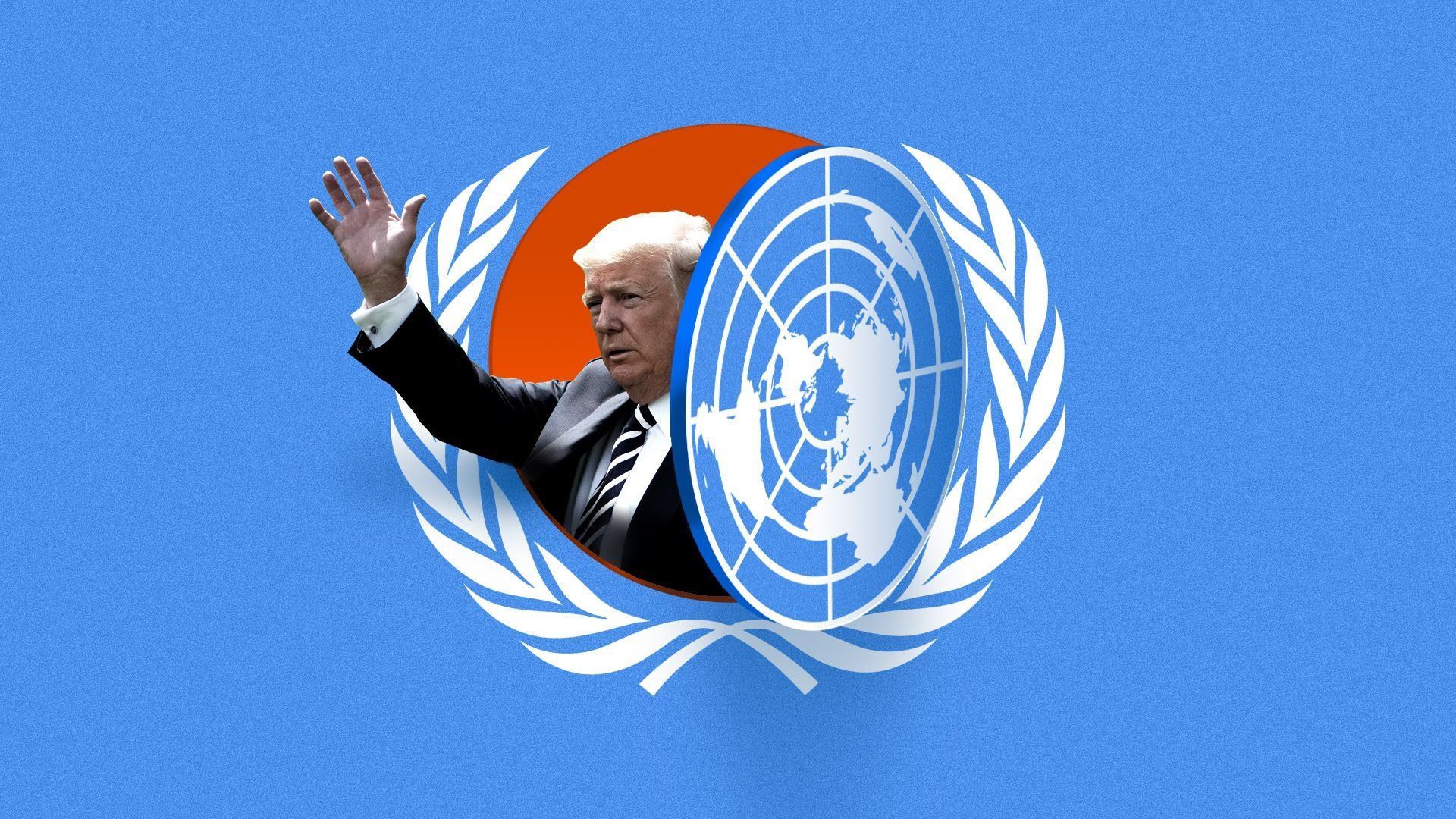
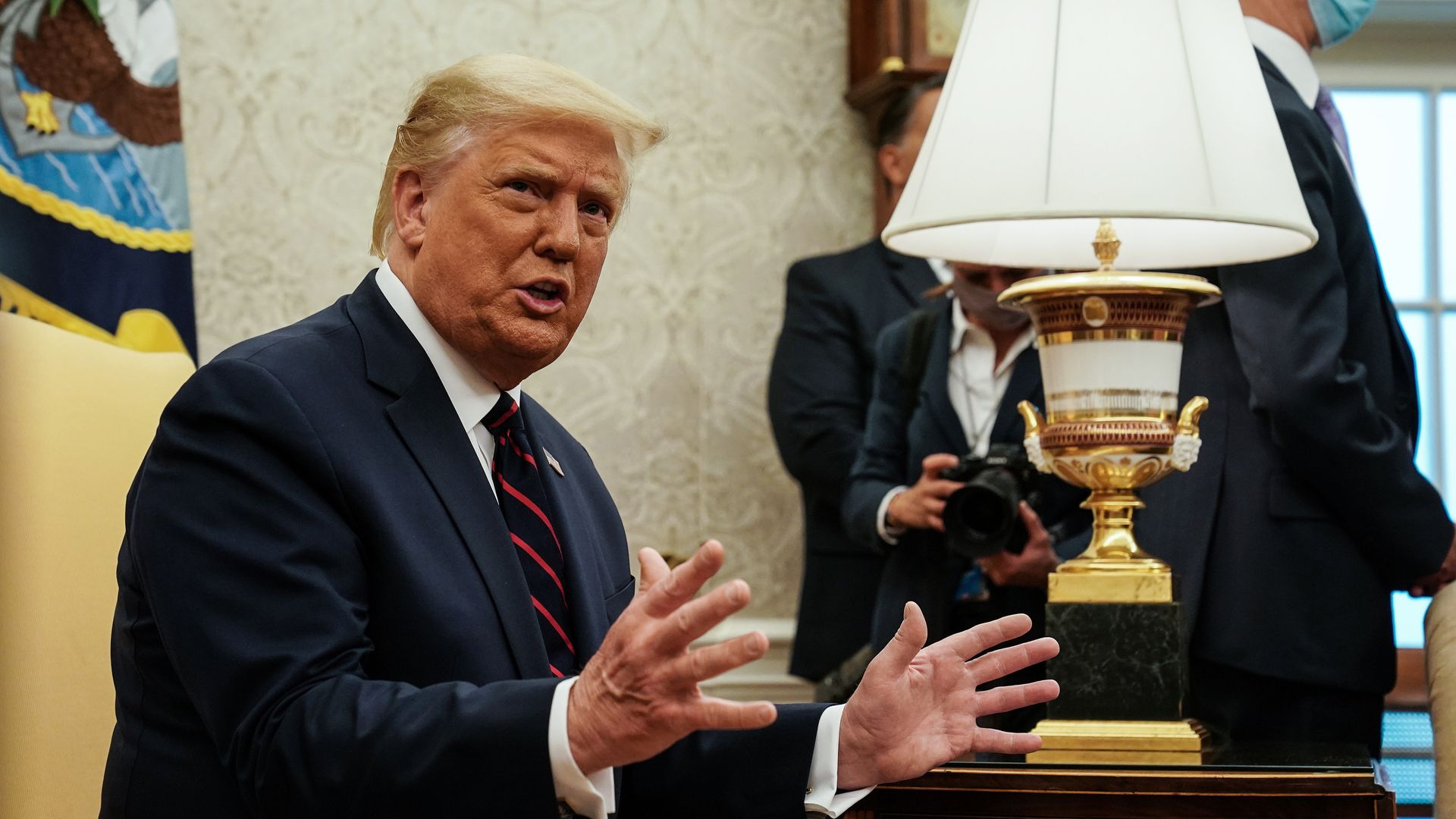
President Trump used a virtual address to the UN General Assembly on Tuesday to defend his response to the coronavirus and call on other countries to “hold accountable the nation which unleashed this plague onto the world: China.”
Setting the scene: Trump ticked through four years of major decisions and accomplishments in what could be his last address to the UN. But first, he launched into a fierce attack on China as Beijing’s representative looked on in the assembly hall.
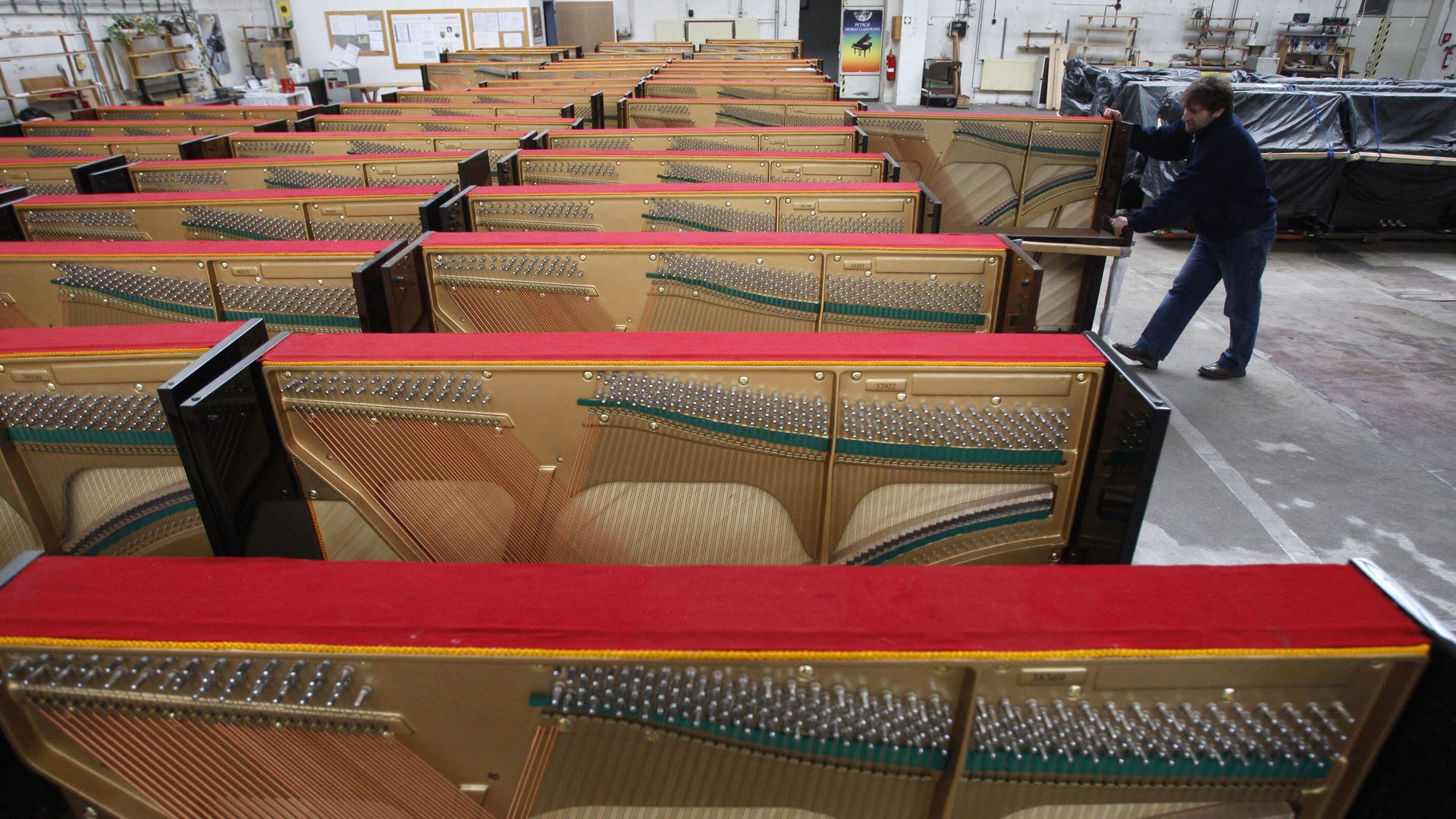
Back in February, I wrote about how the classic Czech piano company Klaviry Petrof, founded in 1864, could face losses after China threatened retaliation on Czech companies after a Czech politician planned to visit Taiwan, which the Chinese government views as part of its territory.
After a second Czech official visited Taiwan in August, China made good on that threat — a Chinese company suspended a $23.8 million order of the Czech-made pianos.
The big picture: WeChat's ban has had a lower profile than TikTok's, but the fate of the app, widely used by Chinese people around the world to stay in touch with family and friends, is at least as consequential.
President Trump and China’s Xi Jinping will address the UN General Assembly just minutes apart on Tuesday morning — with Russia’s Vladimir Putin following soon thereafter.
The big picture: Trump has promised a “strong message on China.” Xi, meanwhile, is expected to laud global cooperation — with the clear implication that it can be led from Beijing.
The U.K. could see up to 50,000 coronavirus cases per day by mid-October if current growth continues, top scientific advisers warned in a televised address from Downing Street on Monday.
The big picture: The U.K. has upgraded its coronavirus alert level from three to four as infections appear to be "high or rising exponentially." Meanwhile, recent European Center for Disease Prevention and Control (ECDC) data shows that over half of all European Union countries are seeing an increase in COVID-19 cases.
Federal prosecutors on Monday charged a New York City police officer with acting as an illegal agent of China and feeding information on ethnic Tibetans in New York City to the Chinese consulate, court documents show.
The big picture: China's Communist Party has for years responded with heavy-handed tactics against Tibetan calls for independence.
Yoshihide Suga will represent Japan at this week's UN General Assembly just days after replacing the country's longest-serving prime minister, Shinzo Abe.
By the numbers: Suga, 71, may find Abe's longevity hard to match. Japan had 17 prime ministers in the 14 years before Abe took office.
President Trump signed an executive order on Monday that would impose sanctions on any person or entity that contributes to the supply, sale, or transfer of conventional arms to or from Iran or is engaged in providing training and financial support related to those weapons.
Why it matters: The executive order is the first step by the Trump administration to put teeth into its claim that international sanctions on Iran were restored over the weekend, one month after the U.S. initiated the "snapback" process under a United Nations Security Council resolution.
Economic tension between the U.S. and China continues to escalate but is shifting in focus — away from the tit-for-tat trade war and toward a more direct confrontation over the future of technology at the heart of the conflict between the world's two largest economies.
Why it matters: The battle between the U.S. and China was always about tech supremacy and the direct confrontation could result in an accelerated splintering of global supply chains and a significant reduction of international commerce.