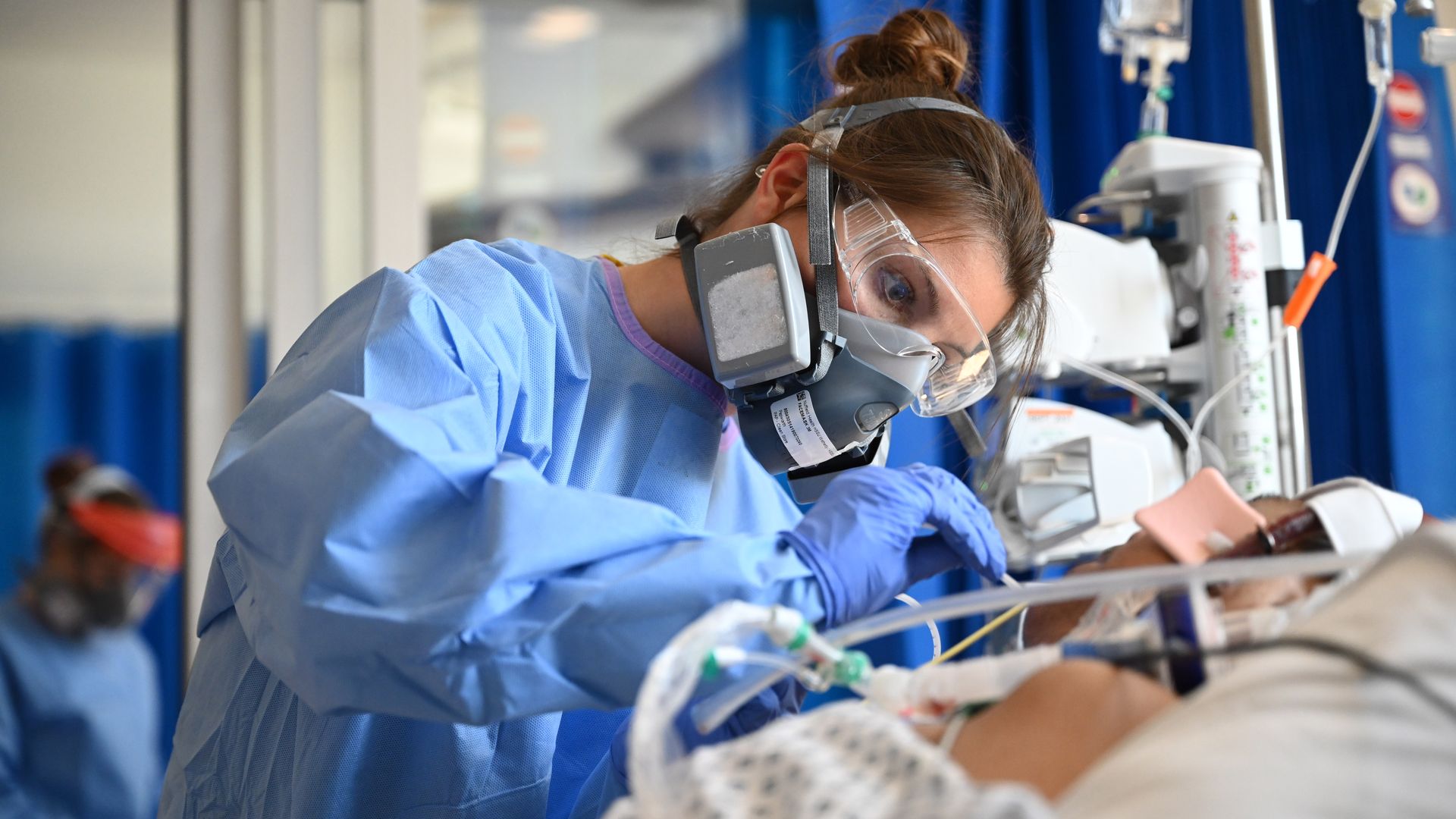
Neil Ferguson, one of the U.K.'s most prominent epidemiologists working on coronavirus response, resigned Tuesday after breaking lockdown rules to have a woman visit him at home, the Telegraph first reported.
The big picture: Models produced by Ferguson and his team at Imperial College London warned that 250,000 people could die from the coronavirus in the U.K. unless the government took drastic action to stem the spread. The projections ultimately contributed to Prime Minister Boris Johnson's decision to lock down the country after initially ruling against it.
The Philippines' telecommunications commission shut down the country's largest TV network on Tuesday, in a surprise move that follows other steps by President Rodrigo Duterte's government to put pressure on major media outlets.
Why it matters: The cease-and-desist order for broadcaster ABS-CBN follows legal threats on the Philippines' largest newspaper, which was sold under pressure to a Duterte ally, and legal cases against leading news site Rappler. It also removes a leading source of news from the airwaves during the coronavirus pandemic.
The U.K. surpassed Italy on Tuesday to report the most coronavirus deaths in Europe, according to Johns Hopkins data and its own tracker.
Driving the news: The country, which prolonged its lockdown last month until at least the second week of May, has reported more than 196,000 cases compared to Italy's roughly 213,000. Imperial College London is undertaking the randomized testing of 100,000 people in England this week to gain data on when the lockdown might be able to lift, per The Guardian.
Governments in Western democracies are being pressured by the news industry to come up with relief plans to support local media companies upended by the coronavirus pandemic — and some have already begun implementing small aid programs.
Why it matters: Most experts agree these efforts are not sustainable in supporting the local media ecosystem long-term.
The world now appears to be moving beyond peak lockdown, with at least 12 countries loosening restrictions today.
Why it matters: While regions and countries will likely be forced to reimpose lockdowns as the pandemic develops, we may not again see half of humanity constrained at the same time.
Spain and Italy, the European countries hardest-hit by the novel coronavirus, are reopening their economies in stages beginning on Monday.
The big picture: Both countries have emphasized bringing back industry before retail. In the U.S., some states are reopening restaurants and other non-essential businesses first, in contrast with federal guidelines for reopening.
The leaders of nations, banks and organizations gathered Monday via video conference for a European Union-led summit, collectively pledging 7.4 billion euros ($8 billion) toward research for a coronavirus vaccine, AP reports.
Why it matters: The U.S. was noticeably absent, despite appearances from the "heads of state and government from Australia, Canada, Israel, Japan, Jordan, South Africa and Turkey spoke at the event, along with China’s EU ambassador" among the many European participants.