The U.S. government is trying to solve a difficult problem: How to protect scientific research from China-linked theft, without quashing international collaboration or resorting to racial profiling.
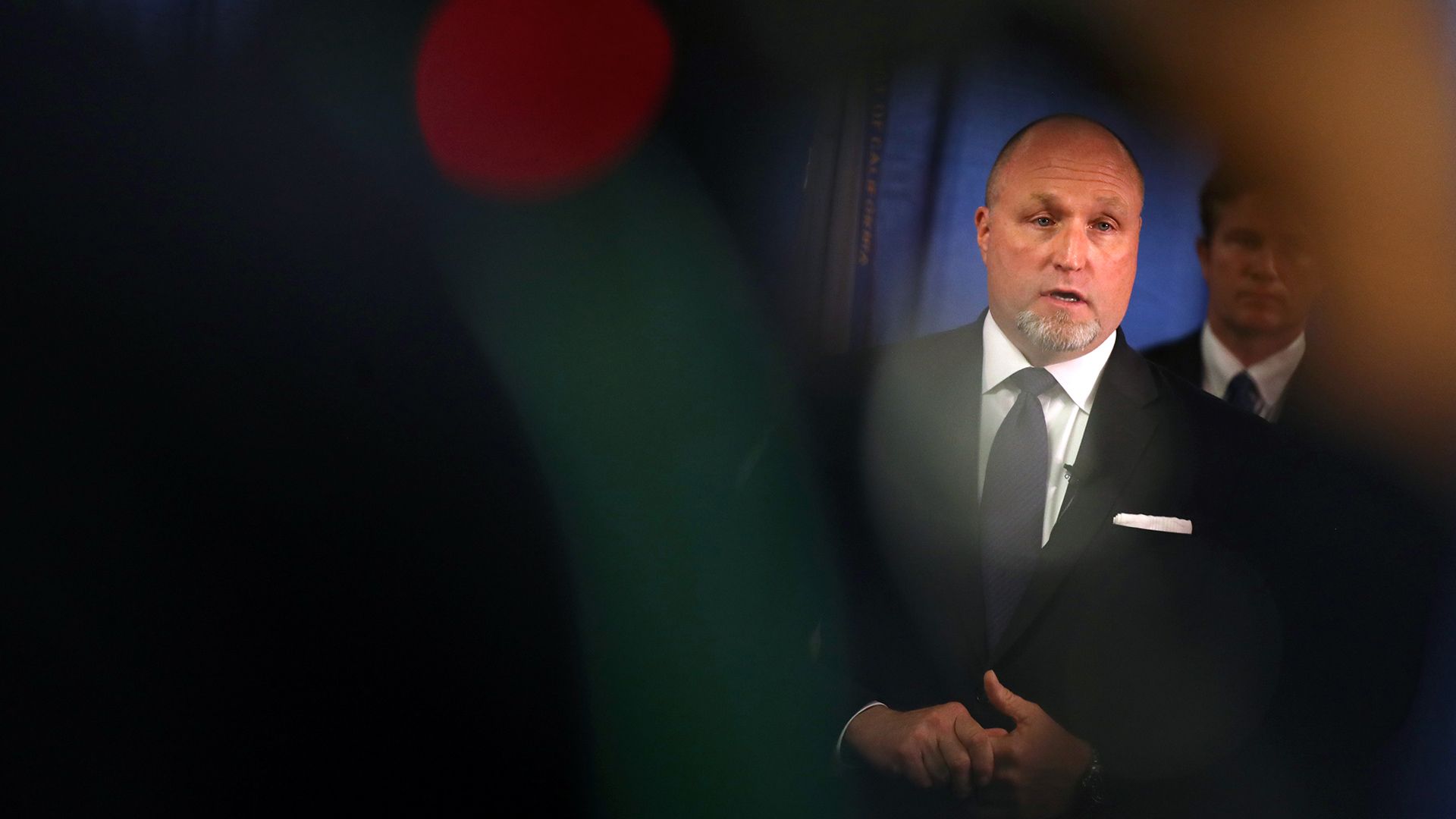
Driving the news: Last week federal prosecutors charged Charles Lieber, chair of the Harvard University chemistry department, with lying about funds he obtained through a Chinese government recruitment program.
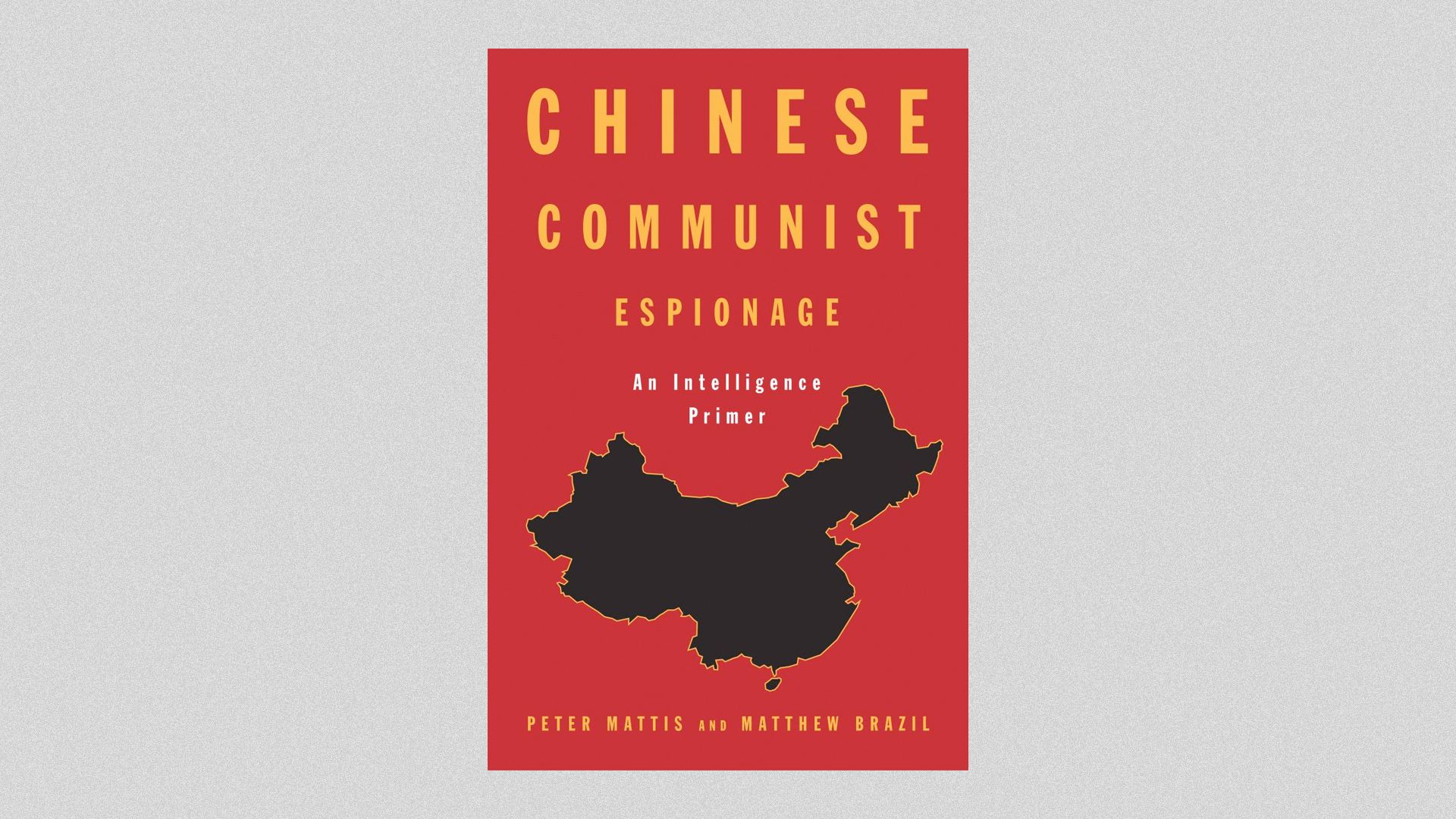
Chinese espionage hinges on a sophisticated network of spies focused on state-sponsored tech theft, according to a new book that dispels outdated theories of how Beijing collects intelligence around the world.
Why it matters: Old tropes cast all ethnic Chinese as potential amateur spies, a belief which has led to racial profiling. In reality, China's intelligence agencies employ highly trained professionals who operate much like spies from any other country.
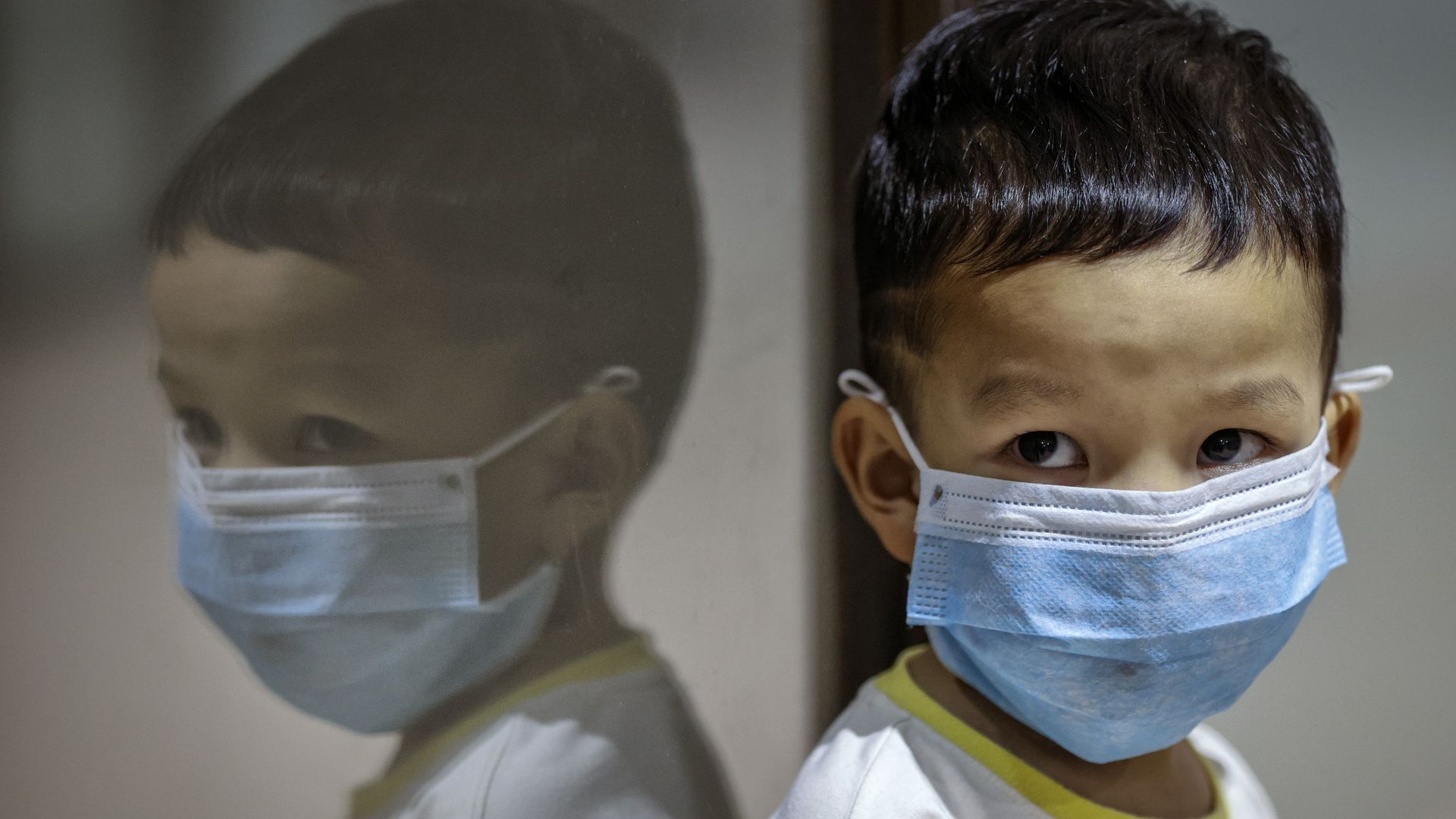
After a high-level meeting to address the deadly coronavirus, China's leaders are prescribing even tighter information controls around the outbreak.
Why it matters: The suppression of vital information about the coronavirus during its earliest weeks of transmission contributed to the devastating epidemic China is now facing.
Britain will allow Huawei into its national 5G network. Germany may not be far behind. But one European country has unequivocally sounded the alarm on Huawei: the Czech Republic.
Why it matters: Europe's giants are having trouble resisting Chinese inducements to open their 5G networks to Huawei's less expensive equipment. Despite its small economic footprint, the Czech Republic shows it's possible to turn back the tide of dependency on China.
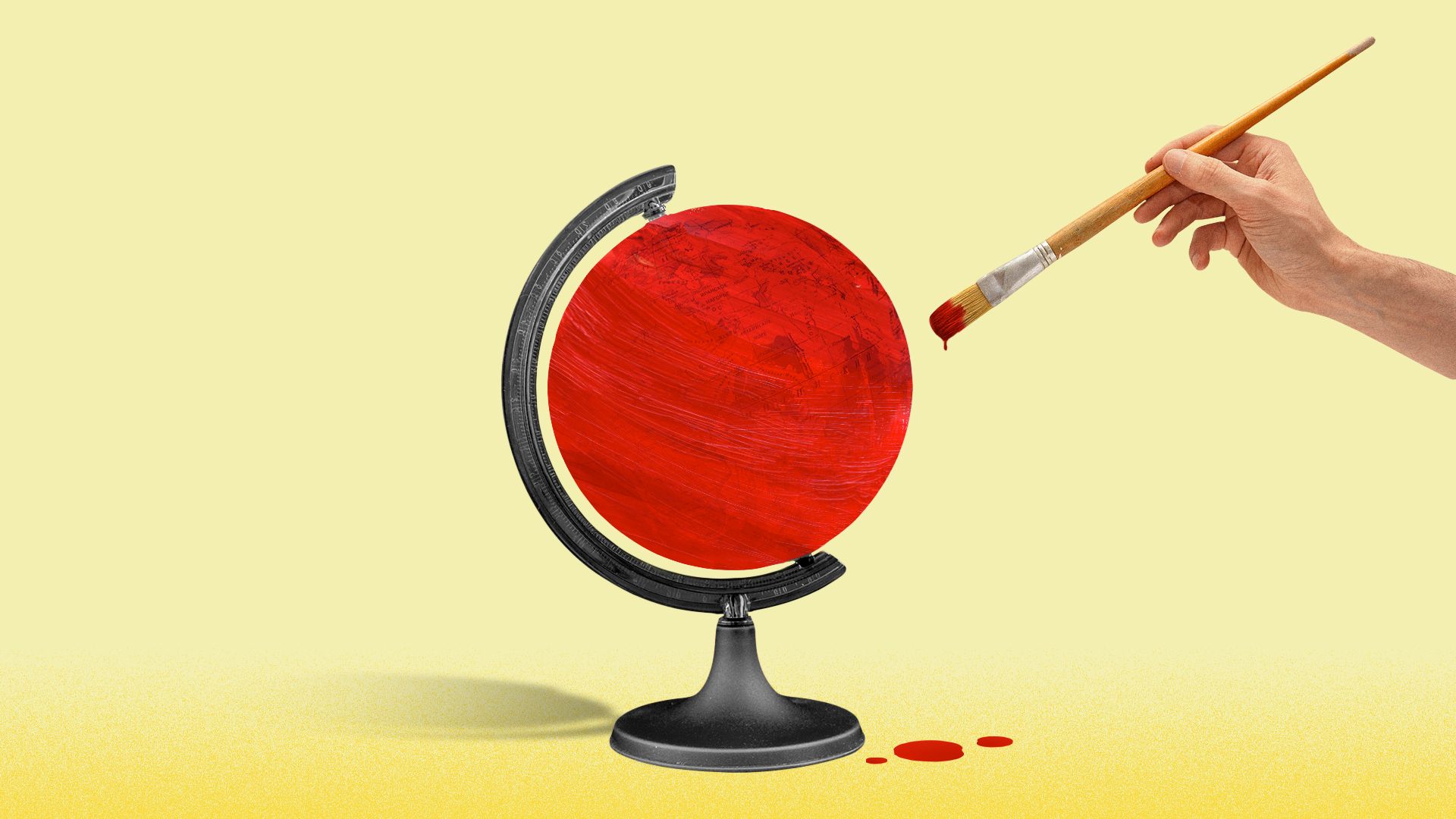
With the U.S. paralyzed by political gridlock and western institutions stagnating, China is positioning itself as the primary architect of new power structures in the 21st century.
Why it matters: If the U.S. continues to anger allies, withdraw from global institutions, and ignore much of the developing world, in 20 years it may wake up to find itself resigned to a small corner in a world defined and dominated by China.
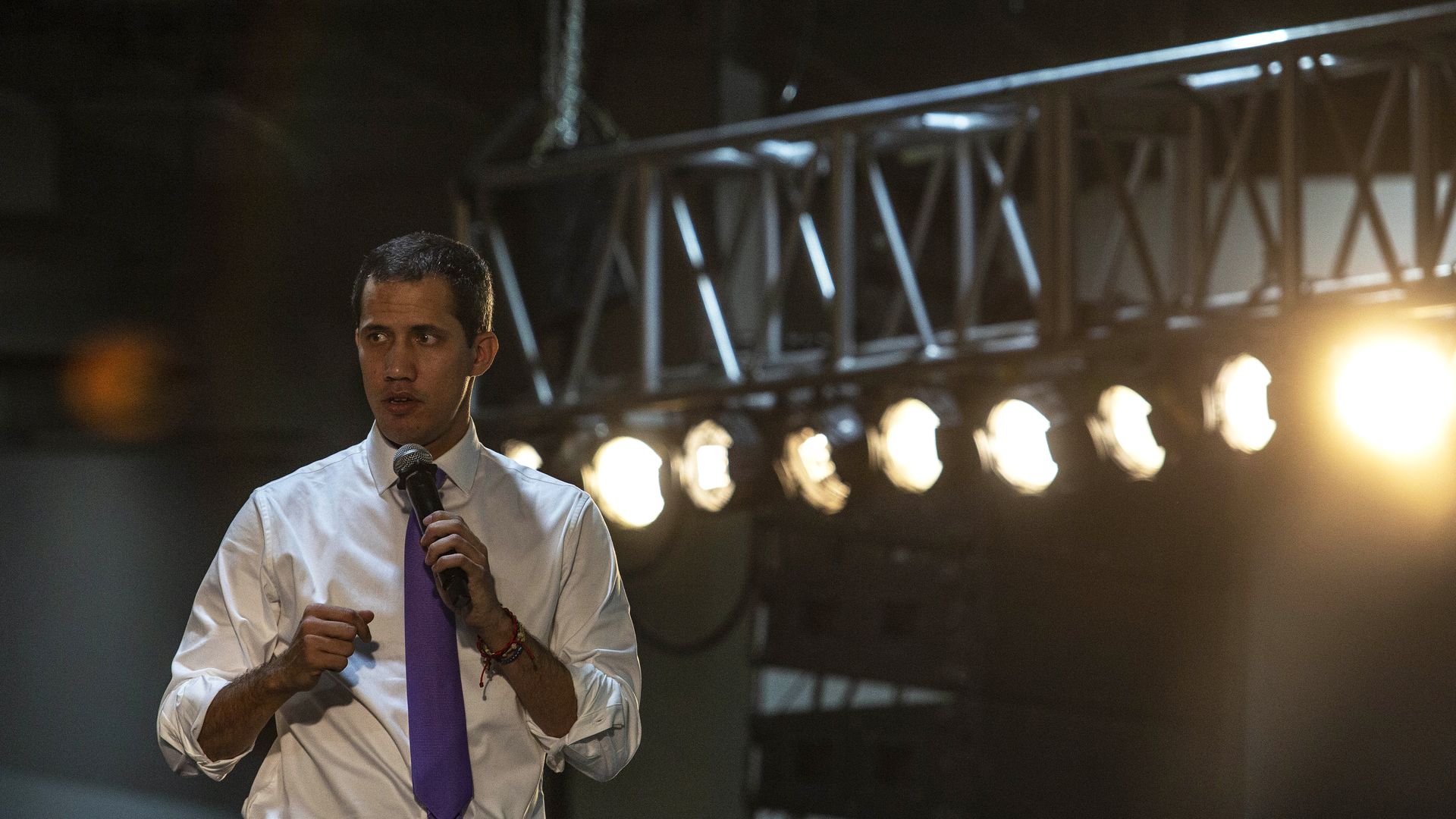
Juan Guaidó, Venezuela's embattled opposition leader, will attend Tuesday night's State of the Union address as part of an overseas tour designed to breathe new life into his push for power, Bloomberg first reported and Axios has confirmed from a Trump administration official.
Why it matters: Guaidó visited Europe and now the U.S. in defiance of a travel ban imposed by Venezuelan President Nicolás Maduro’s government. The U.S. recognized Guaidó as Venezuela’s rightful leader about 13 months ago, but his effort to dislodge Maduro has become increasingly desperate.
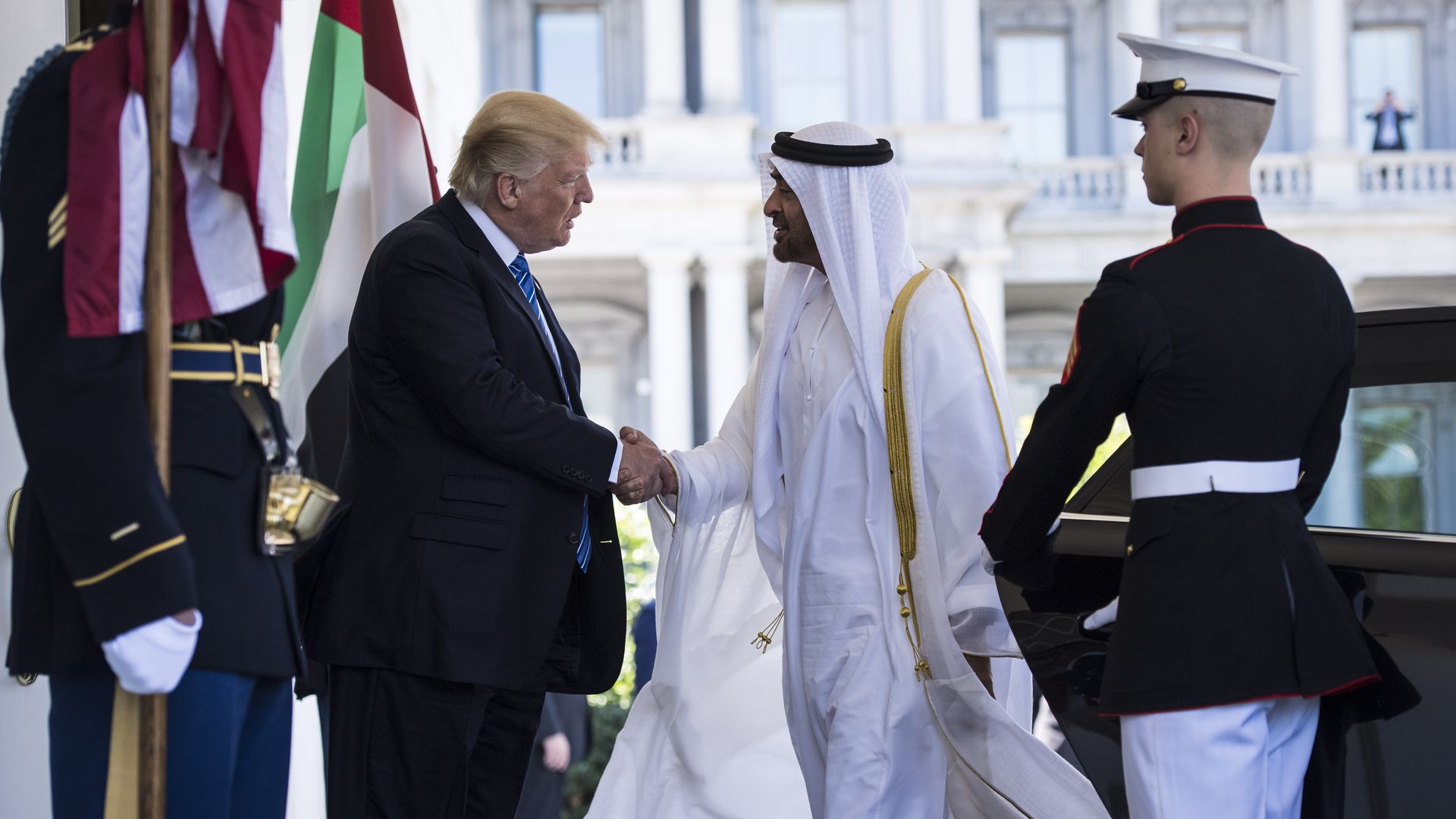
The White House hosted a secret trilateral meeting in December between the U.S., Israel and the UAE on coordination against Iran, Israeli and U.S. officials tell Axios.
Why it matters: The meeting, which took place on Dec. 17, is one in a series of steps from the Trump administration to facilitate closer ties between Israel and the Arab states. It included discussion of a UAE-Israel nonaggression pact — an interim step on the way to diplomatic normalization.
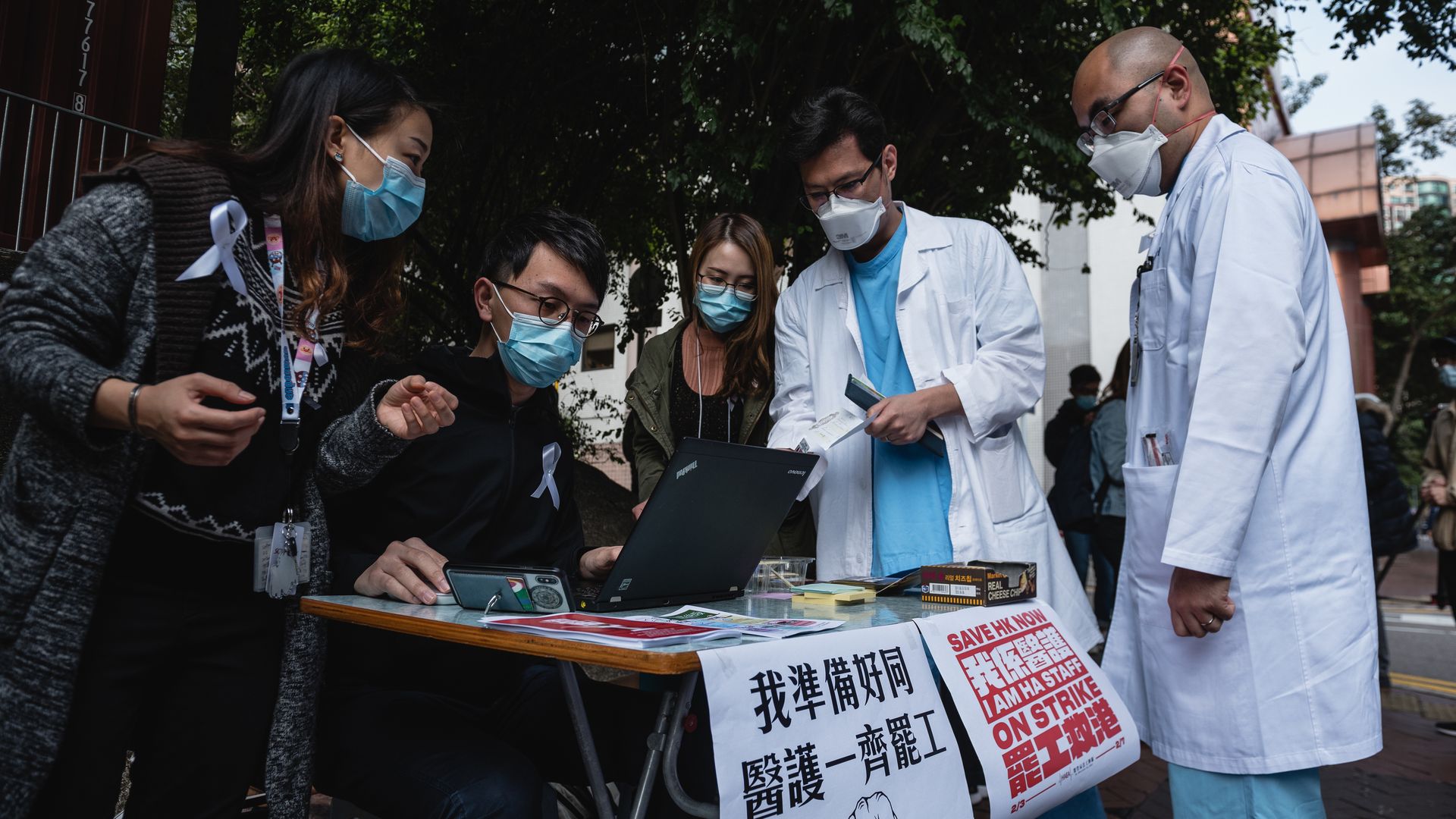
Why it matters: The second reported death outside of mainland China came as over 2,400 Hong Kong medical workers went on strike to demand authorities fully close the border with mainland China to stop the spread of the virus, per the South China Morning Post.
China reacted furiously today to a U.S. decision to deny entry to all foreign nationals who had been to China in the past two weeks, denouncing it as a violation of WHO advice that would only spread fear.
The big picture: Some public health experts warn that travel bans are ineffective in fighting outbreaks and discourage international cooperation and transparency. But several governments are now employing them amid the coronavirus outbreak.
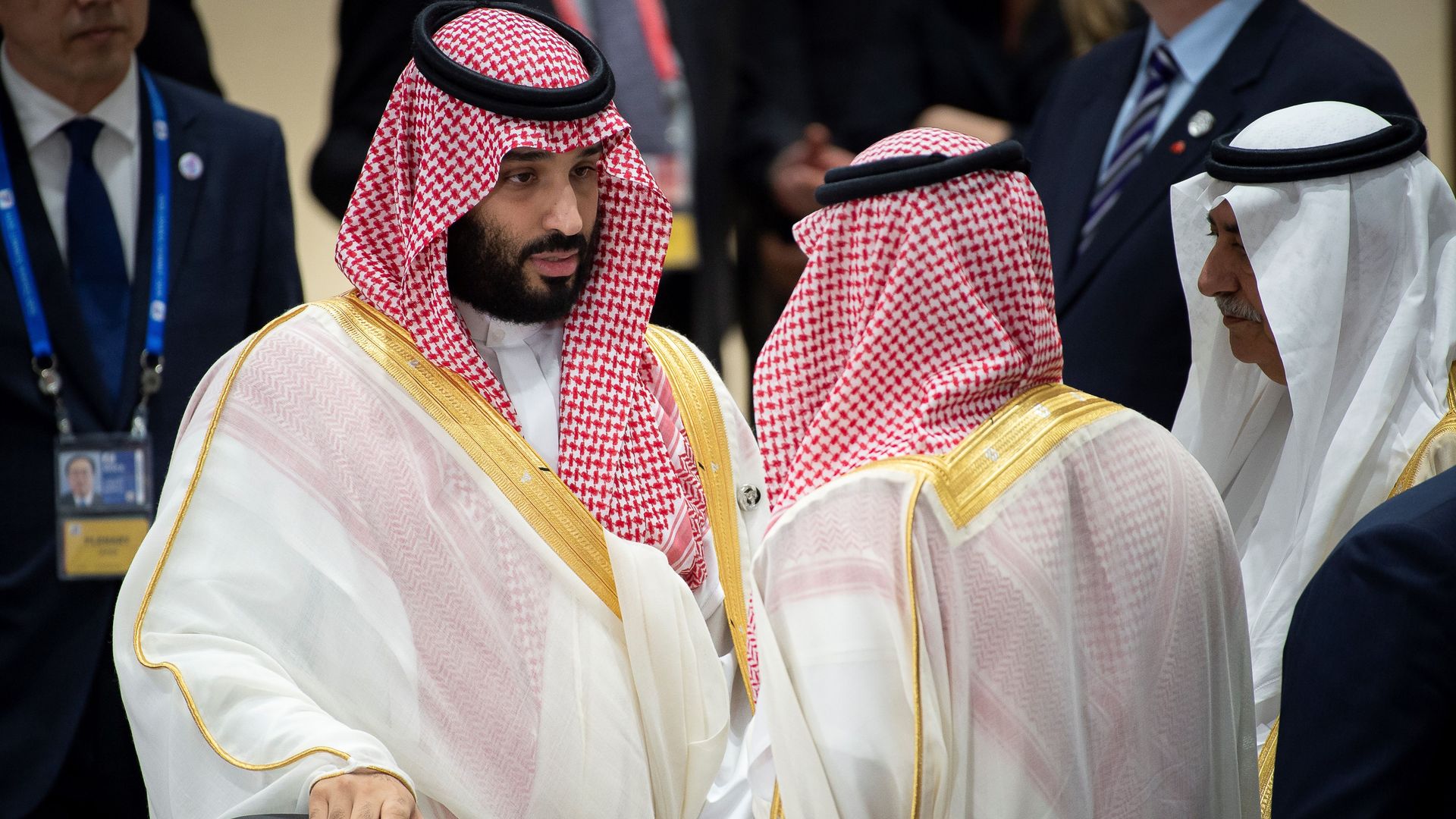
Just 20% of Americans have confidence in Saudi Crown Prince Mohammed bin Salman to "do the right thing regarding world affairs," per a new Pew survey.
By the numbers: Trust is also low in Israel (6%), Lebanon (23%), Turkey (14%) and Tunisia (18%), though the latter two countries have even less faith in President Trump.
Xi Jinping is often described as the most powerful Chinese leader since Mao, but he's not the face of Beijing's response to what could ultimately be the biggest test of his tenure thus far.
Why it matters: Xi has vowed that China will slay the "devil virus" that has spread from Wuhan and sown fear around the world. But the Communist Party seems intent to steer criticism of its slow initial response — and responsibility should its current steps prove inadequate — away from Xi.





/2020/02/04/1580777979472.gif?w=3840)