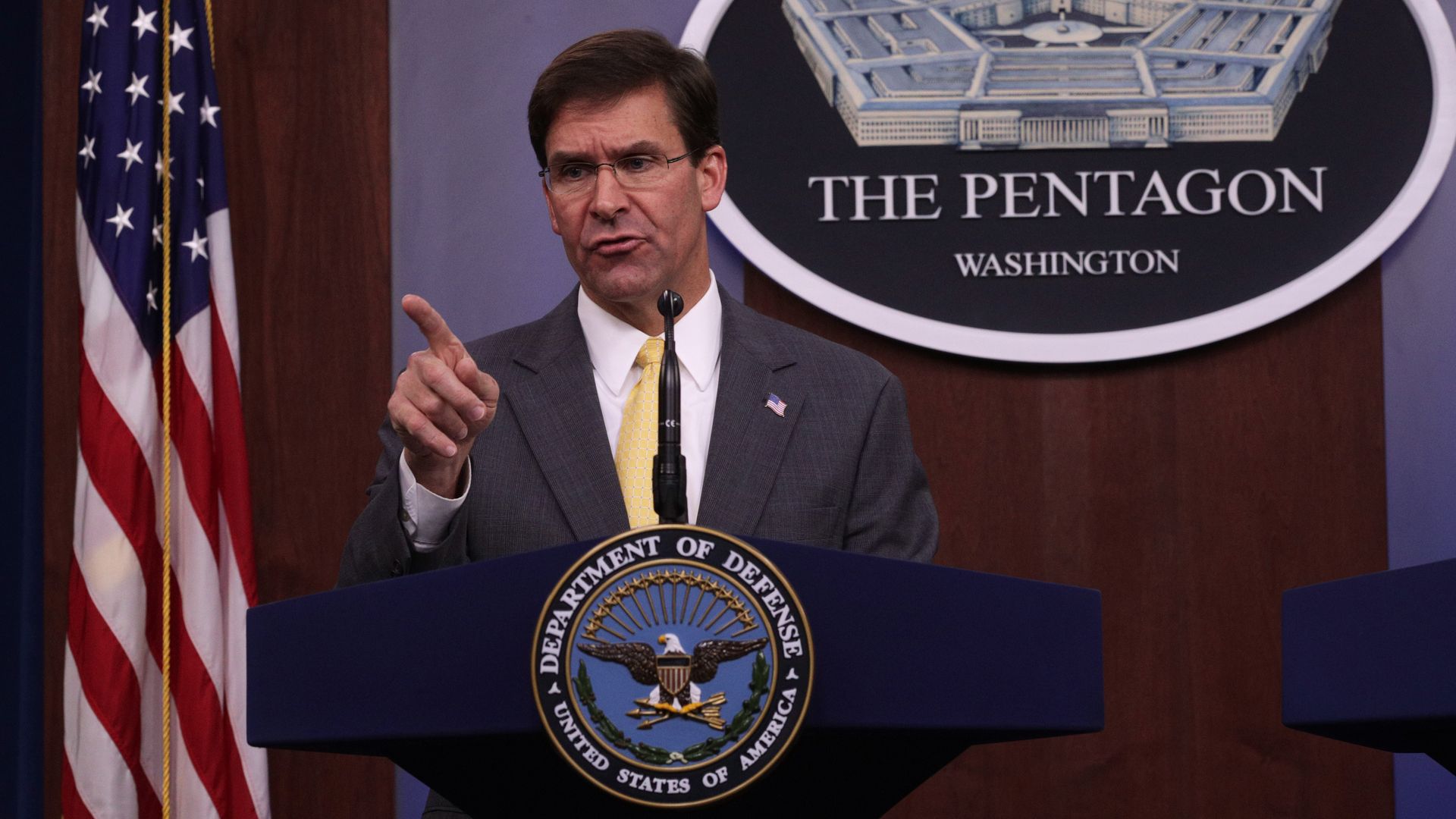
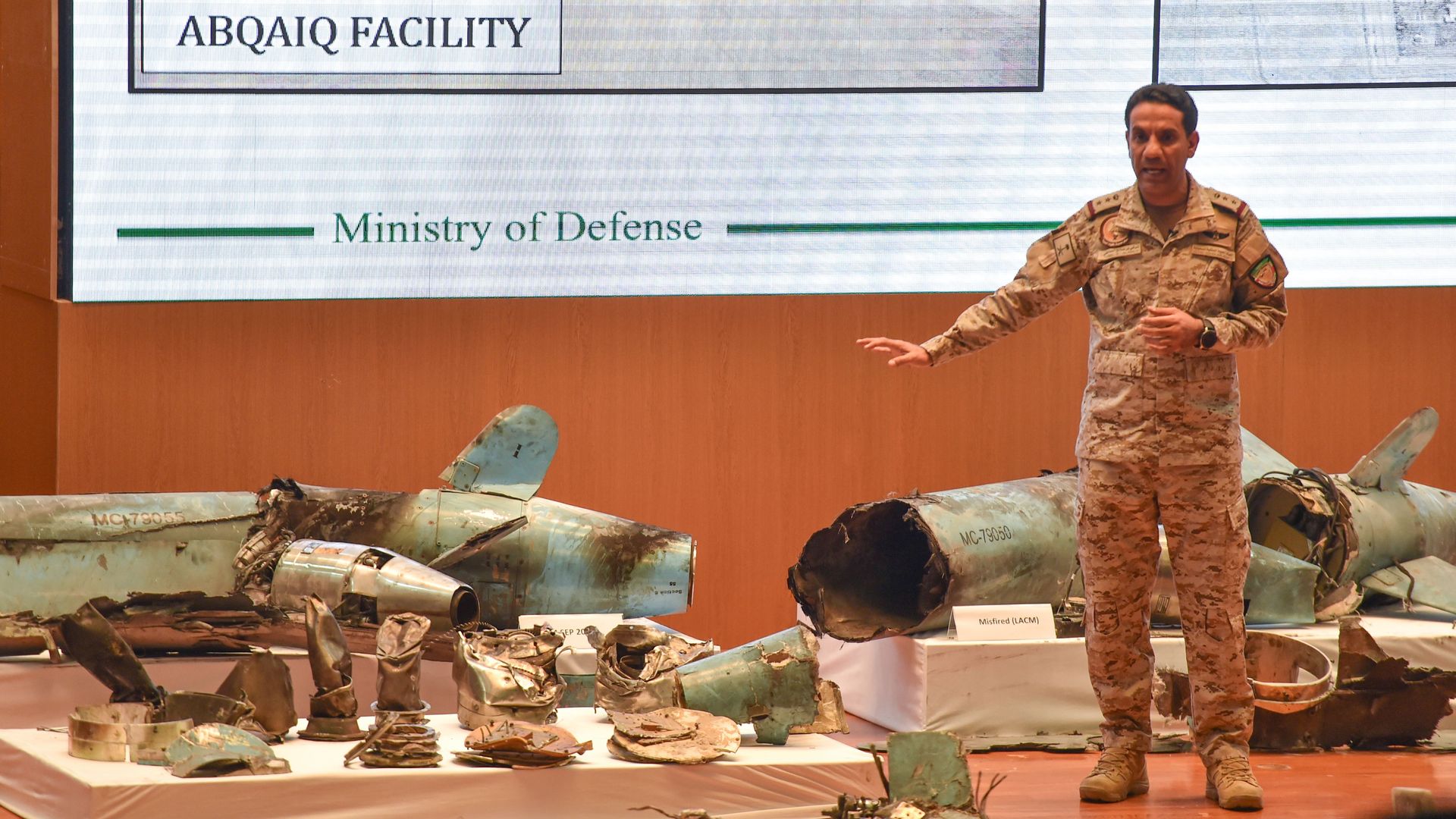
In a press conference Friday evening, U.S. Secretary of Defense Mark Esper announced the Pentagon will deploy U.S. forces to the Middle East in response to last Saturday's attacks against major oil processing and production sites in Saudi Arabia.
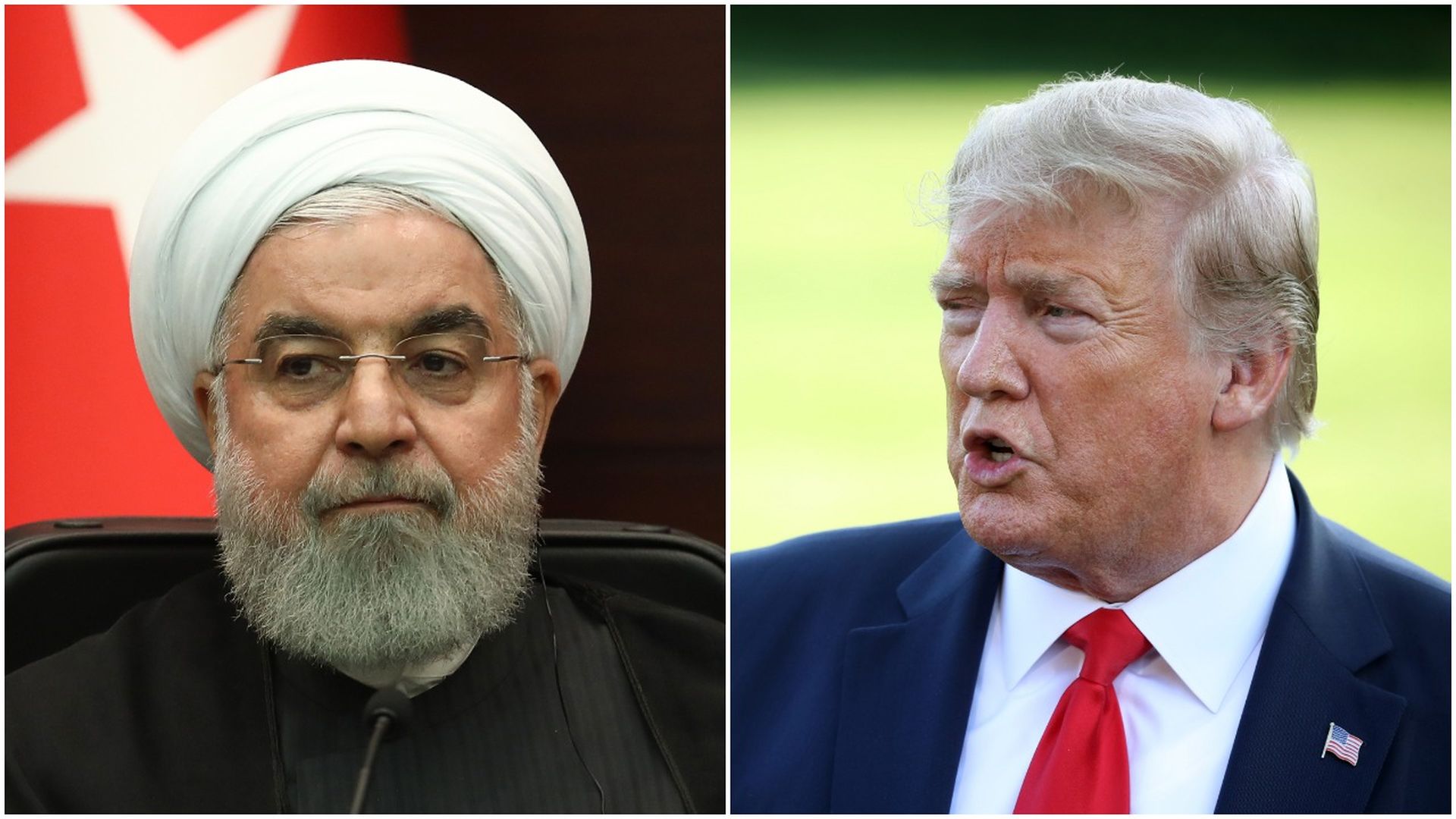
Why it matters: Both Secretary of State Mike Pompeo and the Saudis have blamed Iran for the attacks, though officials are still investigating. Iranian officials have warned the U.S. they are prepared to respond to any attack from the U.S. or Saudi Arabia, the Washington Post reports.
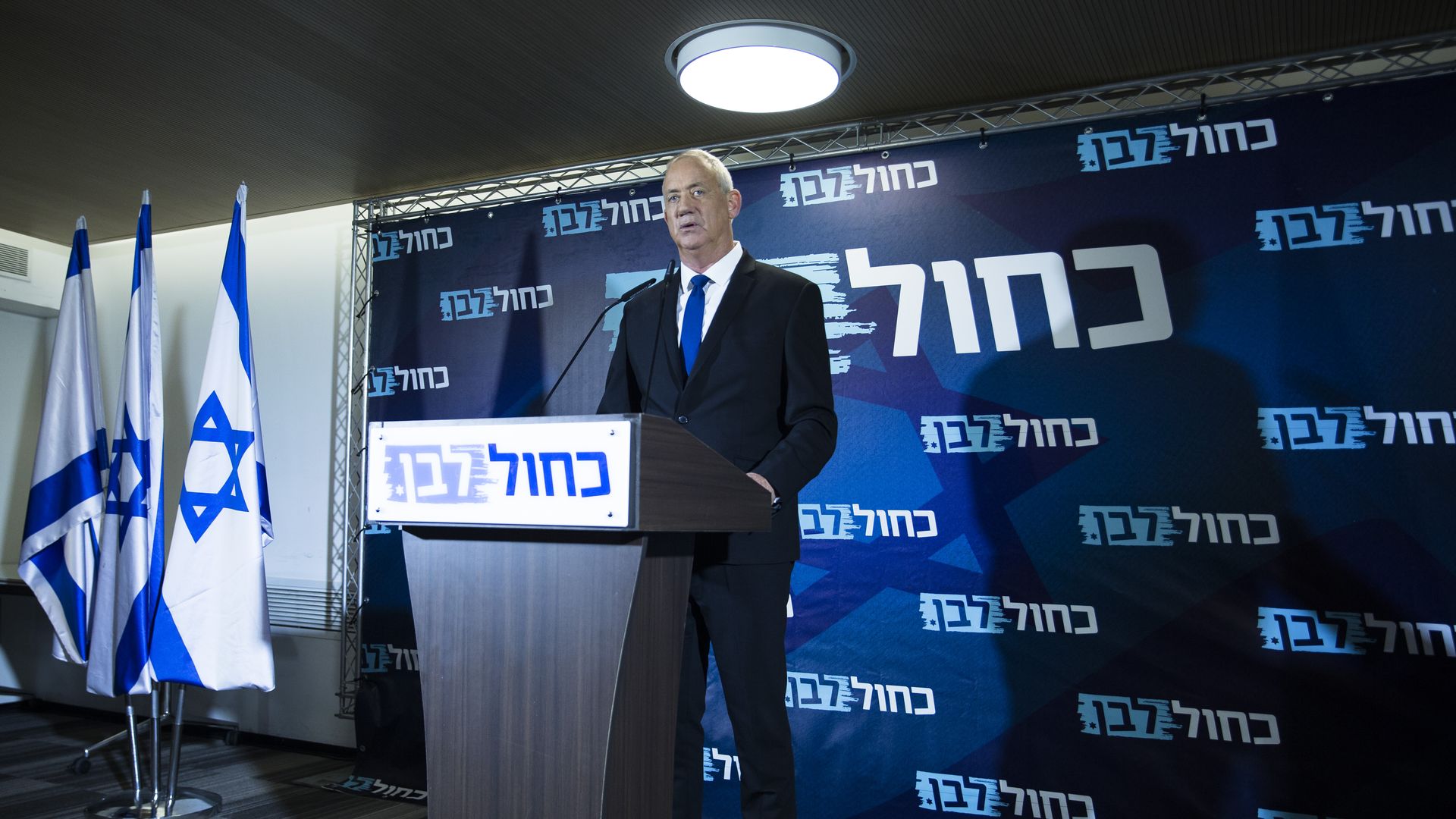
Jason Greenblatt, President Trump's Middle East envoy, plans to meet next week with Benny Gantz, the leader of the Blue and White Party that won this week's Israeli elections, Blue and White officials tell me.
Why it matters: This will be the first time a senior White House official meets Gantz since he entered politics a year ago, and the first recognition of Gantz as an important political player in Israel.
Iran’s alleged attack on Saudi oil facilities was a dramatic escalation in its shadow war with the U.S. and a clear sign that Tehran’s previous strategy was not working.
The big picture: Since May, Iran has tried to counter U.S. sanctions by tormenting the oil market with small-scale attacks, such as placing mines on ships in the Persian Gulf. Its goal has been to drive oil prices higher and thus raise the costs of the U.S. “maximum pressure” strategy.
President Trump told reporters in the Oval Office on Friday that he had issued the "highest sanctions ever imposed on a country" on Iran's central bank.
The backdrop: His statement comes after he tweeted earlier this week that he had instructed Treasury Secretary Steven Mnuchin to "substantially" increase sanctions against Iran. Beyond Trump's statement in the Oval, the administration has not released any further details.
The British pound rose to a 2-month high against the dollar Thursday as hopes are again rising that the U.K. will avoid a no-deal Brexit.
Driving the news: European Commission President Jean-Claude Juncker said in an interview yesterday he expects Brussels to reach a deal with Britain to leave the EU with a deal in place to avert a messy break-up.
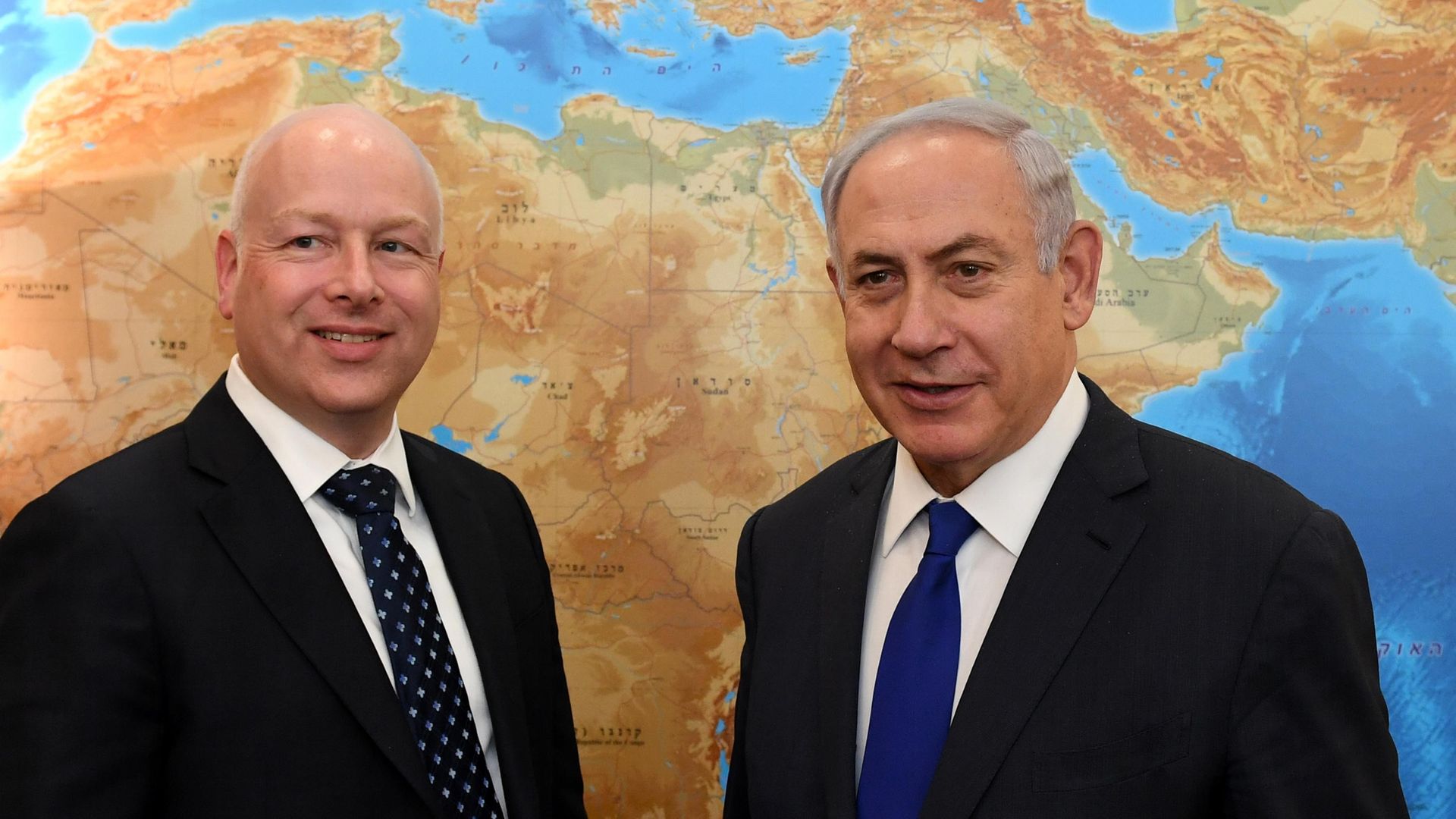
Jason Greenblatt, President Trump's envoy for Middle East peace, met in Jerusalem Friday with Israeli Prime Minister Benjamin Netanyahu.
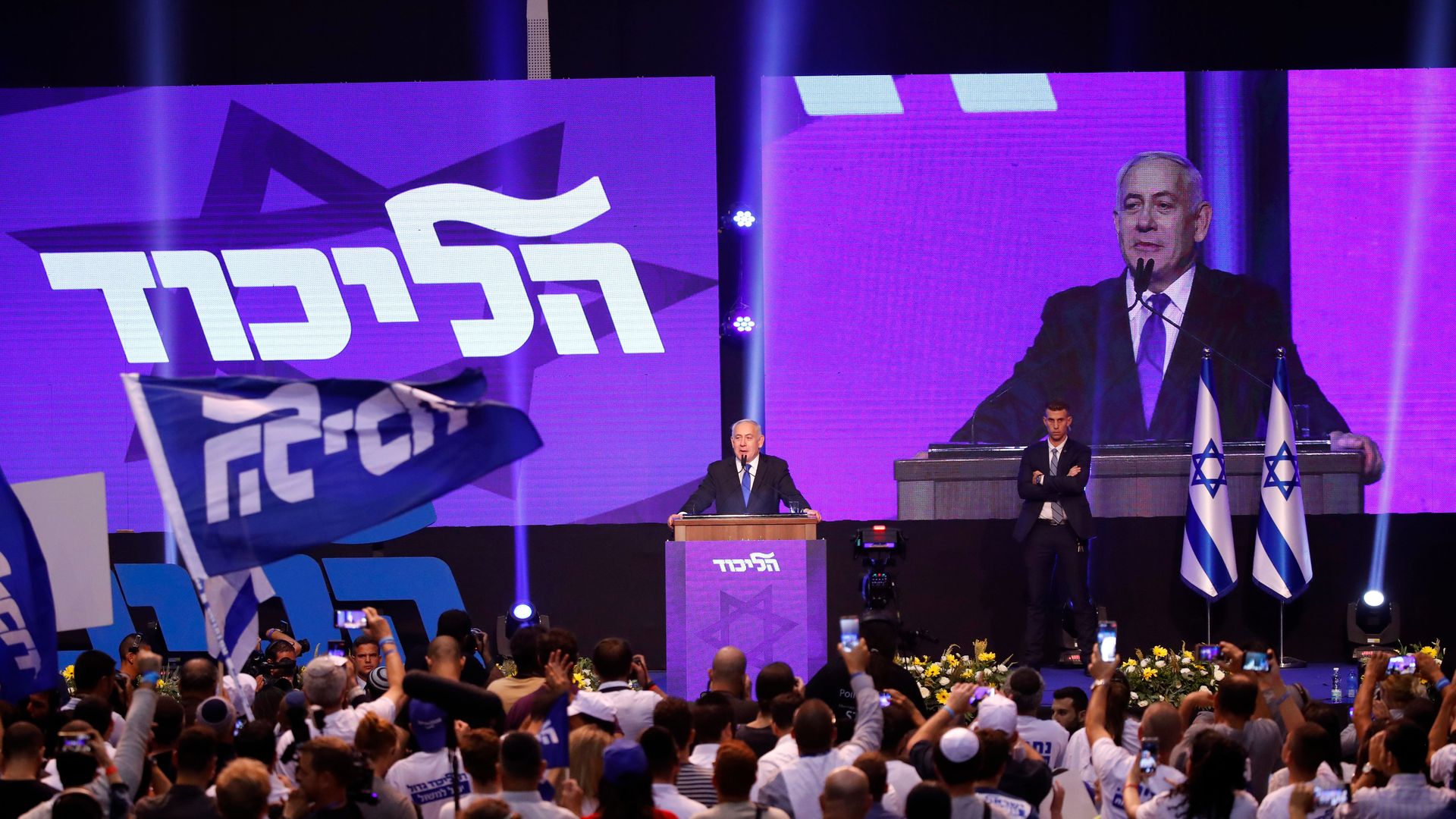
The backdrop: As had been expected, Netanyahu failed to win a parliamentary majority as the final results of Israel's elections were published this morning.
If the Benjamin Netanyhahu era is coming to an end, Israel’s longest-serving prime minister is going out swinging.
By the numbers: Netanyahu’s Likud party is on course for 31 seats after Tuesday’s election, with Benny Gantz’s Blue and White party winning 33, per Haaretz. But Gantz’s center-left bloc (57 seats) and Netanyahu’s right-wing bloc (55) are both short of the 61 seats needed for a majority.
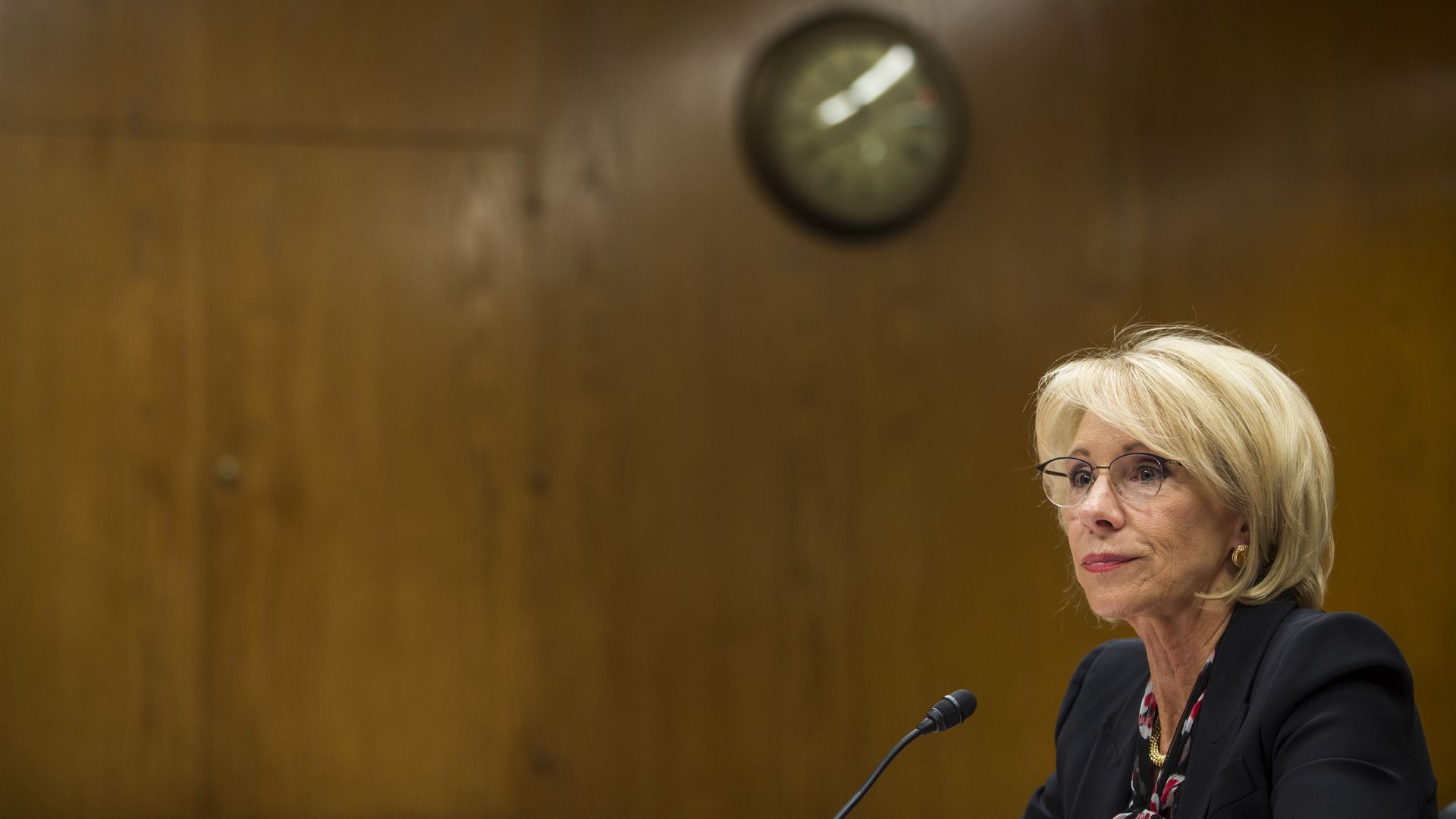
The Education Department told Duke University and the University of North Carolina at Chapel Hill to restructure their joint Middle East studies program, claiming there was not enough “positive imagery of Judaism and Christianity in the region," the New York Times reports.
The state of play: In a letter assistant Secretary for postsecondary education Robert King wrote that the Duke-UNC program "appears to lack balance," alleging that it failed to abide by the standards of Title VI of the Higher Education Act, which grants college funding for international studies and foreign language programs.
This past weekend's strikes on critical infrastructure at Saudi Arabia's second largest oil field at Khurais and its vital crude oil stabilization center at Abqaiq virtually eliminated the cushion of spare oil field capacity that typically prevents market panics during large supply disruptions.
Why it matters: The attack marks a major escalation of the proxy war between regional rivals Saudi Arabia and Iran that has raged since 2015, though there have been previous acts of sabotage on oil facilities. Its success shakes confidence in Saudi Arabia's status as the global swing producer of spare oil supply, a role that has afforded Riyadh substantial influence.