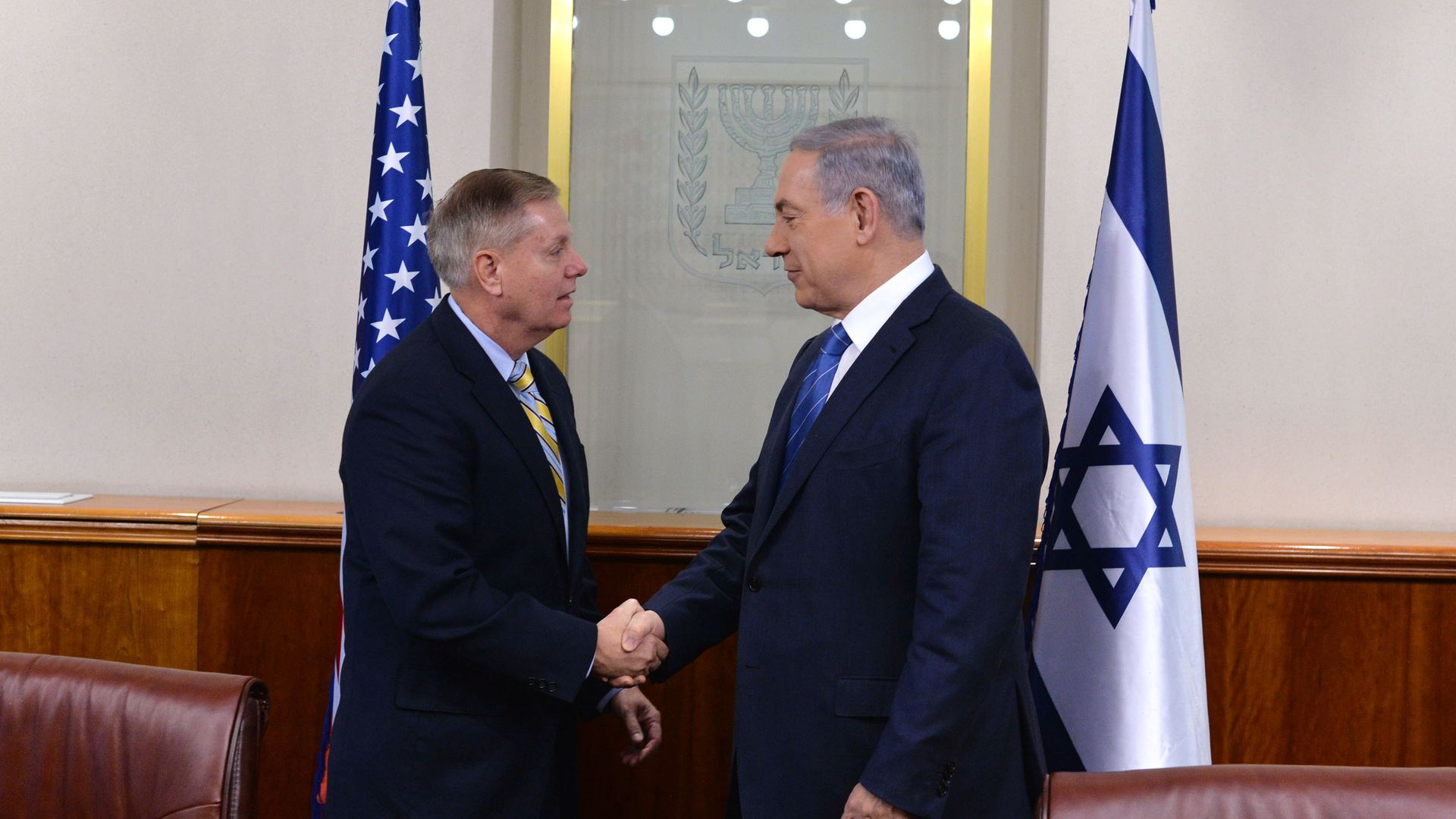
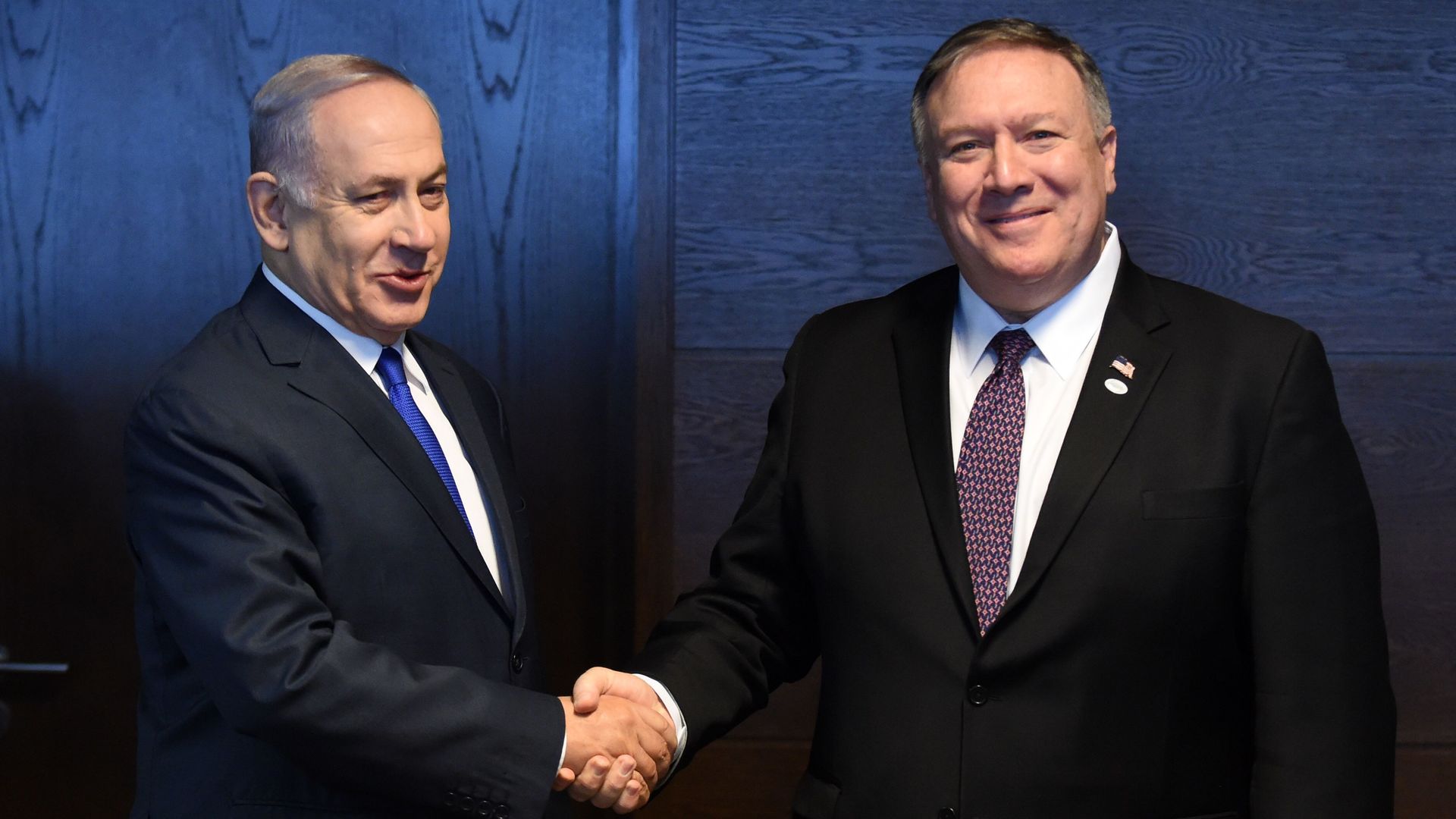
Israel is trying to prevent the Senate from passing a bipartisan resolution endorsing a two-state solution for the Israeli-Palestinian conflict, Israeli officials and congressional staffers tell me.
Why it matters: The resolution could put pressure on the White House as it prepares to release its long-awaited peace plan.
China has invested heavily in soccer since President Xi Jinping, a huge fan, made it a national priority in 2015. First came the youth academies, then came the foreign coaches and now comes phase three: naturalizing foreign players.
Driving the news: 26-year-old Nico Yennaris, who grew up in London and played on the same Arsenal youth team as Harry Kane, just became the first foreign-born player to be called up to the Chinese national team.
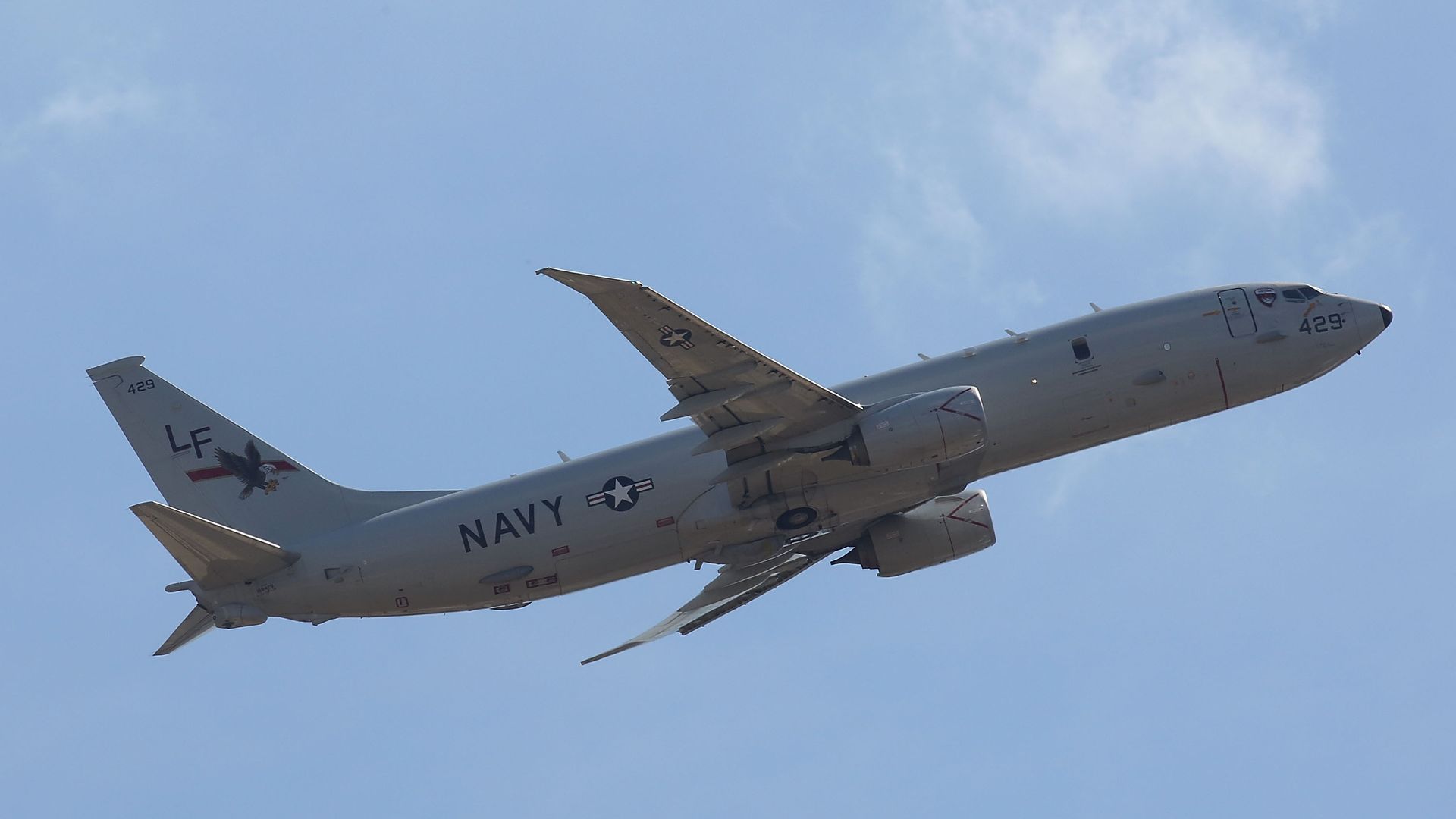
A Russian fighter plane intercepted a U.S. Navy aircraft flying in international airspace over the Mediterranean Sea 3 times over the course of 175 minutes on Tuesday, the U.S. 6th Fleet said in a statement, calling the action "irresponsible."
What they're saying: The 6th Fleet said a U.S. Navy P-8A Poseidon aircraft was intercepted by a Russian air-defense fighter SU-35. It said the second interaction was unsafe because it passed at high speed "directly in front of the mission aircraft, which put our pilots and crew at risk. ... The U.S. aircraft was operating consistent with international law and did not provoke this Russian activity."
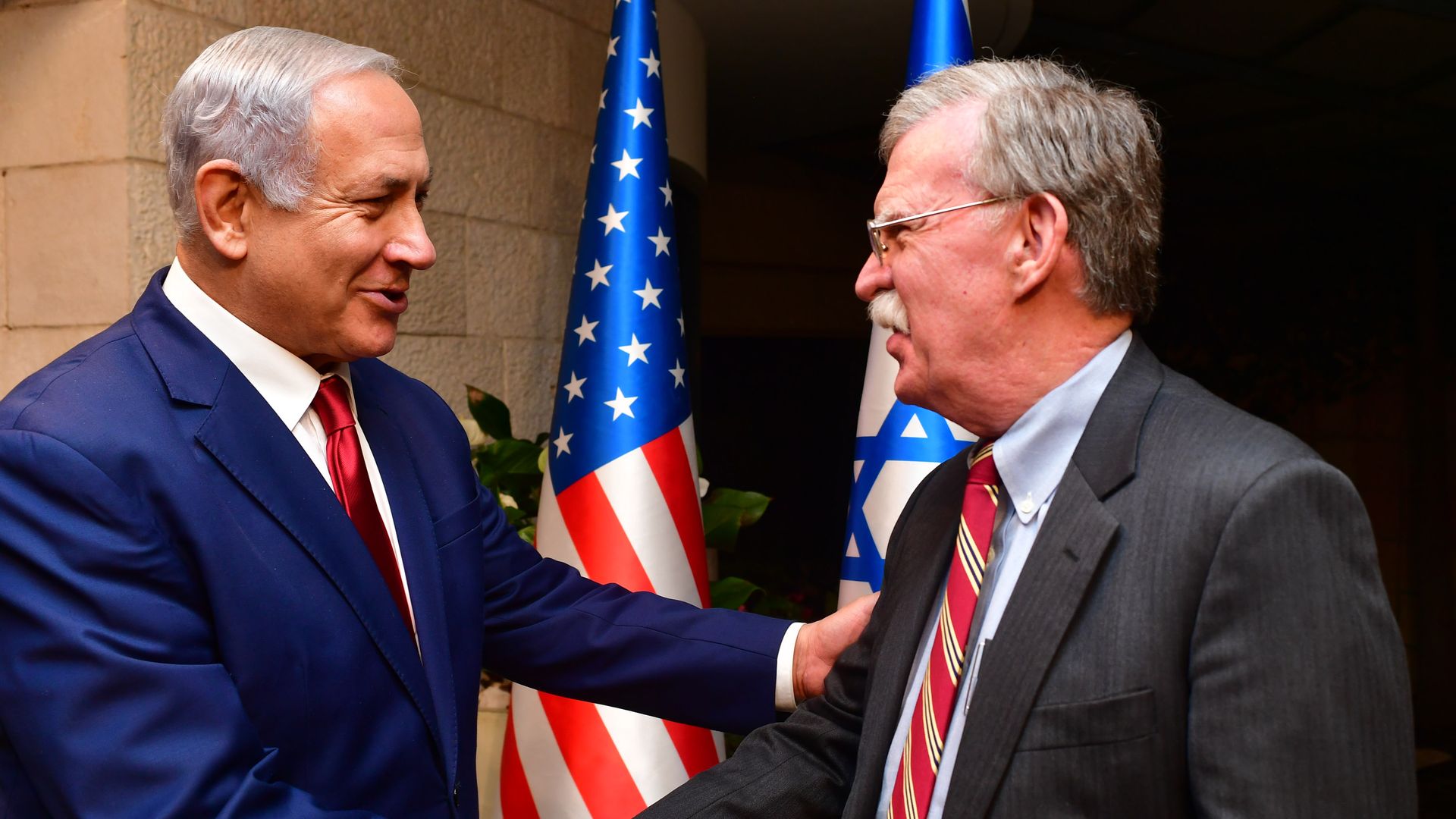
A senior White House official said in a conference call with reporters that the U.S. plans to stress to Russia during its trilateral national security advisers summit in Jerusalem this month that Iranian forces and their proxies have to leave Syria.
Why it matters: The trilateral meeting between the national security advisers of Israel, the U.S. and Russia in late June is an unprecedented event. The White House official said the main focus of the summit will be Syria and Iran's activities in Syria, Lebanon and the rest of the region.
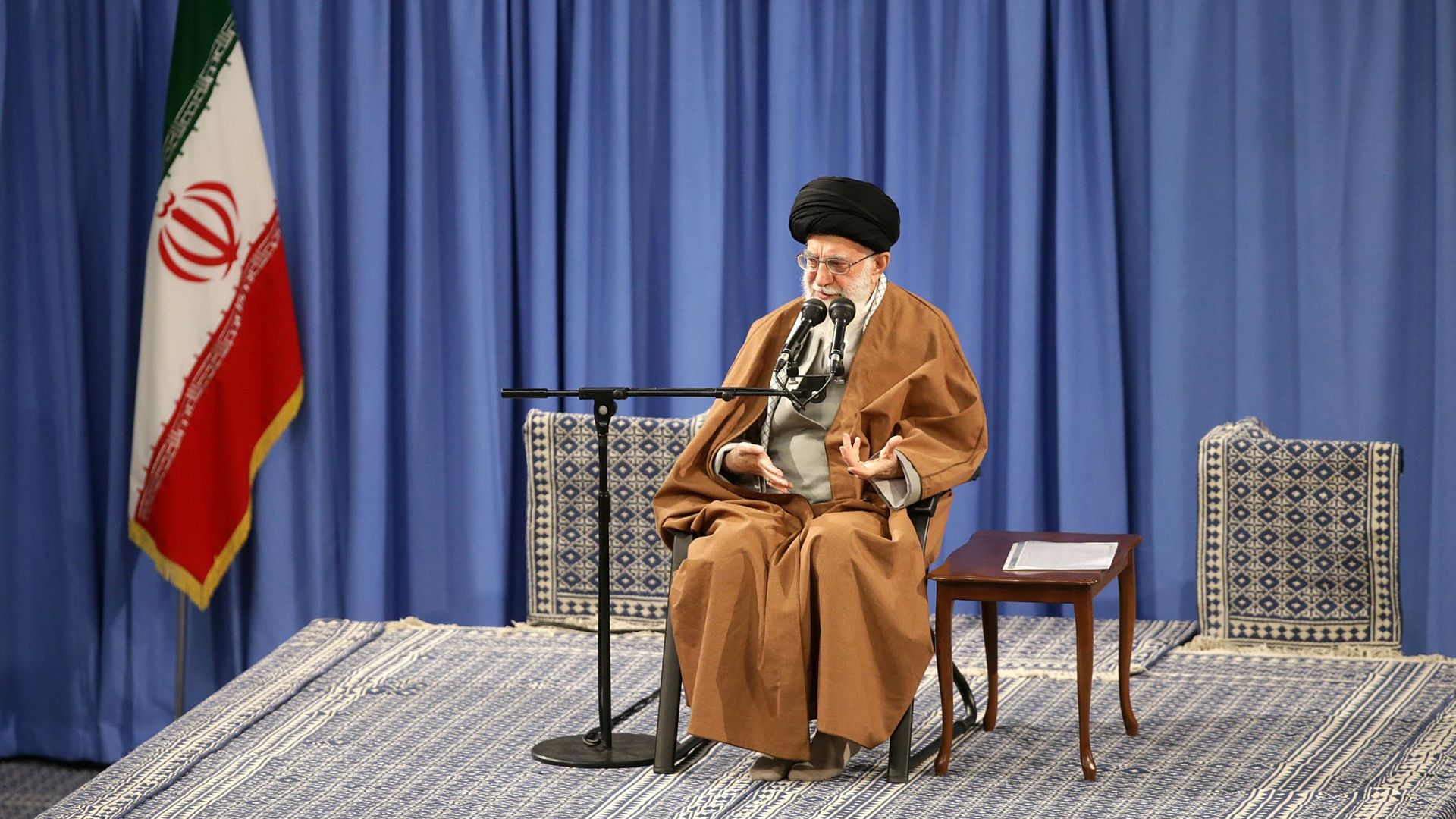
June 4 marks the 30th anniversary of Seyyed Ali Khamenei's reign as Iran’s Supreme Leader, making him one of the longest-serving autocrats in the modern Middle East.
Why it matters: Khamenei’s rule has seen increased tension with anddistrust of the West, proxywarfare across the region, troubled relationships with a series of presidents, and escalatingprotests. Iran has only grown more authoritarian under Khamenei, making it unlikely the country will change course either at home or abroad.
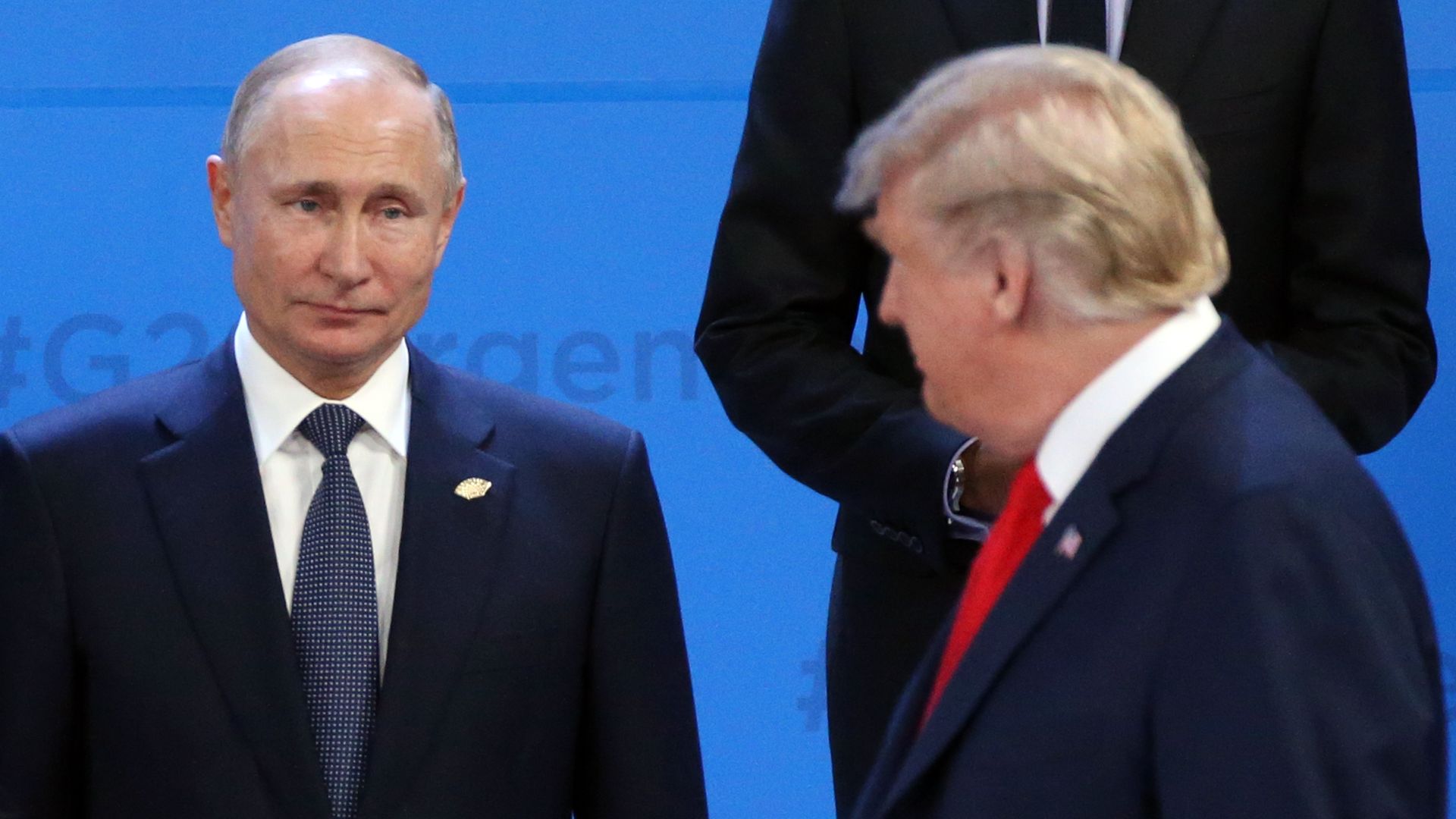
Vladimir Putin's spokesman says he has no idea where President Trump's claim that Russia had "removed most of their people from Venezuela" came from. Dmitry Peskov, the spokesman, was adamant that Trump had received "no official messages in this regard," per the Washington Post.
Why it matters: Russia supports Venezuela's Nicolás Maduro in his power struggle with the U.S.-backed Juan Guaidó, and sent around 100 troops in March to support the embattled president. That complicates matters for the Trump administration, which has said all options — including military intervention — are on the table.
Israel and Lebanon will soon begin direct talks on the delineation of their shared maritime border, a senior Israeli official tells me. The talks will start in the next few weeks, with the U.S. mediating between the parties.
Why it matters: This is a big step forward in a long-standing conflict that has stalled natural gas exploration in the eastern Mediterranean. Solving the crisis could unlock potential natural gas reserves for both countries.
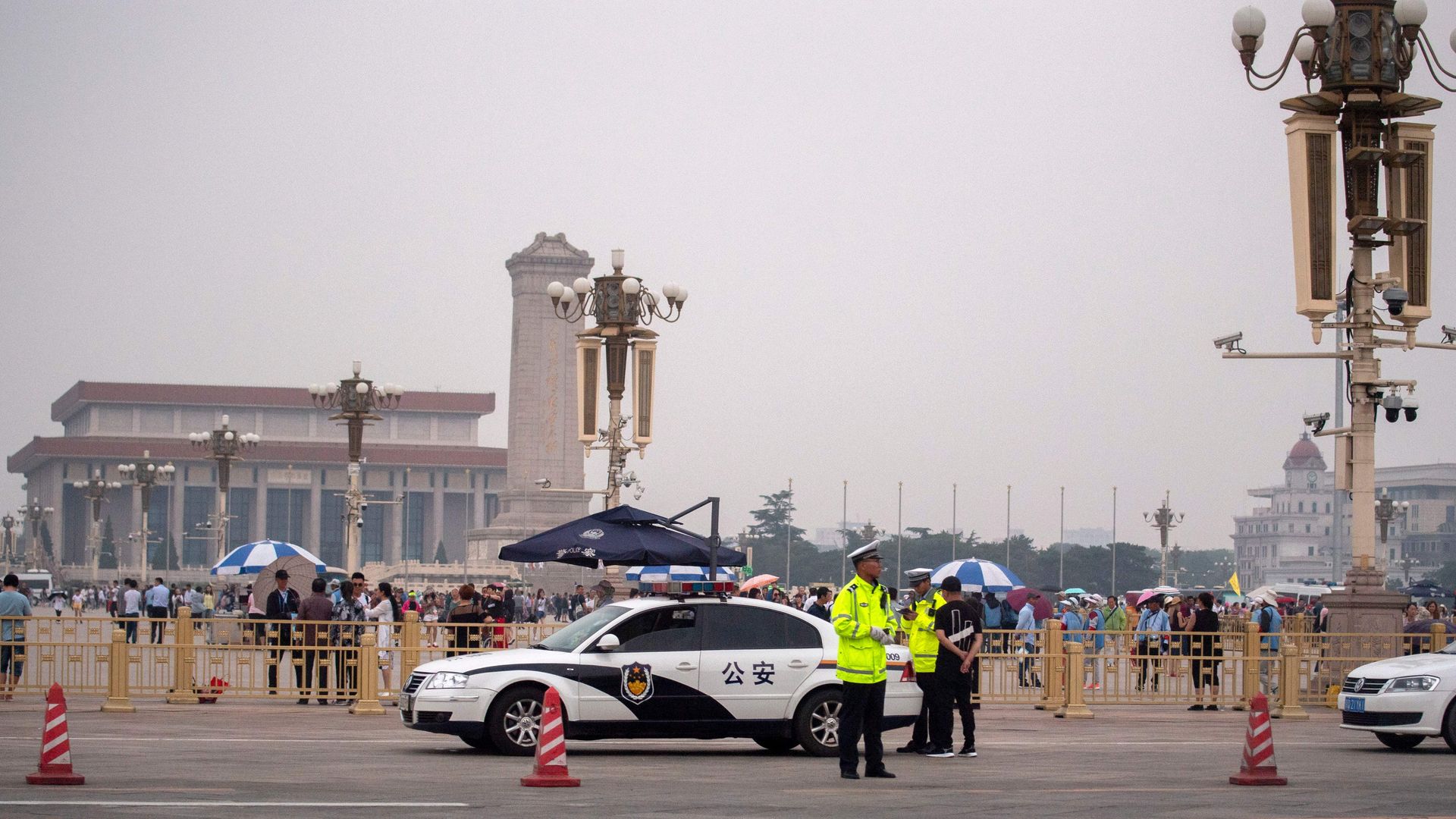
China said Tuesday Secretary of State Mike Pompeo "smears" the country with his remarks about the 1989 Tiananmen Square protest, as Beijing authorities stepped up security in the area on the 30th anniversary of the crackdown.
Details: Pompeo criticized China's human rights record in a statement Monday and called on the government to "make a full, public accounting of those killed" in the crackdown on pro-democracy protesters. A spokesman for the Chinese embassy in Washington, D.C., called Pompeo's remarks "an affront to the Chinese people."
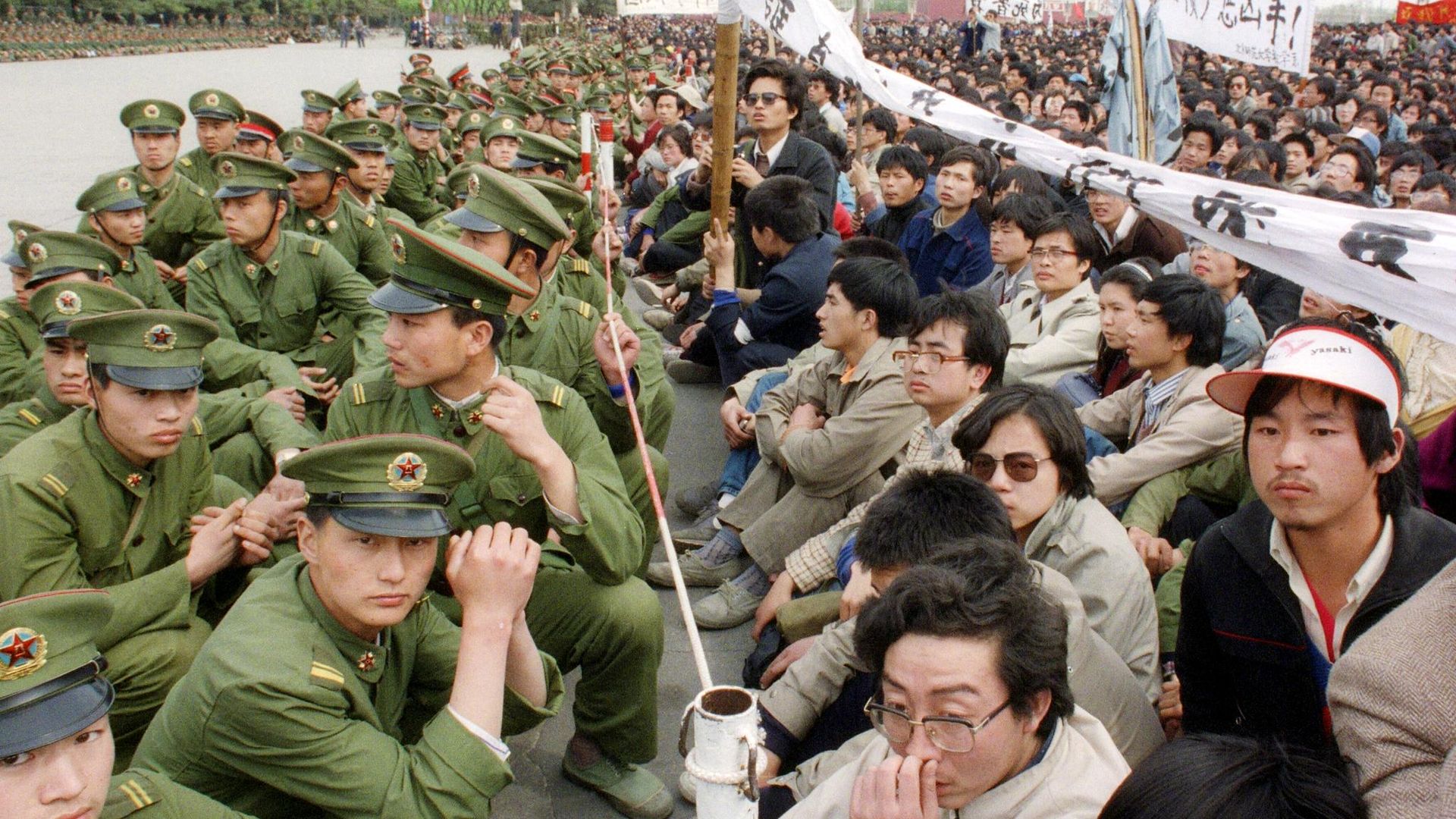
Thirty years ago right about now, Chinese troops were beginning a brutal crackdown on pro-democracy protesters in Tiananmen Square that would leave an estimated 1,000–1,500 dead.
Flashback: What began in April as student demonstrations tied to the death of a reformist former leader, Hu Yaobang, “swelled as older people joined and the list of demands broadened,” writes Willis Sparks of GZERO Media.