A tiny tropical nation hopes to set an example for the world on two crucial challenges: reversing authoritarianism and standing up to China.
Why it matters: Democracy appears to be returning to the Maldives six years after the country’s first, short-lived democratic government was toppled. In an election last month that was widely expected to be rigged in favor of strongman President Abdulla Yameen — and which took place with the most prominent opposition leaders in jail — the opposition won a resounding victory. Yameen initially accepted the results but has since reversed course.
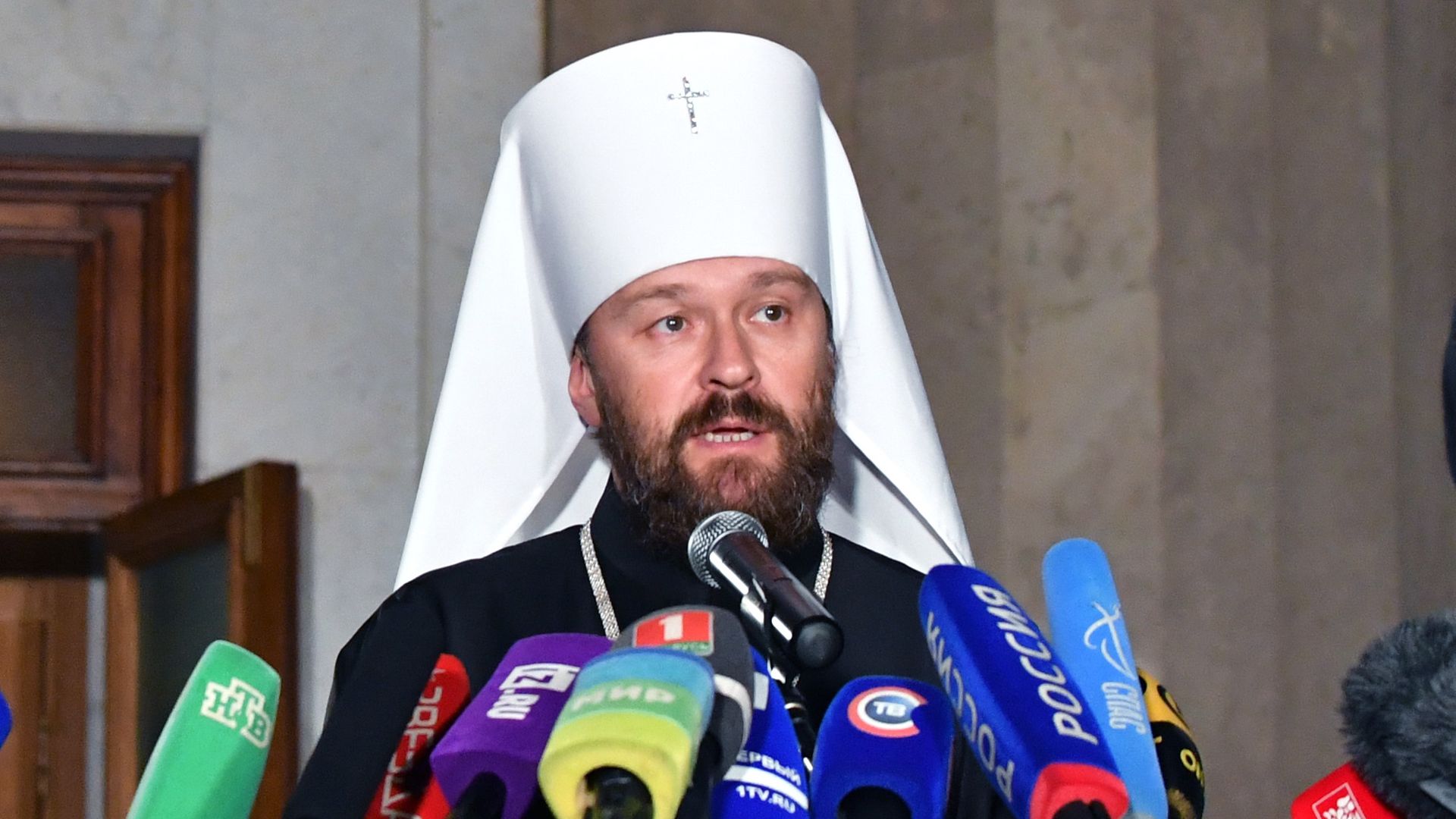
The Russian Orthodox Church said Monday that it has severed ties with the Ecumenical Patriarchate of Constantinople, the leading authority for the world’s 300 million Orthodox Christians, for supporting Ukraine's successful push for an independent church, reports Reuters.
The details: This is reportedly the biggest split in Christianity in 1,000 years. It comes just a week after the Ukrainian Orthodox Church was approval to split from the Russian Church — a move that sought to prevent Russian from interfering in its affairs. Metropolitan Hilarion, a cleric who’s infuriated by Constantinople’s decision to support the Ukrainian church's independence, said the Holy Synod had no choice but to “completely sever ties.”
On a call today with Israeli Prime Minister Benjamin Netanyahu, Australian Prime Minister Scott Morrison said he's considering recognizing Jerusalem as Israel's capital and moving the Australian Embassy there, Netanyahu's office said in a statement.
Why it matters: If Australia does move its embassy, it will be the first Western country to follow President Trump's lead. Guatemala and Paraguay moved their embassies to Jerusalem, but last month the new government in Paraguay backtracked and decided to move the embassy back to Tel Aviv.
British Prime Minister Theresa May told the House of Commons Monday that she still believes a Brexit deal can be reached with the European Union and that the two are not "far apart" — one day after talks broke down amid a flurry of speculation that a deal could be imminent.
The state of play: The biggest sticking point remains how a customs union will operate across the Irish border after Brexit — and how long the arrangement will last after Brexit to prevent a "permanent limbo." May has repeatedly said she will reject any proposal that splits the U.K. by creating a customs border between Northern Ireland and the rest of the nation.
A foiled plot to bomb a rally of Iranian dissidents in Paris "has sparked growing anxiety in France, Germany and several other countries, including the United States and Israel, that Iran is planning audacious terrorist attacks and has stepped up its intelligence operations around the world," per the WashPost.
Why it's happening: Iranian leaders are "under pressure from domestic protesters, Israeli intelligence operatives and the Trump administration, which is reimposing economic sanctions lifted under President Barack Obama."
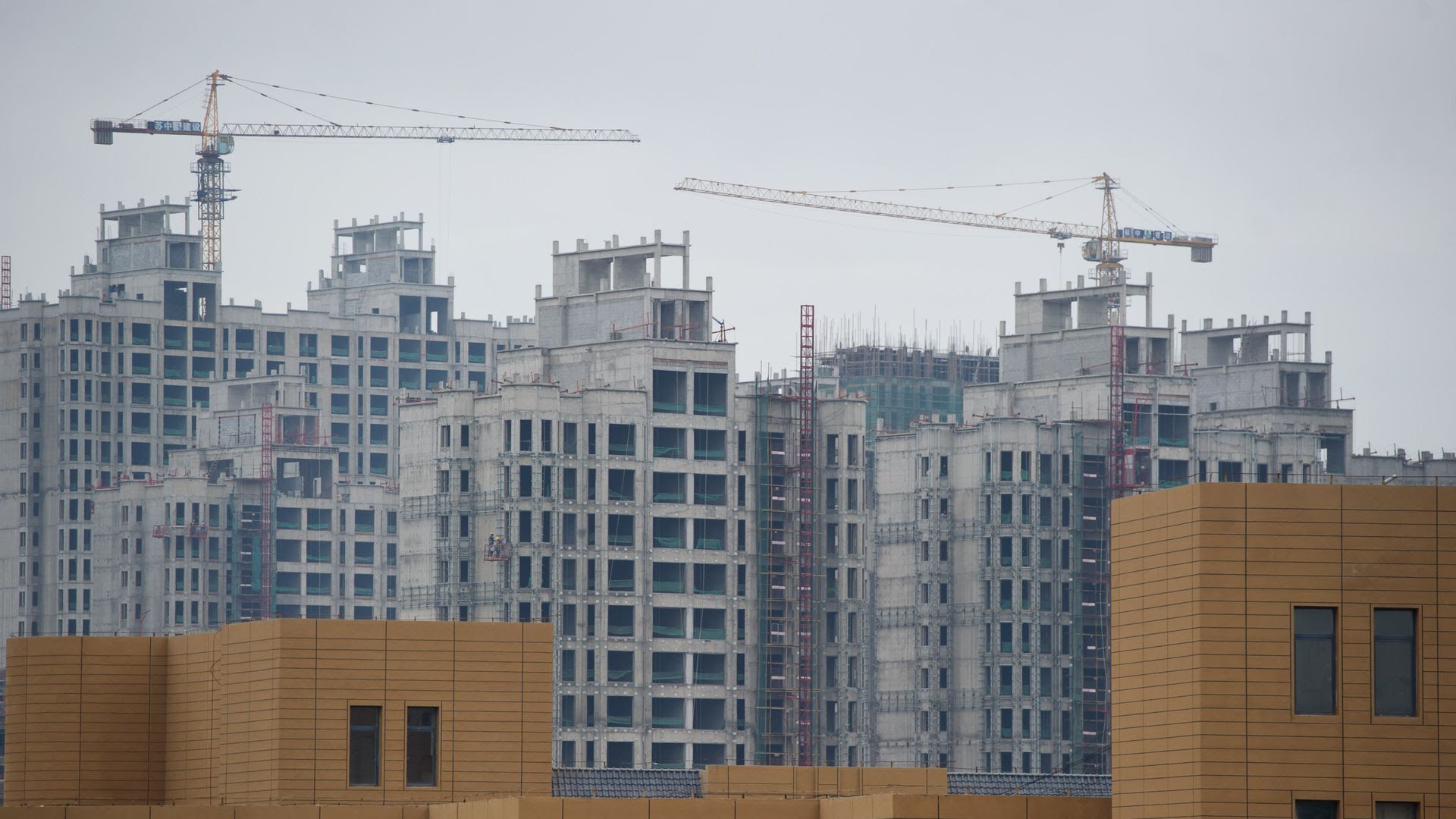
China has spent 3.2 trillion yuan so far — that's $463 billion — tearing down substandard old dwellings and replacing them with brand-new tower blocks.
The big picture: The Shantytown Redevelopment Program (yes, that's its actual name) is now being accelerated. Between 2018 and 2020, China plans to build 15 million new homes; work has already started on more than 5 million of them.
The European Union's chief Brexit negotiator, Michel Barnier, tweeted Sunday that there was not a potential deal on the table for Brexit after a day of frenzied speculation and "intense efforts."
The details: Barnier said, "Despite intense efforts, some key issues are still open, including the backstop for IE/NI to avoid a hard border." Britain's Brexit Secretary Dominic Raab had ignited speculation about a potential breakthrough when he took a surprise trip to Brussels Sunday ahead of a critical summit next week, per AP. An EU diplomat told Politico earlier today that the speculated deal was "at negotiator level [only]," implying there were plenty of potential roadblocks.
"Russia has been cultivating ties with the Taliban to increase its influence in Afghanistan three decades after Moscow’s humiliating defeat there helped hasten the Soviet Union’s collapse," Missy Ryan and Amie Ferris-Rotman of the Washington Post report.
Why it matters: "The Russian gambit is a relatively modest political investment that could yet yield outsize dividends as Moscow seeks to prove its global heft."