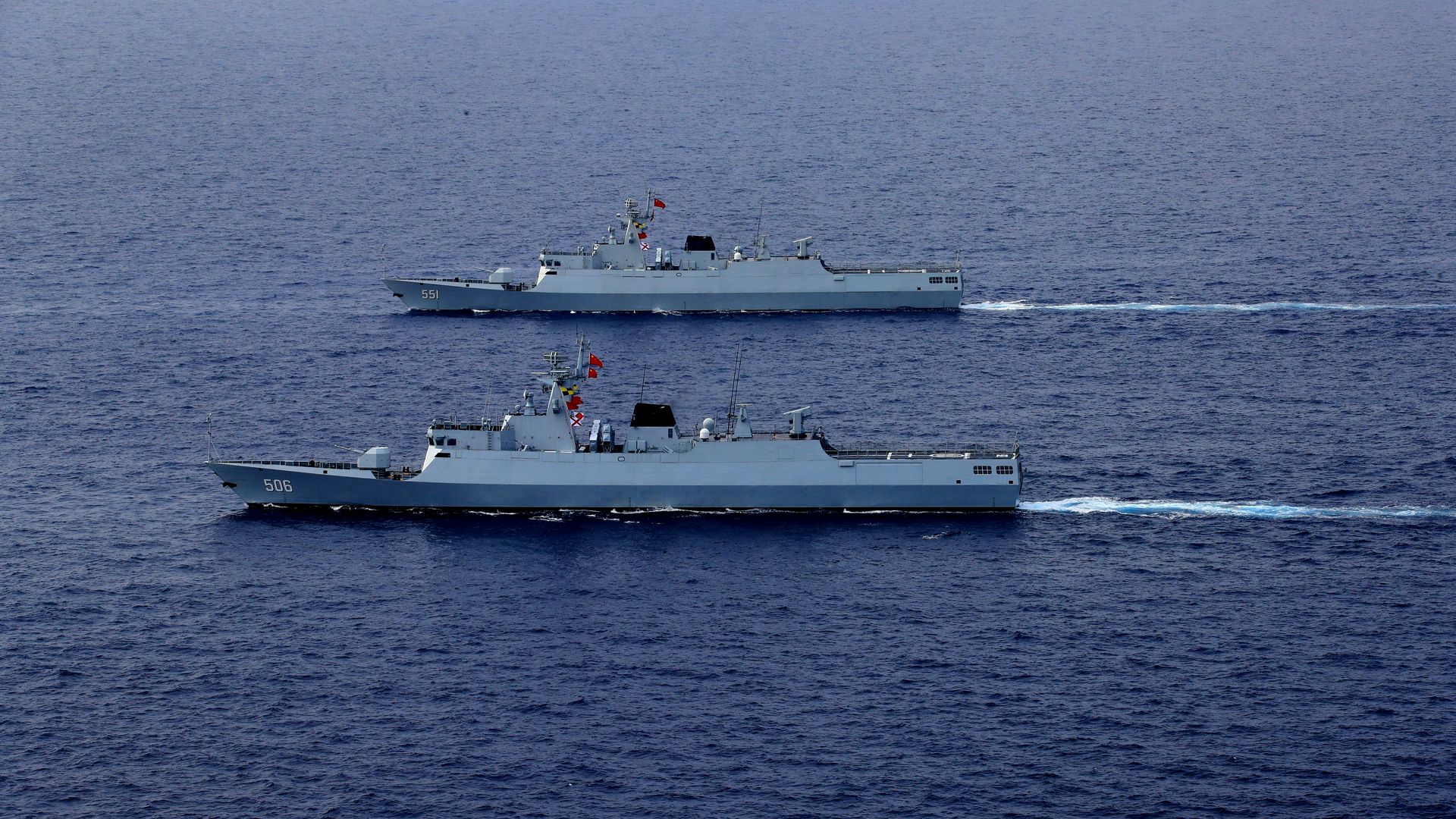
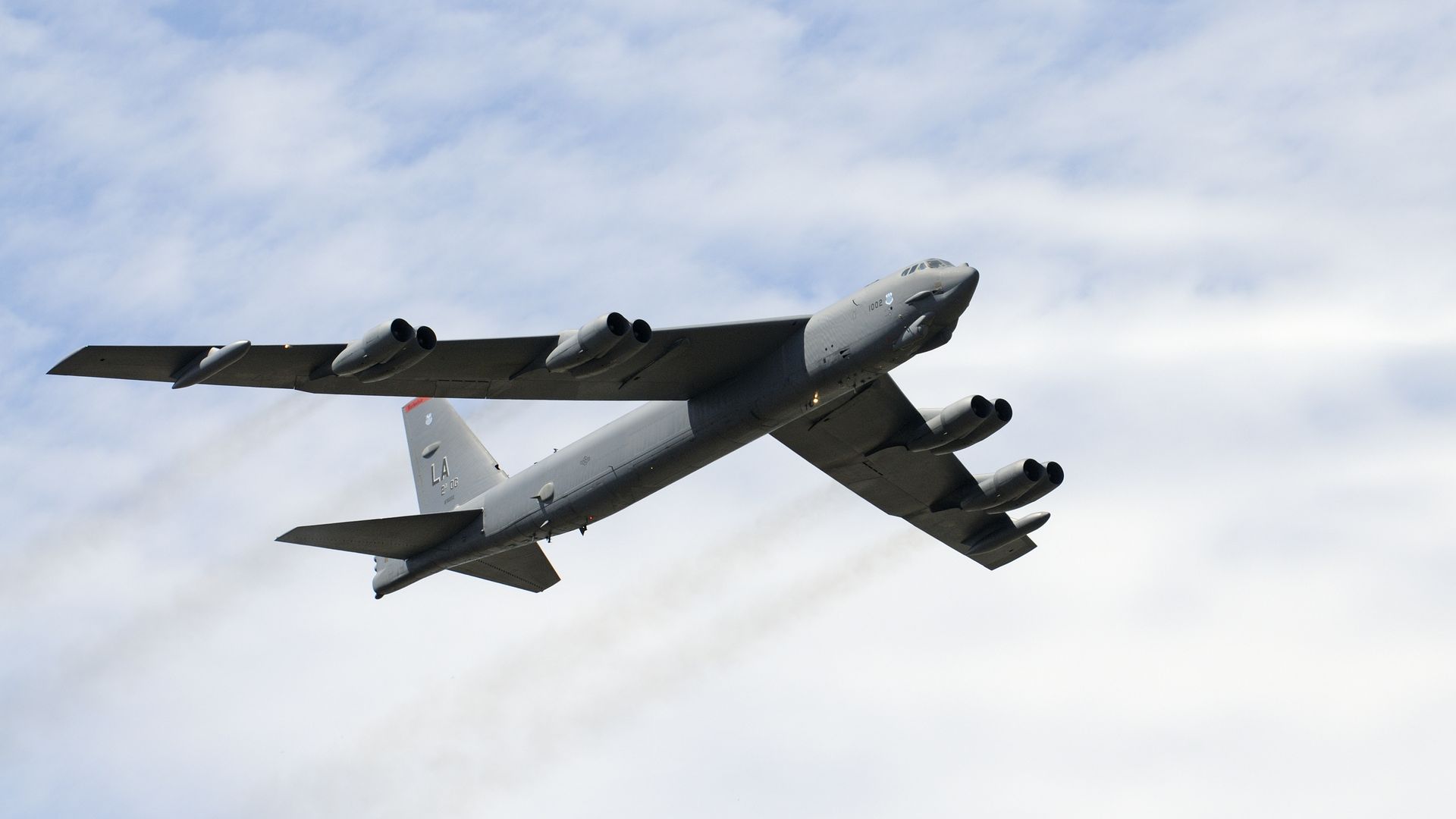
China's air force announced in a statement on Saturday that it conducted take-off and landing training for nuclear-strike capable bombers on unidentified islands in the South China Sea, per The Guardian.
Why it matters: The South China Sea — and who exactly controls it — is one of the most hotly contested issues between the United States and China, and the U.S. has threatened consequences for increased activity in the area.
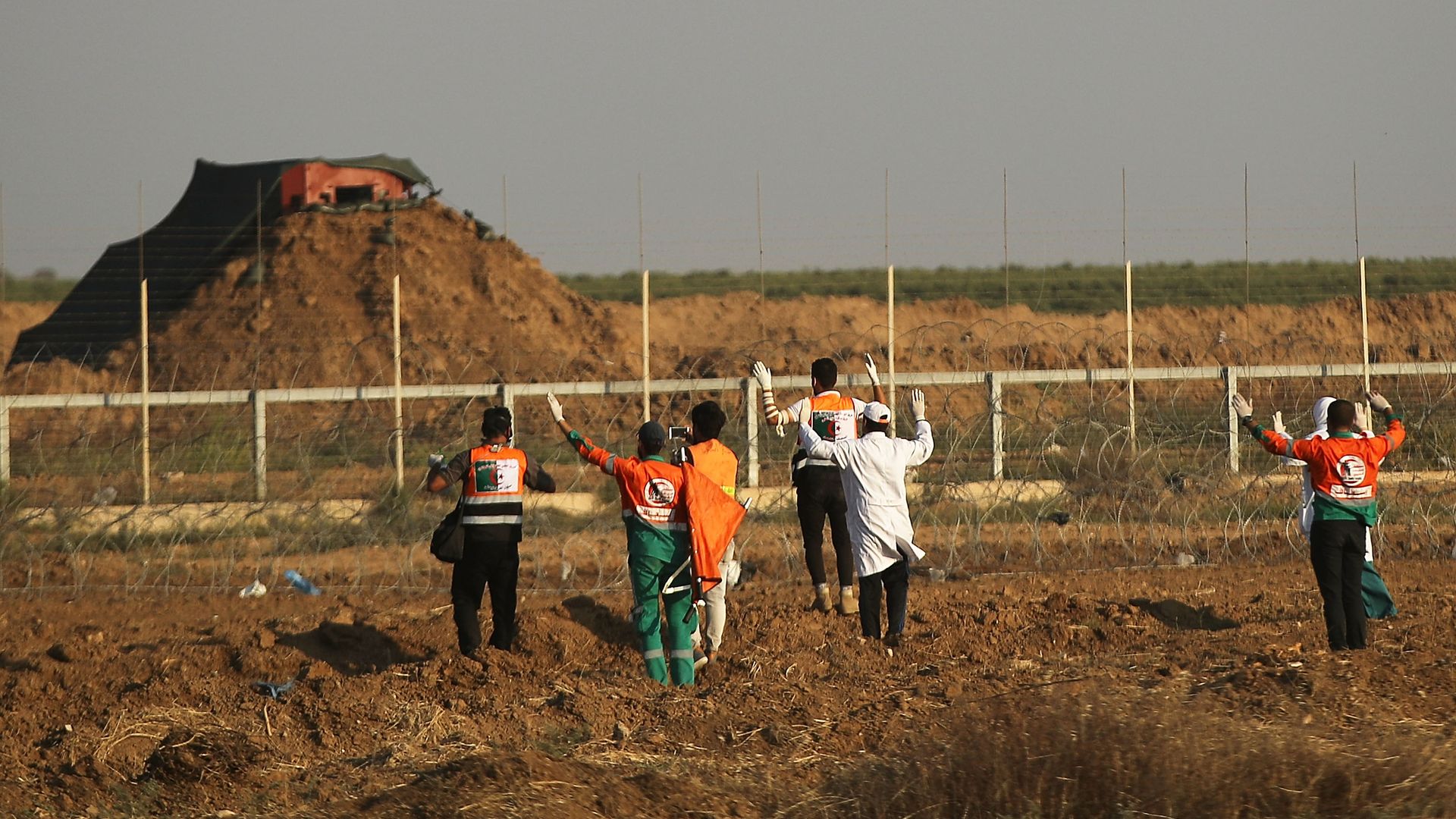
Anyone viewing this week's split-screen images of happy Israelis and Americans celebrating the U.S. embassy opening in Jerusalem alongside the confrontation and killing at the Israeli-Gaza border fence could be forgiven for writing off the prospects for peace.
Where it stands: Whether the two-state solution is merely dead or fully dead and buried, a number of factors have combined to stall its progress and make further deterioration much more likely. Yet in a Friday morning conversation I moderated at the Wilson Center with PLO chief negotiator Saeb Erekat and former Israeli negotiator Gilad Sher, a mutual conviction that the Israeli-Palestinian conflict can be resolved still emerged.
The big picture: The regime has hundreds of operatives around the world, helping the country side-step sanctions, per the Journal. The various schemes carried out by the operatives generated "hundreds of millions a dollars a year in cash and goods." A former Asia diplomat at the State Department, Daniel Russel, told WSJ: "North Korea has an army of these people."
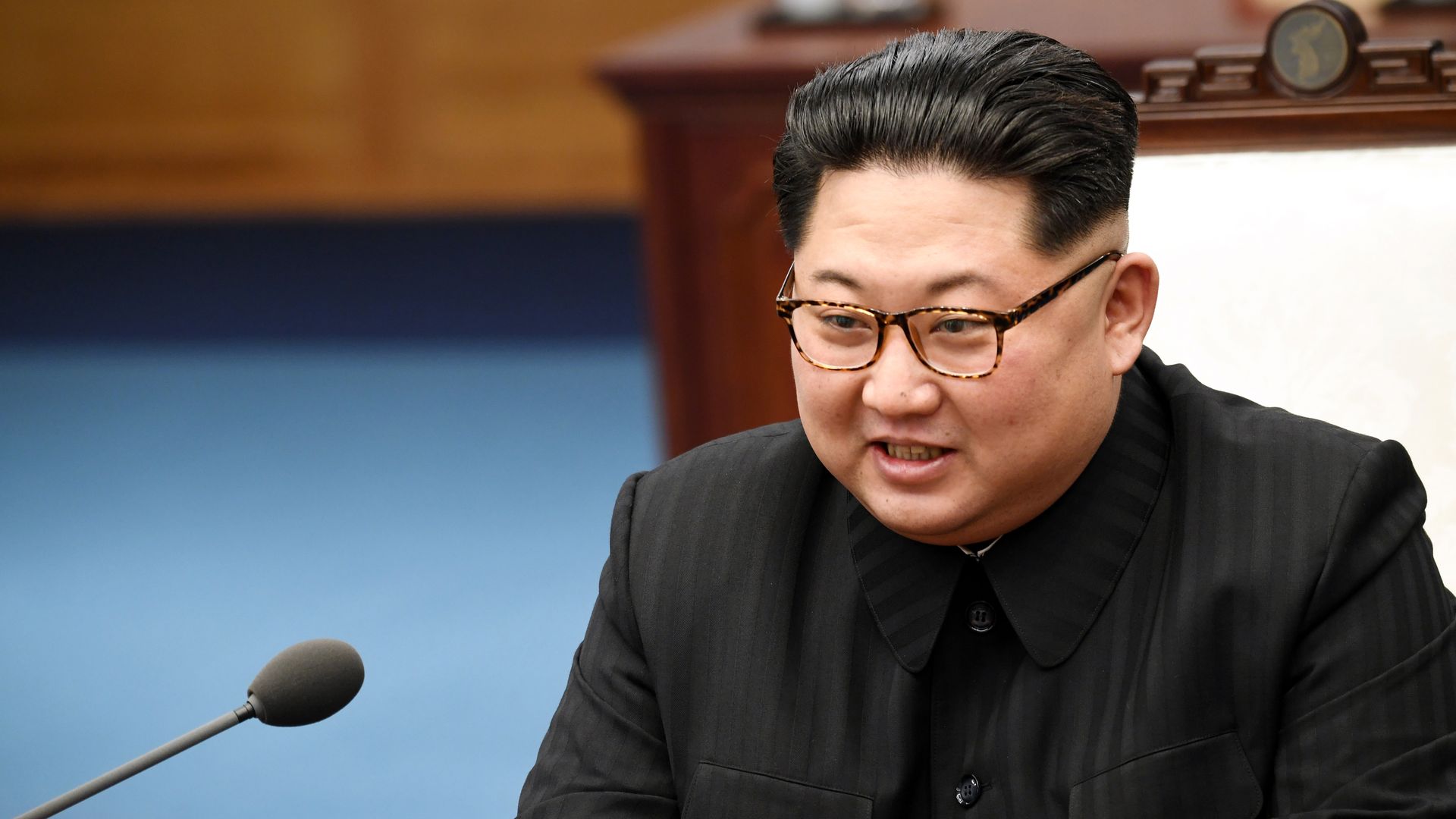
Why it matters: The move, first reported by the Wall Street Journal, follows numerous statements from the U.S. military and Trump administration that the U.S. is maintaining military pressure in the region until denuclearization is achieved. The change is reportedly an effort to ease tensions between the U.S. and North Korea after Kim Jong-un threatened to cancel the summit with Trump planned for next month, and effectively canceled talks with South Korea scheduled for this past Wednesday.
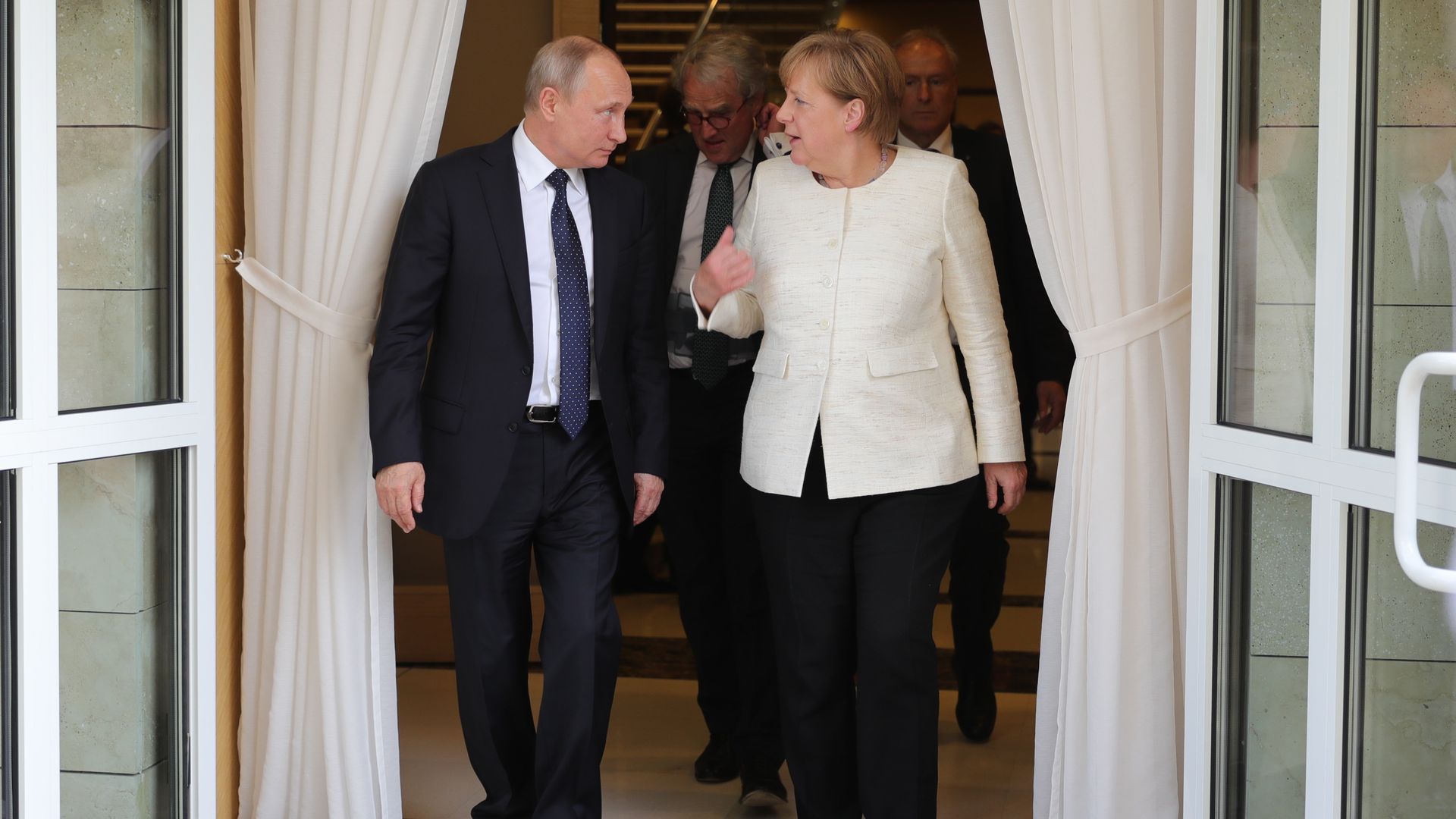
Rebuilding ties with Russia is now a "core policy objective" of Germany's government, Bloomberg reports, citing a senior German official.
The backdrop: Per Bloomberg, tensions with President Trump mean Merkel "is being pushed closer toward a more predictable partner in Moscow." Germany is furious with Trump over his decision to exit the Iran deal and his threats to slap sanctions on the EU. In a poll last December, Germans were more likely to describe Russia as a reliable partner than the U.S. Still, Putin and Merkel have had a decidedly cool relationship since the 2014 Ukraine crisis.
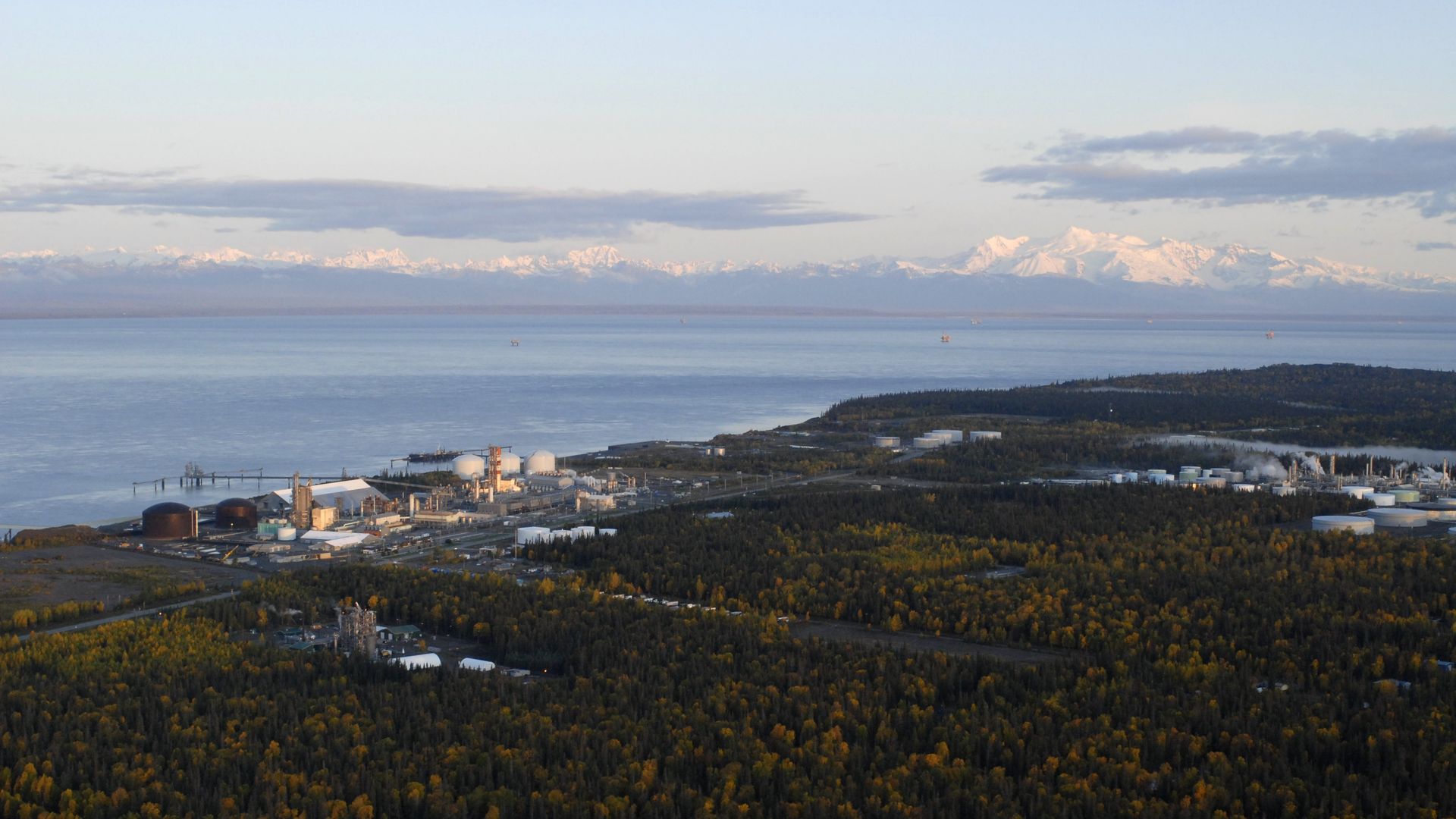
When President Trump demanded that China cut its $375 billion trade deficit with the U.S. by $200 billion, Chinese officials and the U.S. press shrieked. It seemed impossible. However, there's a simple way for China to give Trump this “win”: buying $200 billion worth of American oil, as well as liquefied natural gas (LNG) from Alaska, Texas and Louisiana.
The details: Alaska is estimated to have nearly $1 trillion worth of LNG that it's eager to sell and heartland states have several trillion dollars’ worth of oil and gas reserves available for export. While there would be some delays in delivery — new production and transportation infrastructure would first have to be built — the trade deficit is measured by date of sale, so the impact would be seen right away.
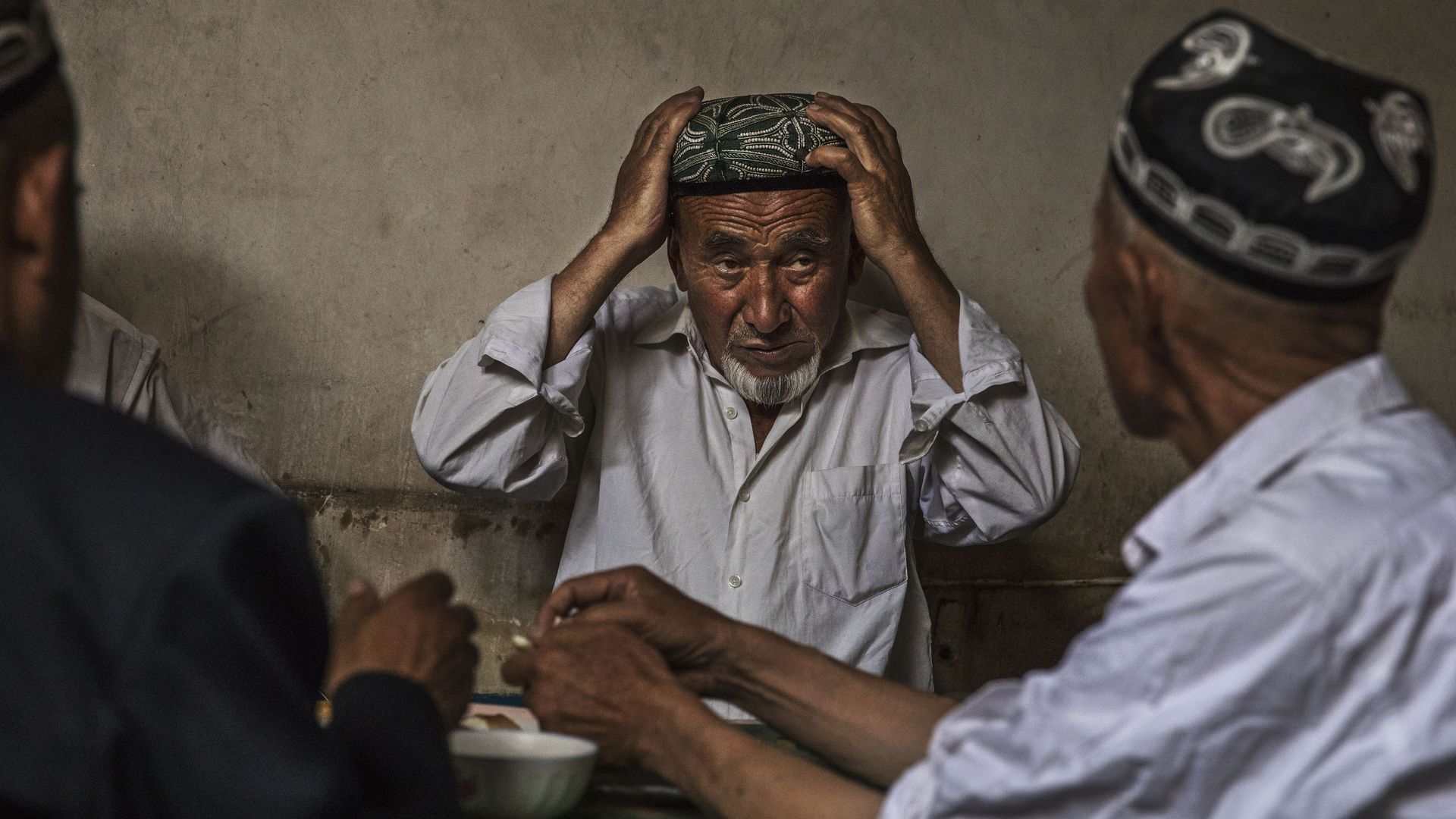
Researchers and reporters have been slowly uncovering the massive scale of political re-education camps housing members of the Muslim minority in the Xinjiang Uyghur Autonomous Region in Western China. Beijing is concerned about separatism, terrorism and Islamic extremism.
Why it matters: The apparent scale of human rights violations is staggering, and yet so far foreign governments have said little. But given China's crackdown on Muslims, will the China become nearly as hated across the Muslim world as America? Might drawing the anger of the Muslim world hurt the prospects for the Belt And Road Initiative, and its long game for influence in the Muslim world?
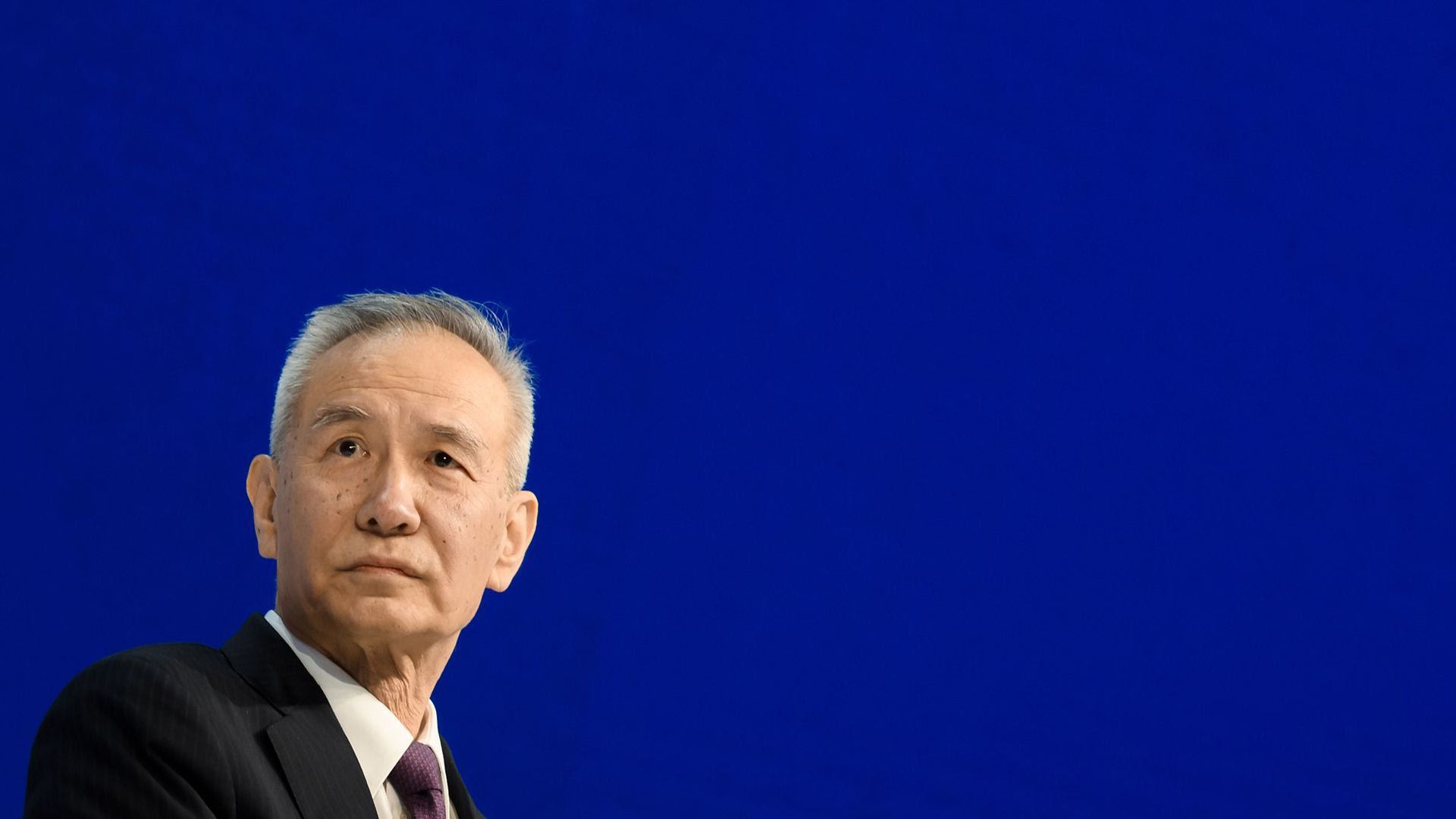
China is disputing reports that Vice Premier and Xi Jinping special emissary Liu He offered to meet the Trump administration's request to cut the trade deficit in his talks Thursday in D.C.
Why it matters: "Even if there is a deal to cut the trade deficit by $200 billion, experts say the U.S. can not produce and sell enough goods to China to hit that target," as Bob Davis and Lingling Wei reported in the Wall Street Journal:
Ex-spy Sergei Skripal, who was poisoned with a nerve agent in Salisbury, England in March, was discharged from the hospital on Friday.
The backdrop: The U.K. has blamed Russia for the attempted murders of Skripal and his daughter, Yulia Skripal, and the incident has led several governments around the world to expel Russian diplomats from their countries. Meanwhile, Sky News reported Thursday that Skripal is still being questioned by police about the attack and his level of contact with British intelligence.