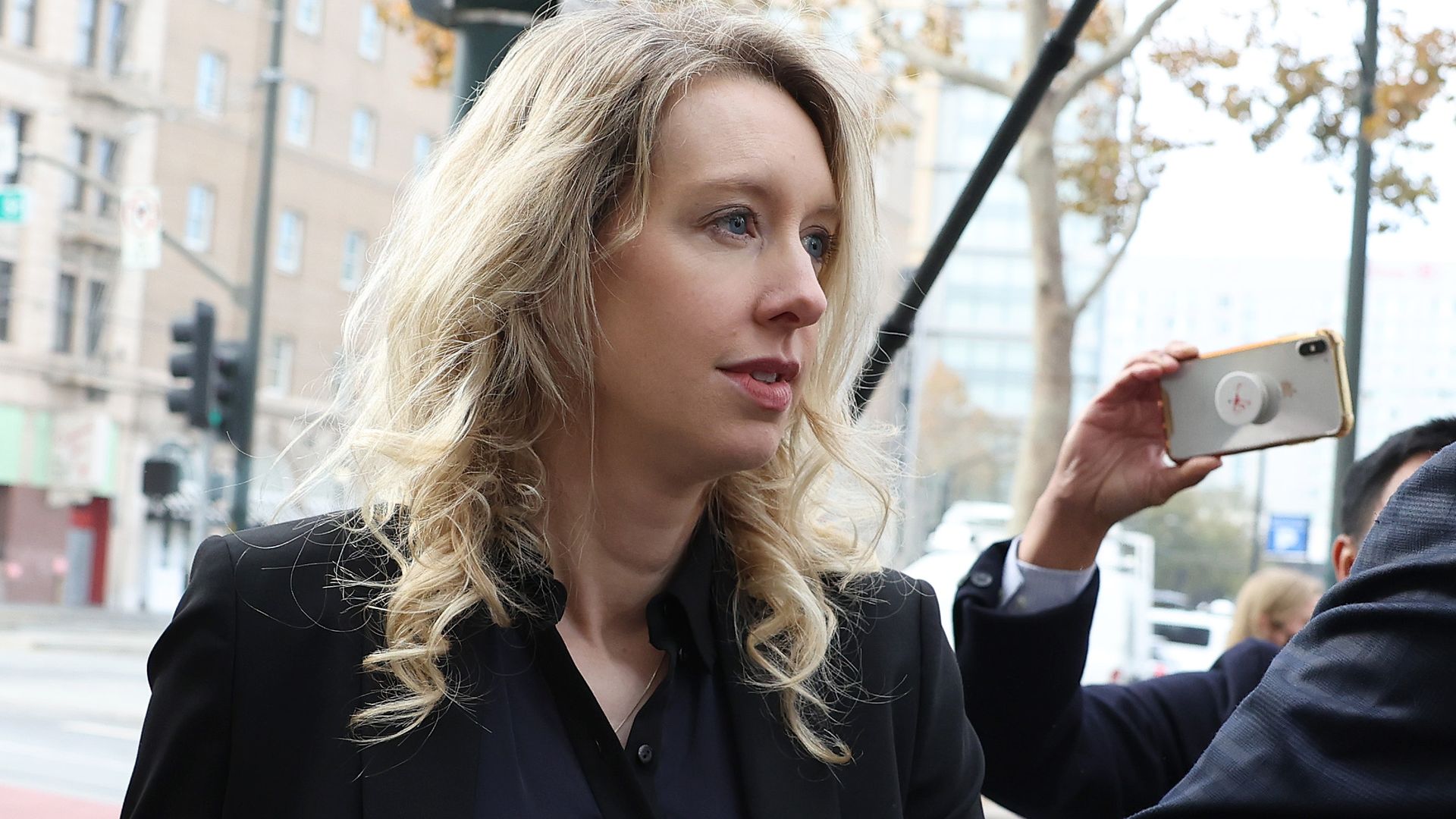
Former Theranos CEO Elizabeth Holmes is scheduled to move from federal prison to a Texas halfway house in August 2027, years before her expected release.
Why it matters: The move would give Holmes more freedom as she serves her sentence for her role in a fraud scheme that cost investors hundreds of millions of dollars at Theranos, her failed blood-testing startup.
Tenstorrent, a Santa Clara, California-based inference chipmaker, on Monday announced that it's raised $1.5 billion at a $6.2 billion post-money valuation led by Trace Capital and Innovation X.
Why it matters: The startup was courted earlier this year by Intel and Qualcomm, but is opting to remain independent. At least for now.
Headlines remain focused on hyperscale AI training factories straining power grids and sparking community pushback. But a tectonic shift is reshaping the AI landscape.
The center of gravity is moving from training in massive data centers to real-time inference — using trained AI models to generate outputs — at the edge.
The AI boom is about to rewrite the rules of global philanthropy, shifting its center of gravity to Silicon Valley, where the IPOs of AI giants Anthropic and OpenAI will create the world's largest charitable organizations.
Why it matters: Rather than massive donations earmarked for renaming hospital wings or university graduate programs, expect the new wave of giving to mirror startup culture: flexible capital, ambitious bets and a search for measurable impact.
AI is producing reality-bending midterm ads about defaced Bibles, upscale dinners and a board game with a "Death to America" playing card.
Why it matters: The warnings about deepfakes are coming true. Election laws haven't kept pace with a world where campaigns can put words in opponents' mouths and create realistic-looking scenes that didn't happen.
Bill Gross has spent 30 years turning problems, technologies and market shifts into companies — and now he is trying to turn that process into a machine.
Why it matters: In a moment when AI is mostly framed as a force that eliminates jobs, Gross is betting it can help create entrepreneurs and companies.
Some people don't like to make small talk. Others — especially youngerAmericans— say they simply don't know how to do it.
Why it matters: A communication-skills app is betting that a baptism by fire in small talk can help rebuild social confidence — and it's hiring people to approach strangers to put that theory to the test.