Investors are scrutinizing the AI trade amid concerns that companies may be throwing money into a bottomless pit.
Why it matters: Not all AI spending is created equal. Investors are drawing a harder line on companies that fail to show how today's AI investments will translate into profits.
The White House's AI framework takes a hands-off approach to open models, raising new questions about how the administration plans to tackle security concerns posed by Chinese labs.
Why it matters: The Trump administration's decision to leave open models outside its AI framework puts the focus now on its approach to Chinese models.
Demis Hassabis is leaving his role as CEO of Google DeepMind to be the unit's chairman. Chief scientist Jeff Dean and several Google AI colleagues are leaving to start their own company, which Google will invest in.
Why it matters: Google's AI organization is undergoing a profound change as the company struggles to keep pace with OpenAI and Anthropic.
Amazon-owned Zoox is about to start scaling its robotaxi service after federal regulators last week cleared it to charge for rides in its driverless vehicles with no steering wheel or other human controls.
Why it matters: Zoox and Amazon are playing the long game, betting a purpose-built vehicle and a self-sufficient business model can crack a market that's become almost synonymous with Waymo.
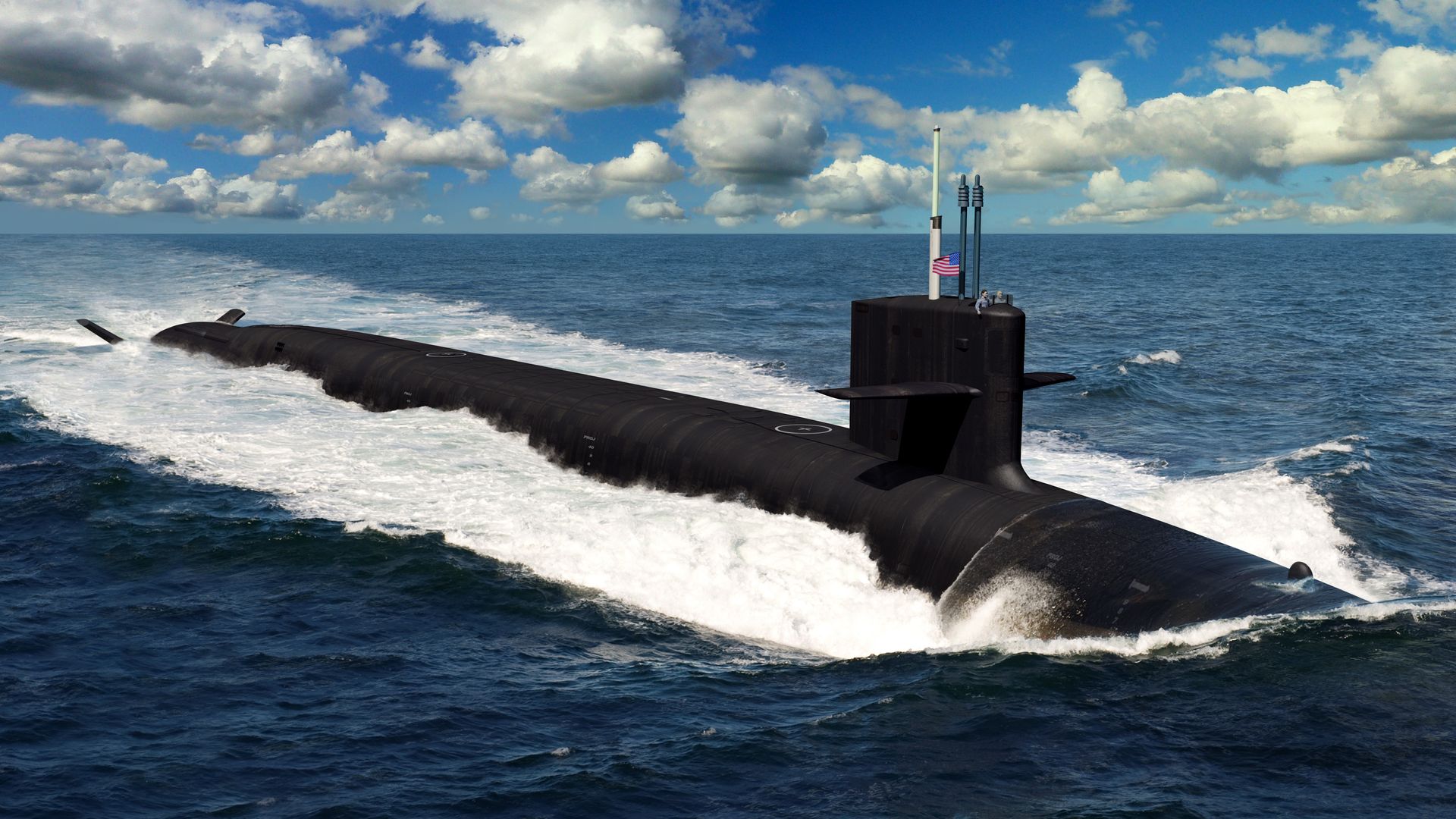
The U.S. Navy is doling out some $76.6 billion in contracts to improve shipyards and build Virginia-class attack and Columbia-class ballistic missile submarines.
Why it matters: The deals with General Dynamics Electric Boat and HII's Newport News Shipbuilding are long awaited.
They also have ripple effects for the AUKUS security pact and the American nuclear arsenal.
Google removed an AI-powered image generation tool from its Google Earth program, after open-source-intelligence geeks, media-literacy experts and journalists sounded the alarm on potential abuses.
The big picture: Google Earth has long been used to monitor situations near and far, as well as geolocate imagery and debunk suspect footage.
The internet is already awash in AI slop and deepfakes. On-demand imagery amendments — inserting blurry air defenses, for example, or surrounding sensitive sites with swarms of people — could easily confuse or misdirect.
The U.S. Air Force recently deployed laser weapons to help combat drones overseas, according to an announcement that has flown relatively under the radar.
Why it matters: Employment of directed energy, whether laser or microwave or some combination of the two, is still relatively rare.
That's despite decades of research and billions and billions of dollars spent.
The U.S. Army's latest swingat streamlining networks and communications, known as Next-Generation Command and Control, proved effective at one of the service's largest experiments to date and will soon be distributed among larger units, according to military leaders.
Why it matters: The Army has tried and tried again to future-proof its command and control, juggling its relationships with the Air Force and Navy, the rapid commercialization of tech, the widespread availability of artificial intelligence, and threats posed by hackers, electromagnetic sensors and ever-evolving tactics in wars abroad.
"Next-Generation Command and Control, or what I call Army Command and Control, is not a replacement for how we fight. That's fundamental, and that's often misunderstood," Gen. Christopher LaNeve, the vice chief of staff, told reporters.
Nvidia is weighing more than $750 billion in AI investments, financing deals and partnerships — betting that any growth in the compute market will ultimately benefit its chip business.
Why it matters: The world's most valuable chip company is bankrolling the same customers racing to build alternatives to its chips.
Who cares about war, oil prices, interest rates or an AI bubble? Investors apparently do not — for now at least — sending stocks back to record highs.
Why it matters: High stock prices are critical to keeping funds flowing to the AI buildout.
A significant erosion of investors' confidence in stocks would be a big risk to the AI flywheel of financial flows, capital expenditures and industrial activity driving the U.S. economy.
This will be the first election cycle where AI is both a dominant policy debate — and a widely deployed political weapon.
Why it matters:AI allows both candidates and bad actors to persuade and perplex with unprecedented speed, scale and precision in our elections. Watch what works, as those same techniques will likely be used against YOU.