SpaceX exceeded revenue expectations and reduced its losses in its initial quarter as a publicly traded company, delivering sharp increases in all three of its divisions: space, connectivity and AI.
The company's stock was down more than 8% in after-hours trading. During the trading day, the shares ended up 9.4%, at $125.33, as investors anticipated the earnings report.
Why it matters: SpaceX has been under the microscope — with shares falling below their IPO price of $135 — as investors look for Elon Musk to deliver AI advancements.
The White House is excluding open models from its framework to test advanced AI capabilities, sources familiar with the matter told Axios.
Why it matters: The voluntary framework will determine how the Trump administration reviews advanced AI models before release, but the White House isn't making it public.
Two independent testing firms said Tuesday that they've uncovered more instances where Anthropic's and OpenAI's most advanced models tried — and sometimes succeeded in — compromising third-party systems last month.
Why it matters: The incidents add to a growing string of disclosures showing frontier AI models taking unsanctioned actions against people, organizations and online services while trying to complete cybersecurity evaluations.
The White House does not plan to publicly release its new framework for evaluating advanced AI models, three sources familiar with the discussions told Axios.
Why it matters: The voluntary framework has global implications for AI security, but details will only be made available to the companies that are part of the process.
Why it matters: Frontier AI models have reached real-world systems during cybersecurity testing, uploading malware, stealing credentials and accessing outside infrastructure after failures in the testing environments built by humans.
At least a dozen states are reportedly responding to cyberattacks against local water systems.
Why it matters: This appears to be one of the broadest known coordinated cyber campaigns against U.S. municipal water systems to date, validating years of warnings that poorly secured utilities could become attractive targets.
Key sectors of the economy that spent years squeezed by high interest rates are gaining momentum.
Why it matters: For years, manufacturing and construction were among the clearest signs that the Federal Reserve's tightening campaign — reversed only somewhat at the end of last year — was weighing on the economy.
Now, manufacturing and construction are early sources of job growth, helped by an AI investment boom that has so far been unconstrained by still-high borrowing costs.
The upper stage of a SpaceX rocket will unintentionally crash into the Moon early Wednesday morning.
Driving the news: The Falcon 9 rocket launched in 2025, carrying a pair of privately-funded lunar rovers.
The upper stage was left in a high Earth orbit that occasionally crosses the Moon's path. Gravity and other forces then sealed its fate.
The resulting crater could be about 90 feet across and about 16 feet deep, scientists estimate — too small to directly observe from Earth, but viewable by orbiting spacecraft.
How it works: SpaceX typically de-orbits Falcon 9 upper stages, letting them burn up in Earth's atmosphere.
There wasn't enough fuel left to do that after this particular high-orbit launch.
The big picture: The inevitable collision is a reminder that our celestial neighborhood is getting busier by the day, with nearly 30,000 active satellites and trackable bits of space junk (dead satellites, spent rocket segments, etc.) now orbiting Earth.
SpaceX's Starlink internet constellation accounts for more than half of all active commercial satellites, per Orbital Radar.
Advocates lament the ever-busier night sky, which compromises both recreational stargazing and scientific observations.
Yes, but: Many astronomers are actually looking forward to this particular event as a chance to collect valuable data about Moon collisions.
It's not every day you can predict when something will smack into our nearest celestial companion.
NASA says it'll take pictures of the impact site from lunar orbit, offering key visual data.
Flashback: Rocket segments have pelted the Moon before — most recently in 2022 with the upper stage of China's Long March 3C rocket, but also back during NASA's Apollo era.
The Moon is also constantly being bombarded by asteroids, without a thick atmosphere to burn them up before impact.
What's next: SpaceX says it's working on better ways to handle spent rocket segments from high-orbit launches.
That's a key step if the Trump administration's lunar colony dreams are to be realized. Life on the Moon would be hard enough without worrying about rocket bits raining down from above.
Bending Spoons on Tuesday said it has agreed to acquire Airtable, a San Francisco-based relational database company, for $1.29 billion in cash.
The implied equity value is $2.25 billion, including Airtable's cash and cash equivalents.
Why it matters: This is one of the first major SaaSpocalypse sales, and an absolute crater for many of Airtable's venture capital investors, despite the unicorn-level sale price.
For two decades, the most valuable parts of enterprise software sat behind a barrier: workflows built around how the organization actually ran, automations eight steps deep, judgment calls baked into every exception. That's real depth, the kind serious work depends on and the kind that took weeks, months or longer to master.
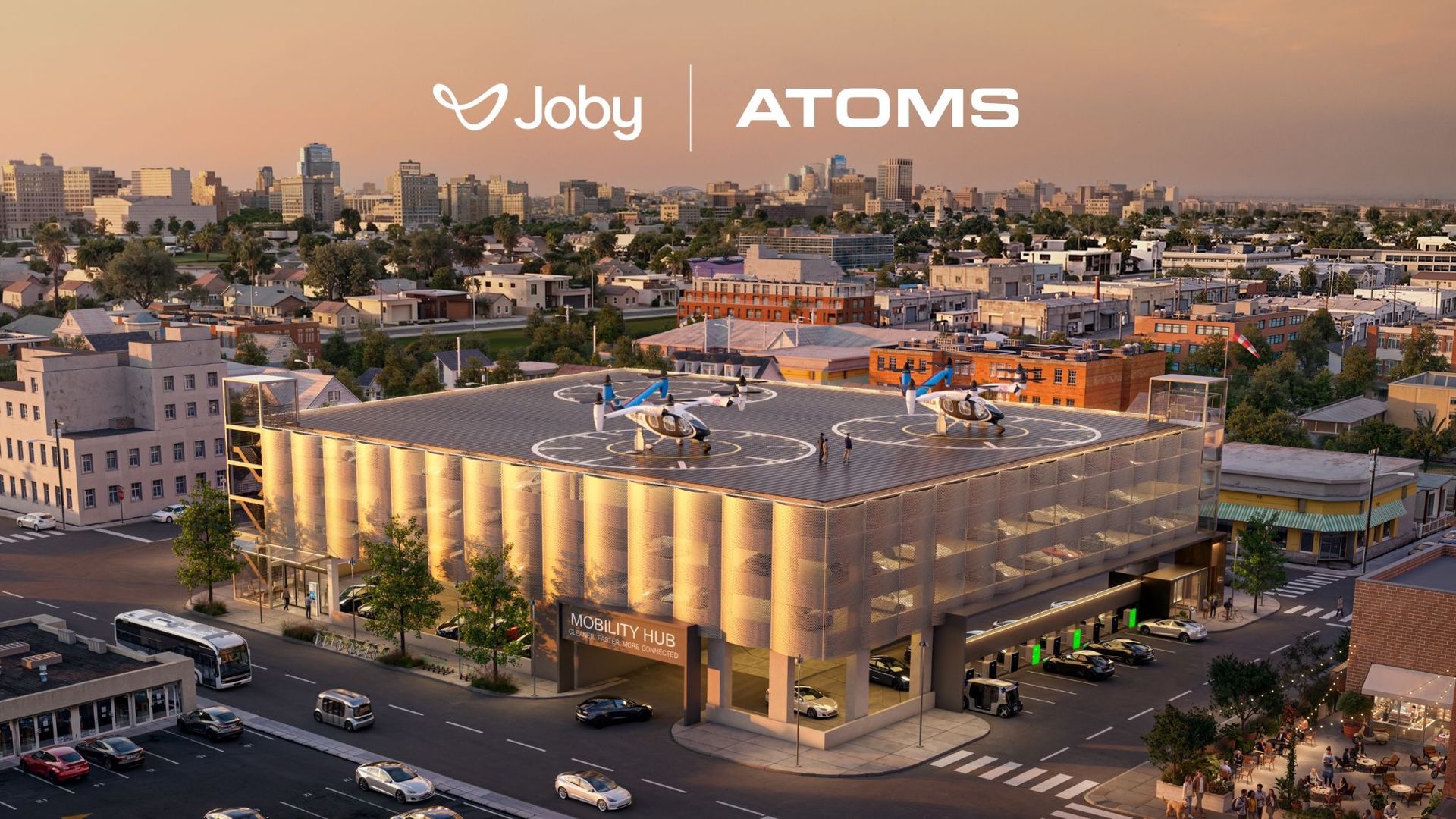
Joby Aviation is partnering with Atoms, an LA-based robotics company led by former Uber CEO Travis Kalanick, to develop next-generation vertiports for urban air taxis.
Why it matters: As these innovative electric aircraft get closer to reality, they'll need places to land, charge and connect passengers to the rest of their journey.
Recovered AI chat logs and coding sessions are giving researchers one of their clearest looks yet at how cybercriminals are using generative AI and easily bypass model guardrails.
Why it matters: Hackers of all skill levels are developing attacks and finding exploitable software vulnerabilities with the help of mostly closed AI models.
Big drug companies have been buying scrappy biotechs to expand their pipelines, but the potential megamerger between AstraZeneca and Bristol Myers Squibb could flip that script.
Why it matters: Combining two drug giants with overlapping portfolios could put cost efficiencies ahead of innovation.
The share of business students regularly using AI has increased from 6.2% to 29% over the past three years, according to research from American University's Kogod School of Business, shared first with Axios.
Why it matters: The chorus of AI boos at college graduations last spring doesn't tell the whole story: Students increasingly see AI as a critical job skill but want more guidance on using it responsibly.