Tuesday's technology stories

Axios Live: Federal focus on cyber crime is a step in the right direction, former FBI official says
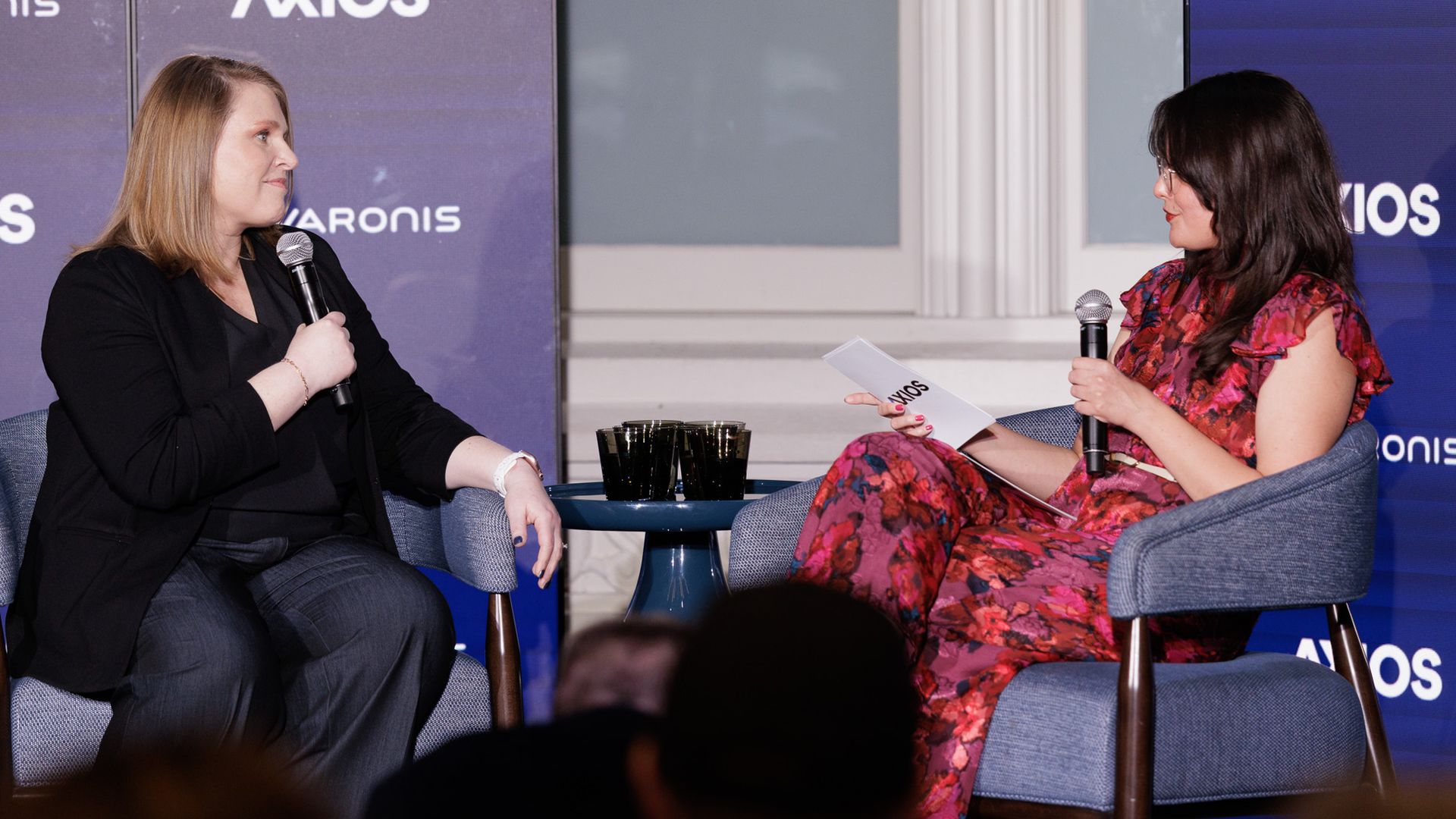
SAN FRANCISCO — It's a "hopeful" sign that the White House is prioritizing new cyber policies, Halcyon Ransomware Research Center SVP Cynthia Kaiser said at an Axios Live event this week.
Why it matters: Cyber risks like ransomware, fraud and scams can create chaos in the day-to-day lives of Americans.
- "Everybody here knows somebody who's affected by a scam," Kaiser said.
- Cyberattacks can cripple businesses and cause more than monetary damages, she added. When hospitals are targeted and lose their ability to perform crucial tests quickly, "people die."
Axios' Sam Sabin spoke with Kaiser and Microsoft Security CVP Vasu Jakkal at the event, sponsored by Varonis.
Driving the news: A March 6 White House executive order signals a broader push to confront cyberthreats.
- The order may help hold nation-states like Iran accountable if they are found to be hosting cybercriminals.
By the numbers: The FBI receives "over 3,000 tips a day on cybercrime," Kaiser said.
- Microsoft is seeing "7,000 password attacks per second," according to Jakkal.
The bottom line: As cyberattacks speed up because of AI — from "weeks" or "days" to "minutes," Jakkal said — the pressure is growing on policymakers to treat cybercrime as a timely and relevant threat.
Content from the sponsor's segment:
In a View From the Top conversation, Matt Radolec, Varonis' vice president of incident response and cloud operations, told Axios Live EVP Kristin Burkhalter that security tools and AI systems built for security protection can "become an encyclopedia for an attacker."
- Cyber criminals can target AI agents themselves — "rather than trying to access the network information," Radolec said.

Inside Cyber Council, the toughest ticket for cybersecurity pros

In Northern California wine country the weekend before RSAC, roughly 80 top cybersecurity CEOs, chief information security officers and former government officials convene at the intimate Cyber Council gathering to game out the next two to three years for the industry.
- For the first time, they allowed a reporter into this space.
Why it matters: The predictions made in these wine country gatherings have a frighteningly good track record of coming true, organizers told Axios.

OpenAI to discontinue Sora video app

OpenAI plans to discontinue its popular-for-a-hot-second Sora video app, as the company says it's looking to narrow its focus and its human and computer resources.
Why it matters: OpenAI is prioritizing capital, chips and enterprise products over experimental bets as it faces increased competition from Anthropic and Google.

Microsoft and Nvidia team up on AI nuclear push

HOUSTON — Microsoft and Nvidia are joining forces on a new initiative aimed at breaking nuclear power bottlenecks to build plants swiftly, Microsoft Vice Chair and President Brad Smith said Tuesday.
Why it matters: The initiative is the latest example of the tech industry leaning on nuclear's emerging potential to deal with AI's voracious energy needs.

Judge questions Pentagon's "troubling" Anthropic actions

A federal judge on Tuesday called the Pentagon's treatment of Anthropic "troubling" as the AI company urged the court to pause the Trump administration's designation of the company as a supply chain risk.
Why it matters: The Trump administration is looking to remove Claude from federal agencies and prevent companies that do business with the Pentagon from working with the AI lab.

McDonald's turns K-pop fandom into a menu showdown

McDonald's is turning K-pop fandom into a full-on food fight — complete with shake-your-own fries.
The big picture: The fast-food giant's latest collab with Netflix shows how aggressively it's leaning into entertainment, global flavors and fandom culture to drive traffic — and turn menu drops into cultural moments.

Retailers split on AI checkout options amid mixed results

OpenAI is pushing deeper into shopping with ChatGPT, as retailers like Walmart and Gap split on who should control checkout.
Why it matters: The storefront may be shifting from websites to AI chats — but early indicators suggest shoppers still prefer to hit "buy" the old-fashioned way.
Cybersecurity's new race: Finding the CrowdStrike or Wiz of AI security

The race to become the next CrowdStrike or Wiz in AI security is playing out this week at the RSAC Conference, the cybersecurity industry's largest gathering.
Why it matters: A wave of AI-native upstarts in the cybersecurity space is piling pressure on incumbents to adapt through acquisitions and by building new capabilities
RSAC CEO Easterly would welcome Trump administration back after boycott
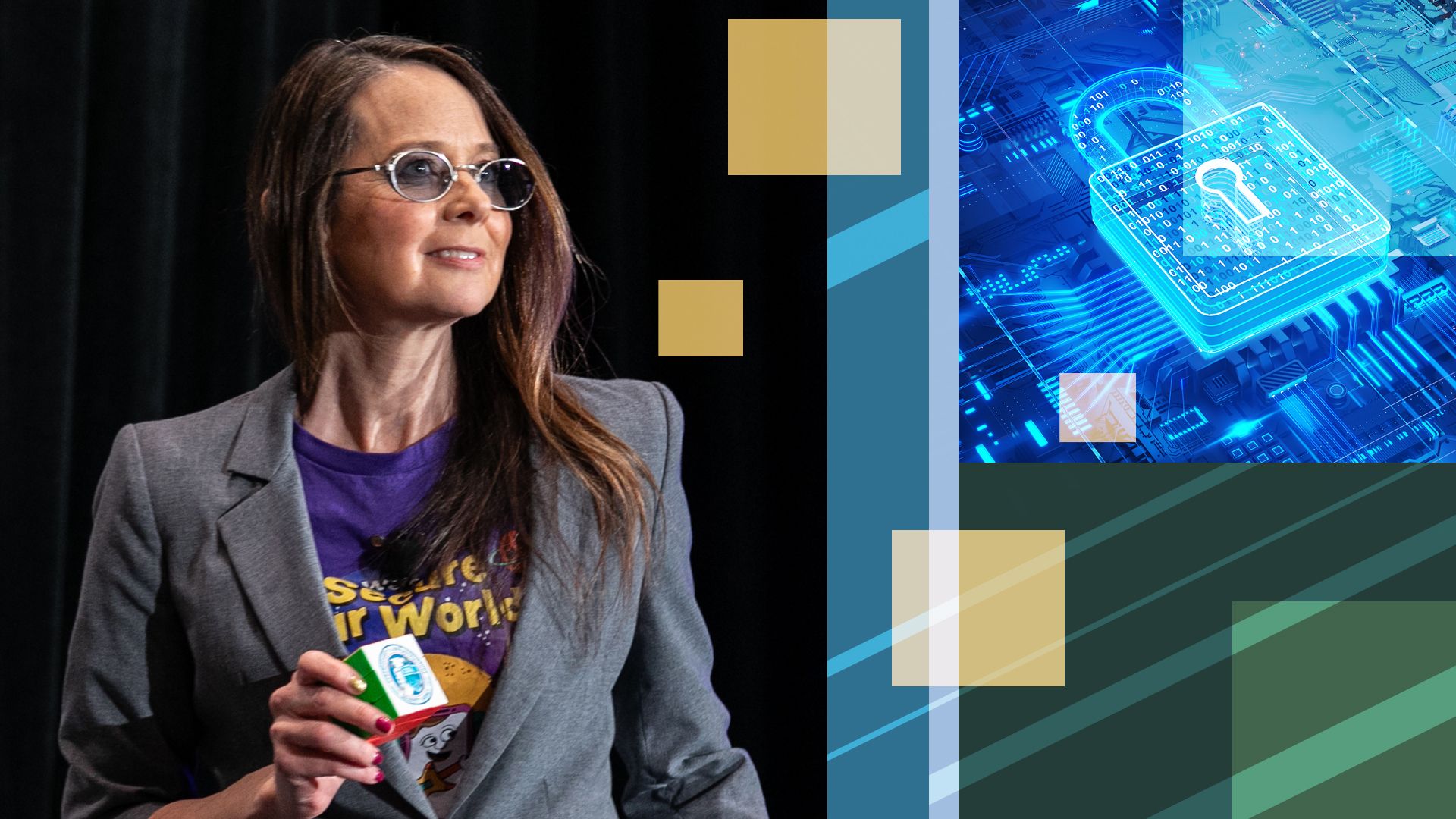
Jen Easterly, former director of the Cybersecurity and Infrastructure Security Agency and the new CEO of RSAC, told Axios before this year's conference that she's looking forward to welcoming back the Trump administration to the conference in future years.
Why it matters: In a rare move, the Trump administration, including Easterly's former agency, pulled its attendance from this year's conference.
Iran-linked hackers target second U.S. medical institution, researchers say

Iranian government-linked hackers hit a U.S. medical institution with ransomware in late February, right around when the war in Iran began, according to research released Tuesday.
Why it matters: This is the second known attack on an American health care organization since tensions between the U.S., Israel and Iran began this year.

Beehiiv to allow creators to manage accounts through AI platforms

Beehiiv, a newsletter platform for independent creators and publishers, has introduced an update that allows users to manage and optimize their accounts from the AI platform of their choice, CEO and co-founder Tyler Denk told Axios.
Why it matters: Without the support of larger institutions, many of the creators that use Beehiiv are responsible for so much more than just writing.

"Where You Work Matters" index rates employers on upward mobility
CarMax's financial analysts and Instacart's software engineers rank among the top roles in an index, out Tuesday, that rates U.S. employers on how well they support workers' upward mobility.
Why it matters: Where you work increasingly determines whether you'll get promoted or get stuck. This first "Where You Work Matters" list is designed to reward employers who help workers move up and expose those who don't.
The ratings of 1,750 employers (across 55,000 occupations) were assembled by the Schultz Family Foundation and the Burning Glass Institute, in partnership with Harvard Business School's Managing the Future of Work Project.
TikTok's plan to reimagine video advertising

TikTok on Tuesday introduced a slew of new ad products designed to help brands tell higher-impact stories, beyond what they could do on traditional television or standard mobile video ads.
Why it matters: TikTok's huge reach has made it a must-buy for performance advertisers looking to sell goods or drive tune-in for shows. Now, executives told Axios, it's making it easier for marketers tell bigger brand stories at culturally relevant moments.

College-educated workers think the job market is as bad as it was in 2013


Workers, especially those with a college degree, think the job market is awful, a new Gallup analysis out Tuesday finds.
Why it matters: They could be on to something. Although the unemployment rate is relatively low at the moment, hiring has slowed a lot, particularly for professionals.

Behind the Curtain — America's next class war: AI fluency

Anthropic just dropped the most granular data yet on who's actually using AI and how — and the findings should rattle anyone thinking AI's gains will be evenly distributed.
- It won't. In fact, it's creating a new form of economic inequality: AI fluency.
Why it matters: The Anthropic data, out Tuesday, reveals something subtler and more consequential than the "robots take your job" narrative.
- The real divide isn't between people who use AI and people who don't. It's between experienced AI users and newcomers to AI.
AI continues to pose a serious risk to any automatable jobs, which Anthropic CEO Dario Amodei has warned could wipe out half of entry-level white-collar work.
- Two workflow categories doubled in prevalence between November and February: automated sales and outreach, and automated trading.
- That means people doing those tasks are in more danger of seeing that part of their job go away.
But AI will also be a growing threat to casual or unsophisticated users who fall behind their more AI-savvy peers, regardless of role or level.
- "Much of the discussion focuses on how AI is something that happens to you," Peter McCrory, Anthropic's head of economics, told us from the company's headquarters in San Francisco.
- "This analysis shows you can develop skills that make you better at getting value out of Claude or whatever large language model you want to use."
Some context: Anthropic's new report, "Anthropic Economic Index: Learning Curves," studied over 1 million conversations on the company's Claude platform last month. The headline finding: Experienced AI users get better results out of an AI model than newcomers. And the gap isn't explained by what tasks they're doing, what country they're in, or what model they're using.
- People who've used Claude for six months or more have a 10% higher success rate in their conversations with AI. "The longer you've been using it, the stronger this effect," McCrory says.
- Adoption of Claude in hypereducated Washington, D.C., is four times the adoption rate you'd expect for a city of its size.
- Globally, inequality in usage has persisted since Anthropic's last report, in January, in the 20 higher-income countries with the most Claude use.
That's a skills gap hardening into a class gap in real time. But you can escape it by experimenting, getting comfortable, getting deft, getting fluent.
- Anthropic's researchers are candid that this could be early-adopter selection bias or survivorship — maybe sophisticated users simply signed up first.
- But Anthropic's finding certainly mirrors our personal experience.
Between the lines: People think of AI as a tool, when you should think of it as a never-before-imagined toolbox — it allows you to not just automate a boring task, but stretch your abilities across most things you touch at work. But only once you start to master prompts, and pushback, and persistence when unsatisfying or unilluminating answers come back.
- Jim started using the models like most — like a search engine. But then they became his best researcher ... then idea stress-tester ... then builder of prototypes for new businesses. He's basically at the six-month mark Anthropic describes, and discovering new use cases every week.
You have to move up the AI proficiency ladder. Using a large language model as a search engine or copy editor is dumb AI. Even having it draft emails for you is like having a celebrity chef boil your water.
- The report divides tasks into "automation" (do this task) and "augmentation" — more polished, sophisticated inputs like using the LLM as a thought partner that spits out ideas and feedback, or writes a business plan, or stress-tests a business plan, or coaches and teaches you.
- Think how much more valuable AI dexterity will make you to your current organization — or how much more marketable it'll make you to a future employer.
The big picture: This report lands in the middle of the most anxious era Americans have experienced about AI and jobs since OpenAI's ChatGPT moment after the model's release in late 2022.
- An NBC News poll from earlier this month found that 57% of registered voters believe AI's risks outweigh its benefits.
- Only 26% have positive feelings about the technology — a net favorability lower than that of any other topic polled, except the Democratic Party and Iran. (AI was two points less popular than ICE.)
AI users are getting better, while AI anxiety surges and the job market deteriorates. It's a reality that Washington isn't confronting with consistency and seriousness.
- Washington is debating AI in the abstract: Should we regulate it, should we race China, should we worry about superintelligence?
- But the Anthropic report makes the near-term problem concrete: Signs of a two-tier workforce are already emerging. And neither party has a plan for people on the wrong side of it.
- What Anthropic found in observing real-world use: Skilled AI users are getting better at collaborating with Claude to do a wide variety of work, not just automate specific activities.
The bottom line: The people already using AI for high-value work may pull further ahead, with real implications for who captures the economic benefits of this technology.
- If you're not an early adopter, today's your chance.
- Go deeper: "How to AI."
Exclusive: Labor Department launches AI literacy course

The Labor Department on Tuesday will announce a free AI literacy course aimed at Americans skeptical of the technology.
Why it matters: Americans are bracing for an AI-driven economy where many jobs may look different or cease to exist, and policymakers are under pressure to show they're responding.

Clean your feed: Avoid the YouTube slop

Welcome back to our mini-series on how to clean your social media feeds.
This time we're zeroing in on YouTube. YouTube is now flooded with engagement bait and AI-generated content — often recycled, repackaged and optimized for clicks.
Why it matters: The more you watch passively, the more the platform assumes you want the same. If you want better recommendations, you have to interrupt the cycle.