Democrats are zeroing in on voter frustrations around electricity bill spikes as data centers become an opening to hit back at President Trump's AI policies.
Why it matters: The data center scrutiny is in direct contrast to the Trump administration, which is aligned with industry in its eagerness to start construction in the U.S.
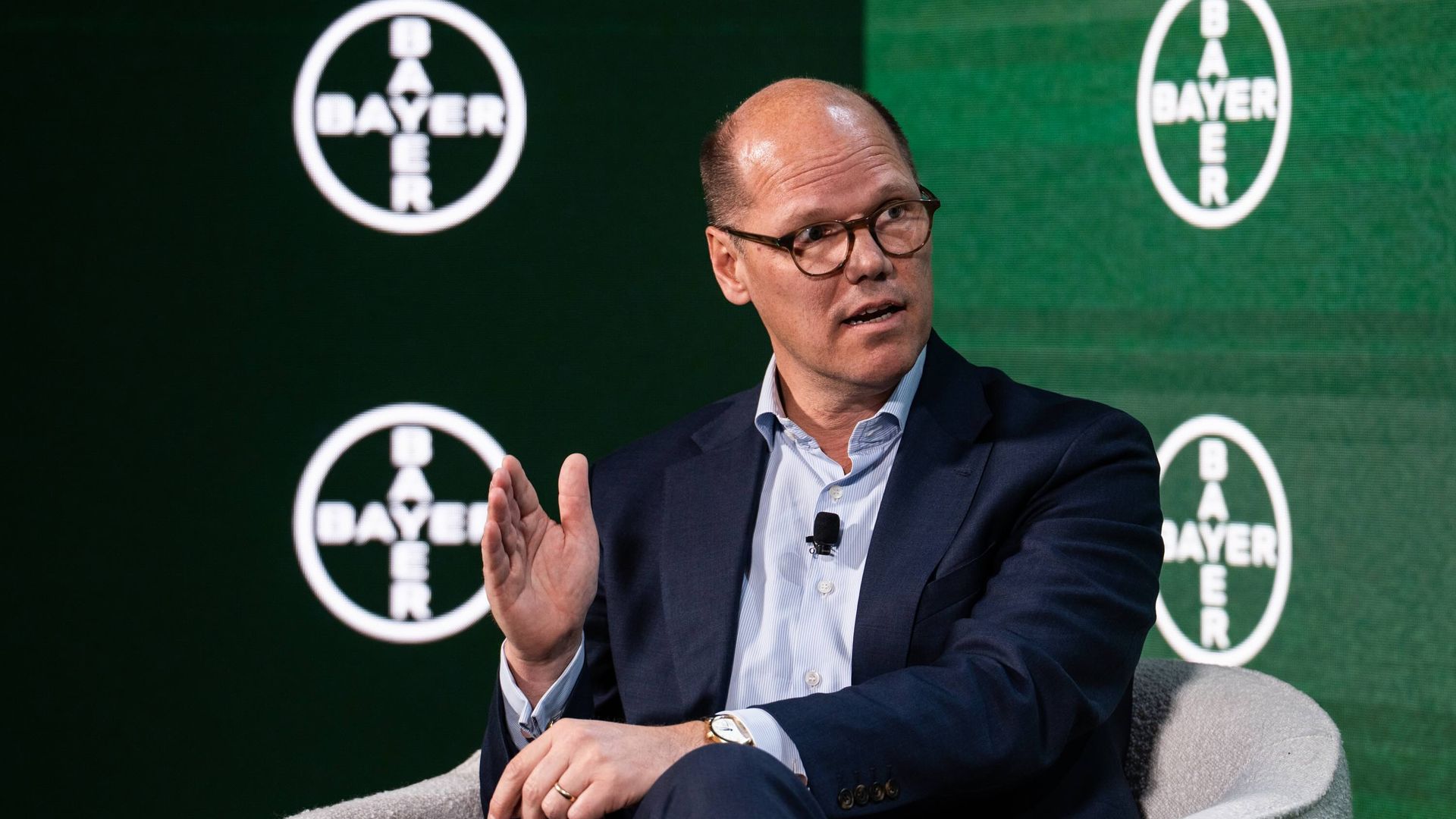
Sebastian Guth, worldwide chief operating officer for Bayer Pharmaceuticals and president, Bayer U.S., shares how Bayer is leveraging cutting-edge science and technology to speed growth in the U.S.
Google released its new Gemini 3 Flash model on Wednesday, aiming to strike a decisive blow against OpenAI and other competitors by pushing a faster, cheaper model throughout its sprawling ecosystem.
Why it matters: The AI race is quickly becoming a standoff between Google and OpenAI, with huge implications not just for artificial intelligence technology, but for the entire economy.
Chris Kirchhoff, the head of applied AI strategy and global security at Scale AI, doesn't "worry about the killer robots quite yet, in the sense that architecting AI systems that work reliably is very difficult," he told Axios in a recent interview.
"I think the real question is: When will autonomous systems provide a layer of deterrence that we don't have today?"
Why he matters: Kirchhoff worked for the Pentagon and the White House and helped establish the Defense Innovation Unit. He later wrote a book about that adventure, plus the evolving defense-tech landscape.
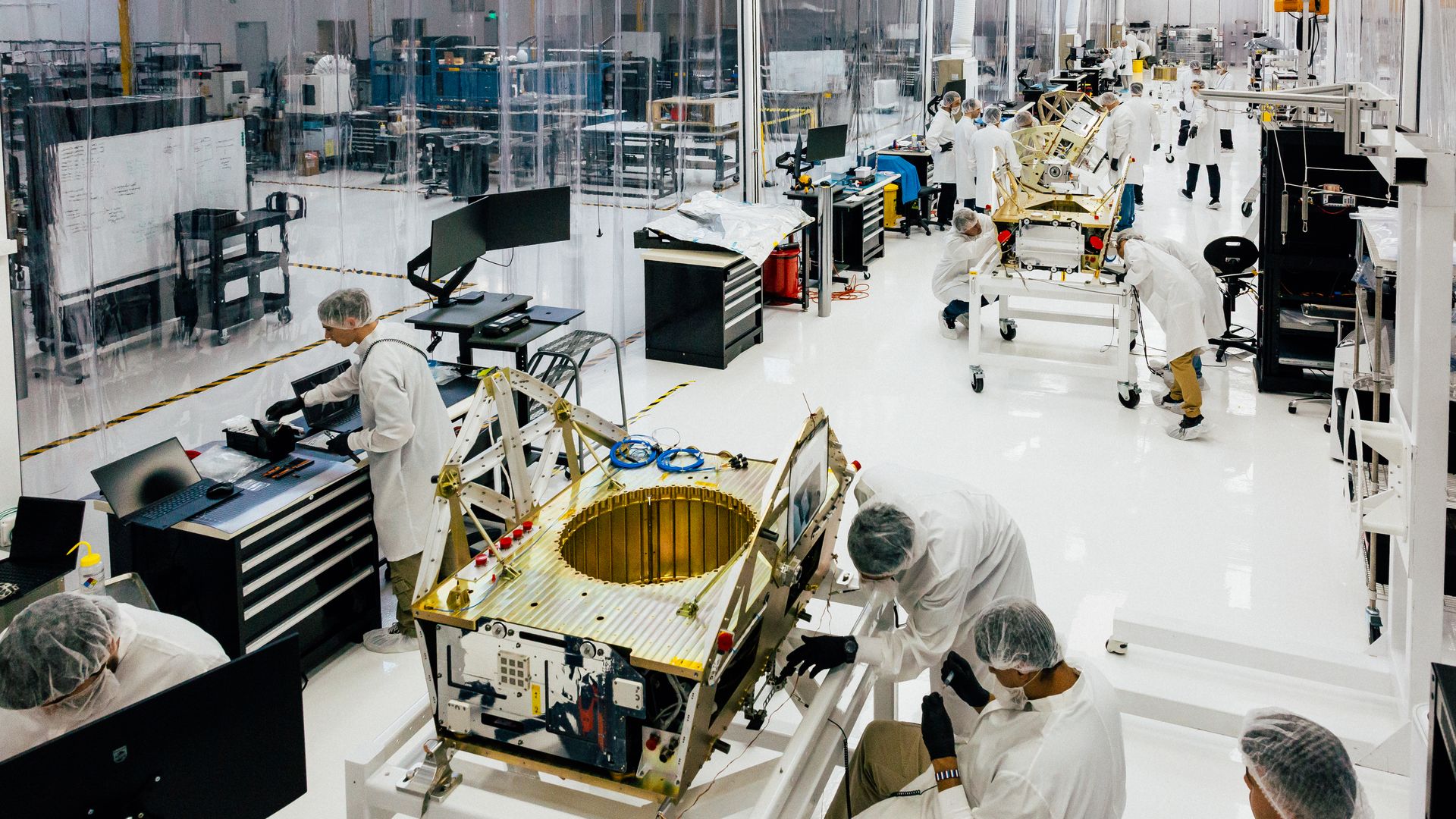
Apex wants to be the Toyota or Ford of space, according to chief executive Ian Cinnamon. President Trump's hemispheric missile shield could be its golden ticket.
The big picture: Ask around and you'll hear it repeated: The next war will be fought in space.
That's one reason for the surge of speeches, spending and startups focusing on the domain.
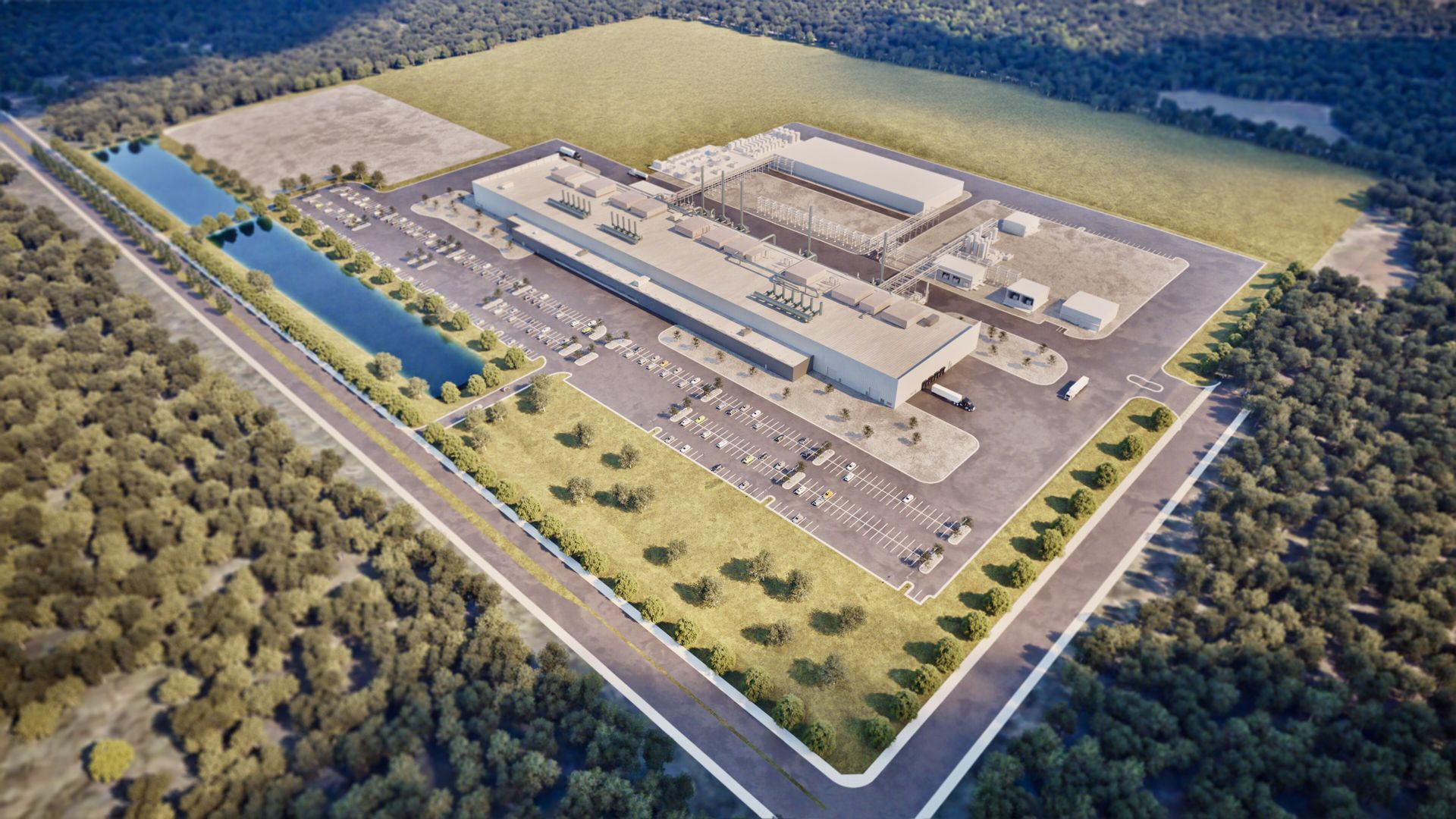
Solar manufacturer T1 Energy has started building a $400 million to $425 million solar cell fabrication plant around 50 miles from Austin, Texas.
Why it matters: The move bolsters one trend — Texas as a growing clean tech hub — while showing confidence in market growth despite Trump 2.0's moves against renewables.
Robinhood is making its biggest bet yet on the convergence of AI and prediction markets, unveiling an AI-powered investing assistant and sports trading tools.
Why it matters: Robinhood is betting on the future of investing being, well, betting.
Cisco is rolling out a new taxonomy for identifying and mitigating the unique security and safety threats posed to AI tools, the company shared first with Axios.
Why it matters: Current frameworks that security teams and executives use to both map out their own defense strategies and explain these issues to other C-suite leaders are missing many of the unique security threats AI tools are facing.
The once-distant prospect of AI models executing cyberattacks fully on their own now looks unavoidable, according to a range of recent academic studies and industry warnings.
Why it matters: This is the worst AI tools will likely ever perform, and they're already unnerving researchers and developers.
ChatGPT's image update — available starting today — shows another front has opened up in OpenAI and Google's battle to dominate AI.
Why it matters: Users have been marveling at the image advances in Google's Nano Banana, putting the pressure on OpenAI to show real progress to keep up.
Humanoid robot maker 1X on Monday announced a deal whereby it will make up to 10,000 of its machine men available to portfolio companies of EQT, the alternative investments giant whose venture capital arm is a 1X investor.
Why it matters: This is nightmare fuel for private equity critics.
GPT-5 has for the first time demonstrated it can do the kind of lab work that opens up a pathway for AI to take a bigger role in scientific experiments, OpenAI shared first with Axios.
Why it matters: The work shows how GPT-5 — and other AI models with similar capabilities — can speed up research, reduce costs and help human scientists make real-world discoveries.
A slew of publishers and brands are facing backlash over AI experiments, amid errors and overall concerns with quality control.
Why it matters: While most content companies understand they need to adopt AI to stay competitive, the risk from sloppy integrations has proven problematic.
WASHINGTON, D.C. — Policy and economic leaders said the U.S. must rapidly accelerate how it commands artificial intelligence, develops energy sources, and protects key manufacturing materials, at a Dec. 11 Axios Live event.
Why it matters: Access and control over those resources shape the United States' position in the geopolitical hierarchy, with China as a key competitor during a period of major foreign policy upheaval.
Axios' Mike Allen and Colin Demarest spoke with Jarrod Agen, deputy assistant to the president and executive director of the National Energy Dominance Council; USA Rare Earth CEO Barbara Humpton; and, Rep. Raja Krishnamoorthi (D-Ill.). The event was sponsored by JPMorganChase.
Case in point: China currently controls the market on crucial supplies necessary for magnets, Humpton said, adding that "our Air Force turns into paperweights without the magnets that support the rotating equipment inside those vehicles."
"Permanent magnets and critical minerals are in nearly every aspect of our economy. and we don't have stockpiles."
Driving the news: President Trump recently announced on Truth Social that his administration will allow Nvidia to sell H200 chips to China — lifting a prior blockade.
What they're saying: Krishnamoorthi warned that the decision is surrendering a technological advantage the U.S. has over China right now.
"Semiconductors, interestingly, are the main choke point for the [Chinese Communist Party]. … They still have not been able to come up with the world's leading chips."
"I think that we are putting ourselves at risk by basically assisting the CCP with their military modernization and the perpetration of human rights abuses by selling these highest-end chips."
Agen emphasized the need to move quickly cross-industrially.
"It's an urgency. It's throwing out the old playbook and completely rewriting how we tackle something like critical minerals, and [Trump] wants to do that on energy across the board."
Content from the sponsored segment:
In a View from the Top conversation, Douglas Petno, co-CEO of JPMorganChase's commercial and investment bank, said America faces "a strategic imperative to win the AI race," and that it's going to take time to compete effectively.
"The size and scale of our challenges [are] daunting, and the time to correct a lot of the challenges that we have in front of us is not an overnight fix."
Investors expect returns from record artificial intelligence investments to come faster than executives do, according to a new Teneo survey of more than 350 global public company CEOs and 400 institutional investors.
Why it matters: Wall Street is tired of waiting for returns on all this AI investment. Based on these survey results, that impatience could leave investors disappointed in 2026.
A new kind of AI-supercharged food recycler will turn fruit and vegetable scraps at Whole Foods into chicken feed — which will then help produce the grocer's own eggs.
Why it matters: The technology can shrink waste volumes by up to 80%, according to its maker, startup Mill, cutting greenhouse gas emissions from food waste and saving Whole Foods money.
Elon Musk has begun funding the GOP's House and Senate campaigns for the 2026 midterms — an indication his relationship with President Trump has thawed since their messy breakup earlier this year.
Why it matters: Musk — who threatened to launch a third party and support challengers to Republican incumbents during his dispute with Trump — is now firmly back in the GOP's camp.
A Washington State county, just north of Seattle and one of the state's fastest-growing regions, is getting a new artificial intelligence-powered system to help with emergency 911 calls.
Why it matters: It's one of the first efforts to use AI to help with 911 emergencies in real time and could be a model for other regions as police expand AI to aid with patrols, investigations and first responders.
America's information ecosystem is badly broken, deeply polluted and increasingly dangerous.
Too many people are lost. They don't know what or whom to trust, what actually matters — or what's even real. Confusion, anxiety and mistrust are soaring. AI will make this worse before it gets better.
This is bad for everyone, bad for America.
Why it matters: Axios is hellbent on being part of the solution. We've succeeded, in our first decade, in making vital topics easier to consume and understand for smart professionals. But all of us, Axios included, need to help clean up how realities are formed — and informed.