Bayer's next act: From AI to breakthrough medicines

A message from: Bayer
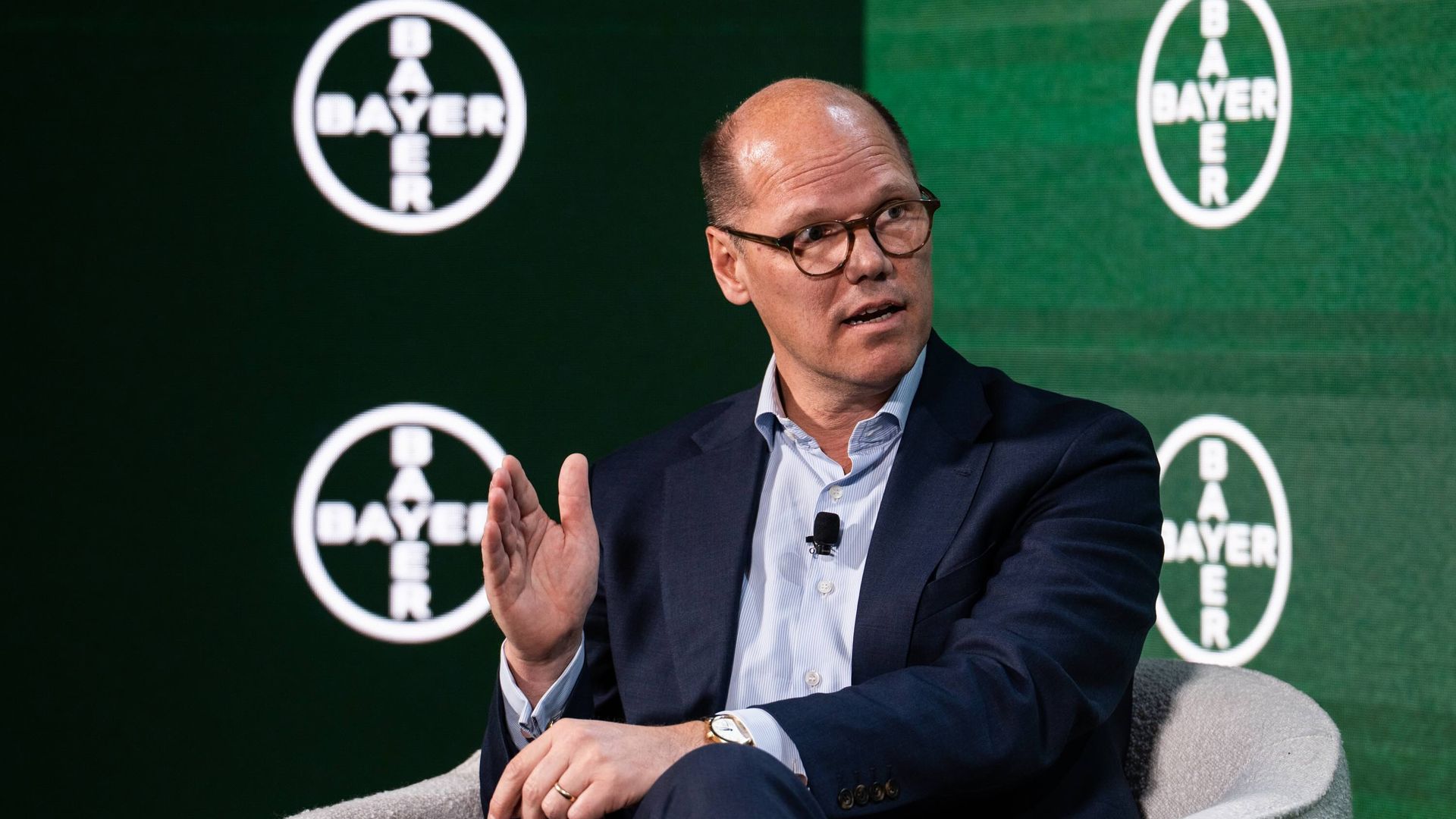
Sebastian Guth, Bayer
Sebastian Guth, worldwide chief operating officer for Bayer Pharmaceuticals and president, Bayer U.S., shares how Bayer is leveraging cutting-edge science and technology to speed growth in the U.S.
1. First things first: Can you give us a big picture of the whole company?
Guth: We've been at the forefront of science for more than 160 years, and while we're most known for aspirin, our portfolio is significantly broader.
- In our pharmaceuticals business, we hold a leading position in areas such as cancer, cardiovascular disease and women's health care.
We operate in about 80 countries around the world. The U.S. is our largest and fastest growing market, but it hasn't always been that way.
- We decided to build our U.S. business to scale some years ago and we've seen very significant results.
- In doing so, we've focused on launching best-in-disease medicines in areas with significant unmet needs.
If you look at this year alone, we've already gotten three major FDA approvals, and we are the second-fastest-growing pharmaceuticals company in the U.S.
2. The details: Are there specific things in cancer, cardiovascular and women's health care driving growth right now?
Guth: We've focused on these areas because they affect a vast number of people.
In 2019, we launched Nubeqa, a prostate cancer medicine.
- We were third to market, and today Nubeqa is the leading and fastest growing medicine in its class.
We launched Kerendia in 2021, to treat chronic kidney disease in type 2 diabetes.
- We're expanding on its legacy as we speak, having just gotten approval for the use of Kerendia for adults with heart failure with an ejection fraction of 40% or more with preserved ejection fraction.
- This affects a very significant part of the heart failure population.
Just last month, we launched Lynkuet — a novel, non-hormonal treatment for the 27 million American women going through menopause transition.
3. Looking ahead: Give a look into how you're building and replenishing your pipeline for the next batch.
Guth: In Pharma, we've invested $7 billion in the U.S. over the past five years, and much of that is focused on research and development.
- We're currently advancing 31 programs across the entirety of our pipeline and those hold tremendous patient potential and commercial value.
An example: We're doing important work in cell and gene therapies. We have the most advanced pipeline in Parkinson's disease — developing both a cell and a gene therapy in late stages of clinical development.
- This is an area where very little has happened over the past decades, even though there are millions of Americans affected by Parkinson's every day.
- Also, part of this R&D investment: Bayer just announced positive topline phase 3 trial results for Asundexian, a potential first-in-class Factor XIa inhibitor for secondary stroke prevention.
4. Okay, but: How does the policy environment, tariffs and regulatory uncertainty from Washington D.C. impact how you're thinking short term and long term in the U.S.?
Guth: The biopharmaceutical industry is the crown jewel of American industries. The unique policy environment and ecosystem have powered the U.S. to be at the forefront of research and development — allowing it to be where many groundbreaking medicines have originated.
The secret sauce positioning the U.S. at the forefront is made up of:
- Amazing scientists.
- Access to capital.
- A gold standard regulatory environment.
- A robust IP framework.
- Willingness to pay for innovation.
5. Here's what else: How is Bayer approaching AI, and how does it fit into innovation and change the work that you do?
Guth: We're very focused on driving workflow and operational efficiencies, and we're making great progress.
What's most exciting in our industry is the ability to use AI at scale to develop medicines that would have otherwise likely not seen the light of day.
We're in the business of unpacking three billion years of evolution and that takes human ingenuity — but it can be amplified, augmented and accelerated with technology,
- Going back to the work we do in cell and gene therapies, we recently worked our way through 100 million clinical records and identified 5,000 gene editing candidates in less than a week.
The takeaway: That work would have taken us years, if it happened at all, and that's the real promise of AI.