The internet oligarchs, referred to now as Web2, are playing catch-up with cryptocurrencies — tentatively tiptoeing into the kiddie pool with waders on — floaties, too.
Why it matters: These companies have huge networks and if one of them finds a way for crypto to complement their business, they could switch on millions of new users with the stroke of a digital pen.
Aclarity, a Hadley, Mass.-based solution for eliminating PFAS (aka forever chemicals) from drinking water and wastewater, raised $3.3 million in seed funding.
Why it matters: PFAS have been tied to numerous forms of cancer, which is why the federal government has devoted increased spend and attention on cleanup. Right now that means filtering the chemicals and then disposing of them elsewhere, like in landfills or deep-injection wells, but Aclarity claims its tech can actually destroy PFAS.
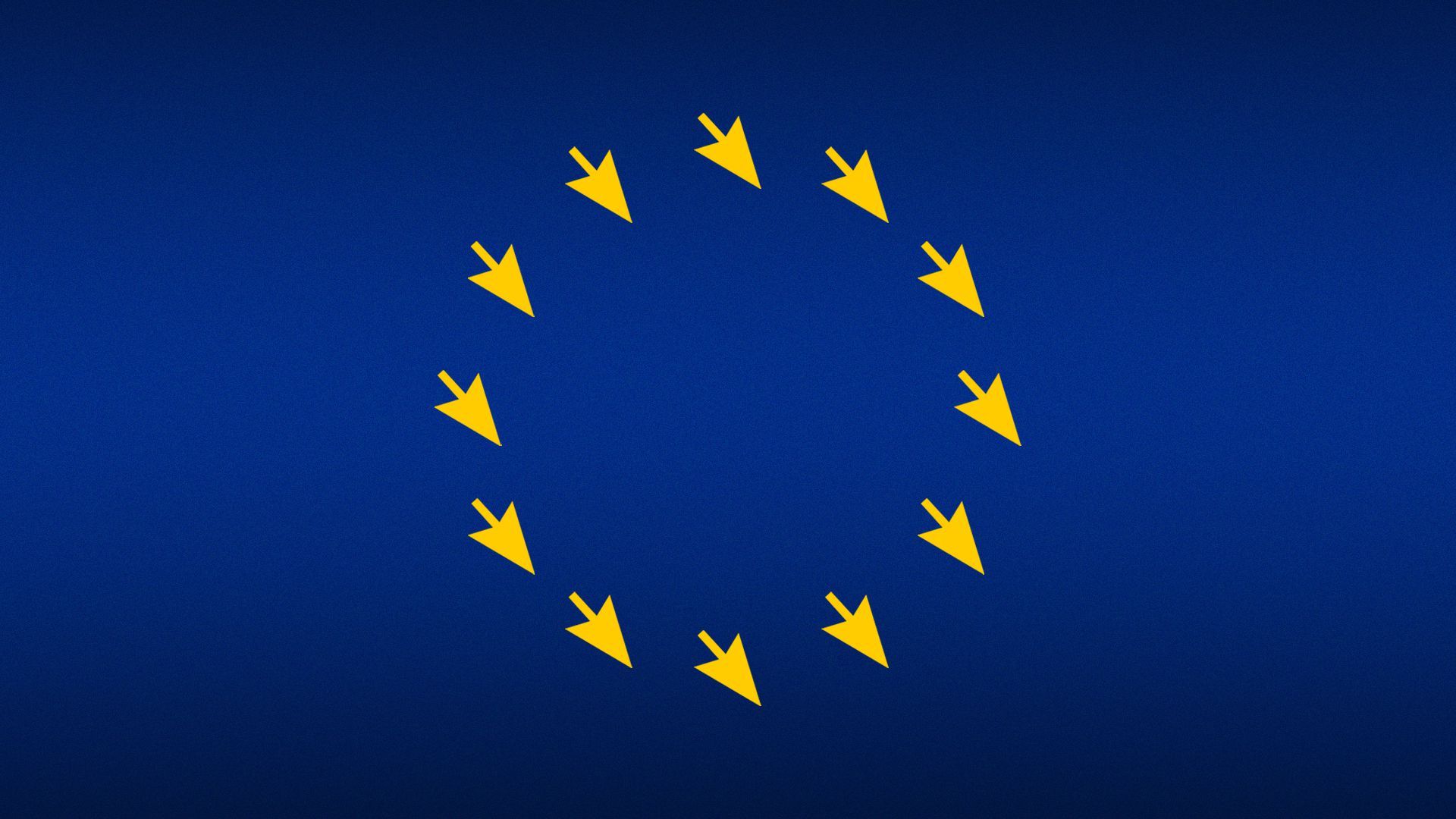
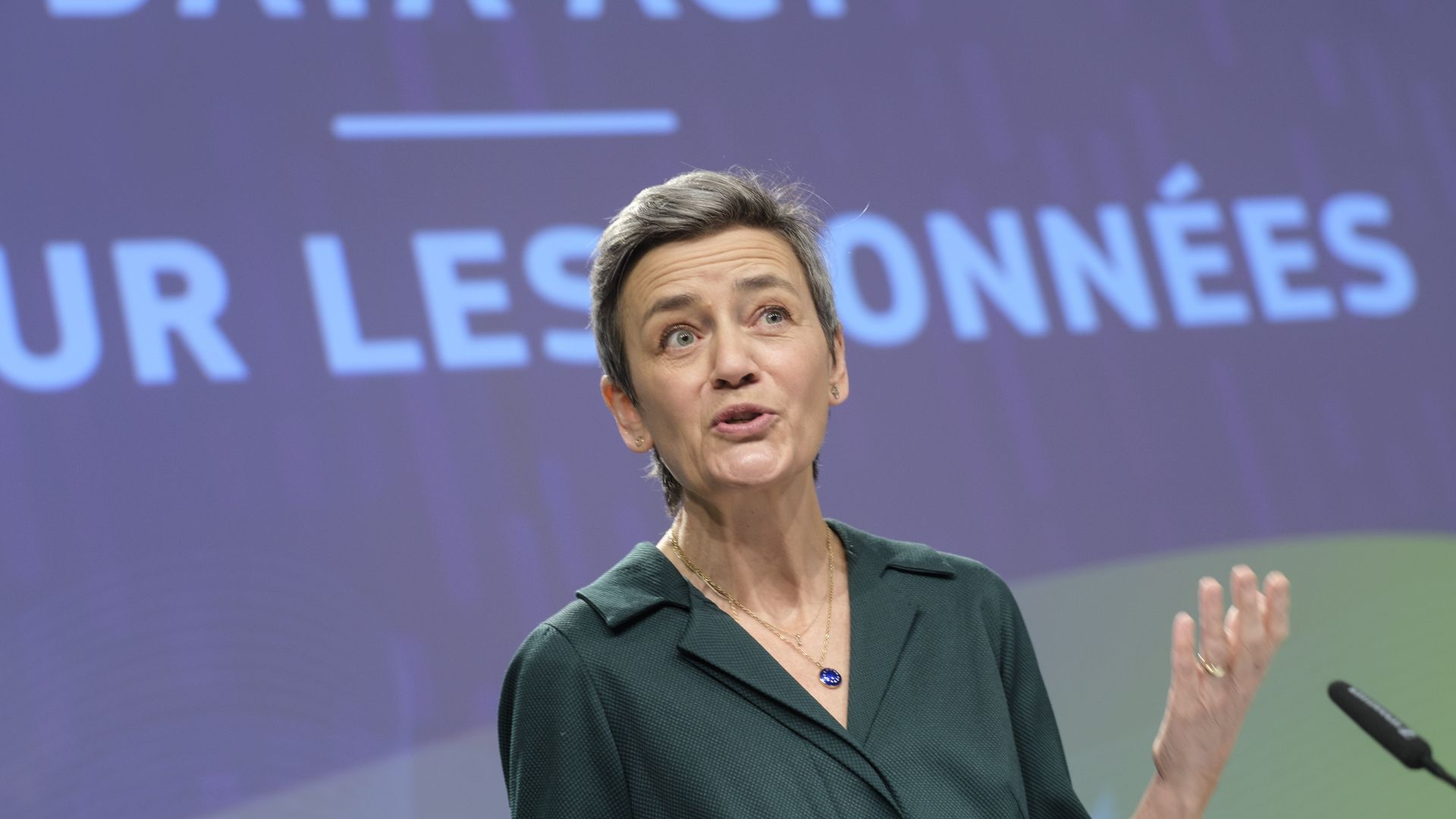
EU executive vice president Margrethe Vestager defended the Digital Markets Act on Thursday, saying it's up to tech companies to figure out how to live with it.
Why it matters: Critics of the legislation have said it could break encryption for messaging, it makes products less useful for users, and it provides little clarity on how companies can avoid massive fines.
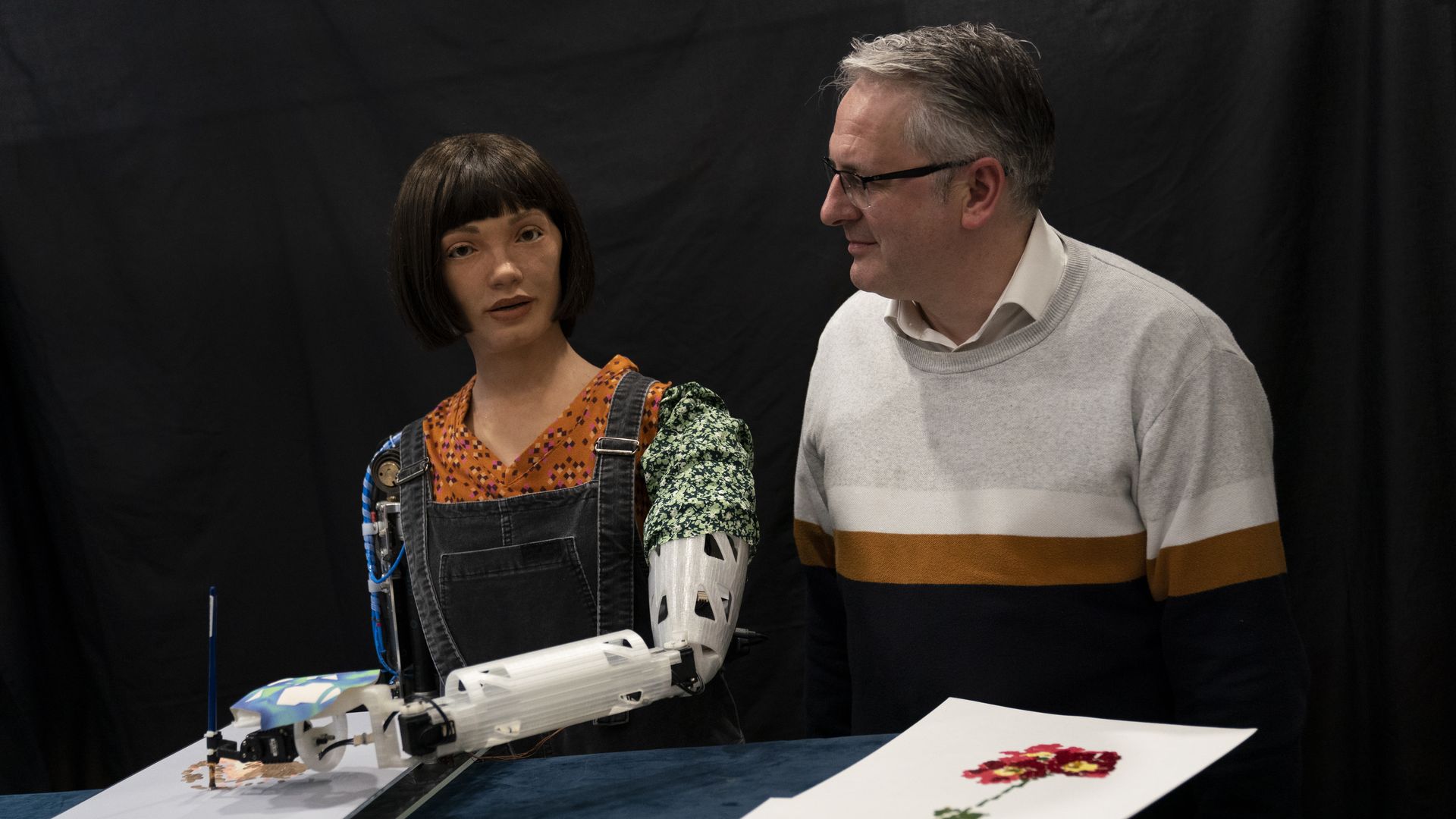
A British gallery owner has created a robot artist with a female persona — "Ai-Da" — whose purpose is to challenge our views of what constitutes art.
Why it matters: The robot, named for computer pioneer Ada Lovelace, "draws and paints using cameras in her eyes, AI algorithms and her robotic arm," according to a web page of her work.
Both she and her creations are meant to raise questions about the meaning of art, creativity and imagination in an age when intelligent machines increasingly interact with humans.
Automated driving features are supposed to make cars safer. But in the hands of drivers who put too much trust in those systems, or simply don't know how to use them, they could make the roads more dangerous instead.
Why it matters: Many new cars are equipped with automated driver-assistance features that people don't understand, or even worse, think they understand and then misuse with potentially dangerous consequences.
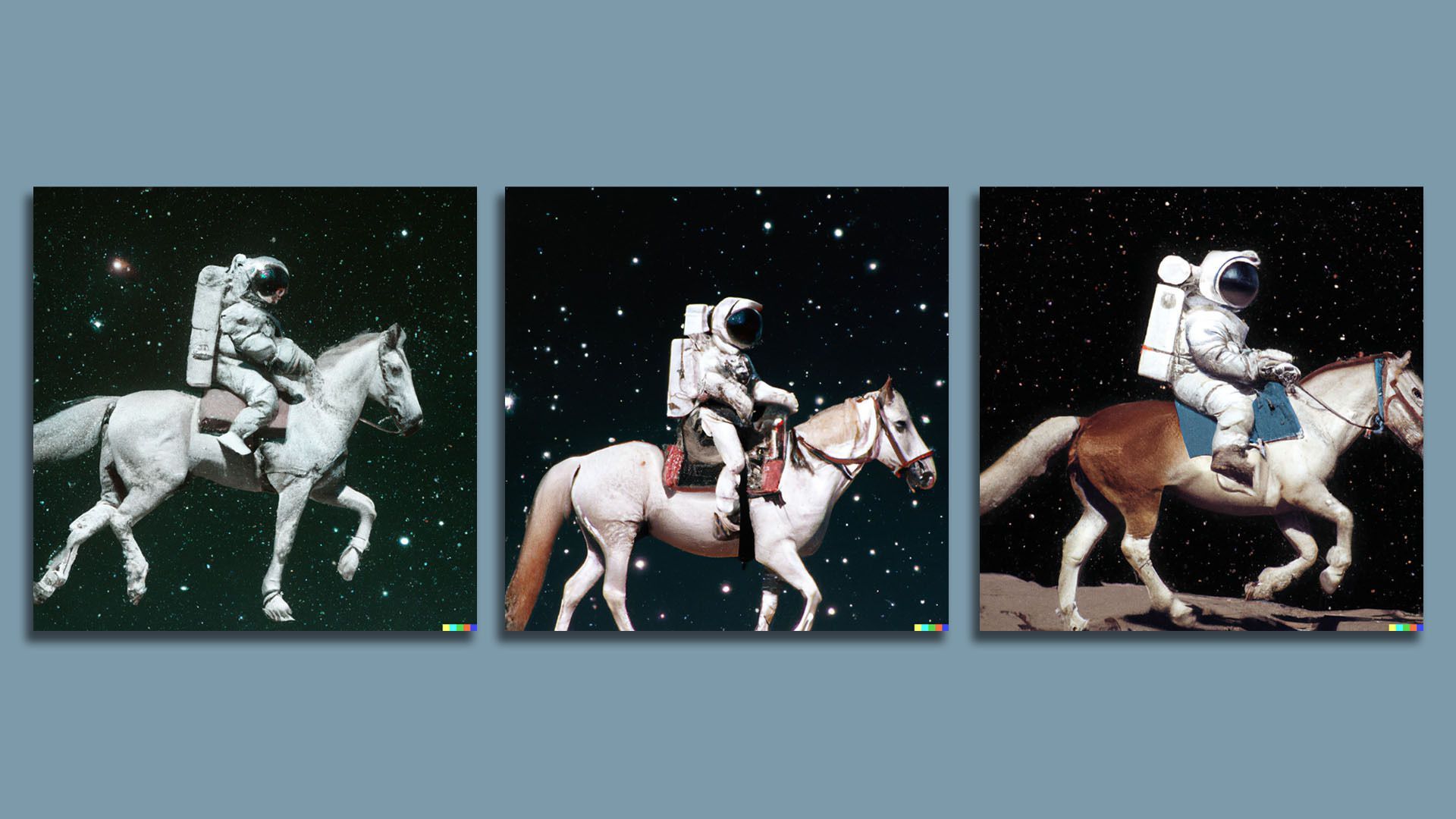
A new algorithmcan produce realistic images from a text prompt, OpenAI announced this week.
The big picture: As advancements in artificial intelligence surge forward, projects like DALL-E 2 could help researchers to create systems that visualize the world around them.
Ubisoft announced this week that it is ceasing development of any new content for military action-adventure Ghost Recon Breakpoint, an expected 2019 blockbuster that flopped even as the company took extraordinary steps to salvage it.
Why it matters: Ghost Recon Breakpoint is a cautionary tale about what a game publisher thinks will happen with a game and what reality offers instead.
Europe's big new tech regulations aim to get full compliance from Big Tech, not to break up big companies, Europe's top competition official Margrethe Vestager said Thursday.
Driving the news: Vestager, who serves as European Commission Executive Vice President and competition commissioner, talked to Axios' Ashley Gold and Dan Primack during a Twitter Spaces event Thursday on the heels of European lawmakers' finalizing the Digital Markets Act.
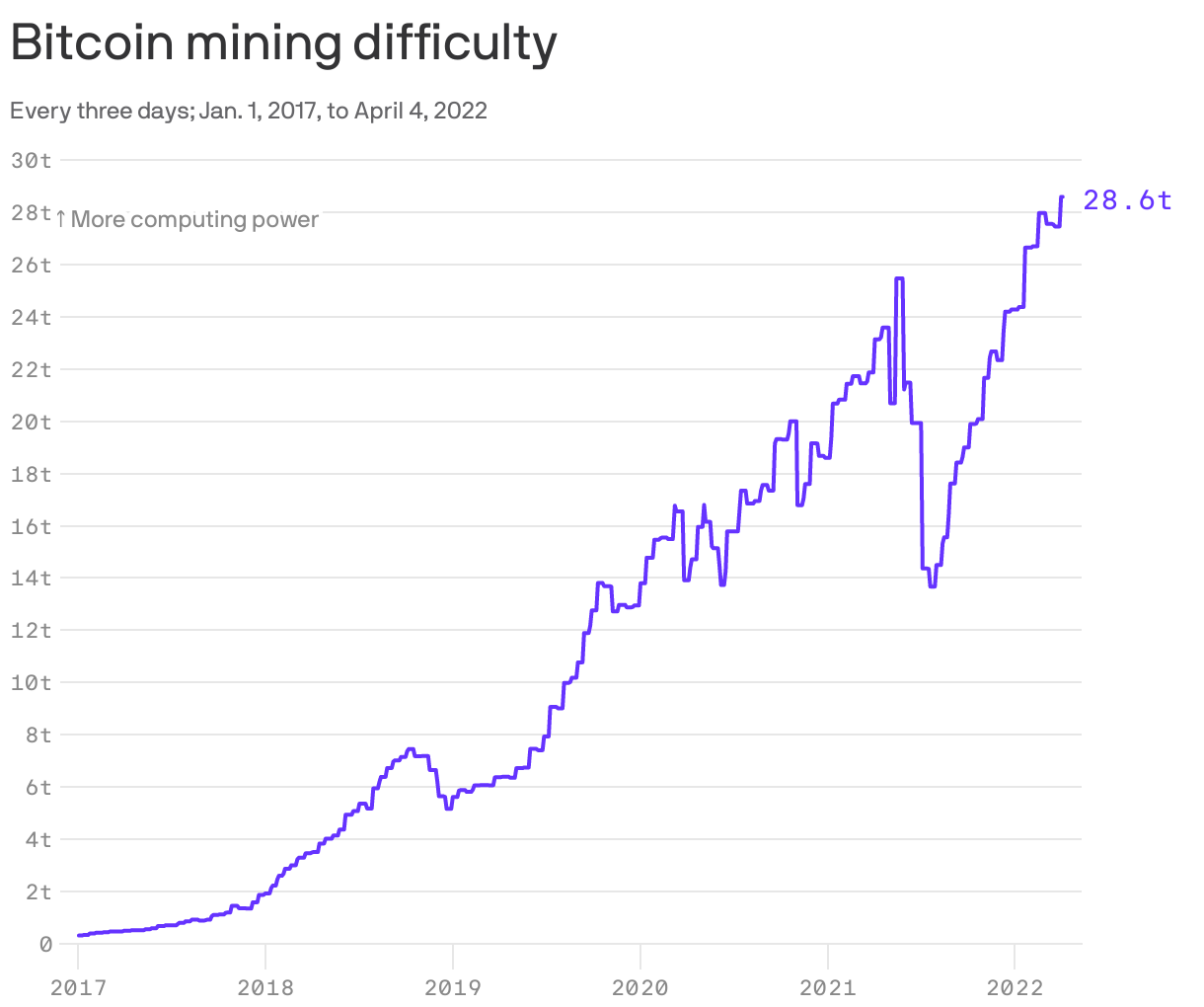
It has never been more difficult to mine bitcoin than it is now.
Context: Mining refers to bitcoin's consensus mechanism, proof-of-work. Miners need to solve a cryptographic puzzle to have the right to add a block to the ledger and earn some fresh bitcoin (currently the reward is 6.25 bitcoins worth roughly $275,000).
The "transparency" of blockchains is probably the most commonly cited pro in the case for cryptocurrencies. It partly enables "trustlessness," the ability to remove central administrators from the world of finance.
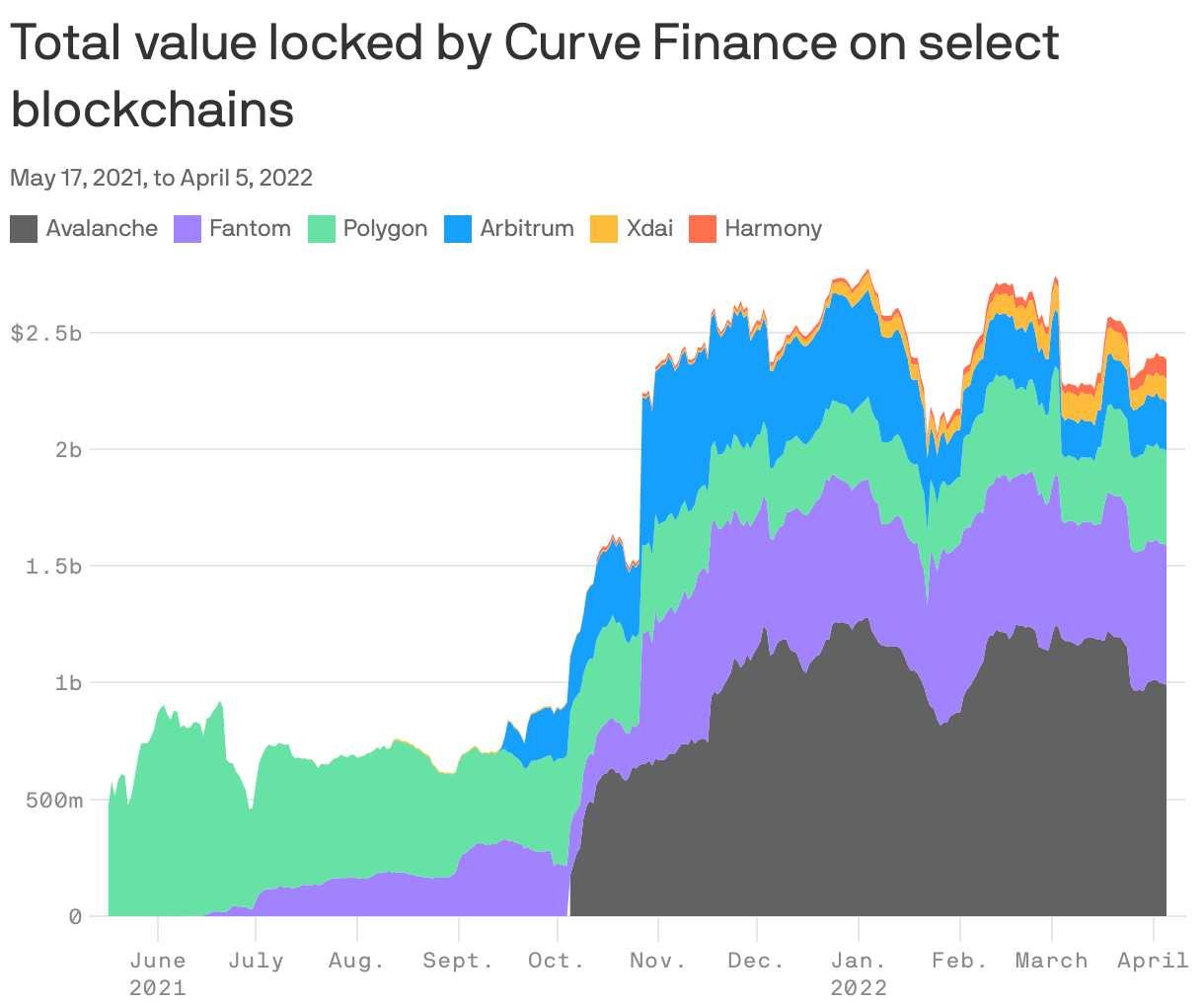
Data: DeFi Llama; Chart: Will Chase/Axios; (Optimism and Moonbeam were excluded due to their small sizes.)
The Curve Finance app has been way out ahead of most similar DeFi applications in launching on blockchains other than Ethereum.
Why it matters: It is diversifying its bets, figuring that other blockchains will blow up and host a lot of trading. Curve is positioned to take some of that market share.
Since the start of the war in Ukraine, Facebook says it has removed "tens of thousands of accounts, Pages and Groups" around the world for spreading misleading content about the conflict to build audiences and bring in cash.
Why it matters: Scammers have long latched on to breaking news events to post clickbait that can earn them revenue. Russia's Ukraine invasion created an enormous opportunity for bad actors because so much of the content being shared online is video that's harder to moderate.
The makers of Fortnite are building a kid-friendly Lego-themed virtual world, Epic Games and Lego announced today.
Why it matters: The project, pitched as a “place for kids to play in the metaverse,” could be a well-funded competitor to Minecraft, Roblox and other virtual worlds.
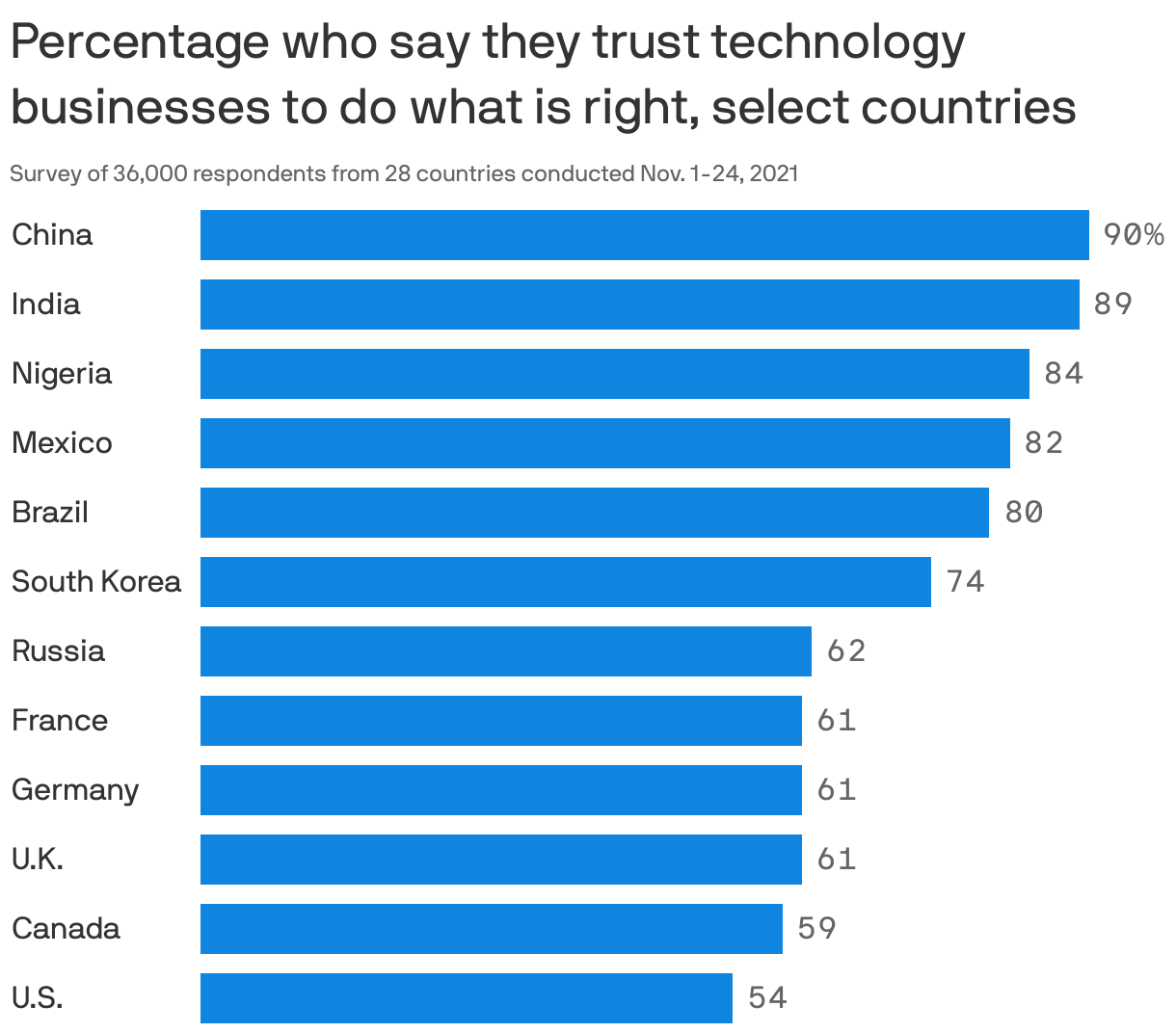
Trust in tech companies has continued to decline in the U.S. and Canada, while rising in most of the rest of the world. That's according to fresh data from Edelman's annual 2022 Trust Barometer, shared first with Axios.
Why it matters: The decline in trust comes as pressure is mounting for regulators and legislators to more tightly regulate the industry and its perceived excesses.
We want to prepare you for the next frontier in America’s free speech argument: putting the power of what you read, see and hear in your hands alone.
The concept carries a pedestrian name: the "decentralized" web, or "web3." But its consequences are profound — rewiring the very foundation of social media and speech policing.
Why it matters: Elon Musk, Jack Dorsey (co-creator of Twitter) and many others believe that you — not the government or social media platforms — should decide who and what you get to read and hear online.


/2022/04/08/1649426293686.gif?w=3840)









/2022/04/07/1649346134728.gif?w=3840)





/2022/04/06/1649277756321.gif?w=3840)