Near just secured a new $350 million investmentfrom heavyweight investors, representing a giant bet on fast blockchains and a potential future challenge to Ethereum, the world's second-largest blockchain.
Why it matters: Well, that's a lot of money, right? It's a bet on super fast and cheap transactions in a decentralized fashion.
Bitcoin has always claimed the potential to compete with the existing global financial rails, but the trouble is people don't want to transact in bitcoin — they want to transact in dollars. Lightning Labs has raised $70 million to build Taro, a way for bitcoin to do dollars (and euros, and yen, and so on).
Why it matters? Lightning Labs is a leading developer of the Lightning Network, a layer on top of Bitcoin. It raised the funds to build Taro, a way for all kinds of assets to move more quickly and cheaply using bitcoin than with existing financial rails — at least that's the pitch.
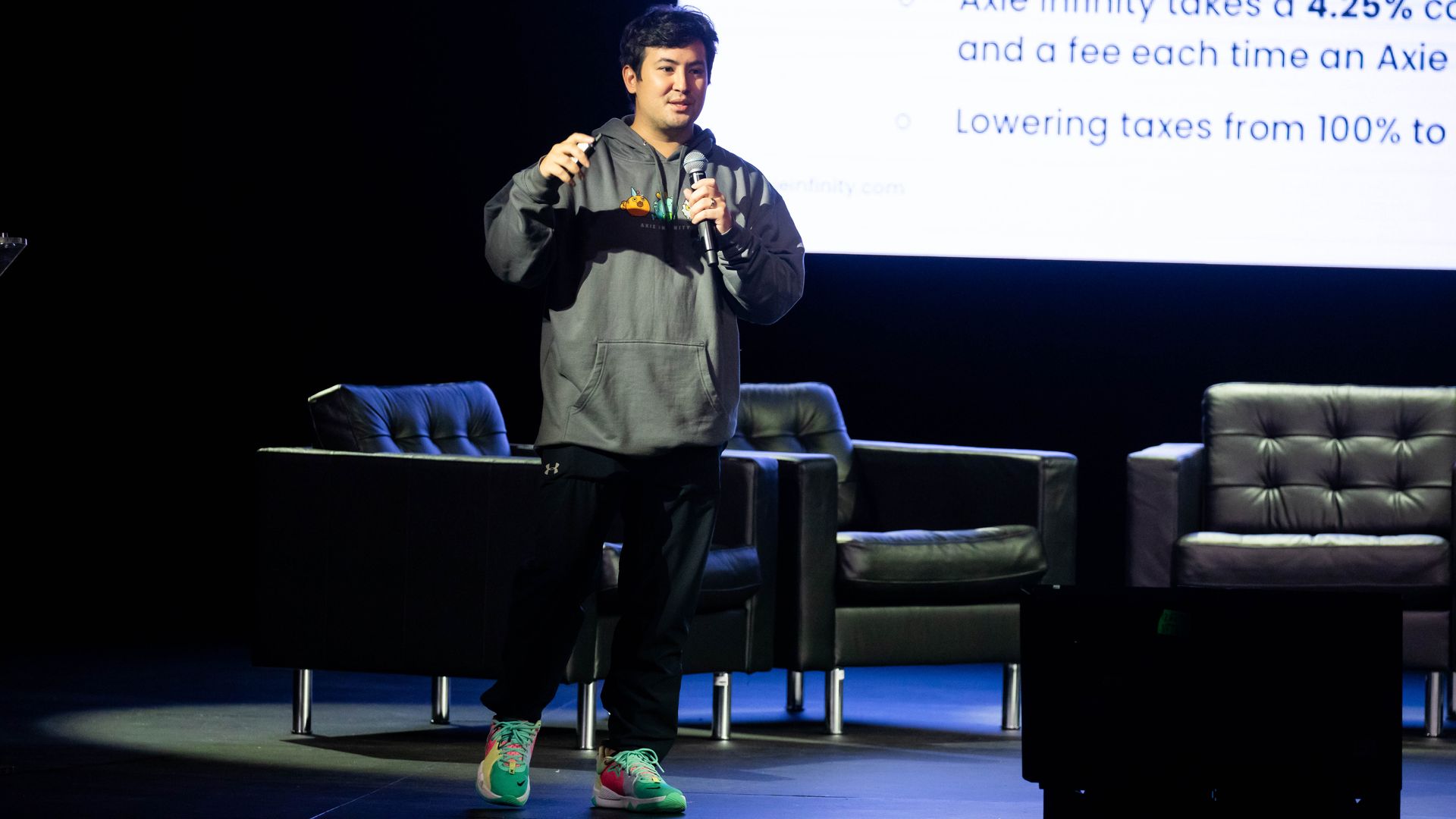
Sky Mavis, the crypto gaming studio behind Axie Infinity, raised $150 million to reimburse users affected by the recent Ronin Bridge hack.
Why it matters: Ronin was one of the largest crypto thefts in history, totaling over $600 million, and this appears to be the first time a hacked crypto company has raised outside funding to make users whole.
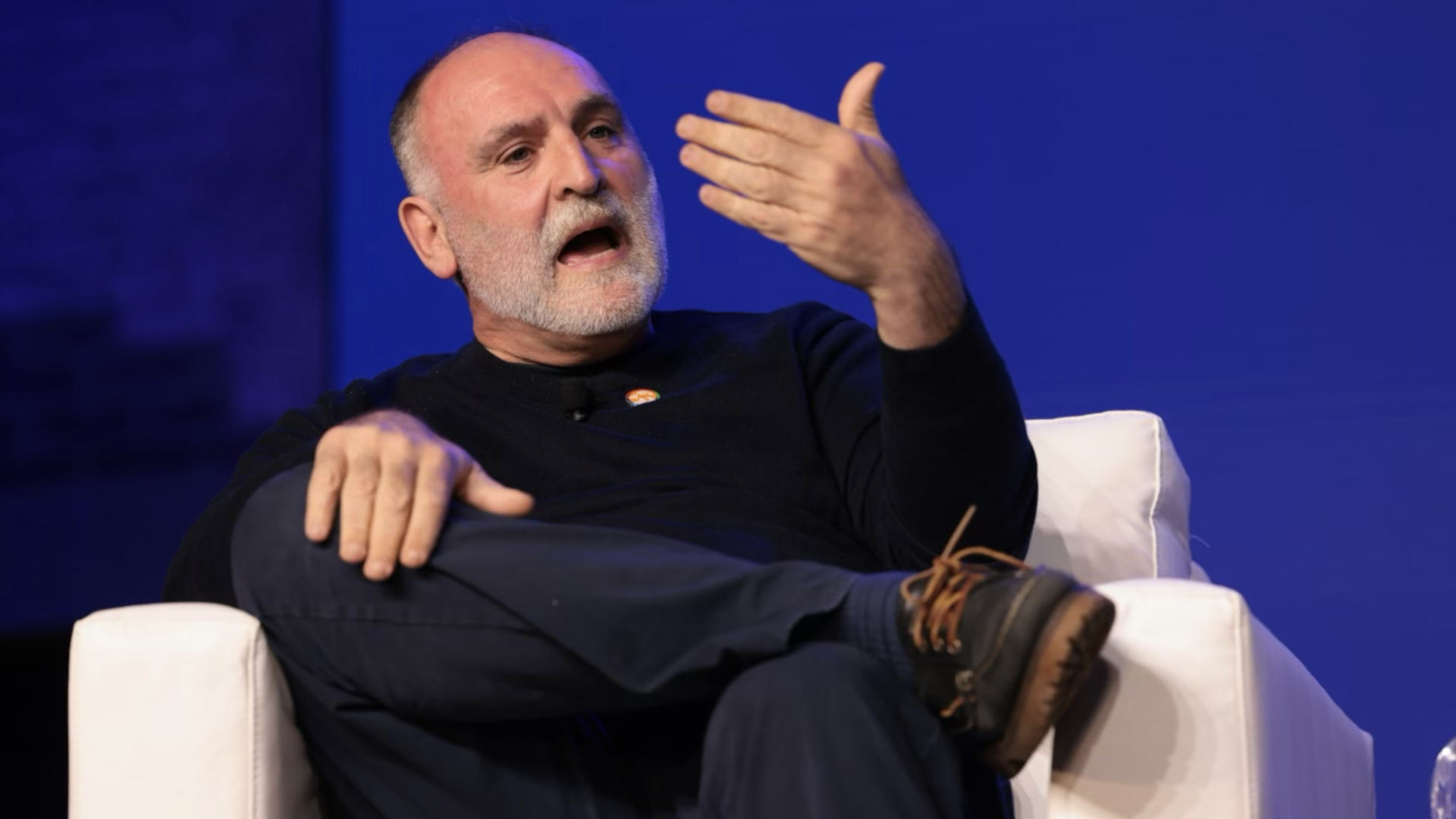
Chef José Andrés has relied heavily on technology as part of his humanitarian work in Ukraine, feeding thousands of people displaced by the Russian invasion. But he has a few gripes as well, including the fact that Apple Maps kept sending him to Russian-controlled areas.
"Don’t send people to enemy territory in a war," he told me in a brief interview after his appearance at the Axios What's Next Summit in Washington, D.C.
The pandemic turned messaging tool Slack into a pillar of office communication inside many companies coping with a sudden shift to remote work two years ago. But Slack CEO Stewart Butterfield finds the emerging post-COVID world of hybrid work as tricky to master as anyone else.
Why it matters: Butterfield, who spoke Tuesday at the Axios What's Next Summit, says each company and each employee makes different calculations about what kind of work environment they want now.
The time to start figuring out rules and norms for the metaverse, autonomous vehicles and other emerging platforms is now, not after the technologies are built and widely deployed, industry and policy leaders at the Axios What's Next Summit in Washington, D.C. Tuesday largely agreed.
The discussion was hosted by Axios chief tech correspondent Ina Fried and Axios business reporter and Closer newsletter co-author Hope King.
Good news, Twitter crew: The app is finally about to test an edit feature. Twitter's communications team tweeted on Tuesday. The platform said it was launching testing in the coming months, and said it didn't "get the idea from a poll."
Why it matters: This is a commonly-requested feature and people send lots of typo-filled tweets.
Business and thought leaders around the future of work and professional mobility came together at Axios’ inaugural What’s Next Summit on Tuesday for a discussion on how employees now prefer to be treated like customers.
Why it matters: With COVID-19, the great resignation and technological shifts, everyone from business owners to job seekers are asking what jobs will look like in the years to come.
Former U.S. PlayStation chief Jack Tretton has his eyes on purchasing a game company that goes for $1 billion to $2 billion, he tells Axios.
Driving the news: Tretton is CEO of PowerUp Acquisition, a special purpose acquisition company (SPAC) chaired by former Vivendi games boss Bruce Hack that raised more than $250 million in February.
Most people don't know exactly what a "smart city" is, but proper definitions will be key to making sure they can become a reality and work for everyone.
Why it matters: There's a lot of hype about smart cities and the future of where we live and work, but smart cities won't become a reality, making life easier and more sustainable, without the right policy.
Base10, a San Francisco-based venture capital firm, has raised $460 million for its third early-stage fund.
Why it matters: The firm's bet on what it calls "automation for the real economy" is definitely one that paid off during the pandemic as all industries had to adapt.
Defense giant Northrop Grumman and AT&T are partnering to create what will be a "military Internet of Things" where sensors, weapons and data will all be connected by a 5G network.
Driving the news: Kathy Warden, Northrop Grumman CEO and president, announced the partnership Tuesday at the Axios What's Next summit in Washington, D.C.
Ready Player DAO (RPD) was valued at $150 million in a new $10.2 million funding round, the latest validation of the play-to-earn gaming model.
Why it matters: The crypto industry has high hopes for Web3 video games to bring lots of new users into digital assets, because people actually get to own the stuff they gather up while playing.
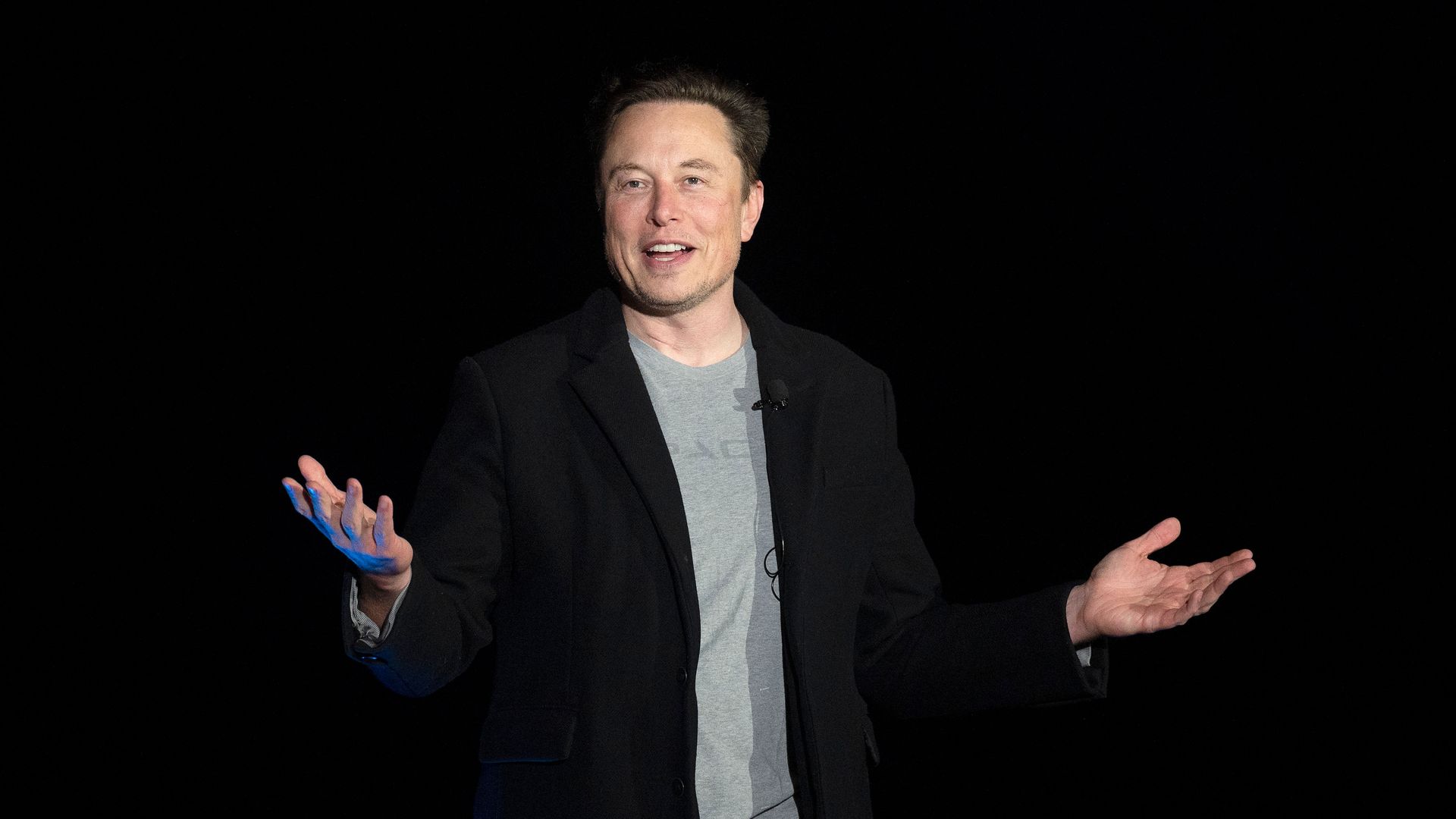
Why it matters: Musk, who has criticized Twitter for "failing to adhere to free speech principles," can reform the platform to his liking from his new position in the company, Axios' Hope King reports.
iHeartMedia, the holding company of iHeartRadio, is pouring several hundred thousand dollars into purchasing the rights to roughly a dozen NFTs to create a new NFT-based podcast network, executives tell Axios.
Why it matters: It marks one of the first major media franchises to introduce a podcast slate of characters and voices united across prominent NFT collections.
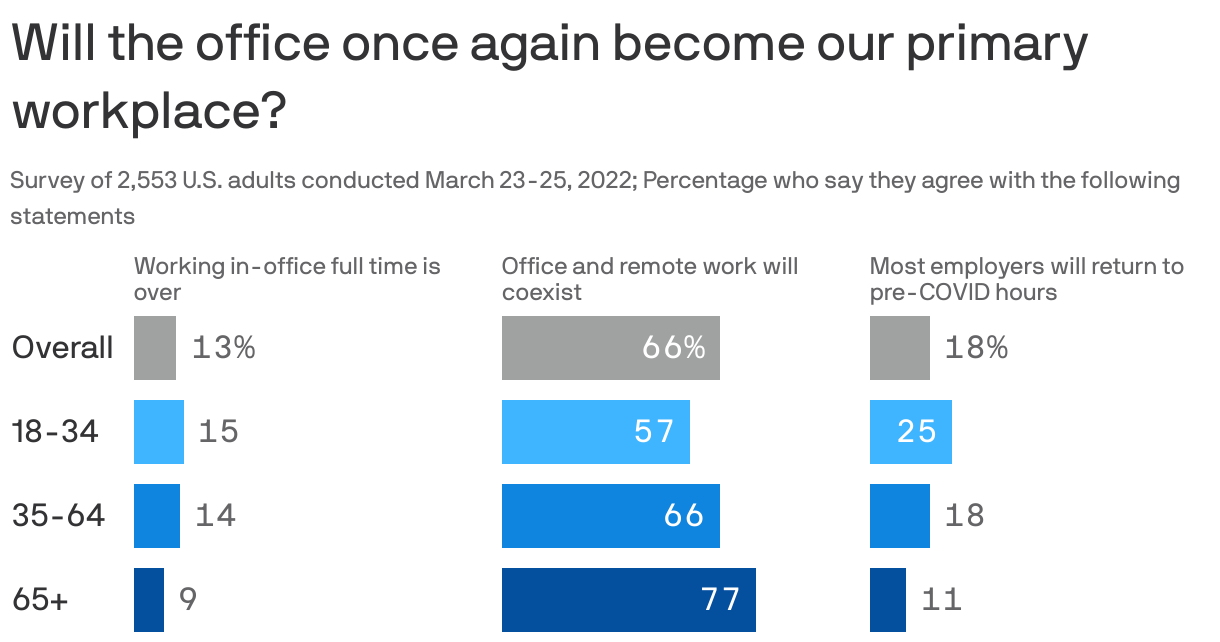
Two-thirds of U.S. adults say that office and remote work will continue to coexist well into the future, an Axios-Momentive poll found.
Why it matters: A lasting legacy of the pandemic may be the freedom from the 40-hour (or more) facetime-in-the-office workweek for those whose occupations are traditionally conducted that way.
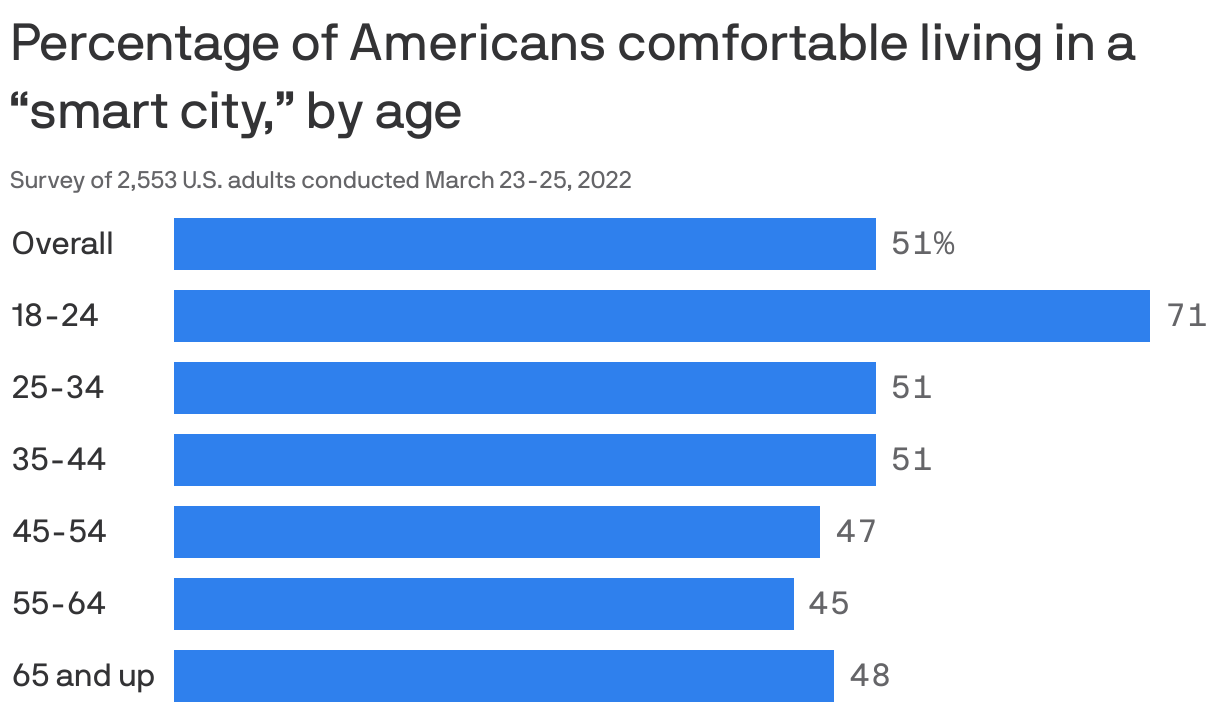
Nearly half of Americans feel uncomfortable about the prospect of living in a smart city, a place where electricity grids, traffic lights and other infrastructure components are networked and internet-connected, an Axios-Momentive poll found.
Why it matters: Cities have embraced smart technology in fits and starts. They're lured by the promise of better citizen services, but fearful of the expense and the potential for security and privacy breaches.
So far, the most popular piece of the smart city ecosystem seems to be micromobility devices — shared e-scooter networks and the like.
New investments flooding partisan media platforms are starting to restructure America's internet business around the nation's deepening political divide.
Why it matters: For years, internet theorists have warned of the "splinternet," a breakup of the global internet into regions governed by different rules and laws. Something like that is now starting to happen within the U.S., splitting the online world into red and blue sectors.
False narratives surrounding Russia's invasion of Ukraine are increasing and extend far beyond the bounds of Russia-controlled state media, according to new research from NewsGuard first shared with Axios.
Why it matters: Though Russian state-media has faced widespread de-platforming, many shady think tanks, anonymous websites and other outlets can easily continue to spread misinformation about the war.
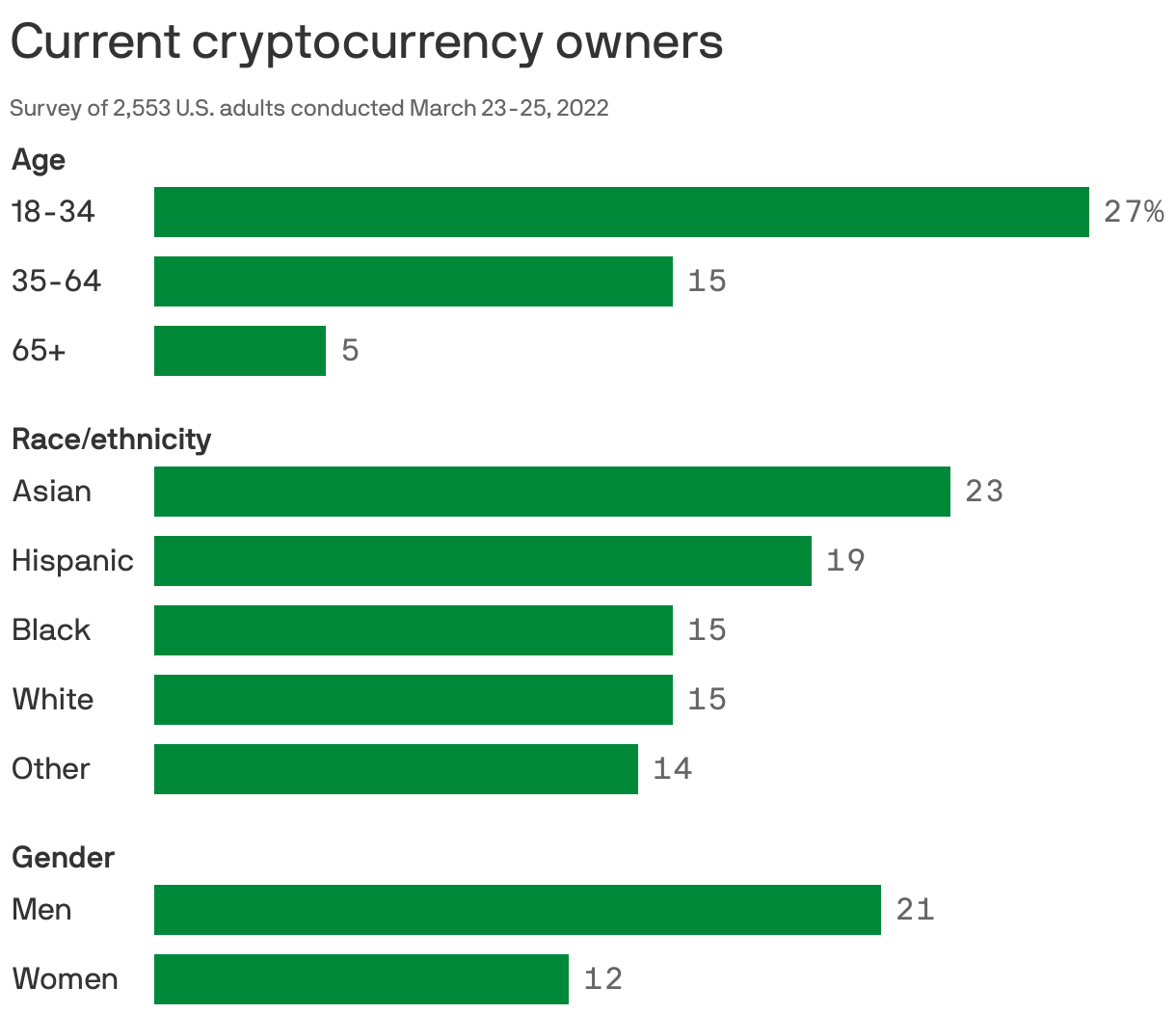
Most consumers are steering clear of cryptocurrency, but those buying it tend to be young, male and nonwhite, an Axios-Momentive poll found.
Why it matters: It's hard to avoid hearing about bitcoin and other digital currencies — there are more than 10,000 of them — but many people still consider them too risky or experimental.
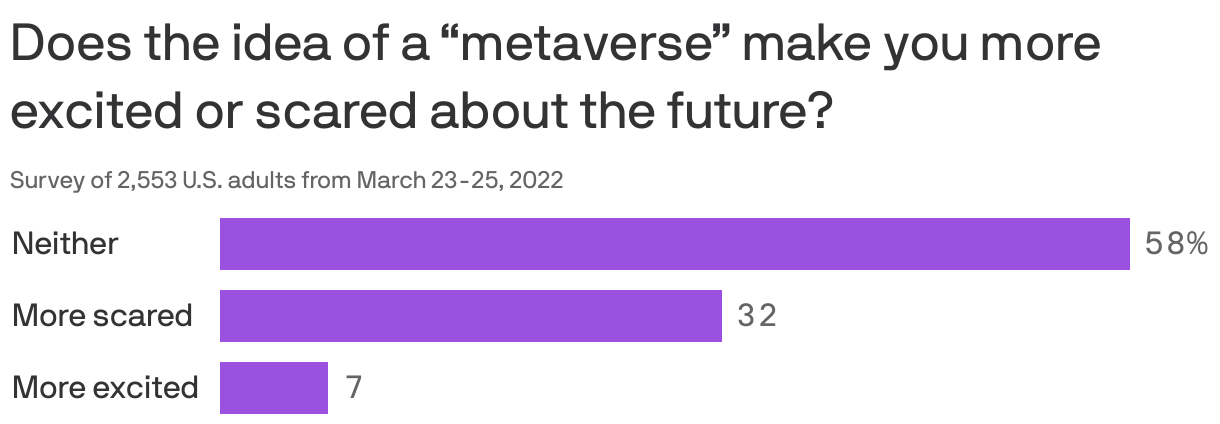
Consumers are still lukewarm about some of the buzziest tech trends out there, like the metaverse (which seems to elicit puzzled yawns) and the prospect of home delivery via drone, an Axios-Momentive poll found.
Why it matters: Although the companies propagating these technologies are unlikely to be discouraged by public indifference, the results suggest that consumer adoption may take longer than those companies hope.
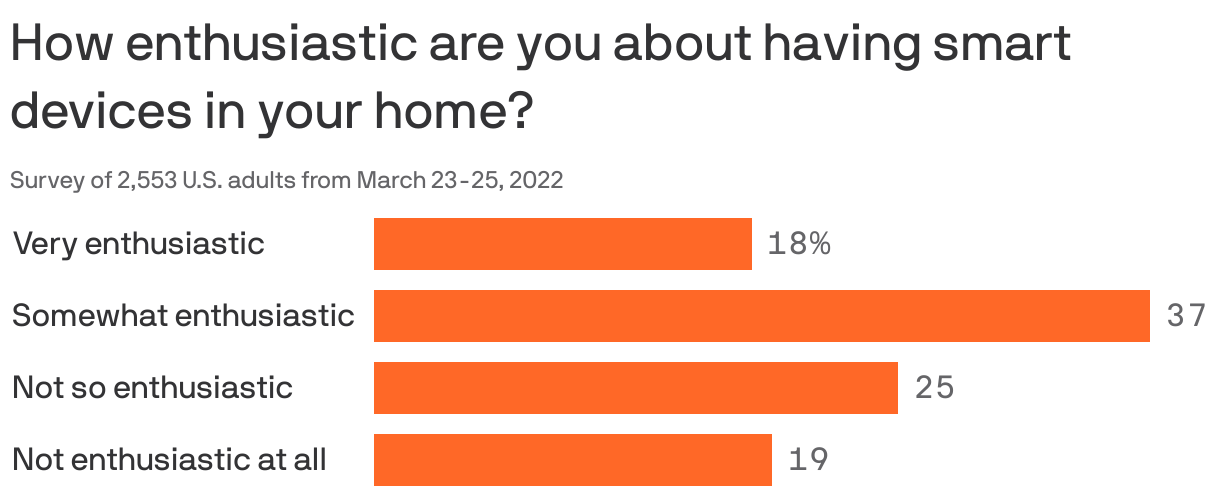
The transition to electric vehicles and smart home devices is proceeding quickly — despite some consumer jitters — as people discover they like the stuff once they buy it, an Axios-Momentive poll found.
Why it matters: The transition to “electric everything” will require ongoing investment and innovation. But consumers are already starting to appreciate some aspects of the home of the future.
More than 1 in 4 young American adults are invested in cryptocurrency — and it's people under 25 who express the most excitement about everything from electric vehicles to smart home technology, an Axios-Momentive poll found.
The poll was conducted in conjunction with Axios’ inaugural What’s Next Summit today. (Register here to watch virtually.)
Why it matters: Young consumers' enthusiasm about trending tech is reshaping mass-market preferences and lifting society toward a more sustainable, convenient and connected future.