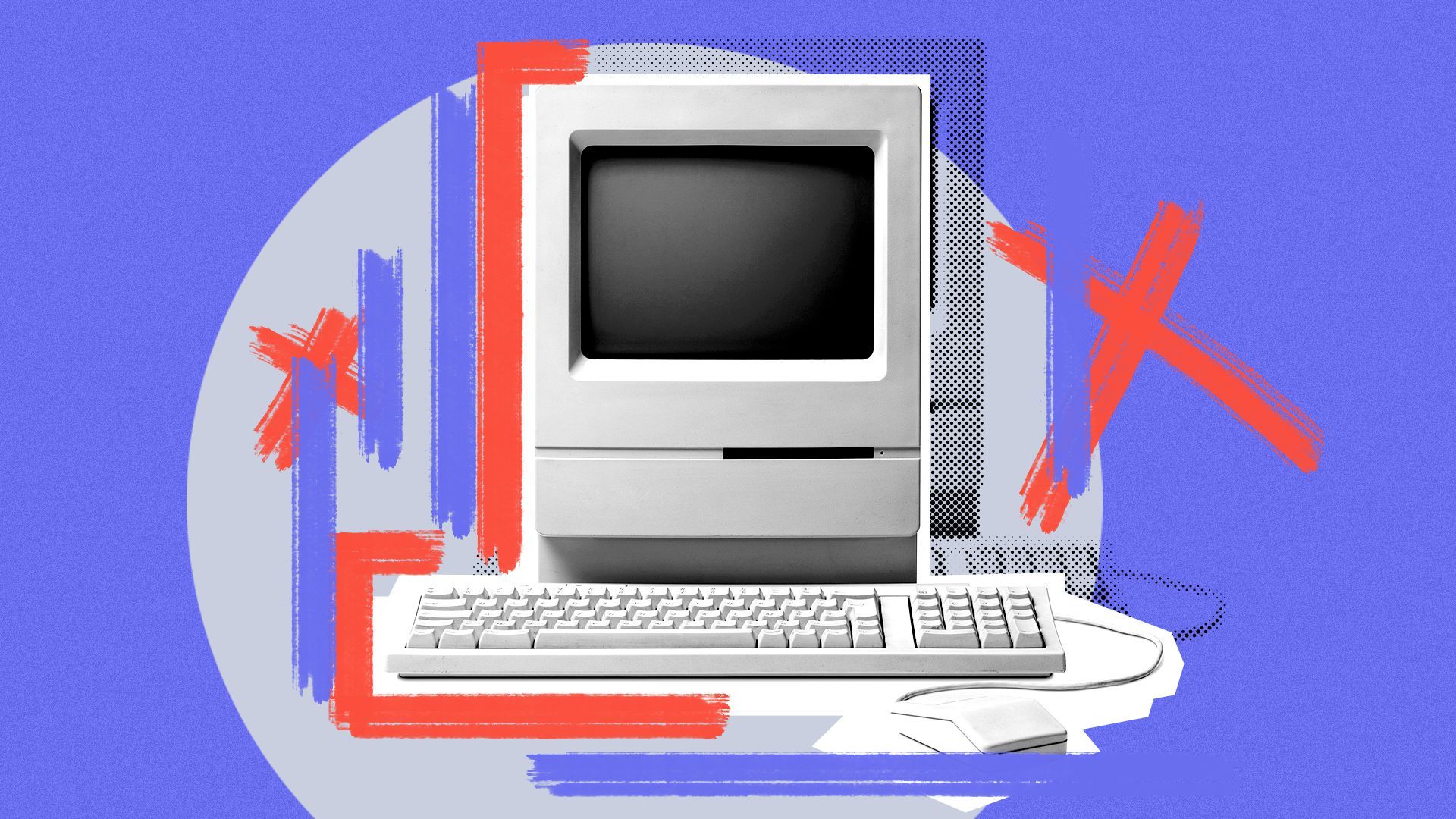
Intel CEO Pat Gelsinger hasn't given up on the idea of the Mac once again using Intel chips, but he acknowledges it will probably be years before he gets that chance.
In the meantime, he is focused on powering Windows machines that give Apple CEO Tim Cook a run for his money.
Why it matters: In getting pushed out of the Mac, Intel not only lost a customer but picked up a new rival.
Older brands, trends and technologies are making a comeback as younger consumers desperately chase slower, less chaotic times.
The big picture: TikTok's algorithm makes it easy for flashback items to resurface and quickly go viral both on its platform and eventually on other social networks.
AI algorithms employed in everything from hiring to lending to criminal justice have a persistent and often invisible problem with bias.
The big picture: One solution could beaudits that aim to determine whether an algorithm is working as intended, whether it's disproportionately affecting different groups of people and, if there are problems, how they can be fixed.
Tech's leading companies — like the rest of corporate America — responded to the murder of George Floyd by police in 2020 in part by pledging to give big to racial justice groups.
Our analysis of these companies found that, by and large, Big Tech paid up.
Asians make up the majority of Silicon Valley's tech workforce at roughly 57%, according to MarketWatch. Yet they're vastly underrepresented at the leadership level: 27% at Apple, 40% at Google and 25% at Facebook.
The big picture: Many tech leaders like to think the field is "post-race," often pointing to the handful of Asians, mostly East and South Asian men, who occupy prominent executive roles. The reality is far more complicated.
Game developer Chandana "Eka" Ekanayake waited till mid-career to found a startup because he didn't see a path to do it. "I joke about this on Twitter: I wish I had 'white man confidence,'" he says now. "I would have started a company at 25."
Historically, that confidence hasn't been encouraged in the gaming sector. Ekanayake is now one of several entrepreneurs aiming to speed up diversification in a field where progress has been slow.
In the mid-2010s tech's biggest companies started publicly reporting diversity statistics, and the tale these annual numbers tell since then is one of progress — but very slow and very slight.
U.S. Census numbers for 2020 show the U.S. Black population at 12.4% and the Hispanic population at 18.7%. These numbers don't include the growing tally of multi-racial people.
The technology industry is famously determined to change the world — but its efforts to diversify its workforce and remove bias from its products haven't changed nearly enough.
The tech industry likes to cast its failure to include enough people of color and other underrepresented groups as a "pipeline problem" — one that would vanish if only more such people studied tech skills and entered the field.
But there's another reason U.S.tech companies struggle to diversify: work environments that critics say are rife with harassment and discrimination even as companies paint themselves as champions for diversity.
Better sensors, more intelligent AI, and the coming wave of 5G wireless could finally fulfill the promise of the smart city.
Why it matters: How we organize, run and power our cities will be increasingly important in the years ahead, as urbanization expands and the damaging effects of climate change compound.