BitMEX, a cryptocurrency derivatives exchange, has agreed to pay $100 million to settle charges by the Commodity Futures Trading Commission and Financial Crimes Enforcement Network that it unlawfully operated in the United States.
Why it matters: U.S. regulators are cracking down on the cryptocurrency industry as new innovations like derivatives exchanges, "decentralized finance" protocols and others boom.
China's regulatory shakeup is causing even one of its biggest believers —SoftBank — to take pause.
Driving the news: "We don't have any doubts about the potential of China but again, new rules are being implemented, so until it gets settled, we want to wait and see," SoftBank CEO Masayoshi Son told analysts during the company's quarterly earnings presentation.
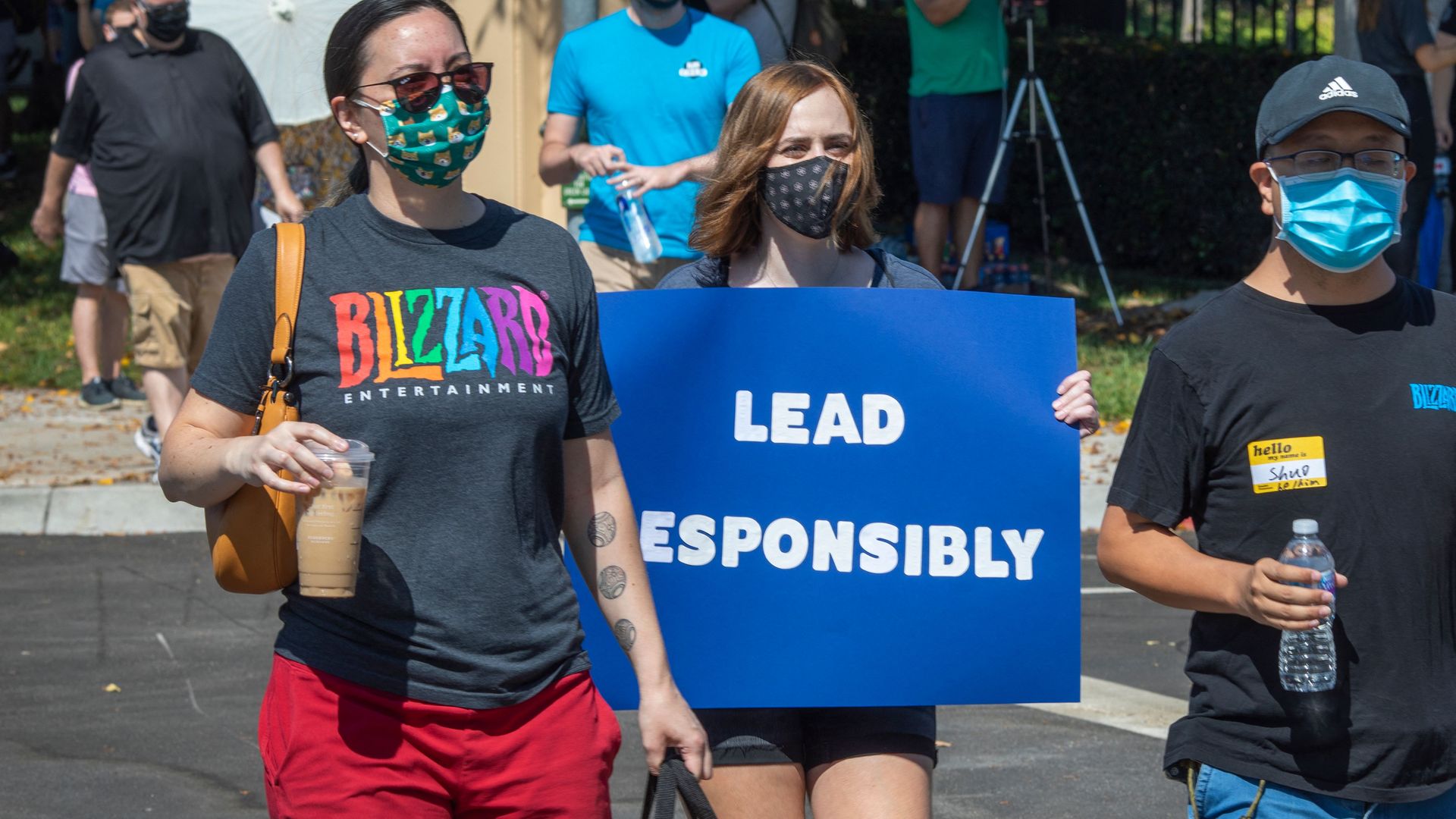
SOC Investment Group says that Activision Blizzard's recent promises to improve its culture do not go "nearly far enough to address the deep and widespread issues with equity, inclusion, and human capital management" that the company is facing.
Why it matters: In addition to being an Activision Blizzard shareholder, SOC advocates for ethical business practices and is outspoken on topics like pay gaps between executives and workers.
Google and YouTube are introducing new safety protections for users under 18, according to company blog posts Tuesday.
Why it matters: Google joins Facebook-owned Instagram in changing privacy and advertising policies for younger users as regulators across the globe scrutinize how Big Tech affects children.
Salesforce is the latest tech giant to venture into video streaming with the launch of a new service aimed at business professionals called Salesforce+, the company's chief marketing officer Sarah Franklin tells Axios.
Why it matters: The service is part of a greater effort to transition Salesforce's marketing approach from paid customer acquisition to owned and operated media.
The White House-backed infrastructure bill now moving toward Senate approval divvies up $65 billion in broadband funding in ways that largely please the big cable and telecom companies.
The big picture: President Biden's spending blueprints and talking points stoked alarm in the industry over the prospect of price regulation or government-backed networks, but the legislation that's moving forward is much more to its liking.
Primetime ratings for the Tokyo Olympic Games were down 42% from the 2016 Games, according to data from NBCUniversal.
Why it matters: It's an undeniable proof point that the decline of traditional television is happening faster than initially expected. It also points to the ways media diets and interests have become more polarized and divided in the digital era.
A majority of doctors say the pandemic forced their organization to make tech upgrades that normally would've taken years, according to a Google Cloud poll provided exclusively to Axios.
Why it matters: While health care has typically moved at a cautious pace when it comes to adopting new tech, COVID spurred a digital transformation.
Jay Y. Lee, Samsung’s de facto leader who had been serving a 30-month sentence on bribery, embezzlement and perjury charges, is expected to leave a South Korean prison on Friday after being granted parole, according to the Wall Street Journal.
Why it matters: Lee, the grandson of Samsung's founder, still holds a vital role in the company, though it is unclear if he will be able to resume his duties after leaving prison.
A new survey of 1,000 senior executives finds that only 20% of U.S. companies are fully employing AI for decision-making in business.
Why it matters: Many businesses, especially outside tech, remain reluctant to fully employ AI because they don't completely trust it and can't tap the talent they need.
Facebook's leaders know they have to demonstrate accountability to the world, but they're determined to do so on their own terms and timetable.
Why it matters: Since the 2018 Cambridge Analytica affair, Facebook has moved to provide more transparency and oversight, but its programs are limited, selective and slow, leaving journalists and scholars as the de facto whistleblowers for problems on its platform.
Apple's plan to detect images of child sexual abuse on iPhones and to shield some underage users of Messages from receiving explicit images has touched off the latest round of a perennial debate over prioritizing law enforcement or user privacy.
Why it matters: There's increasing pressure on giant tech platforms to flag illegal behavior and remove harmful content. But smartphones are also powerful tools of surveillance that are increasingly employed by authoritarian governments and invasive marketers to target users around the world.












/2021/08/09/1628537636341.gif?w=3840)

/2021/08/09/1628507377441.gif?w=3840)



/2021/08/09/1628477441039.gif?w=3840)