Google fired back on Thursday with claims of patent infringement after Sonos sued the tech giant earlier this year over speaker patents.
Why it matters: Sonos is in a tough spot as it tries to add smart speaker capabilities while also competing with devices from Amazon and Google, the companies that control the two main popular virtual assistants.
U.S. video conferencing company Zoom issued a statement on Thursday acknowledging that the Chinese government requested that it suspend the accounts of several U.S.- and Hong Kong-based Chinese activists for holding events commemorating the anniversary of the 1989 Tiananmen Square massacre.
The big picture: Zoom claims that it only took action because the Chinese government informed the company that "this activity is illegal in China" and that meeting metadata showed "a significant number of mainland China participants." Zoom said it does not have the ability to block participants from a certain country, and so it made the decision to end some of the meetings and suspend the host accounts.
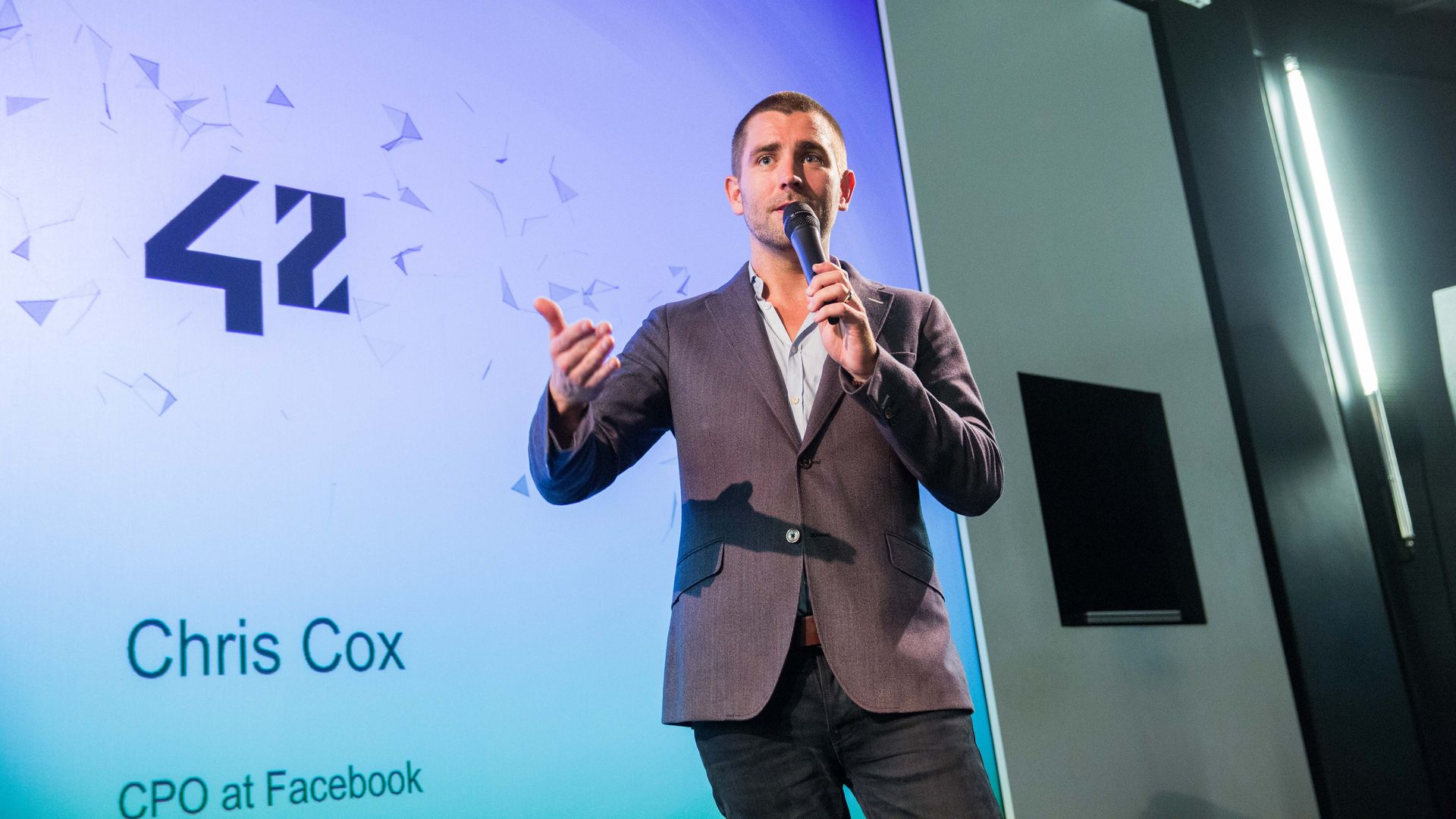
Why it matters: Cox is coming back at a time when Facebook faces continued criticism over its content policies and is just months away from the next U.S. presidential election, the last of which exposed the company's blind spots as to how it saw its influence elections.
Snapchat on Thursday introduced a slate of new products, tools and partnerships that move the company closer to being a platform for developers and businesses, rather than just a chat app for friends.
Why it matters: With increased investments in things like gaming and augmented reality, Snapchat's business is beginning to look more like that of the Chinese tech giants, which make money off of value-added services like in-app purchases, rather than just ads.
Joe Biden's campaign published a petition and a letter to Facebook CEO Mark Zuckerberg on Thursday demanding that the social media giant implement stronger misinformation rules and hold politicians, including President Trump, accountable for spreading lies.
Why it matters: Biden is directly challenging Facebook over its misinformation policies months ahead of the 2020 election. Many Democrats have been calling for Facebook to more closely regulate misinformation on its platform, especially since some credit Facebook for President Trump's 2016 victory.
Apple CEO Tim Cook on Thursday announced a $100 million project focused on the systemic barriers to opportunity and dignity faced by the black community, with special emphasis on education, economic equality and criminal justice reform.
Why it matters: While many tech companies have talked about the need for more work in the area, Apple's large check appears to be a more substantial move.
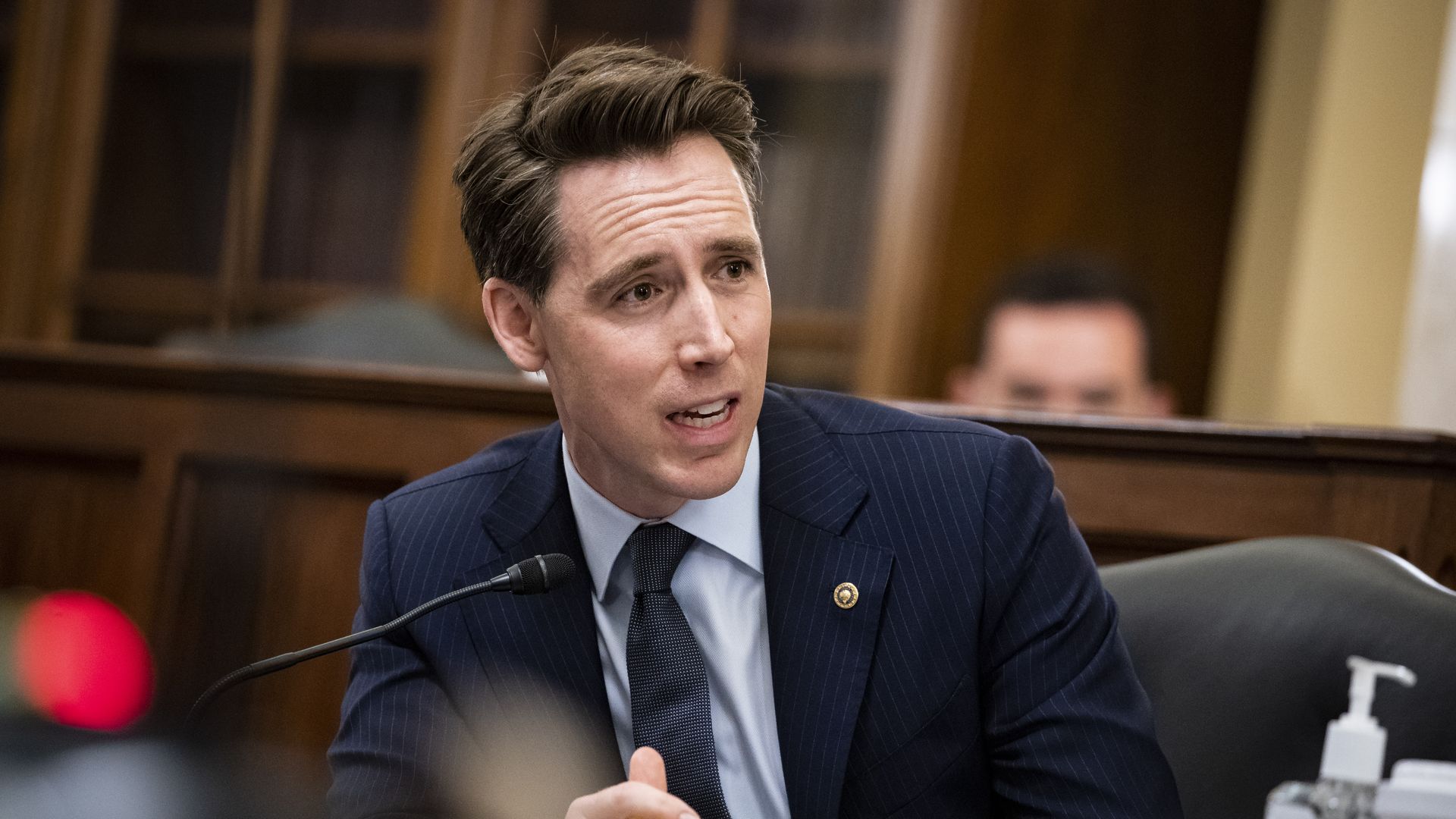
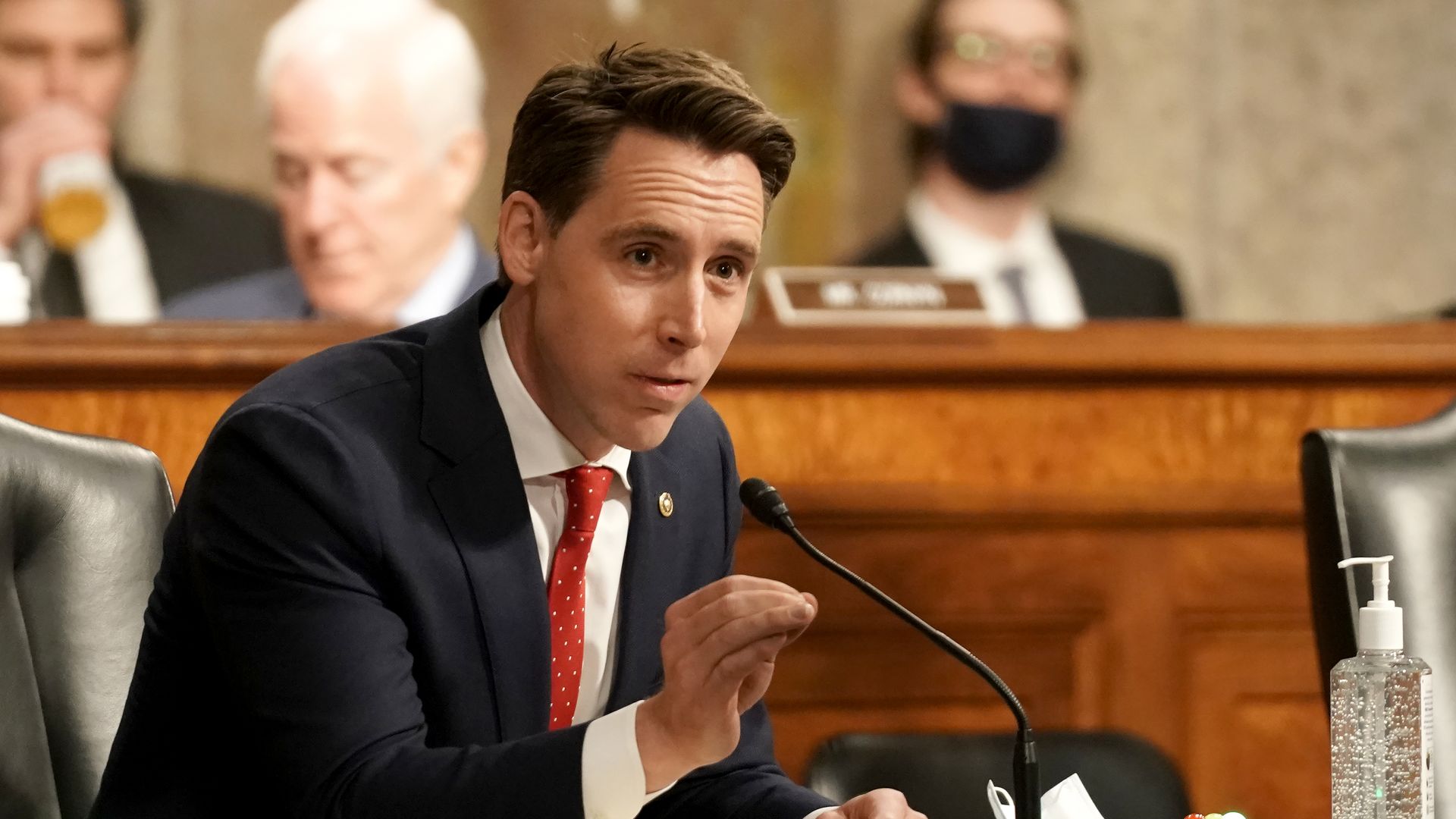
At the request of the Trump administration, Sen. Josh Hawley (R-Mo.) is working on new legislation targeting the tech industry's liability shield, a source familiar with the effort told Axios.
Why it matters: The Hawley bill will be an additional threat against platforms like Facebook and Twitter following President Donald Trump's executive order aimed at curbing their legal protections from content posted by users.
Facebook has been hiring seasoned tech investors to help lead a new "multimillion dollar" investment fund within its experimental apps team, Axios has learned.
Why it matters: Starting a formal investing program aimed at startups could bolster the company's ability to spot the next big social app before it becomes big. That visibility is all the more important given that antitrust scrutiny has likely closed the door on large acquisitions by Facebook for the near future.
As the big five tech giants face a trifecta of crises over pandemic disruptions, government investigations, and protests against racial inequality, their ages and life stages are shaping their responses.
Between the lines: Companies have life cycles that mirror those of people. And like people,they handle stress in different ways at different stages of maturity.
Amazon announced on Wednesday it would stop supplying U.S. police officers with its facial recognition technology for one year amid a nationwide push for police reform.
What they're saying: "We’ve advocated that governments should put in place stronger regulations to govern the ethical use of facial recognition technology, and in recent days, Congress appears ready to take on this challenge. We hope this one-year moratorium might give Congress enough time to implement appropriate rules, and we stand ready to help if requested."
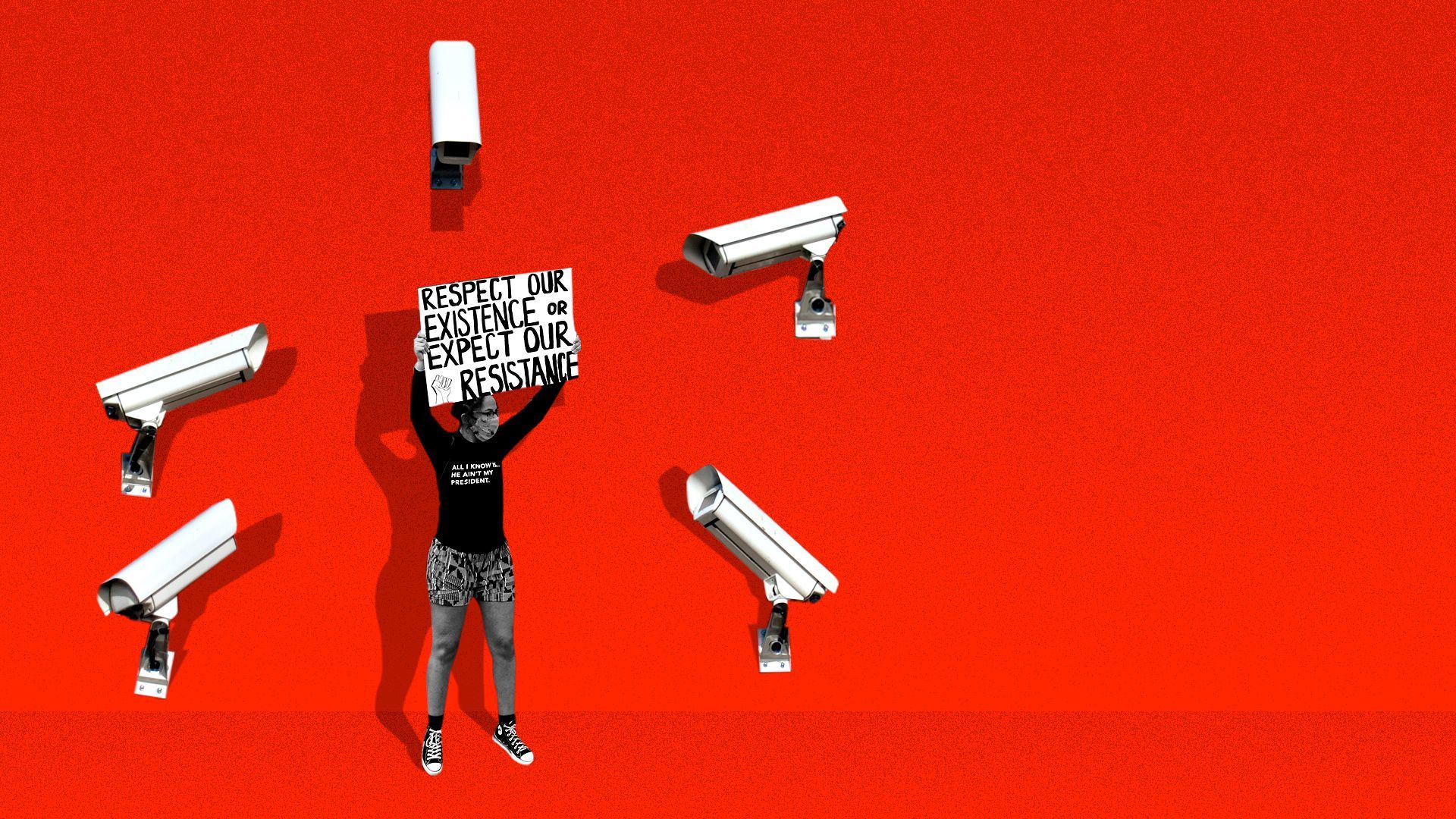
The sometimes militarized government response to nationwide protests following the killing of George Floyd has shone a light on the scope of the surveillance and enforcement apparatus that can be mobilized quickly against U.S. civilians.
The state of play: Since the protests began, extraordinary emergency authorities have been granted to the Drug Enforcement Agency to police demonstrators, including through “covert surveillance,” according to a DEA memo leaked to BuzzFeed.
Apple is on the verge of transitioning the Mac from Intel processors to homegrown chips — a move that, even if it pays off in the long term, could mean hassles and tough choices over the next few years for developers and consumers.
The big picture: The move is a blow to Intel, long the U.S. microprocessor leader. Whether it is a win for Apple depends on the eventual cost savings and performance gains, as well as how smoothly Apple is able to handle its transition without losing customers and app developers.
Driving the news: Bloomberg reported Tuesday that Apple may announce its plans for the shift at its Worldwide Developer Conference, scheduled to take place online this month.
The move is not a surprise. Bloomberg has been reporting it for a while, as has Axios. What's new is that the change seems imminent.
Why it matters: The shift creates dilemmas both for customers deciding what to buy and when, and for software developers allocating scarce programming resources.
Flashback: Apple has changed the types of chips powering the Mac line twice before. In 1994, it switched away from the Motorola chips that powered the first Macintoshes to PowerPC chips, jointly developed by IBM and Motorola. Then, starting in 2005, it moved from PowerPC to Intel.
Consumers and businesses looking to buy a Mac computer in the next year or so will have to decide between two not-so-great options:
Buy one of the last of the old computers, and accept that there will be new software in a couple of years that doesn't work on your machine...
Or hang on to the old computer and buy one of the first new machines, even though it may not yet fully support much or all the software you need.
Developers face a dilemma of their own: when to put resources behind optimizing key programs for the new chips. Even after Apple officially announces the move and provides the tools, developers know that the base of potential users for the new software will start from zero.
Between the lines: Apple has a pretty good track record here, having managed past chip transitions — as well as the shift from classic Mac OS to OS X — fairly successfully. There were bumps, to be sure, and some applications took years to be converted, but in the end, everyone made it across, and the platform was stronger for it.
There will likely be some sort of compatibility layer allowing existing apps designed for Intel chips to run on the new Apple-made chips — as well as tools to help developers convert their programs without starting from scratch.
That said, such approaches have a mixed track record and can slow performance.
Yes, but: This transition differs from Apple's previous ones in a couple of ways.
The Mac isn't the center of Apple's business any more. Most of Apple's revenue comes from iPhones and other non-Mac product lines, including iPads, peripherals and services.
And, speaking of iPhones and iPads, Apple isn't moving to a brand-new architecture, but rather to ARM-based chips similar to those that power Apple's iOS devices. That means some work can be ported from existing iOS apps.
Our thought bubble: In addition to sharing the time frame and particulars of the transition, Apple needs to answer why it needs another change in chips. Some developers say the shift will only be worth the effort if it provides a truly meaningful performance boost.
Meanwhile, Microsoft has been trying to open up Windows to ARM-based processors for years now, with little success.
Each time, Microsoft and a chipmaker partner, such as Qualcomm, promise improved battery life and wireless capabilities — but performance and compatibility issues have consistently sent the companies back to the drawing board.
The bottom line: Apple's motivations for the move likely include an opportunity to cut costs, an effort to boost performance, and a desire to control its own destiny. But even if the company gets all those wishes — and even if it manages the transition well — the whole Mac community is probably headed for some short-term pain.
Facebook and Google should be broken up and stripped of their liability shield if they continue to sell advertising, argues progressive think tank the American Economic Liberties Project in a policy brief out Wednesday.
The big picture: The report ties together three major threads of the techlash: the idea that tech giants are too big; the concern that they harvest too much private data; and the threat to rein them in by taking away their broad legal immunity.
Twitter and Square CEO Jack Dorsey announced Tuesday that Juneteenth would become a holiday for both companies.
Why it matters: The day — June 19 — marks the end of slavery in the United States in 1865, when Union soldiers landed in Galveston, Texas, and told slaves there that they were free and that the Civil War had ended.
Why it matters: The board change comes amid growing scrutiny of Reddit's content moderation, which has often been accused of not curbing hateful content enough.
Zynn, a rising TikTok-like service that pays its users, is drawing the attention of China hawk and Big Tech antagonist Sen. Josh Hawley (R-Mo.), who wants the Federal Trade Commission to look into it.
Why it matters: Zynn, which pays users both when they watch content and when they refer others to install its video-sharing app, quickly topped the App Store's free app chart just weeks after debuting in May.






/2020/06/11/1591885397935.gif?w=3840)