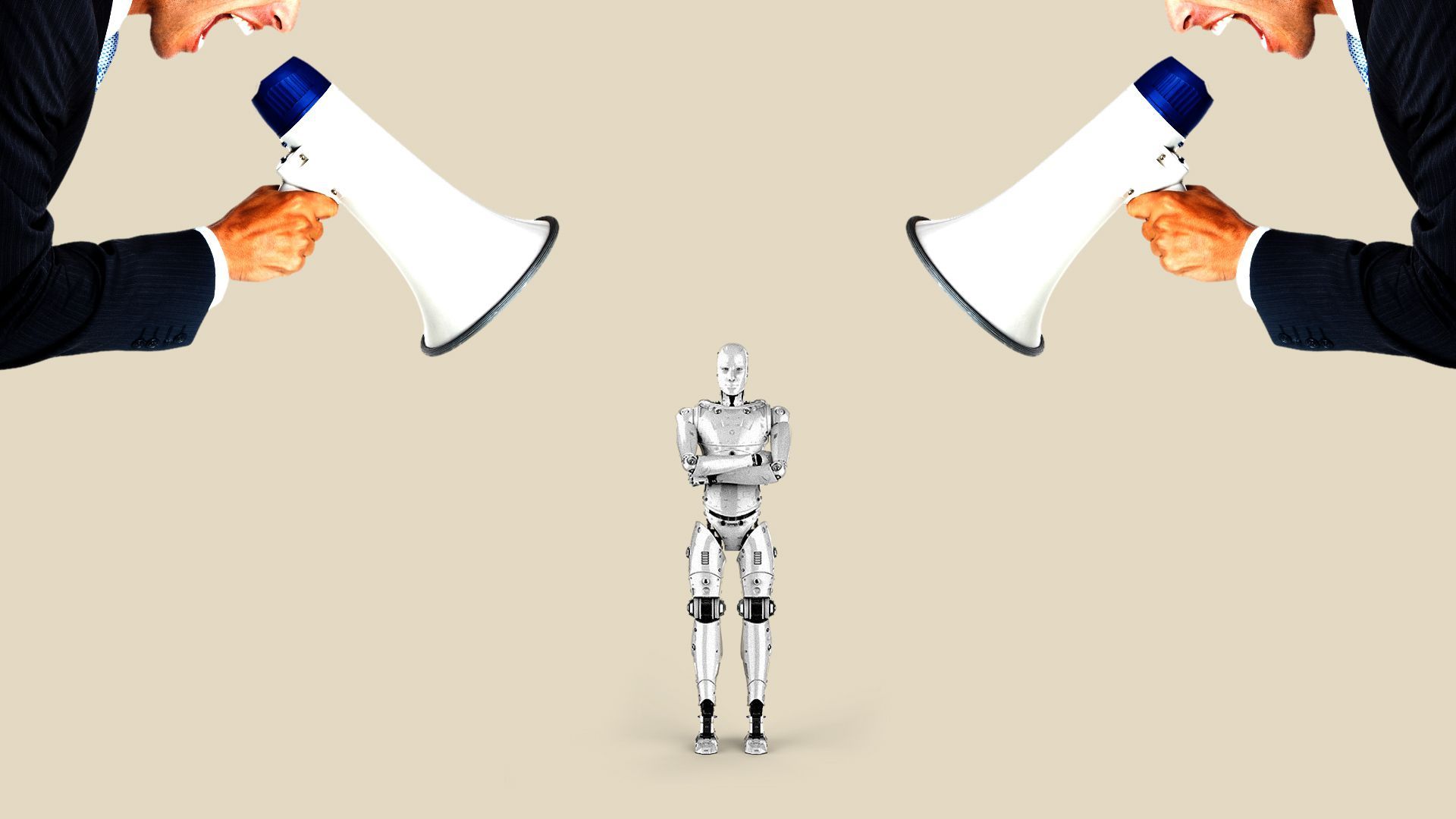
China touted emotion recognition systems as a means of crime prevention at its2019 Public Security Expo, Financial Times reports(subscription), although experts say the tech doesn't work as advertised.
Reality check: "The science on emotion recognition is pretty bogus," ACLU senior policy analyst Jay Stanley tells Axios. A July study found that it is not possible to confidently assign emotional states to facial expressions "regardless of context, person, and culture" — "as much of current technology tries to do."
Your heart leaps when the beat finally drops; your skin prickles when the violins swell.
What's happening: In new research, a team of computer scientists and psychologists at the University of Southern California tried to connect musical characteristics to listeners' unconscious responses.
After decades of gestation in relative obscurity, leading-edge technologies like AI and quantum computing have been thrust into the center of an era-defining competition between China and the U.S.
Why it matters: Politicizing these technologies has led to a rush of investment — but it risks hobbling international collaboration and potentially even derailing some critical research.
Uber's lawsuit to overturn rules to restrict the number of for-hire delivery and transportation vehicles allowed in the city was dismissed Friday by the New York state Supreme Court, The Verge reports.
Why it matters: This is part of a package of rules lawmakers said was aimed at decreasing traffic caused by ride-hailing cars. Taxi drivers view the ruling — which Uber is likely to appeal — as a victory. Uber argues the ride-hailing cap costs its drivers thousands of dollars per year and the company stopped hiring new drivers in New York City this spring due to the cap.
Google is buying Fitbit for $2.1 billion in a deal expected to close in 2020, the fitness company announced Friday.
Why it matters: It's an attempt by Google to "bolster its lineup of hardware products, which already includes smartphones, tablets, laptops and smart speakers. Fitbit makes a lineup of fitness-tracking devices, but has faced stiff competition from Apple after the introduction of the Apple Watch," The New York Times reports.
Even if it proves to be the right thing to do, implementing a ban on political ads is no easy task, as the major platforms have found out in Washington state. As The Verge reports, Facebook and Google opted to ban ads there rather than comply with the state's strict campaign finance laws, but have found even that to be difficult.
Why it matters: The experiences of Facebook and Google in Washington state could foreshadow the work Twitter will have to implement its promised ban on political advertising, which starts next month.
Google turned to a Texas court for help Thursday, fearing that a multistate antitrust probe could allow its rivals to gain access to sensitive information.
Driving the news: Google sought a protective order to limit the sharing of its confidential information in the states' antitrust investigation.
Facebook's scale and power have often made it seem more a kind of quasi-sovereign nation than a traditional company — and right now it's looking more like a failing state than a thriving one.
The big picture: Digital giants like Facebook, Google, Apple and Amazon are making the kinds of decisions about speech, personal safety, political power and financial relationships that have belonged to governments in the past. But at heart they are profit-making corporations with only limited competence in these domains, so their choices frequently go awry.
It's more important than ever for companies to have privacy experts, to help them obey proliferating laws on how consumers' data can be used — but it's hard to find people with the expertise to do it.
Why it matters: Privacy is a once-and-future battleground. Without more qualified professionals, everyone’s sensitive information could fall vulnerable to corporate ignorance, mismanagement and whim.