If you've taken a college entry test in the last few years, your personal information may have been used to decide which colleges can recruit you.
Why it matters: Universities and other educational organizations are buying high schoolers' personal data from SAT administrator College Board to target and recruit future students. More than 3 million students in 2018 gave up their personal information in the process of taking the SAT, ACT and PSAT, the New York Times reports.
It's one thing to play chess against a computer — you'll lose — but it's another entirely to play a collaborative word game. That stretches the limits of today's AI.
What's happening: Game geeks are trying to create bots that can play Codenames, the super-popular word guessing game.
We're seeing the beginnings of a tug-of-war at the highest levels of government over how much access people should have to AI systems that make critical decisions about them.
What's happening: Life-changing determinations, like the length of a criminal's sentence or the terms of a loan, are increasingly informed by AI programs. These can churn through oodles of data to detect patterns invisible to the human eye, potentially making more accurate predictions than before.
Some technologists look at the pileup of crises weighing down American health care — overworked doctors, overpriced treatments, wacky health record systems — and see an opportunity to overhaul the industry, which could save lives and make them money.
Yes, but: There's frequently a chasm between can-do engineers itching to rethink health care and the deliberate doctors and nurses leery of tech that can make their lives more complicated, or worse, harm their patients.
Already facing antitrust and privacy enforcement actions from governments around the globe, major tech companies are now grappling with a slew of new potential threats from individual states.
Why it matters:Local governments are more nimble and have higher levels of public trust than Congress, so they have more latitude to get laws passed quickly.
The backlash against Big Tech is on track to escalate around the world in 2020 — and with more concrete consequences.
Driving the news: Just this week The Verge published leaked audio of Mark Zuckerberg's internal Facebook meetings, wherein he claimed Facebook would win the legal challenge posed by Elizabeth Warren if she were elected president.
PayPal dropped out of Facebook's digital currency project Libra on Friday, the Wall Street Journal reports.
Why it matters: Facebook’s cryptocurrency plans have come under scrutiny from regulators across the globe. Now, some of its provisional partners appear to be having second thoughts.
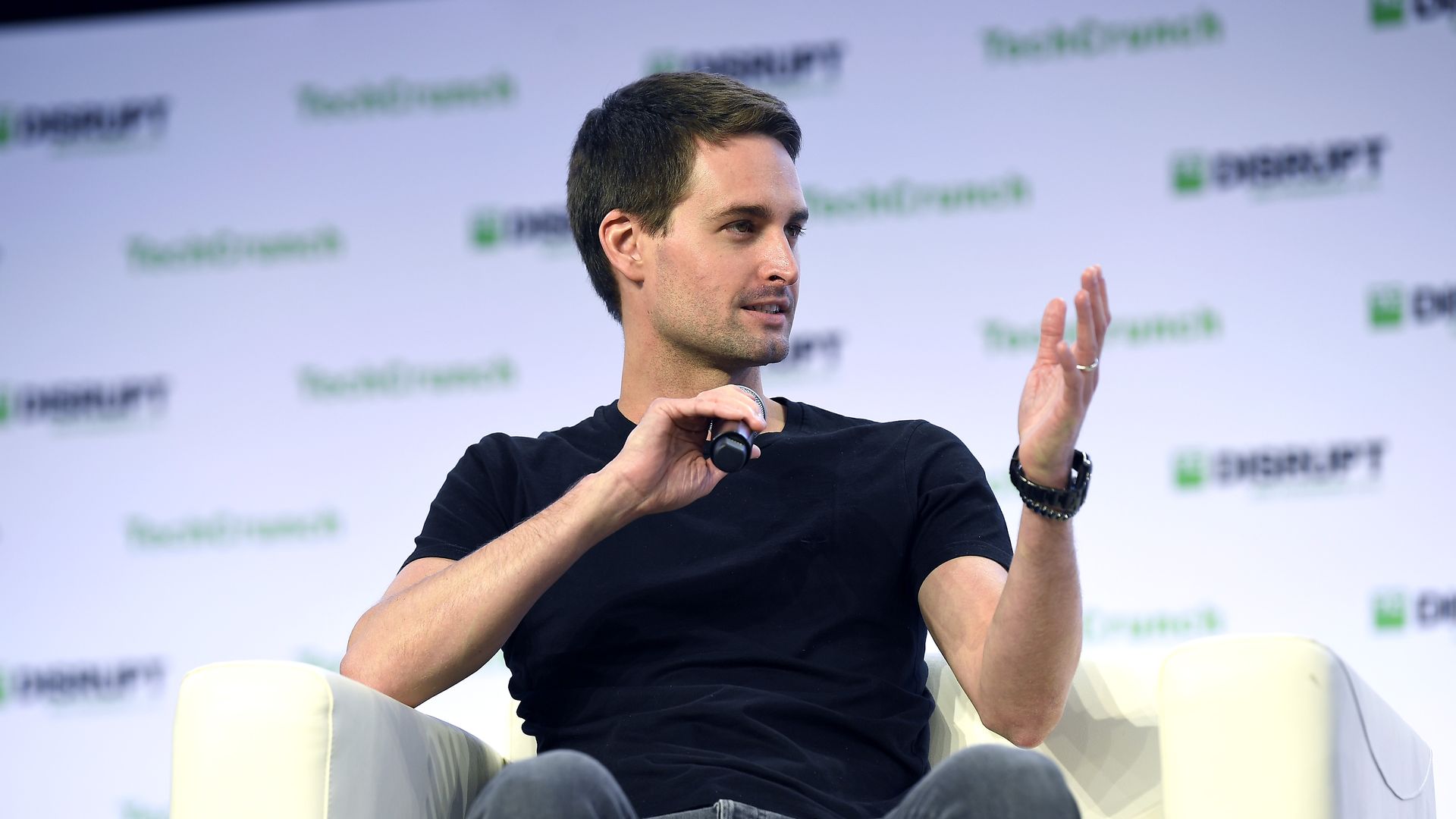
Despite Snap's well-known rivalry with Facebook, CEO Evan Spiegel did not give a resounding "yes" when asked on Friday at the TechCrunch Disrupt conference if breaking up Facebook would benefit society.
"I think the thing that everyone’s concerned about is that they’ve seen that competition has been what’s motivated Facebook to make changes over time. Those have really motivated Facebook to dramatically change their product offering in order to compete."
New emergency-braking technology that is supposed to help cars avoid pedestrian crashes is often ineffective, per AAA.
Why it matters: Pedestrian deaths are sharply higher, according to federal statistics, with nearly 6,000 fatalities a year, accounting for 16% of all traffic deaths. The technology has the potential to make the streets safer, but clearly needs more work, AAA said based on new test results.
As cities get more crowded, companies are developing SimCity-like software that help urban planners plot better transportation networks.
Why it matters: These software programs enable communities to visualize the movement of people and goods around their city and develop solutions to reduce congestion and improve safety.
The U.S., along with the U.K. and Australia, has sent a letter to Facebook asking it to halt implementation of end-to-end encryption tech in its services, in order to keep messages accessible to law enforcement.
Why it matters: The request marks the latest twist in a long-running debate over encryption, with some arguing for government backdoors and others maintaining that there is no way to provide them without compromising security and privacy.
Tech giants, TV networks, and even transit companies are all struggling to figure out how to manage political ads ahead of the 2020 election. While some firms choose to run lots of political and issue ads with little oversight, others opt to ban them altogether.
Why it matters: Absent strict government regulation of political ads across all media, the decision over how to manage those ads is left to companies. And while most firms have faced this dilemma for years, the hyper-political environment leading up to 2020 is shining a stronger spotlight to their decisions.

/2019/08/14/1565808271613.gif?w=3840)