PayPal dropped out of Facebook's digital currency project Libra on Friday, the Wall Street Journal reports.
Why it matters: Facebook’s cryptocurrency plans have come under scrutiny from regulators across the globe. Now, some of its provisional partners appear to be having second thoughts.
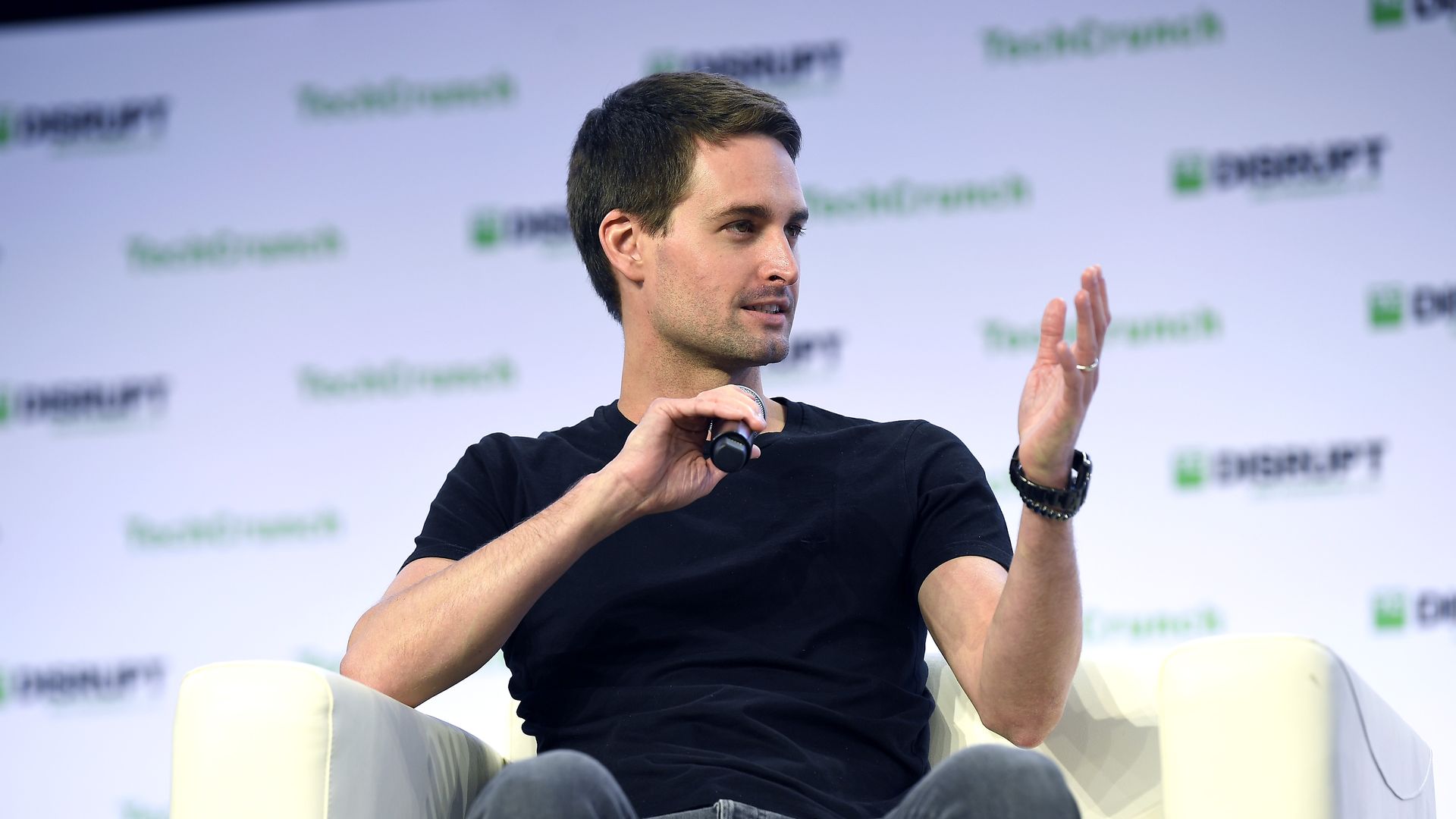
Despite Snap's well-known rivalry with Facebook, CEO Evan Spiegel did not give a resounding "yes" when asked on Friday at the TechCrunch Disrupt conference if breaking up Facebook would benefit society.
"I think the thing that everyone’s concerned about is that they’ve seen that competition has been what’s motivated Facebook to make changes over time. Those have really motivated Facebook to dramatically change their product offering in order to compete."
New emergency-braking technology that is supposed to help cars avoid pedestrian crashes is often ineffective, per AAA.
Why it matters: Pedestrian deaths are sharply higher, according to federal statistics, with nearly 6,000 fatalities a year, accounting for 16% of all traffic deaths. The technology has the potential to make the streets safer, but clearly needs more work, AAA said based on new test results.
As cities get more crowded, companies are developing SimCity-like software that help urban planners plot better transportation networks.
Why it matters: These software programs enable communities to visualize the movement of people and goods around their city and develop solutions to reduce congestion and improve safety.
The U.S., along with the U.K. and Australia, has sent a letter to Facebook asking it to halt implementation of end-to-end encryption tech in its services, in order to keep messages accessible to law enforcement.
Why it matters: The request marks the latest twist in a long-running debate over encryption, with some arguing for government backdoors and others maintaining that there is no way to provide them without compromising security and privacy.
Tech giants, TV networks, and even transit companies are all struggling to figure out how to manage political ads ahead of the 2020 election. While some firms choose to run lots of political and issue ads with little oversight, others opt to ban them altogether.
Why it matters: Absent strict government regulation of political ads across all media, the decision over how to manage those ads is left to companies. And while most firms have faced this dilemma for years, the hyper-political environment leading up to 2020 is shining a stronger spotlight to their decisions.
Shares for Snap Inc., the parent company of Snapchat, were down nearly 7% after Facebook announced the launch of "Threads," a new messaging app for Facebook-owned Instagram that looks and feels a lot like Snapchat.
Why it matters: The app could certainly pose a real threat to Snapchat, as it will be made available and likely marketed to all of Instagram's 1 billion+ users around the world.
U.S. Attorney General Bill Barr and officials from the U.K. and Australia (three of the "Five Eyes" intelligence alliance) plan to send a letter to Facebook requesting the company halt implementation of end-to-end encryption tech into its services, which would make content inaccessible to law enforcement, BuzzFeed first reported.
Why it matters: This is the latest example of the tension between the technology industry and governments when it comes to balancing digital privacy of consumers and law enforcement.
A growing industry of commercial disinformation services based in countries like Russia and the Philippines have the language skills, local contacts and cultural background to influence an English language conversation half a world away.
Driving the news: A new report from the security firm Recorded Future documents two campaigns that it paid Russian-speaking, dark web propagandists-for-hire to run.