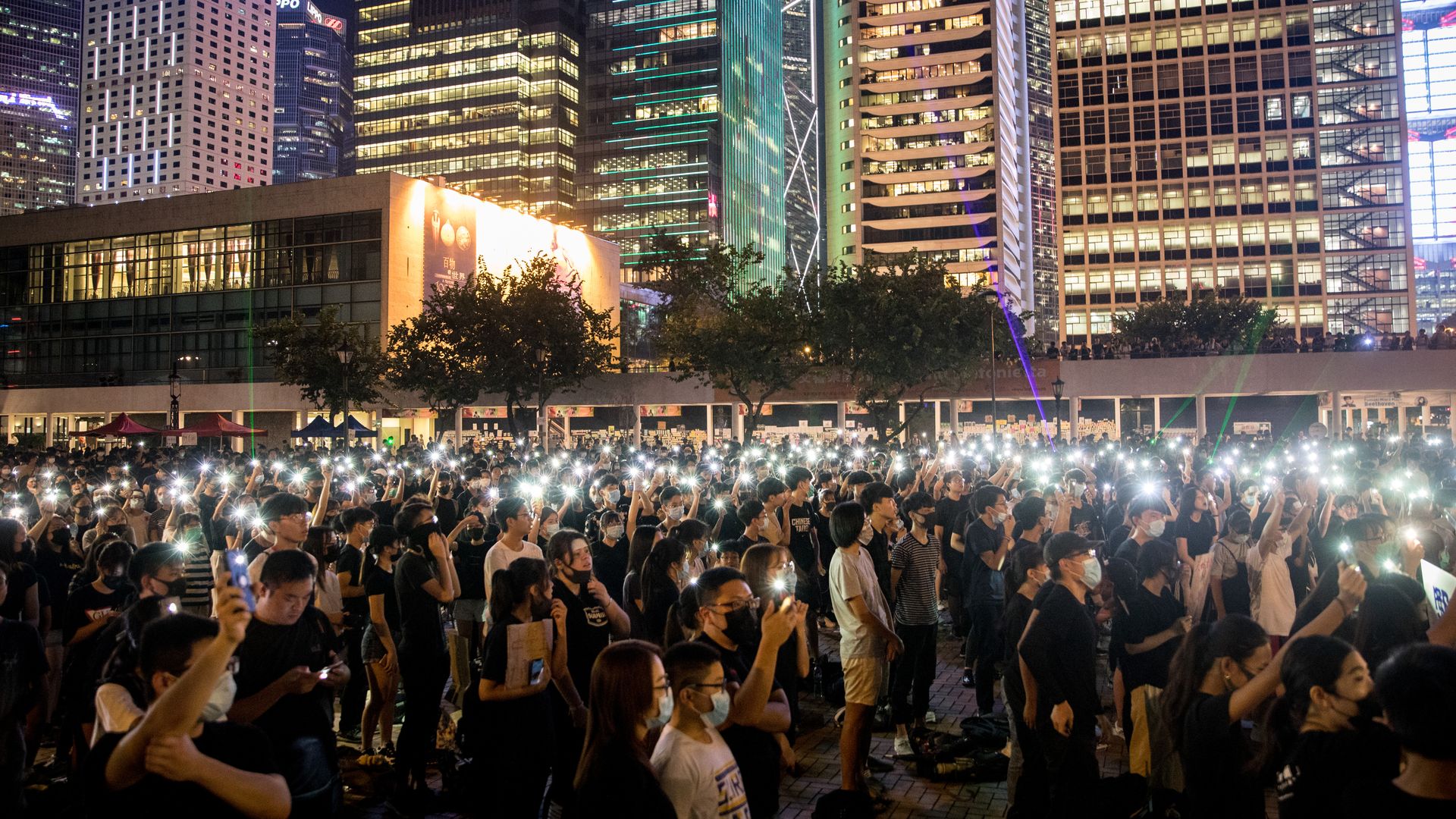
Google, which owns YouTube, announced Thursday that it shut down more than 200 channels for spreading disinformation about Hong Kong, which has been overwhelmed by pro-democracy protests for nearly 12 weeks.
Driving the news: YouTube is following in the footsteps of Facebook and Twitter, both of which flagged hundreds of similar accounts earlier this week. Twitter since announced that it will no longer permit advertising from "state-controlled news media entities."
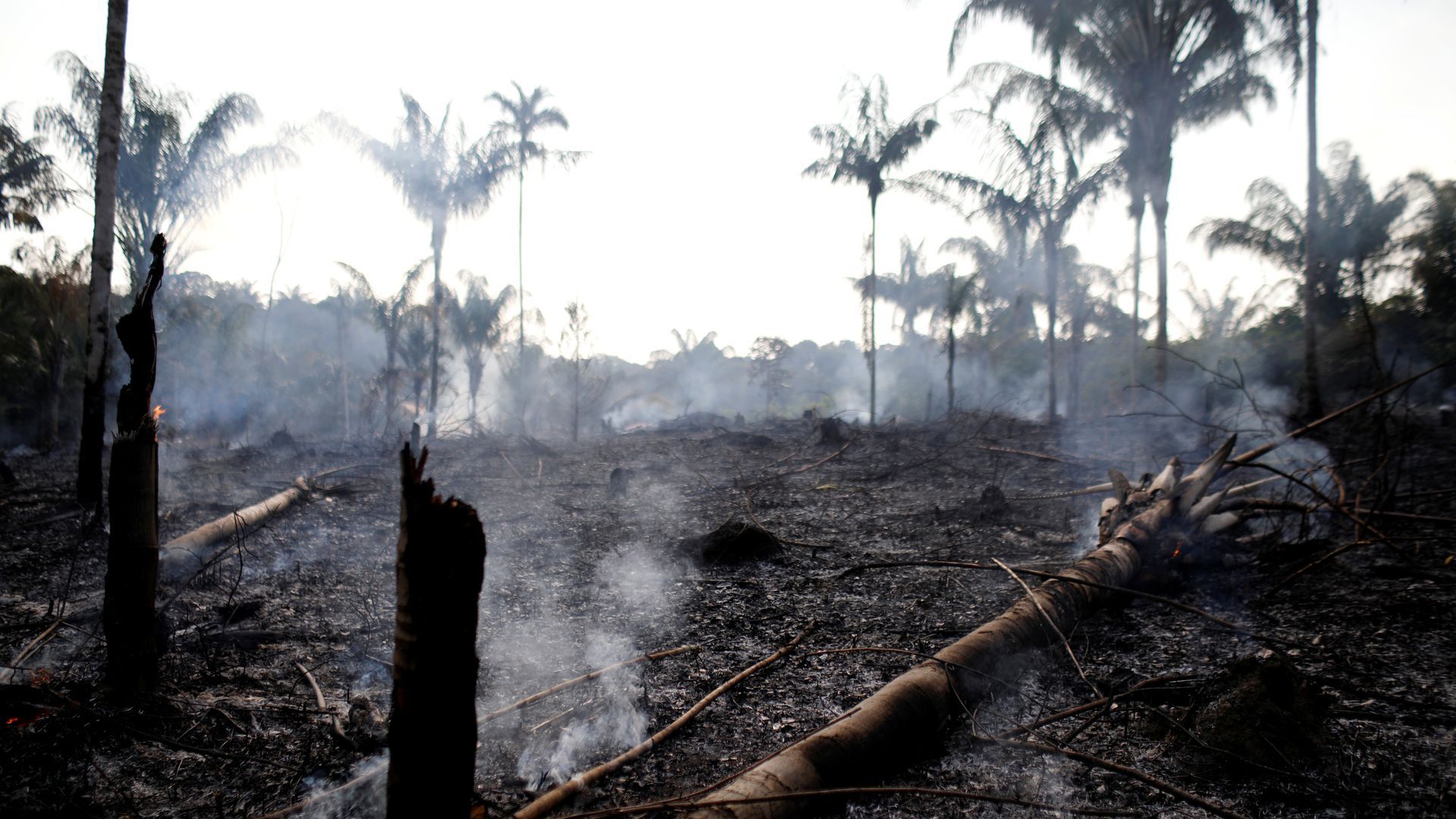
The Amazon rainforest is burning faster than usual, it's most likely because of humans clearing land for agriculture, and it will make efforts to fight climate change harder if it doesn't stop fast.
Why it matters: "By one recent estimate, the trees of the Amazon rainforest pulled in carbon dioxide equivalent to the fossil fuel emissions of most of the nine countries that own or border the forest between 1980-2010," the BBC reported.
The international industry of disinformation-for-hire services has already reared its head in Western politics, and it's growing fast.
The big picture: There is no U.S. law that prevents candidates, parties or political groups from launching their own disinformation campaigns, either in-house or through a contractor, so long as foreign money isn't involved. It's up to individual candidates to decide their tolerance for the practice.
The largest swaths of the Amazon rainforest, located in Brazil and Peru, are burning at the highest rates since records began in 2013 — an increase of 84% compared to the same period last year, according to INPE, Brazil's National Institute for Space Research.
What's happening: On Tuesday, "Inpe registered a new fire roughly every minute" across Brazil, the Wall Street Journal reports. 2019's sharp increase is largely due to illegal loggers "burning newly cleared land for cattle ranching and agricultural use," according to environmental experts.
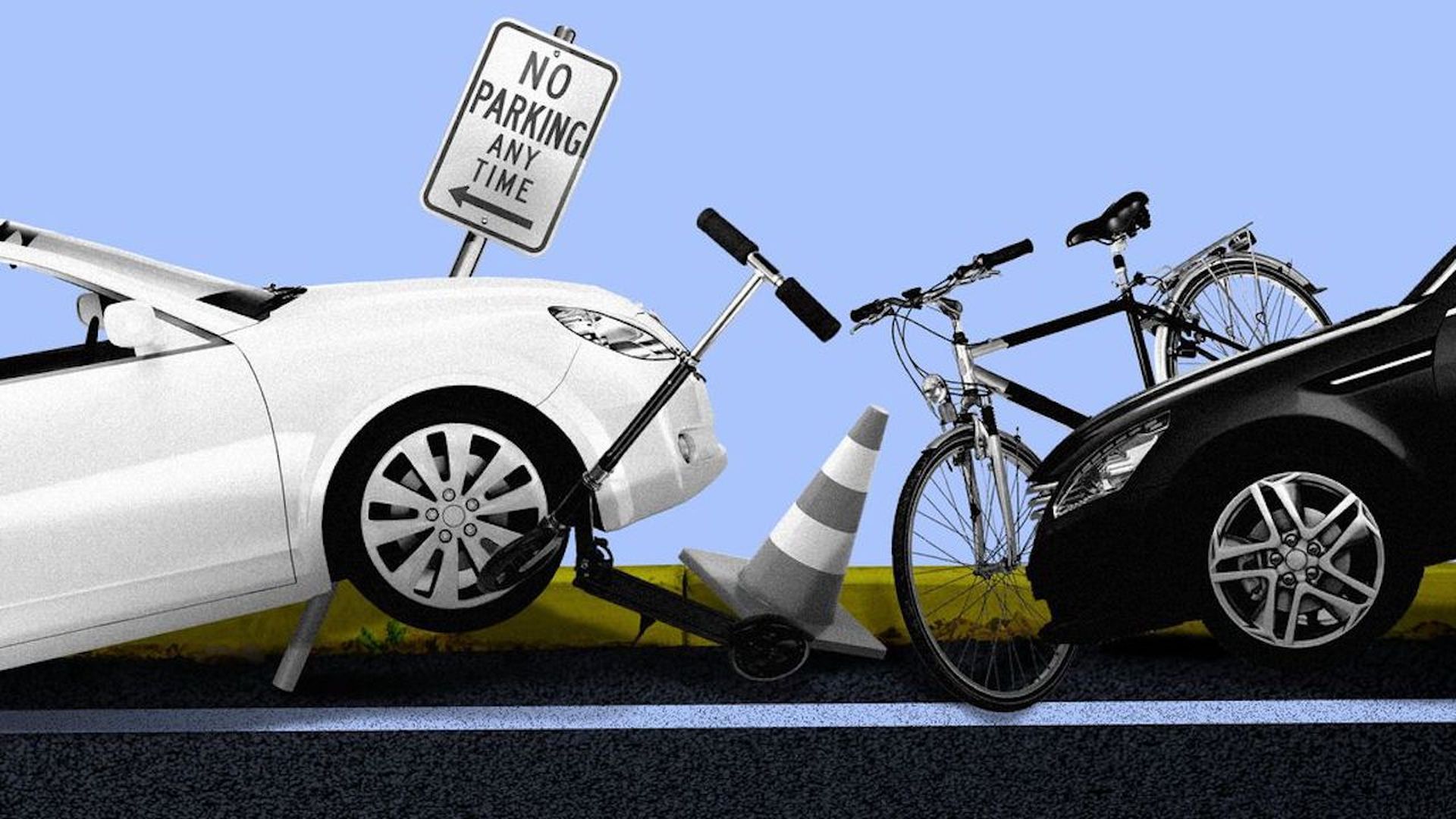
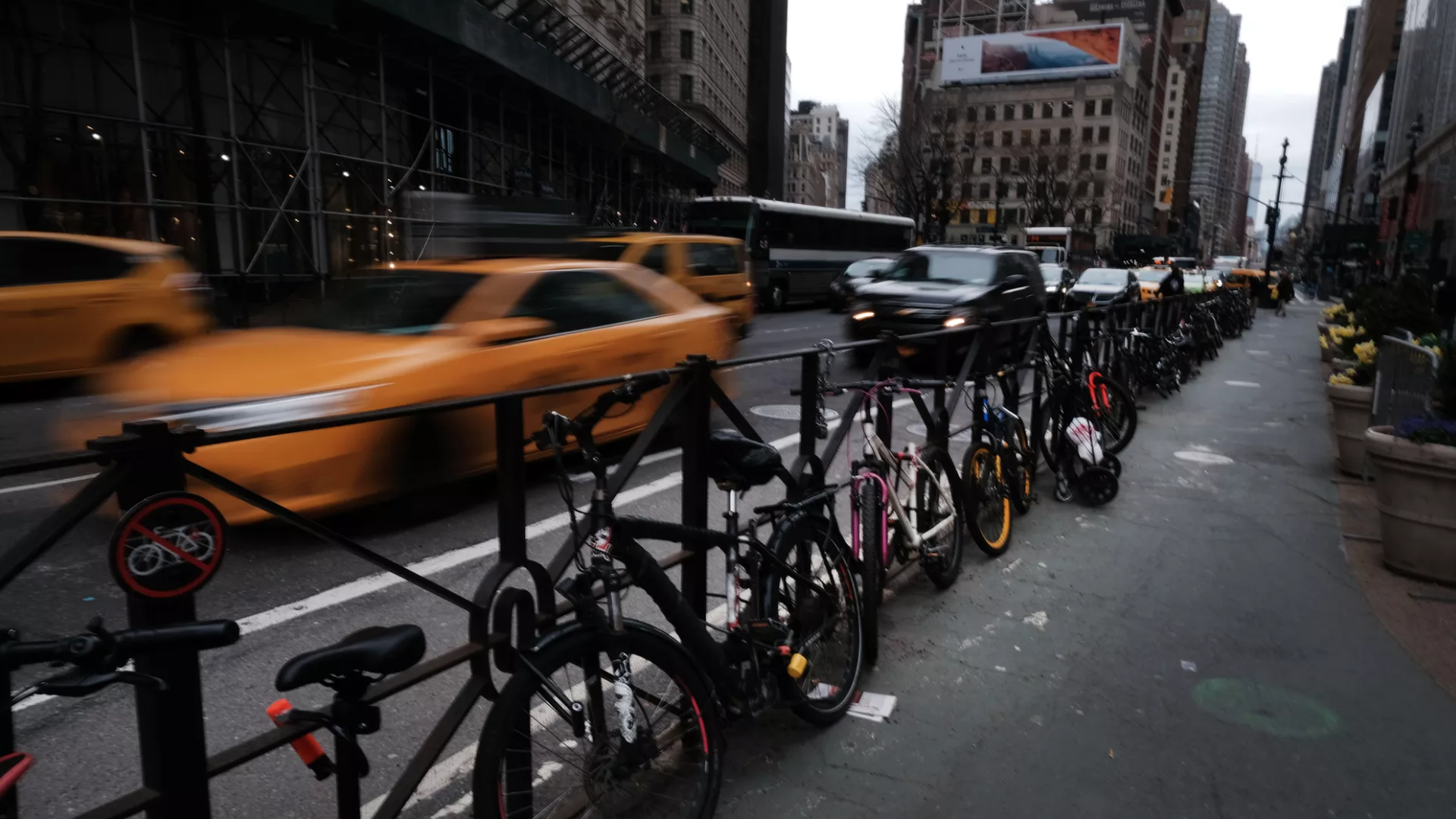
The lowly curb has become a coveted piece of urban real estate.
The big picture: It's also a chaotic mess thanks to exploding demand for street-side access — by hordes of delivery trucks, taxis and ride-hailing services; electric bikes and scooters; city buses; pedestrians; construction crews; garbage trucks; parked cars; and meters.
How much cities should charge vehicles to drive on city streets and who should have to pay is the center of political debates, Chris Teale writes for Smart Cities Dive.
Driving the news: New York City is about to become the first to charge Manhattan drivers a congestion toll. Fees collected would fund public transit and infrastructure improvements.
Self-driving technology is hard — so hard that even the industry front-runner is showing its cards to try to get more brainpower on the problem.
Driving the news: Waymo announced Wednesday it's sharing what is believed to be one of the largest troves of self-driving vehicle data ever released in the hope of accelerating the development of automated vehicle technology.
A growing number of U.S. cities, including Las Vegas, Minneapolis and Chandler, Arizona, are re-examining their zoning, land use, and transportation regulations to ease the way forward for AVs.
Why it matters: Cities are exploring changes to decades-old laws in the hopes of attracting new technologies and investment as well as the economic and quality-of-life gains that come with them.
Google, Mozilla and Apple are taking a coordinated action to prevent the Kazakhstani government from using bulk surveillance on citizen web browsing.
The big picture: Web browsers use a system known as certificates to verify and encrypt communications with websites. Kazakhstan is reportedly forcing residents to circumvent that system by using a national certificate rather than the trusted certificates browsers normally use.