The largest swaths of the Amazon rainforest, located in Brazil and Peru, are burning at the highest rates since records began in 2013 — an increase of 84% compared to the same period last year, according to INPE, Brazil's National Institute for Space Research.
What's happening: On Tuesday, "Inpe registered a new fire roughly every minute" across Brazil, the Wall Street Journal reports. 2019's sharp increase is largely due to illegal loggers "burning newly cleared land for cattle ranching and agricultural use," according to environmental experts.
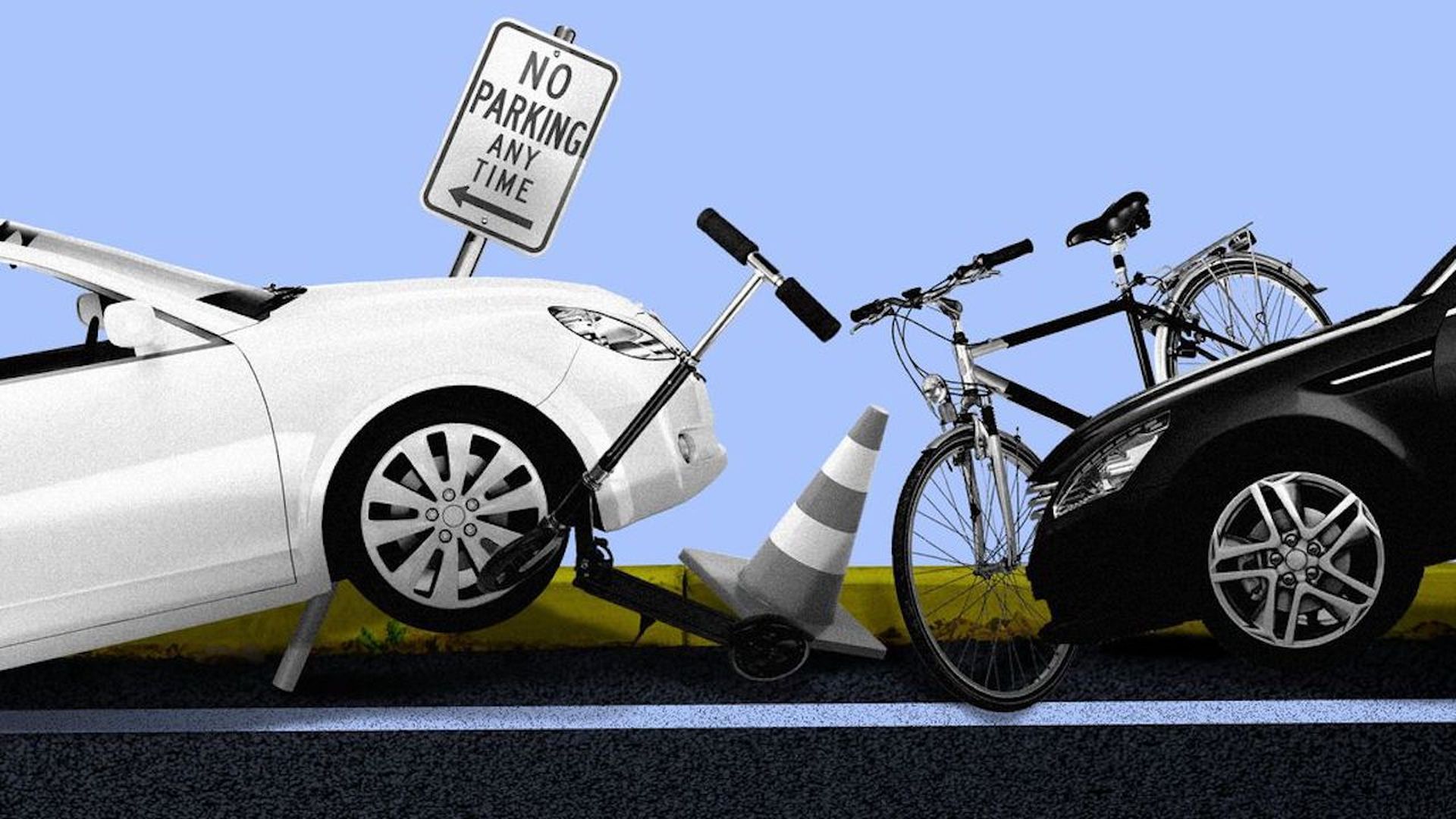
The lowly curb has become a coveted piece of urban real estate.
The big picture: It's also a chaotic mess thanks to exploding demand for street-side access — by hordes of delivery trucks, taxis and ride-hailing services; electric bikes and scooters; city buses; pedestrians; construction crews; garbage trucks; parked cars; and meters.
How much cities should charge vehicles to drive on city streets and who should have to pay is the center of political debates, Chris Teale writes for Smart Cities Dive.
Driving the news: New York City is about to become the first to charge Manhattan drivers a congestion toll. Fees collected would fund public transit and infrastructure improvements.
Self-driving technology is hard — so hard that even the industry front-runner is showing its cards to try to get more brainpower on the problem.
Driving the news: Waymo announced Wednesday it's sharing what is believed to be one of the largest troves of self-driving vehicle data ever released in the hope of accelerating the development of automated vehicle technology.
A growing number of U.S. cities, including Las Vegas, Minneapolis and Chandler, Arizona, are re-examining their zoning, land use, and transportation regulations to ease the way forward for AVs.
Why it matters: Cities are exploring changes to decades-old laws in the hopes of attracting new technologies and investment as well as the economic and quality-of-life gains that come with them.
Google, Mozilla and Apple are taking a coordinated action to prevent the Kazakhstani government from using bulk surveillance on citizen web browsing.
The big picture: Web browsers use a system known as certificates to verify and encrypt communications with websites. Kazakhstan is reportedly forcing residents to circumvent that system by using a national certificate rather than the trusted certificates browsers normally use.
For years, Facebook and other social media companies have erred on the side of lenience in policing their sites — allowing most posts with false information to stay up, as long as they came from a genuine human and not a bot or a nefarious actor.
The latest: Now, the companies are considering a fundamental shift with profound social and political implications: deciding what is true and what is false.
Facebook on Tuesday introduced a new setting to let users view and control data from apps and websites that send Facebook information about user activity away from the app. Facebook is also giving users the ability to clear this information from their account if they choose to, something the company said it was working on doing last year.
Why it matters: The new tool is supposed to give users more control over how their data is shared, in light of revelations through news stories — primarily the Cambridge Analytica scandal — that other companies can access and share user data with Facebook.
Twitter and Facebook announced Monday the takedown of coordinated misinformation campaigns from the Chinese government, the latest in a list of global regimes caught using social media to exploit their own people, spread propaganda or retain power.
Why it matters: While mostly Western leaders around the globe push to hold social media companies accountable for large-scale misinformation campaigns, autocratic regimes have become increasingly reliant on social media technologies.
For the first time last month, a majority of all browser-based Google searches resulted in zero clicks, according to a new study from software company Sparktoro.
Why it matters: The report's author notes that Google's functionality has changed to keep users within the Google ecosystem, not to always refer them outside of it. "We’ve passed a milestone in Google’s evolution from search engine to walled-garden," he writes.
Facebook will release the findings of a roughly year-long conservative bias audit Tuesday, along with changes to its advertising policies as a result, executives tell Axios.
What's new: The only new policy that's being announced alongside the audit results will be a small adjustment made to Facebook's "sensational" advertising policy, which will now allow the display of medical tubes connected to the human body.
Facebook executives tell Axios they're hiring seasoned journalists to help curate a forthcoming "News Tab" that they hope will change how millions get news.
Why it matters: News Tab is an effort by Facebook to restore the sanity and credibility that's lost in the chaos of our main feeds. Facebook will personalize the News Tab, so it will need a massive amount of content, from the New York Jets to gardening.