Generation Alpha — the first cohort to be born entirely within the smartphone era — is increasingly a battleground between family members over privacy for their tots.
Why it matters: Kids of every generation can relate to being publicly embarrassed by their parents. But Generations Z and A are the first whose embarrassment will be recorded for posterity.
Amid uncertainty over its longterm access to Google's Android, Huawei on Friday detailed HarmonyOS, the operating system it has developed in-house over the past 2 years.
Why it matters: Huawei, which has been targeted by U.S. trade restrictions and security concerns, needs a Plan B if it loses access to Google's operating system and services. But it also faces an uphill battle in getting other key tech companies to adopt it.
Amid a decline in infrastructure spending, cities and local transportation agencies still pull together funding to address current and future transportation needs — but they could be taking on more ambitious updates.
Why it matters: Beyond repairing and improving roads and sidewalks, cities have an opportunity to build infrastructure that could open up alternative mobility options and increase accessibility for all.
New technology is reshaping asset management for a new generation of workers, and most of the industry has not kept pace.
Why it matters: Asset managers are in danger of being left in the cold as individual investors are forced to take control of their retirement savings, and more money shifts to passive strategies.
Health care companies are trying to fend off tech giants with one hand while striking up partnerships with them with the other.
Between the lines: Whether health care companies love or hate big tech's encroachment into their territory is dependent on whether they stand to make or lose money should the tech companies succeed.
Broadcom on Thursday said it will buy Symantec's enterprise security business for $10.7 billion in cash. This comes just weeks after Broadcom ended talks about buying Symantec in its entirety.
The bottom line: Symantec is the world's largest provider of cybersecurity software, while Broadcom is seeking to expand beyond its core competency of chips.
Two parallel quests to understand learning — in machines and in our own heads — are converging in a small group of scientists who think that artificial intelligence may holdan answer to the deep-rooted mystery of how our brains learn.
Why it matters: If machines and animals do learn in similar ways — still an open question among researchers — figuring out how could simultaneously help neuroscientists unravel the mechanics of knowledge or addiction, and help computer scientists build much more capable AI.
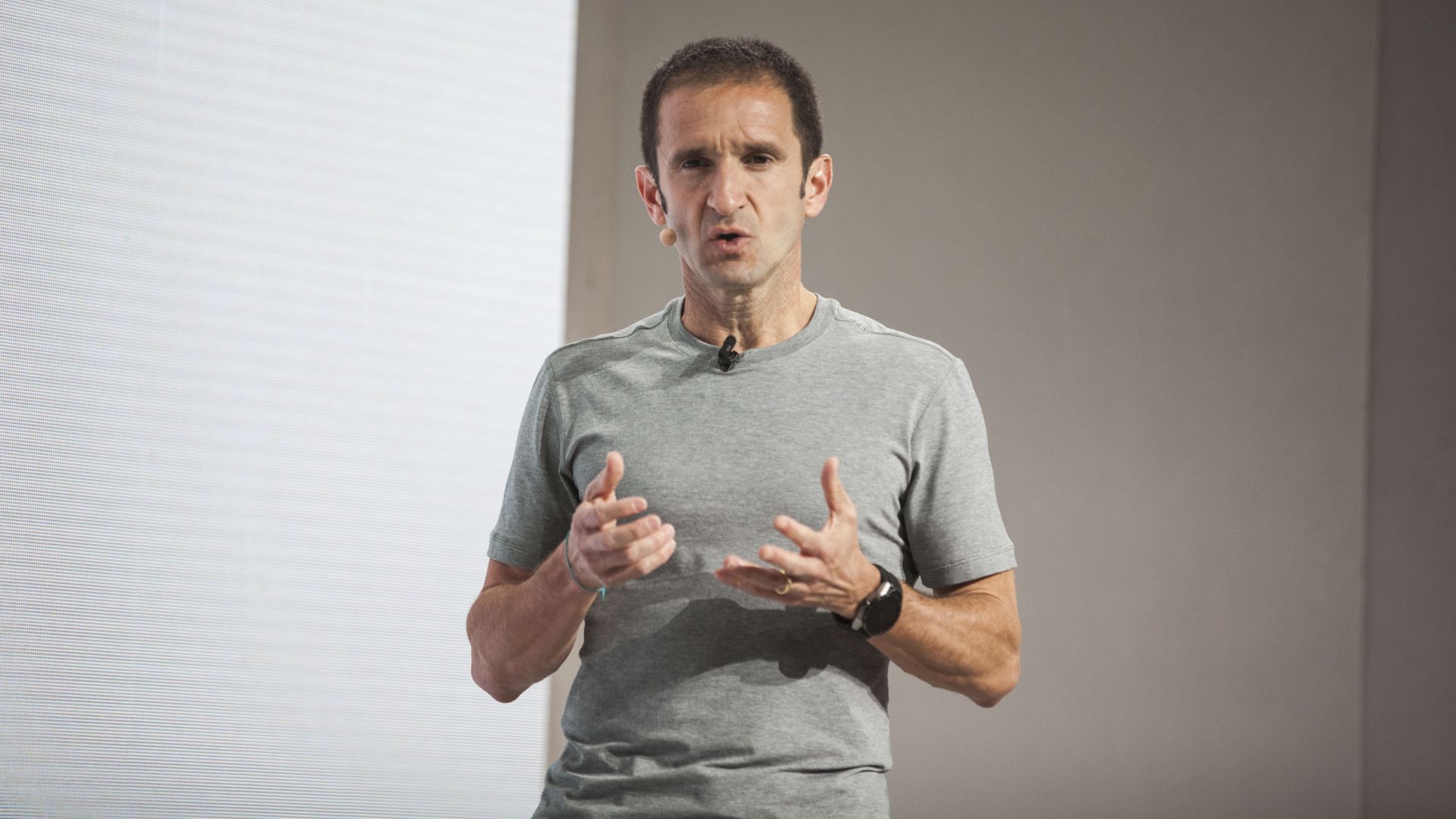
Mario Queiroz, the Google VP who serves as general manager of its Pixel smartphone business, is leaving the hardware unit for a new job in the office of CEO Sundar Pichai, Axios has learned.
Why it matters: The move comes as Google gears up for this fall's launch of the Pixel 4. Queiroz has been involved in Google's mobile efforts since the first Android phone and has led a number of other projects, including Chromecast, Google Home and the Stadia streaming game service.
While Lyft is slowly growing its share of work-related rides taken by U.S. startup employees, rival Uber commands about 75% of the total, according to data from Brex, which supplies credit cards to startup companies.
Why it matters: Business riders are an important — and lucrative — category of customers for ride-hailing companies. Workers often need transportation when they travel, to get to and from airports, for business meetings, and can be less price conscious since convenience is a high priority.
Since going public in March, Lyft is now easing off its price-cut war with rival Uber, instead competing on “brand and experience."
The bottom line: As part of its Q2 earnings, the company revealed that its sales and marketing expenses for incentives — meaning ride "coupons" — have dropped by 40% from the first quarter. It’s also quietly raising some prices at the end of June to improve its margins.

/2019/08/09/1565382610066.gif?w=3840)






/2019/08/08/1565304355742.gif?w=3840)