Fed Chairman Jerome Powell said on Wednesday that Facebook has discussed its plans for its Libra cryptocurrency with the Federal Reserve:
"It’s something we’re looking at... we would wind up having quite high expectations from a sort of safety and soundness and regulatory standpoint if [Facebook does] decide to go forward with something."
The Federal Trade Commission is in the late stages of a probe into YouTube's handling of children's content following multiple complaints from privacy advocates, the Washington Post reports.
Details: The complaints allege that YouTube fails to protect children's privacy and has partaken in improper data collection. The investigation, which could result in fines, has reportedly catalyzed discussions on children users that include overhauls to recommended video algorithms.
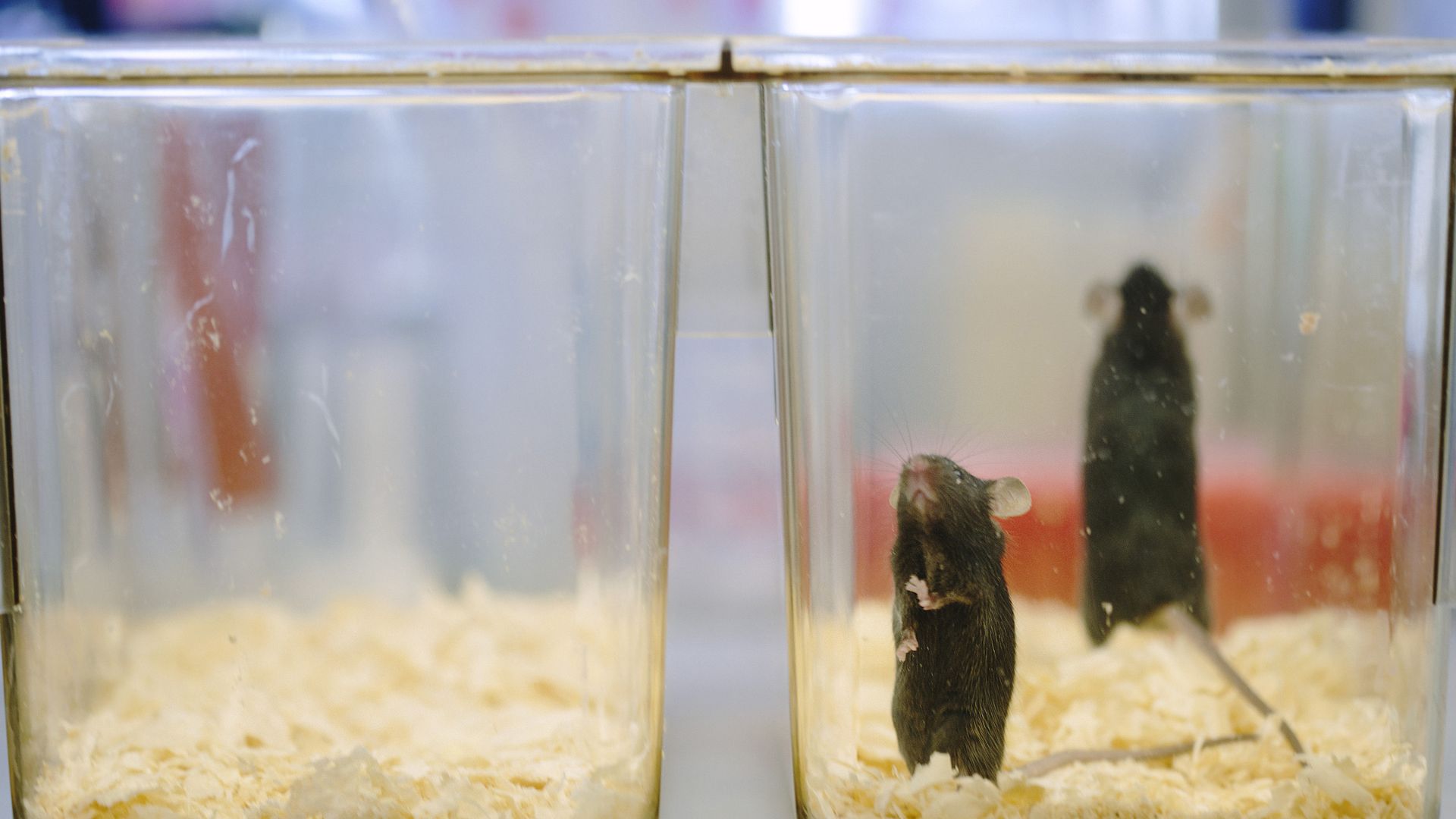
Neuroscientists studying birds, mice, and fish are landing seven-figure salaries in Silicon Valley to help advance artificial intelligence for self-driving cars and more, reports Bloomberg.
The big picture: Tech companies are raiding universities for specialized animal researchers to help them understand how mice and other animals learn in hopes of teaching computers or autonomous vehicles to do the same.
The number of U.S. traffic fatalities remains stubbornly flat, while deaths among pedestrians and bicyclists are rising, despite available crash avoidance technology that could help.
The big picture: In a largely self-regulated industry, it's up to carmakers to decide which safety features to install in their cars, leaving potentially life-saving technology on the shelf. As they work to perfect self-driving cars, they must weigh valid safety concerns against whether there is a moral imperative to deploy autonomous vehicle technology faster if it will help save lives.
The effort to commercialize fully autonomous vehicles has spawned an array of supporting hardware and software technologies whose impact could extend well beyond AVs.
The big picture: Fierce competition during the mobile computing boom led to better, cheaper components — cameras, batteries, wireless chips — that in turn transformed technologies from satellites to drones. A similar process could play out with AVs, as the billions of investment dollars pouring into the sector enable advances that spill over into retail, health care and other parts of the economy.
Facebook's plan for its Libra cryptocurrency illustrates one of Silicon Valley's most durable principles: Tech revolutions tend to start with a radical idea but don't spread unless the idea is made safe for business.
Why it matters: If Facebook succeeds in its bid to domesticate cryptocurrency, following in the footsteps of open source software and the internet itself, it could outflank the global currency system and leave the social network as keeper of everyone's money.
The tech industry, long accustomed to seizing the spotlight by unveiling innovations and winning applause with product launches, is adjusting to a new kind of conversation — one that's full of doubts and questions about its wares.
Why it matters: With public criticism mounting and regulatory pressure rising, companies like Google, Facebook, Apple and Amazon can choose to participate in the critical dialogue — or circle the wagons and fight.
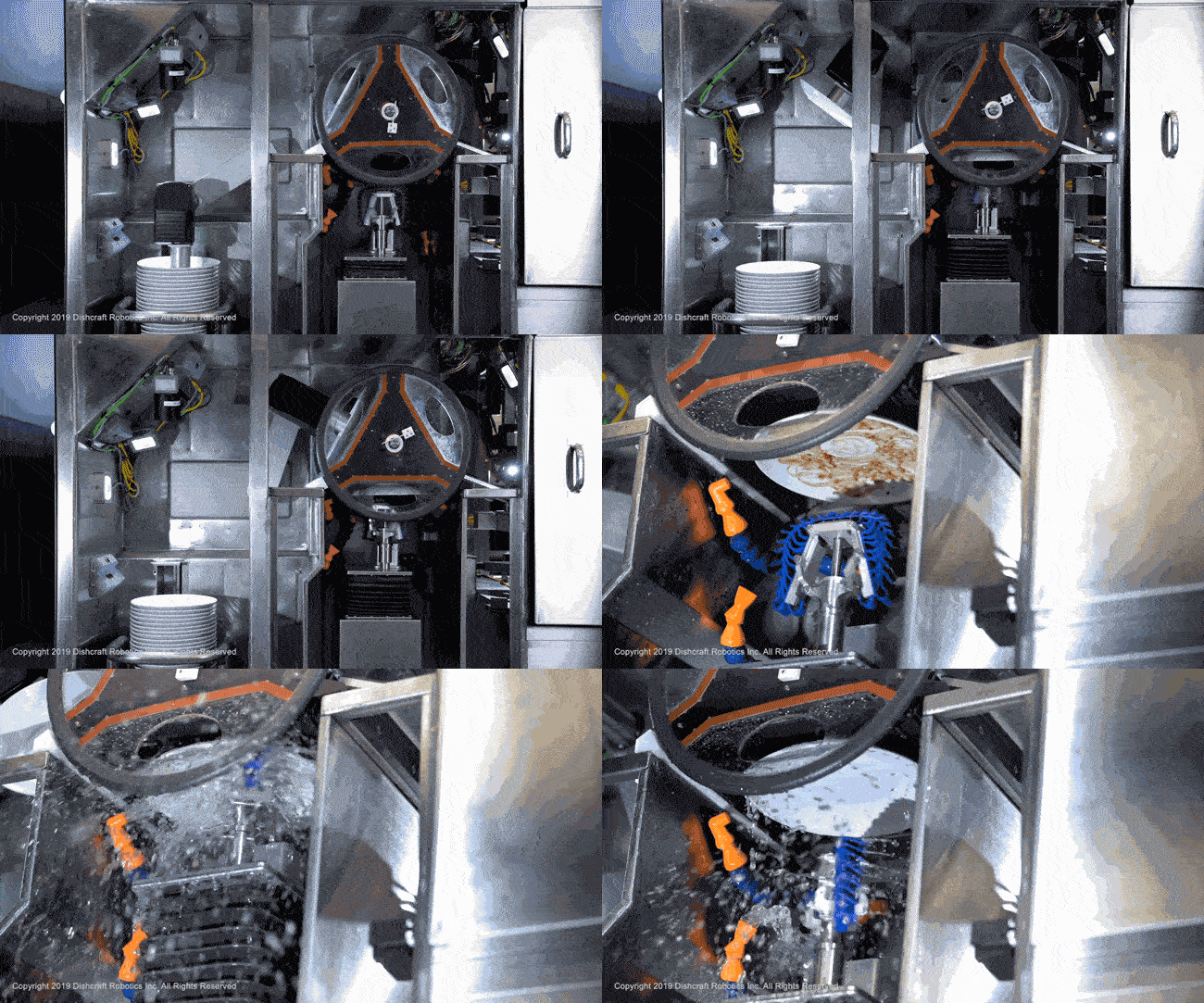
Like an automated carwash for plates, a new commercial-grade robot dish-scrubber takes in dirty dishes in tall stacks and spits clean ones out the other side — potentially cutting dishwashing staffs by more than half.
But, but, but: In a concession to the limitations of today's robots, the machines can only handle specially made plates and bowls with magnetic inserts, and their cost lands them out of reach of all but the biggest restaurants and cafeterias.
Love Facebook or hate it, you can't say the besieged company is shying away from new products or big thinking.
What's happening: In the past 18 months — amid Cambridge Analytica and all the other scandals — the company has launched bold new moves to help find you a date, to put cameras inside your home and, now, to encourage you to adopt a whole new cryptocurrency.
With the iPhone's global dominance waning, there's a growing chorus of skeptics betting that Apple is headed the way of Blackberry and Nokia.
Why it matters: While Apple still generates ridiculous cash flow, the nearly $900 billion megacompany's growth is built on its ability to reinvent and dominate entire product categories, which it hasn't done lately. Doubters don't see evidence that Apple still has the innovative juice it needs to dominate not just tech but the global consumer marketplace.
After nearly a year of speculation, Facebook has finally unveiled its plans to create a cryptocurrency, which will be called Libra and debut in 2020.
Why it matters: With more than two billion users, Facebook is arguably better positioned to roll out a global digital currency than any other company, government, or organization. That's also a source of concern over how much influence Facebook will hold over the new currency, given the company's history of amassing power and its record of privacy controversies.
A decade after Bitcoin was born in a declaration of liberty from central banks and anyone else's control, Facebook is about to announce a new currency that sheds much of the crypto-world's counter-culture origins in hopes of actually being used.
Driving the news: For a year, Facebook has secretly developed a crypto-currency it calls Libra. As early as tomorrow, it will reportedly unveil its concept in a white paper. But if Libra is to gain the mainstream ubiquity for which Facebook is known, it will be because it jettisons some of the central principles that have united crypto purists.













/2019/06/17/1560779262474.gif?w=3840)