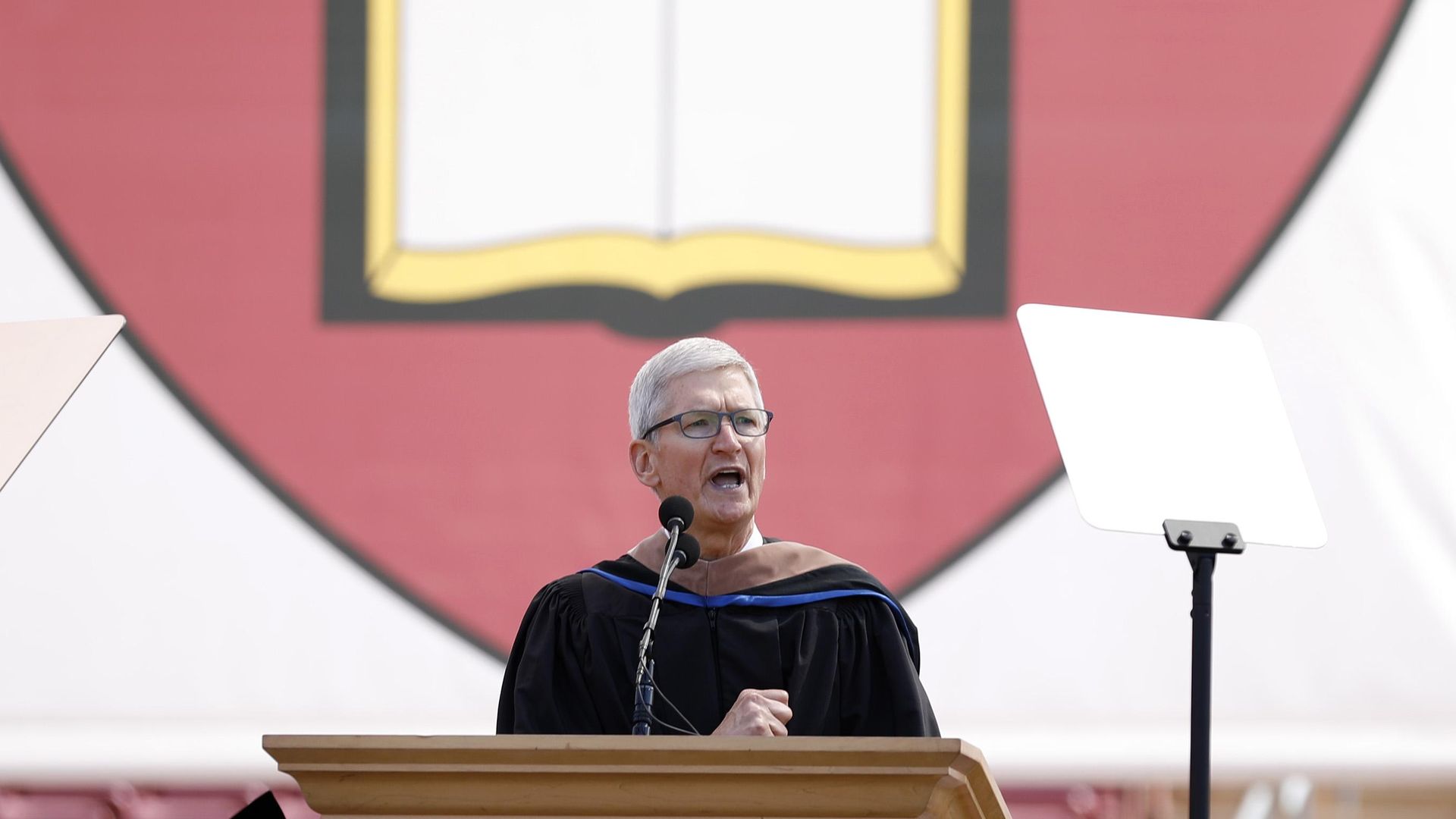
Apple CEO Tim Cook used a Stanford commencement speech yesterday to go after other tech companies, saying "this industry is becoming better known for a less noble innovation — the belief you can claim credit without accepting responsibility," per CNBC.
Why it matters: As the national conversation on tech gear-shifts from admiration to regulation, Apple hopes to carve out a safe harbor by positioning itself as a privacy champion.
GM CEO Mary Barra, facing an aggressive timeline to launch a self-driving taxi fleet, tells "Axios on HBO" they won't deploy the technology until it is safer than a human driver.
Why it matters: In a largely self-regulated industry, it is up to carmakers to demonstrate when self-driving cars are ready for deployment. The race to be first means the buzz and hype have often gotten ahead of the reality.
YouTube CEO Susan Wojcicki wants rules. "From a policy standpoint, we need to be consistent," Wojcicki told Axios' Ina Fried on Monday. "If we took down that content, there would be so much other content that we would need to take down."
The state of play: There are two kinds of enforcement mechanisms. Silicon Valley engineers naturally gravitate towards rules-based systems: If this, then that. Once you set the rules, the job of enforcing them becomes routine. The alternative is a principles-based system. In the legal system, principles can be found in areas like sentencing guidelines or even the "reasonable doubt" test.



/2019/06/16/1560708294537.gif?w=3840)