Waymo has inked an exclusive partnership with the giant Renault-Nissan Alliance on autonomous vehicles, the latest in a dizzying array of headline-grabbing deals in the AV space.
The big picture: Carmakers and technology companies need to work together on self-driving cars because neither industry has the expertise to do it alone.
But some so-called partnerships lack substance or seem to be driven as much by ambition and the need for credibility and capital as they are by true commercialization efforts.
No one would argue Waymo lacks credibility — it is widely considered a leader in autonomous technology — but its partnership with Renault-Nissan to take its technology to "a global stage" seems a bit of a stretch.
The deal is exclusive only "for an initial period" and is limited at this point to researching commercial, legal and regulatory issues in France, Japan, and potentially, China.
For Renault-Nissan, it is being portrayed in Europe as a salve between two bickering alliance partners in the wake of a failed merger with Fiat Chrysler Automobiles and the downfall of former CEO, Carlos Ghosn.
Between the lines: In a field as competitive as self-driving cars, it's instructive to pay attention to the language of partnership announcements and to the motivations behind them. This is especially true among lidar technology companies, for example, that are fighting for attention and hungry for investment.
What they usually mean is the carmaker is testing a handful of their lidar units on its pilot vehicles.
Though far from revenue-generating production contracts, such announcements could be parlayed into big investments if the companies are perceived as hot.
Not all partnerships are equal. Some are just a MOU — memorandum of understanding — signaling an intention to move forward on something more substantive, but not a legal contract.
But MOUs typically expire or fall apart, as in the case of a similar partnership Aurora had with Volkswagen for the past 18 months. (It's also working with China's Byton and Korea's Hyundai-Kia, which just pumped about $70 million into Aurora.)
In a blog post earlier this year, Aurora explained it preferred working with multiple carmakers rather than being locked into an exclusive deal so it could deliver its technology more broadly.
But it's hard to imagine Aurora's relationship with Volkswagen, the world's largest automaker, wasn't a factor in securing a $530 million investment led by Sequoia Capital in February, at a $2 billion valuation.
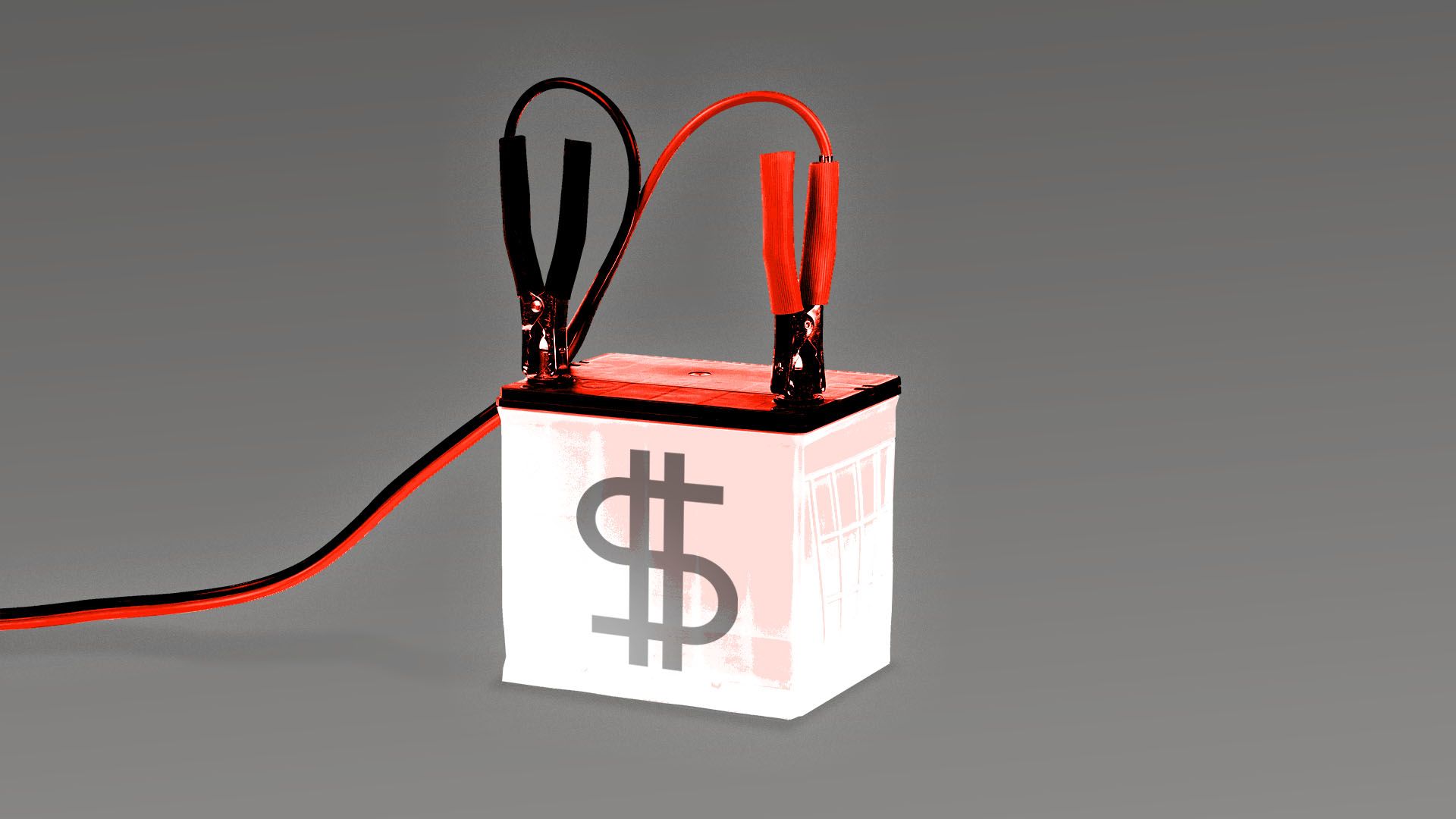
Be smart: Unless money and board seats are involved, partnerships can be fleeting. Where big money is involved — as in the billion-dollar-plus investments made in Cruise by GM, Argo by Ford and Uber by Toyota — it's serious.
This week's release of "Harry Potter: Wizards Unite" isn't just the debut of a highly anticipated mobile game: it's also a glimpse into the future of augmented reality and location-based gaming.
Why it matters: This gives Niantic, which also is the San Francisco-based creator of "Ingress" and "Pokemon Go," a chance to show how it can work with partners — and begin to turn the game system it has created into a platform others companies can build upon.
Guest host Felix Salmon, chief financial correspondent, discusses the decision by the Federal Reserve to not cut interest rates with Axios Markets reporter Courtenay Brown. In the "Final Two", Slack's direct listing and Facebook's new Libra coin.
A lawsuit filed by CVS against a former employee suggests that major industry players are more worried about Amazon's foray into health care than they initially let on, CNBC reports.
What's happening: Amazon gained a pharmacy arm when it acquired PillPack, and it's also part of the trio that has formed Haven.
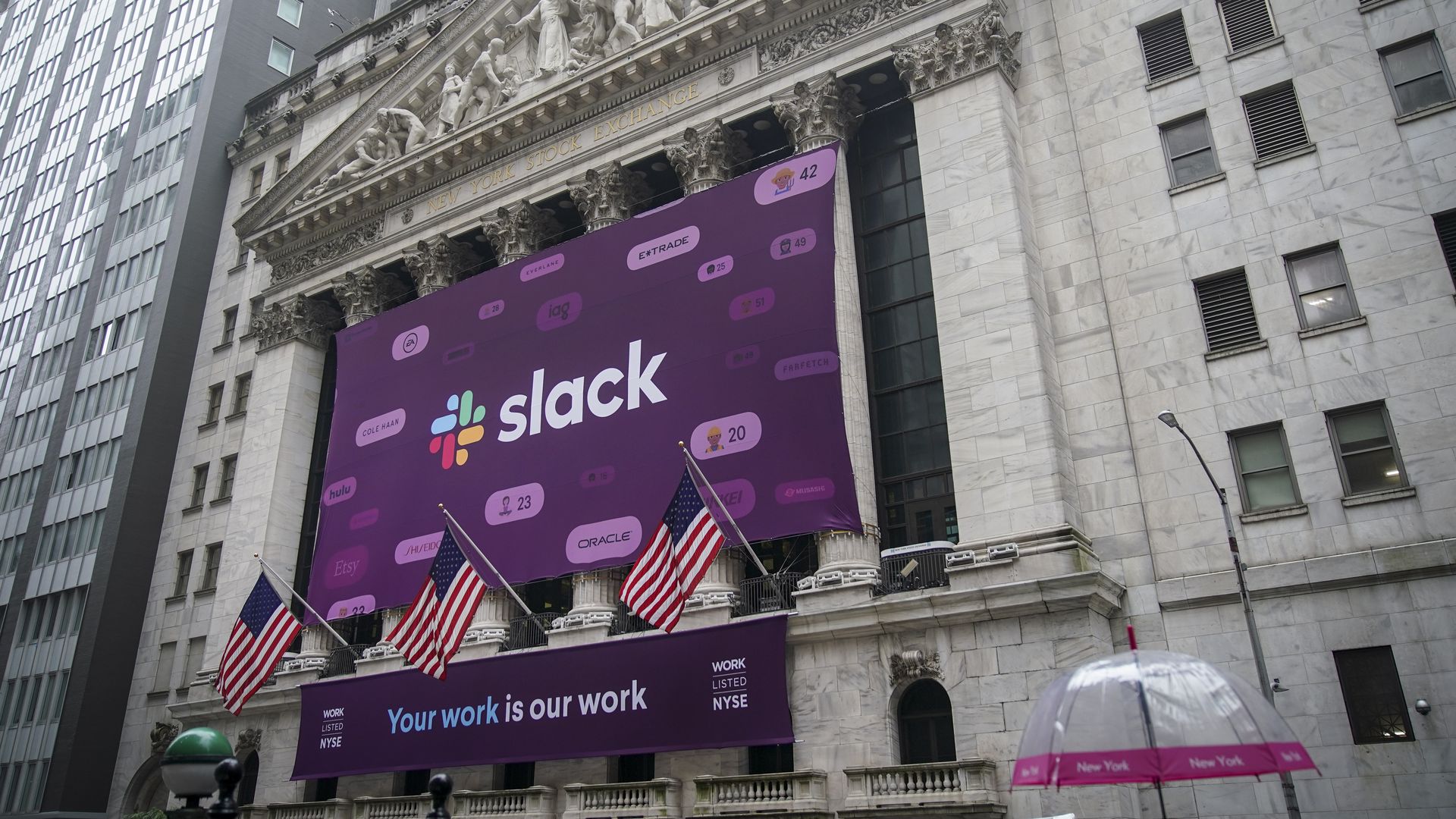
Slack closed its first day of trading on the public market at $38.62 a share, 0.3% up from its opening price of $38.50.
The bottom line: It didn't close notably higher than its opening price, but a steady first day is a good result for Slack's unorthodox choice of a direct listing.
Slack, the workplace chat app going public on Thursday, opened trading at $38.50 per share after the NYSE issued a reference price of $26 Wednesday, giving it a market cap of $23 billion, more than three times its last private valuation of $7.1 billion in 2018.
Yes, but: It still has to maintain low-volatility (a concern with direct listings) and keep its price up.
Slack Technologies, the workplace chat service, will go public on the New York Stock Exchange today via a direct listing.
Why it matters: It's only the second direct listing from a major tech company and the first from a non-consumer service (Spotify blazed the trail last year). And if it’s a success, it could push Airbnb closer to taking the same path.
A new bill aimed at increasing accountability of online Big Tech platforms has raised concerns that it may create problems worse than the ones it's trying to solve.
Details: The bill, introduced by Sen. Josh Hawley (R-Mo.), would open up platforms like YouTube and Facebook to lawsuits about content they host, unless federal regulators certified that their moderation of content was not "biased against a political party, political candidate, or political viewpoint."
Concern about kids' use of YouTube has long been simmering. It bubbled over yesterday, with reports on a "late stage" FTC inquiry and initiatives within the company to revamp its policies.
Why it matters: YouTube is widely used by kids, and most of their viewing happens on the main site, even though its dedicated YouTube Kids site provides more protections.
In 10 short years, Uber's ride-hailing service has become so ubiquitous that people use "uber" as a verb. For its next act, Uber wants to manage everything about how you get around, whether on the roads or sidewalks, underground or in the air.
The big picture: Like Amazon, which started selling books online and now delivers almost everything right to your door, Uber aims to leverage its digital expertise from ride-hailing to become a one-stop shop for transportation.
In an increasingly lucrative market, dozens of companies and startups are selling futuristic-looking headgear that promise to connect to your brain to relieve stress, enhance memory, improve sleep or increase focus.
But, but, but: Experts suggest these products make mostly unsubstantiated claims and in some cases can harm unwary buyers.







/2019/06/20/1561042605777.gif?w=3840)


/2019/06/19/1560976223040.gif?w=3840)