Why it matters: Once upon a time, software and hardware companies largely relied on Intel and others to provide chips. More and more companies, though, see strategic or financial advantage in doing their own silicon.
Today's autonomous vehicles use a combination of cameras and other sensors to try to replicate human perception, but they still struggle, especially in bad driving conditions. New technologies under development could help fill the gaps by letting vehicles "see" and "feel" things from different perspectives.
Why it matters: The race to develop fully self-driving cars has hit a series of hurdles, with many industry experts now predicting it could be a decade or longer before their full-scale deployment.
No matter how much developers test AVs, the world will still present unforeseen circumstances for vehicles to navigate. Researchers and policymakers want to mitigate these risks by making roadways more accommodating of mistakes.
The big picture: Road safety policy can help offset these challenges and better plan for AV deployment, particularly the Safe System approach that originated as part of Sweden's 1997 Vision Zero initiative. Countries that have implemented similar policies have seen declines in traffic fatalities, and others could follow their models.
Spotify announced Wednesday that it acquired podcast production company Gimlet Media and short-form podcasting app Anchor. The announcement came in conjunction with its 2018 Q4 earnings release, and acquisition terms were not disclosed though Recode reported a price tag of more than $200 million for Gimlet Media last week.
Why it matters: Spotify made its name as an online music streaming service, but has long supported other audio content — like podcasts — as well. These acquisitions should help bolster its capabilities to produce high-end content in-house, as well as provide better tools to creators to give it an edge over competitors like Apple. Spotify also disclosed it's budgeting $400-500 million on more podcast-related acquisitions in 2019.
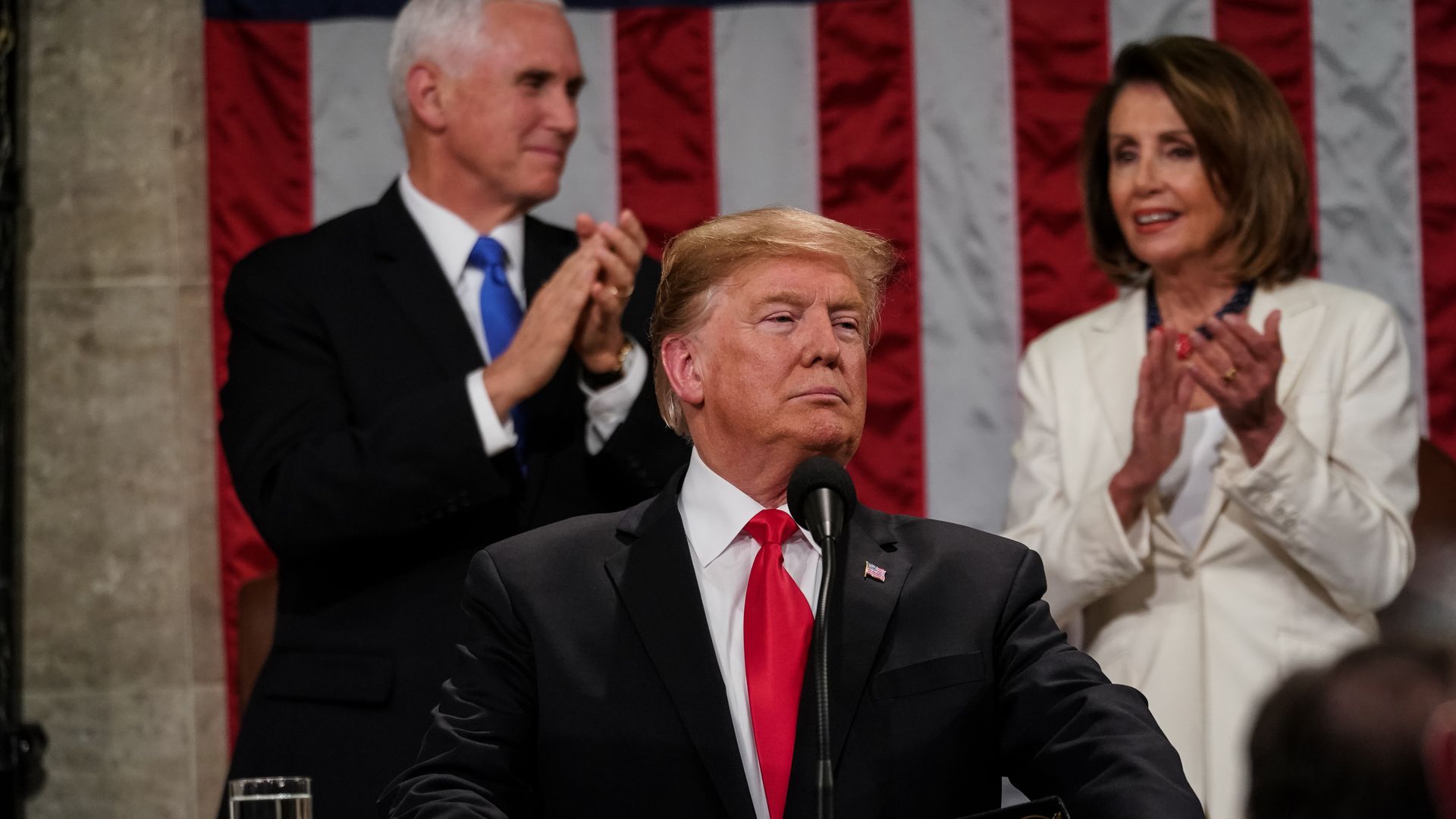
President Trump used part of his State of the Union address Tuesday to call for Congress to pass infrastructure legislation that supports "investments in the cutting edge industries of the future."
The bigger picture: The brief reference — in a speech dominated by both nods to bipartisanship and deeply conservative immigration rhetoric — reflects a White House interest in areas like artificial intelligence, quantum computing and 5G wireless.
What he said:
Trump said that "I am eager to work with you on legislation to deliver new and important infrastructure investment, including investments in the cutting edge industries of the future."
He also said that China had spent years "stealing our intellectual property," a perennial tech concern.
For several years, computers have made short work of human champions in Go and chess. Now, artificial intelligence researchers are attempting an improbable path even closer to human capability: Pictionary, a guessing game requiring not strategy but the hard-to-duplicate quality of common sense.
Why it matters: The effort to play with humans — rather than against them — is a step toward an optimistic future of work in which AI cooperates with people to complete tasks, rather than wiping out workers in large numbers.
Snap Inc., the parent company of camera app Snapchat, saw its stock rise nearly 16% in after-hours trading Wednesday, after the company reported record revenues and lowered the margins on its losses.
Why it matters: Wall Street was looking for consistency from Snapchat last quarter, after a tumultuous year in which it lost several high-level executives, suffered a few internal leaks, and faced blowback for the rollout of an app redesign.
Facebook said Tuesday it has removed 22 pages tied to conspiracy theorist Alex Jones.
Why it matters: The social giant's future is tied in part to its ability to better police its platform, even as its user base continues to grow. The Jones pages were removed under an updated "recidivism policy" that stops individuals who already violated Facebook's rules from doing so on a new set of pages. A Facebook spokesman said the pages had similar titles and admins to previous Jones-linked pages that were removed for Community Standards violations.
An email scam outfit is taking advantage of Gmail's "dot" feature to streamline operations, according to email security firm Agari.
Gmail dots? Gmail allows users to add or subtract periods in their email addresses at will. If you own the right to [email protected], you will receive emails sent to [email protected] and [email protected].
Facebook is adding Lead Stories as a new fact-checking partner, the company will announce today.
Why it matters: The announcement comes as Snopes, one of the first online fact-checking websites, says it is reevaluating its relationship with the Facebook fact-checking unit. The Associated Press is renegotiating its contracts with Facebook but says it plans to continue in the Facebook program.
Facebook is building a unified messaging for businesses feature that will let businesses access and manage Instagram Direct Messages alongside its Facebook Messenger messages, according to two sources familiar with the matter.
Why it matters: It's a first step in building a tool to manage messaging across Facebook's apps for businesses. The New York Times reported last month that the company was planning to unit the back-end technology that runs Instagram, Facebook Messenger and WhatsApp on the consumer side.
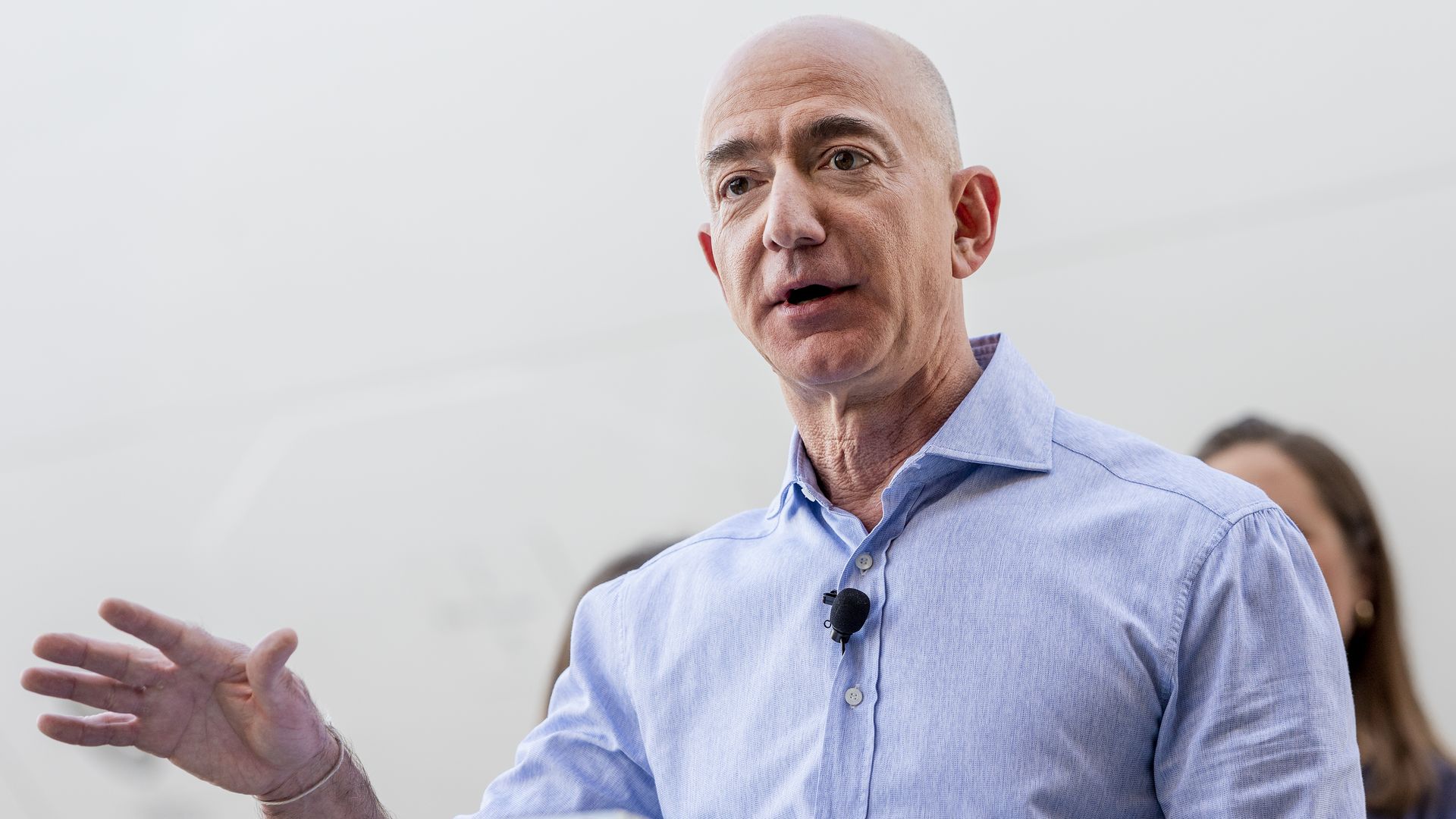
The man who has profited most from the Trump era is his foremost nemesis in the business world, Amazon founder Jeff Bezos, Bloomberg's Justin Sink reports.
By the numbers: Bezos has become the world’s richest person, his net worth swelling by $66.8 billion, since President Trump has been in the White House.
Facebook has deployed a senior executive to Capitol Hill to address questions from concerned policymakers about the company's partnerships with other services.
Why it matters: Tech leaders used to leave worrying about Washington to their lobbyists, but that doesn't cut it any more. Facebook senior executives keep trooping to Washington because the social network sits at the heart of so many policy debates — and those debates are also central to its future.


/2019/02/06/1549465490425.gif?w=3840)












/2019/02/05/1549338340291.gif?w=3840)