Pentagon spokeswoman Dana White said in Saturday's Pentagon briefing that there has been a "2,000% increase in Russian trolls in the last 24 hours," following the coordinated strike against Syria on Friday night.
The bottom line: The problem of Russian actors generating division and conflict among Americans isn't going away. As Axios' Sara Fischer and David McCabe reported last year, they aim to sow confusion and capitalize on political divisions. Senator Ben Sasse said in a statement on Saturday that this illustrates what "the wars of the future will look like...The fog of war will not be limited to our situation rooms and battlefields."
Netflix expects to spend about $8 billion on content this year. CEO Reed Hastings says that's still not enough.
Why it matters: The company is competing against a range of traditional entertainment companies around the globe, and of course, against the need to work, sleep and do other things.
Alaska Airlines is the number one ranked airline for the second year in a row, just barely beating out Delta, according to a report from Embry-Riddle Aeronautical University's College of Aviation.
A new Google project called called "Talk to Books" provides answers to questions by drawing on a library of more than 100,000 books.
Tech pioneer and Google Research director of engineering Ray Kurzweil debuted the project at the TED conference in Vancouver, and explained that it differs from traditional search by relying on semantics rather than keywords.
Technology pioneer Ray Kurzweil predicted Friday that universal basic income, a controversial notion today, will be common throughout the developed world by the early 2030s and globally by the end of that decade.
Why it matters: With the combination of automation and artificial intelligence, there has been wide concern over how society will deal with massive job disruption.
The U.S. Postal Service cannot currently change postage rates because its Board of Governors has been empty since late 2016, although President Trump's first three appointees will have Senate confirmation hearings next week.
Why it matters: Trump has criticized USPS for losing money, and yesterday formed a task force to explore possible reforms — two things that might not have been needed were governors in place.
On "60 Minutes" on Sunday, Salesforce CEO Marc Benioff tells Lesley Stahl how he bridged pay inequities between men and women.
Details: In 2015, Benioff was skeptical that a pay audit would show a disparity at Salesforce, but it did. He had to spend $3 million on raises for women to erase that gap. After Salesforce acquired other firms, another pay audit revealed the gap had returned. He paid another $3 million in raises to fix it.
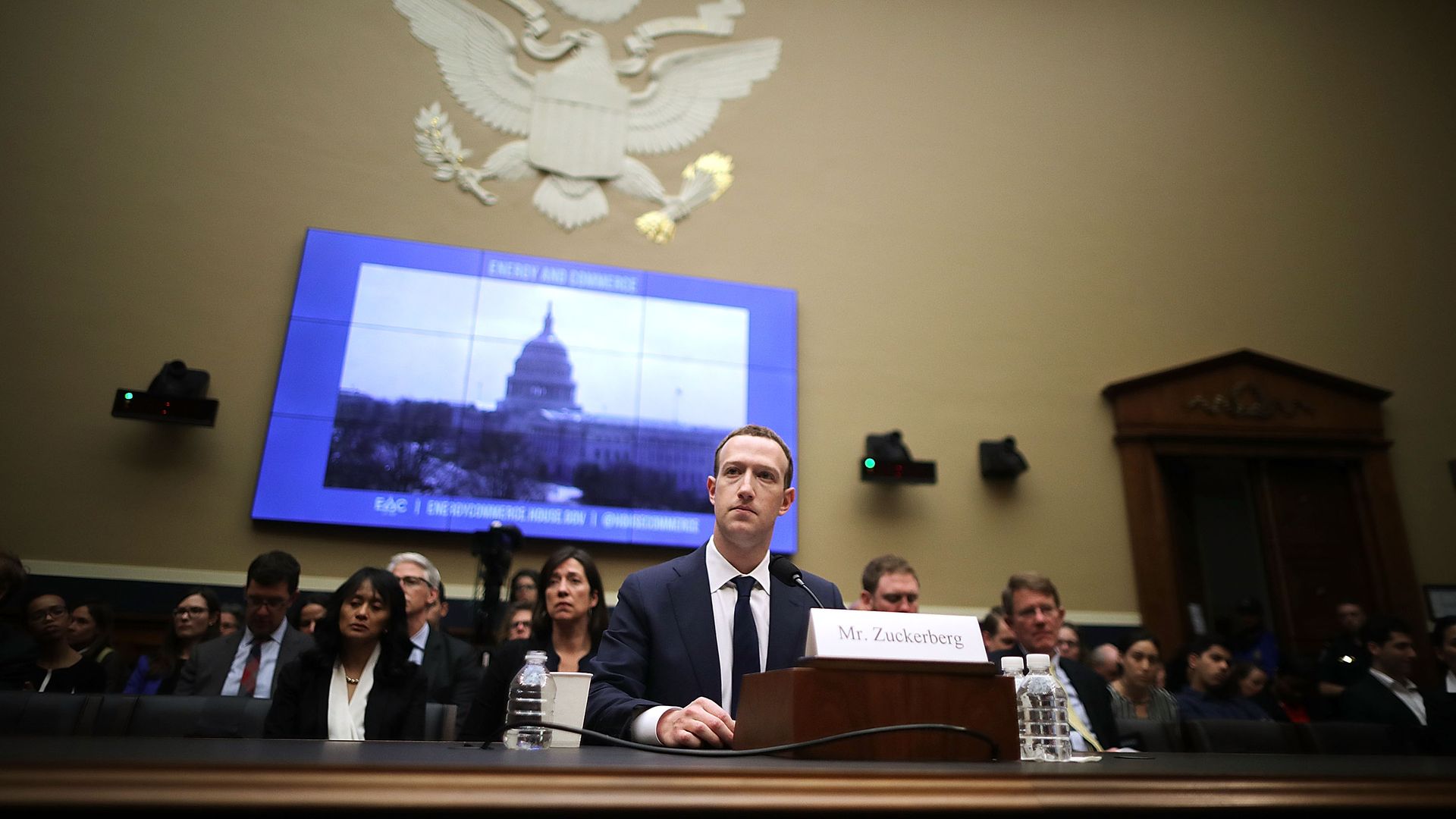
House Democrats plan to use this week's Facebook hearings as the starting point for an aggressive push for privacy legislation, which sets them up to move a bill forward if the House flips in November.
Why you'll hear about this again: Mark Zuckerberg emerged from 10 hours of testimony without any indication that bipartisan action is imminent. But House Democrats are preparing to introduce proposals for privacy legislation that will put in place concrete protections for how personal data is used and shared, although specifics are still being worked out, according to a Democratic House aide.