The "think different" tech crowd is developing a habit of blowing up people who actually do think differently.
The latest example is the internal memo from (now former) Google engineer, James Damore, questioning the company's diversity efforts and women's affinity for engineering. Damore's memo — and Google's decision to fire him — triggered outrage.
Those offended by the memo branded it as sexist, misogynistic, and counter to the equality goals that tech companies like Google strive for. Those who supported his views, or at least his ability to express them, called his firing a form of censorship and harshly criticized Google's ouster of someone who strayed from the corporate correctness.
Why it matters: Tech's well-documented diversity problems appear to have revealed a deeper cultural crisis. Companies have worked hard — and spent hundreds of millions of dollars — to project an aura of diversity and inclusion, but those efforts have sparked a backlash.
Google has spent the past week embroiled in controversy, following the leak of an internal memo that included arguments about how the company's lack of gender parity can be partially explained by biological differences between the sexes. The memo's author was quickly fired for "advancing harmful gender stereotypes in [Google's] workplace."
Story behind the story: The loudest outcries invoked the memo's specific contents and the employment fate of its author. But I suspect that the weightier undercurrent from women who work in Silicon Valley — especially from those with Google on their resumes — is that the incident is a reminder of all the other wrongs and inequities at Google that predate the memo, and of those that they fear will persist.
Led by China, tech companies are pushing into a voice-and-chat future in which we will rarely get a human on the phone for our banking or shopping question. And when we do, our egos will be massaged by emotionally intelligent bots that will advise call center reps how to handle our complaints.
WeChat, a wildly popular mobile app made by Tencent, is part of the daily lives of an estimated hundreds of millions Chinese. By comparison, talking apps, many built on machine-learning platforms, are only beginning to penetrate working and playing lives in the West.
Why it matters: Robotic chat is coming, and it may be fast — we will increasingly buy our stuff, and conduct our personal and work lives, through voice-command apps and artificial intelligence-trained chatbots. What we may not have expected is the degree to which non-human, intelligent bots will look over our shoulder and offer up helpful suggestions while we are at work.
In 2014, Google started publishing employee demographic data and pledging to invest in major initiatives to recruit a more diverse workforce, spending at least $265 million on the efforts.
Why it matters: Google has been thrown into the controversy over Silicon Valley's lack of diversity and sexist culture by an internal memo by a (now former) employee ascribing some of the tech industry's gender gap to biological differences. The memo also suggested the company's efforts to hire a more diverse workforce have been ineffective.
On that point, the memo isn't far off. Axios took a look at the data released by the company over the last few years.
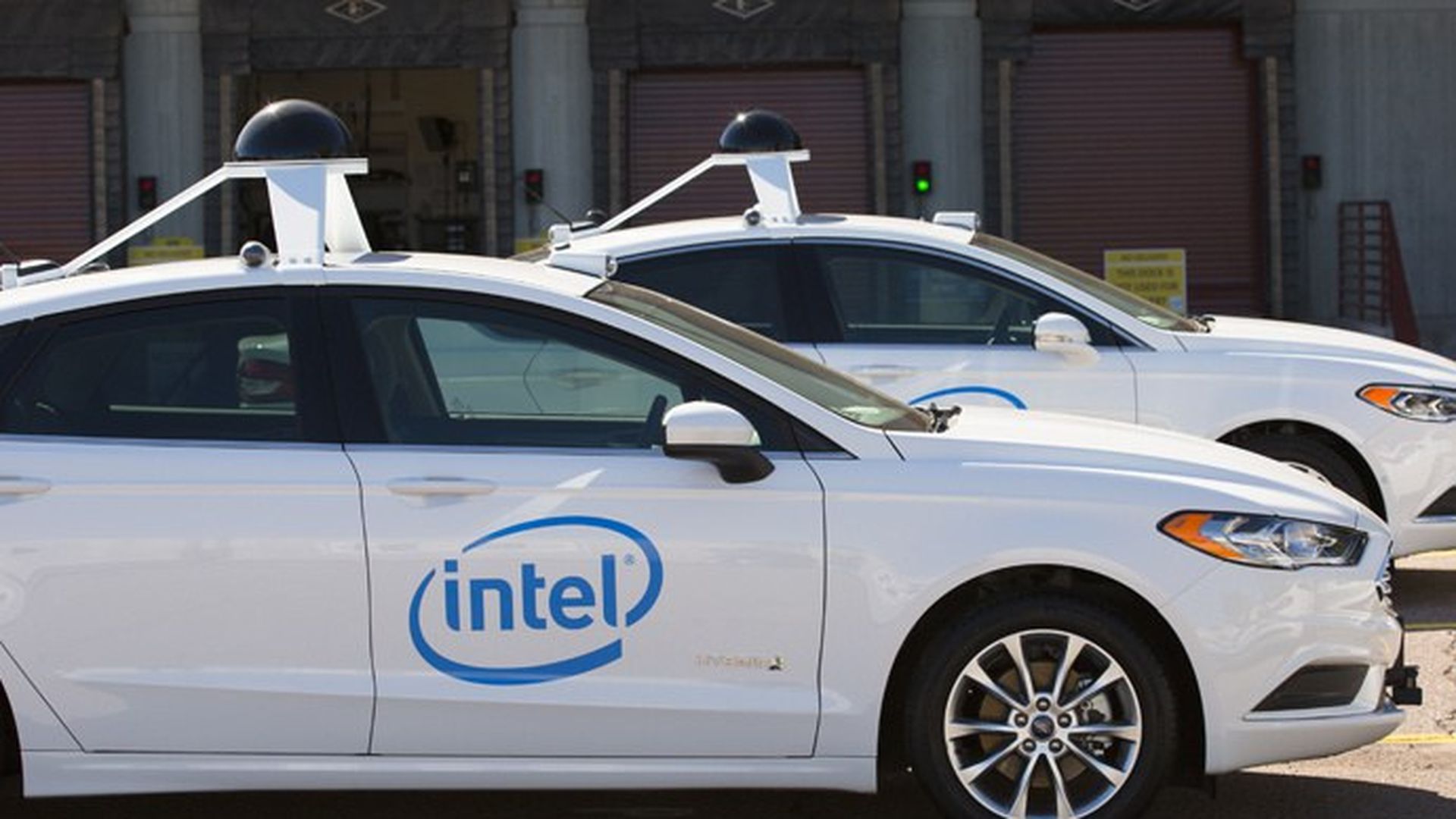
Intel says it is solidifying its aggressive push into the autonomous vehicle race with its $15 billion purchase of Mobileye.
Why it matters: On a call with reporters Tuesday, Intel CEO Brian Krzanich says that combining their resources will give it a major leg up for a market that's as big as $70 billion for hardware, software and services.
Mobileye co-founder Amnon Shashua, who will become Sr. Vice President at Intel, said Intel's new advantage is bringing a completely autonomous vehicle system under one umbrella, as opposed to the piecemeal approach other companies are pursuing.
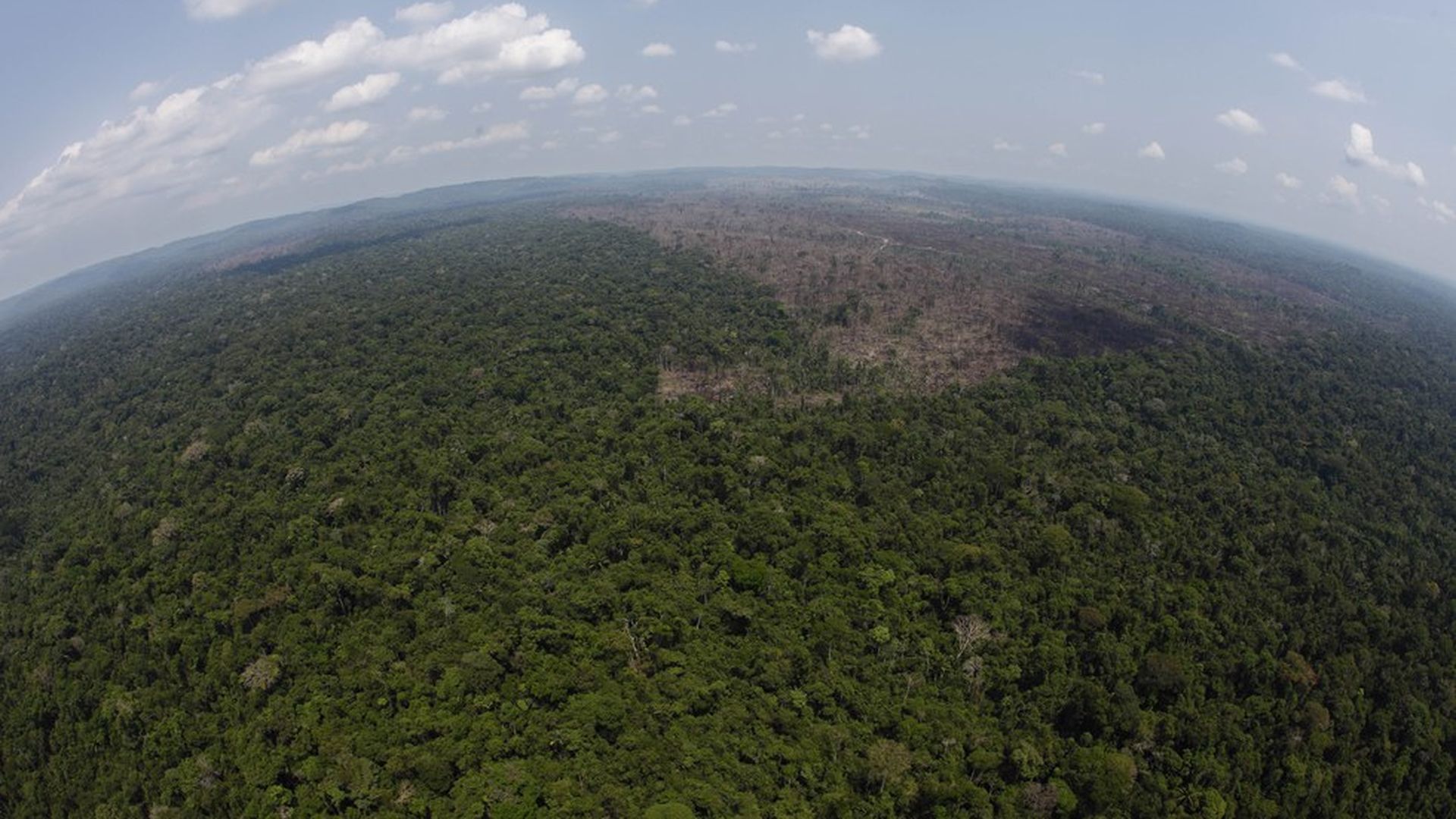
Trees in the Amazon can generate rain, according to a new study
in Science
.
How it works: Plants release water vapor through their leaves during photosynthesis, and in the rainforest that process actually creates "low-level clouds." A bonus effect: the rain from those clouds warms the atmosphere, causing wind patterns to shift and pulling more moisture in from the ocean.
How they did it: Using a NASA satellite that studies the chemistry of the Earth's atmosphere, the team led by Rong Fu, a climate scientist at UCLA, found that water vapor over the Amazon was too high in the isotope deuterium to come from the ocean, and must instead come from plants.
Why it matters: It's interesting that trees can play an active role in causing rainfall , but as Science points out, in this context it could mean that deforestation actually causes droughts.
IBM today claimed a leap in "deep learning," the leading method to train intelligent machines to sort photos, decipher voices and drive autonomous vehicles, and compared the achievement to the jump to jet-powered aviation six decades ago.
The breakthrough, IBM said, could significantly improve fraud detection, medical diagnoses, and self-driving technology, beating a 2014 record set by Microsoft in the speed of a run of deep learning. The software also bested Facebook, until now the leader in this type of deep learning, IBM said. IBM made the software open-source, although it only runs on the company's platform, said Sumit Gupta, vice president for AI and deep learning at IBM.
"This is just as transformative as the jet engine, giving us the accuracy we need," Gupta told Axios.
Why it matters: Gupta said that in one training run, the time needed was cut from 16 days to seven hours, quickening the process of machine learning by 58 times. The result, he said, is to help shift deep learning from an impractically long process to a manageable one.
The New York Times' Upshot compiled a list of maps detailing breaking down the country's popular music tastes geographically, so if you're ever wondered where The Chainsmokers are most popular (answer: Northeast college towns), now you know.
The method: The Upshot took the 50 most-watched artists on YouTube over the past year from this spring's Billboard Top 100 and used YouTube's geocoded streaming data to tally up their plays in metropolitan areas across the United States. The maps reflect each artist's relative popularity across the country.
Some takeaways: Coastal and southern hip hop — Future, Migos, Lil Yachty — really doesn't play well out West. Artists with a rock/pop flavor — Taylor Swift, Coldplay, Ed Sheeran, Lady Gaga — aren't hugely popular in the South.
Politico's Kevin Robillard tweets the truth: "This article makes one thing clear: Americans in every section of the country have truly terrible taste in music."
Chinese transportation giant Didi Chuxing has invested an undisclosed amount of funding into Careem, a Dubai-based ride-hailing company that operates in the Middle East and North Africa, as part of a new partnership. Careem recently raised $500 million in funding from Saudi billionaire Prince Alwaleed bin Talal's Kingdom Holding, Daimler, DCM Ventures, and Coatue Management, among others, valuing the company at over $1 billion.
Didi's global game: Didi has already put money into Southeast Asia's Grab, India's Ola, 99 in Latin America, Taxify in Europe and Africa, and Lyft in the U.S. The company has been aggressively investing in and forging partnerships with local players, undoubtedly as part of its ambitions to "play a global game," as president Jean Liu said last year. This strategy also pits it against Uber, which operates in most parts of the world, and in which Didi has a stake thanks to a merger last summer with the company's Chinese operations.