Tuesday's technology stories

Facebook's safety chief on Cleveland, mental health outreach
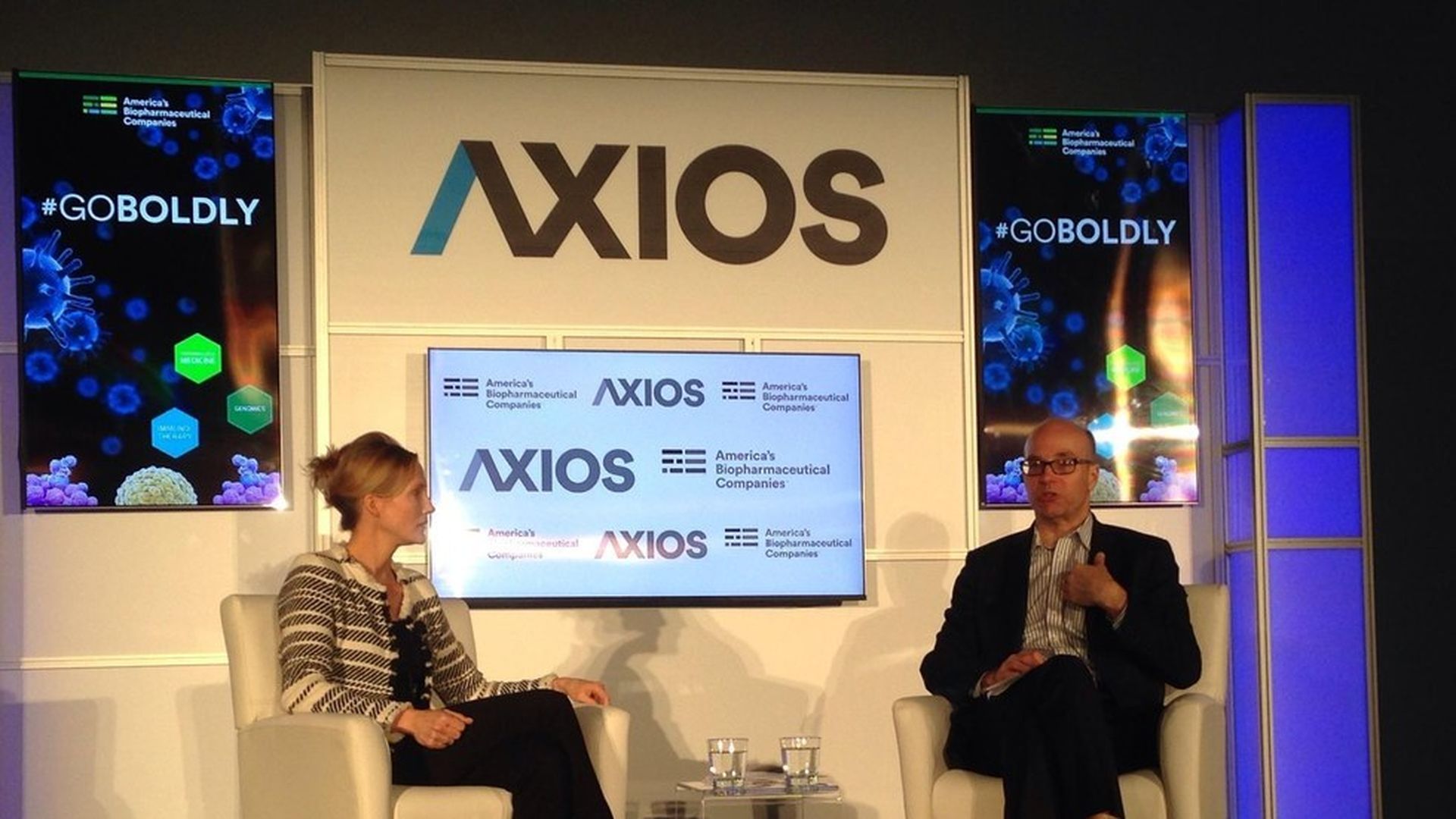
At an Axios Future Shapers event in Chicago this afternoon Antigone Davis, Facebook's Head of Global Safety Policy, discussed Facebook's outreach following posts indicating potential self-harm, and commented on the murder in Cleveland from which video was posted to Facebook.

Yahoo says Verizon deal expected to close in June

Yahoo chief executive Marissa Mayer said Tuesday in a statement that Verizon's acquisition of the company is "anticipated to complete in June," in line with the company's stated timeline of closing in the second quarter of the year.
Why it matters: The deal has been burdened by multiple revelations of hacking of Yahoo user accounts, and when it closes will be a big part of Verizon's play at the targeted ad market controlled by Google and Facebook.

Facebook Messenger gets extra shot of AI
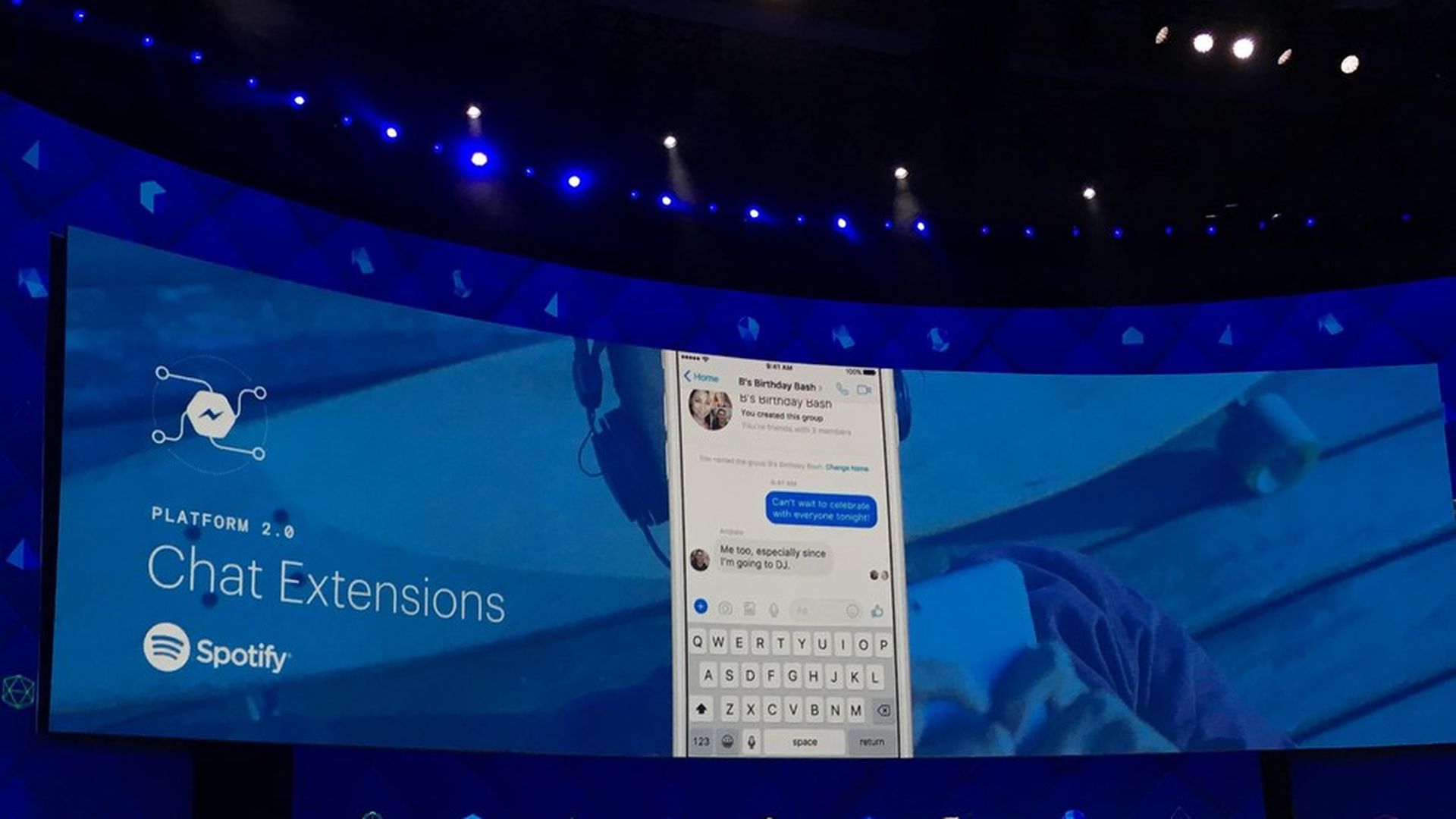
Following last year's big push to bring chat bots to its Messenger app, Facebook unveiled new capabilities and improvements on Tuesday at its annual developer conference in San Jose, California. "We got a lot of attention for opening our platform," said Messenger Chief David Marcus, "and right after we got a lot of attention for all of the work we still need to do."
What's new: Chat extensions for adding bots to group conversations, bots for playing games, QR codes for information, a Discover tab with a curated selection of popular bots, and new tools to help businesses build their own bots. There's already a Spotify chat extension for sharing music links in group chats, with Apple Music coming soon.
By the numbers:
- 65 million businesses active on Facebook, and more than 20 million respond to Messenger messages
- 2 billion messages sent monthly between users and businesses
- 100,000 Messenger bots
- 100,000 developers using Messenger's tools
Facebook unveils new augmented reality tools
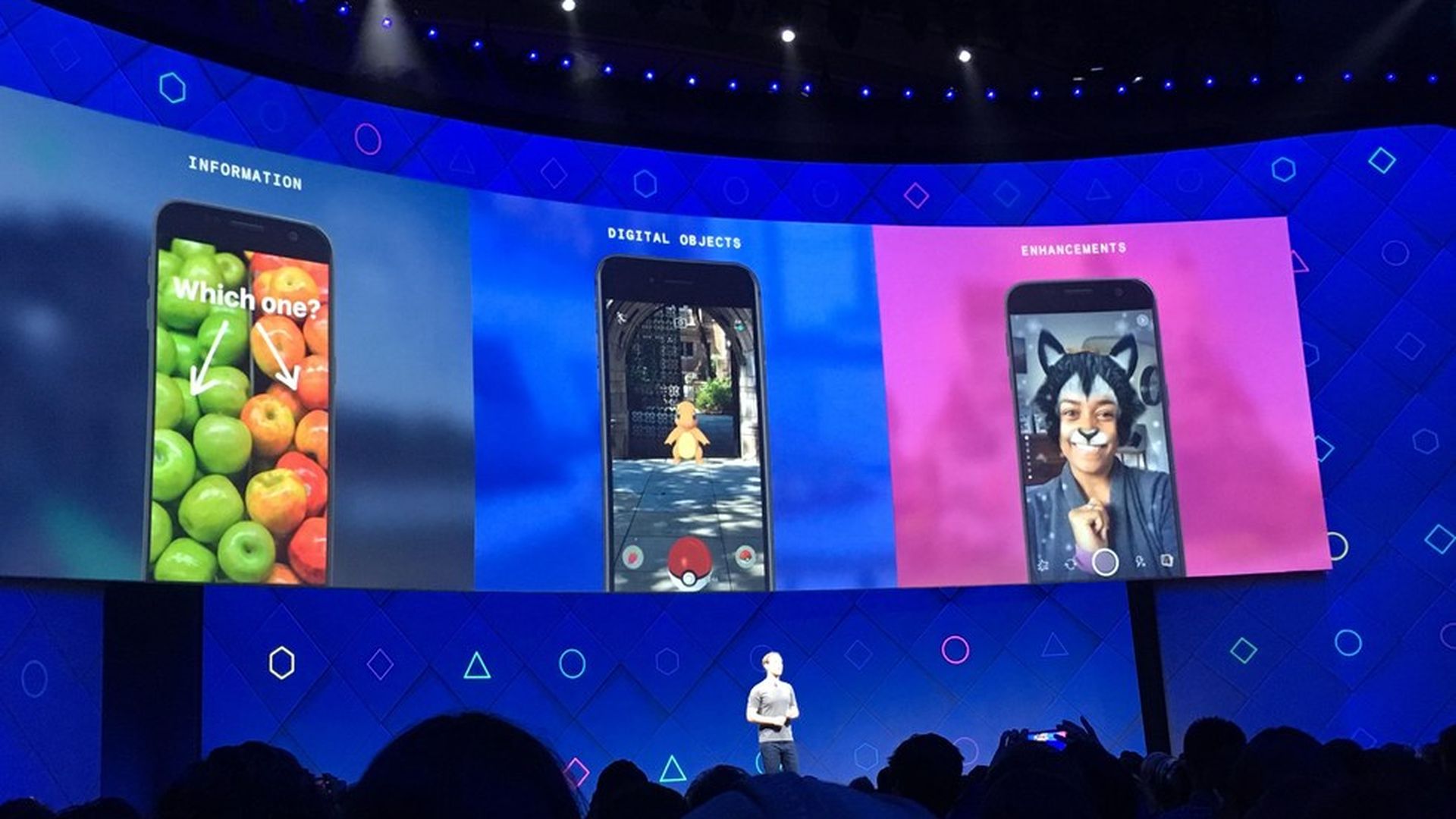
Facebook unveiled its Camera Effects Platform, a set of augmented reality tools for outside developers, on Tuesday at its annual F8 developer conference in San Jose, California.
We're going to make the camera the first mainstream augmented reality platform.—Facebook CEO Mark Zuckerberg
The features: The initial set of software tools for developers will let them build camera filters and effects that can recognize objects and add 3D effects, among others. One set of tools, called Frame Studio, lets creators design photo frames, while AR Studio lets them build augmented reality frames that can display information or labels. As Zuckerberg said as he introduced the new platform, Facebook will add new and improved tools over time.
Facebook brings hanging out to virtual reality with Spaces
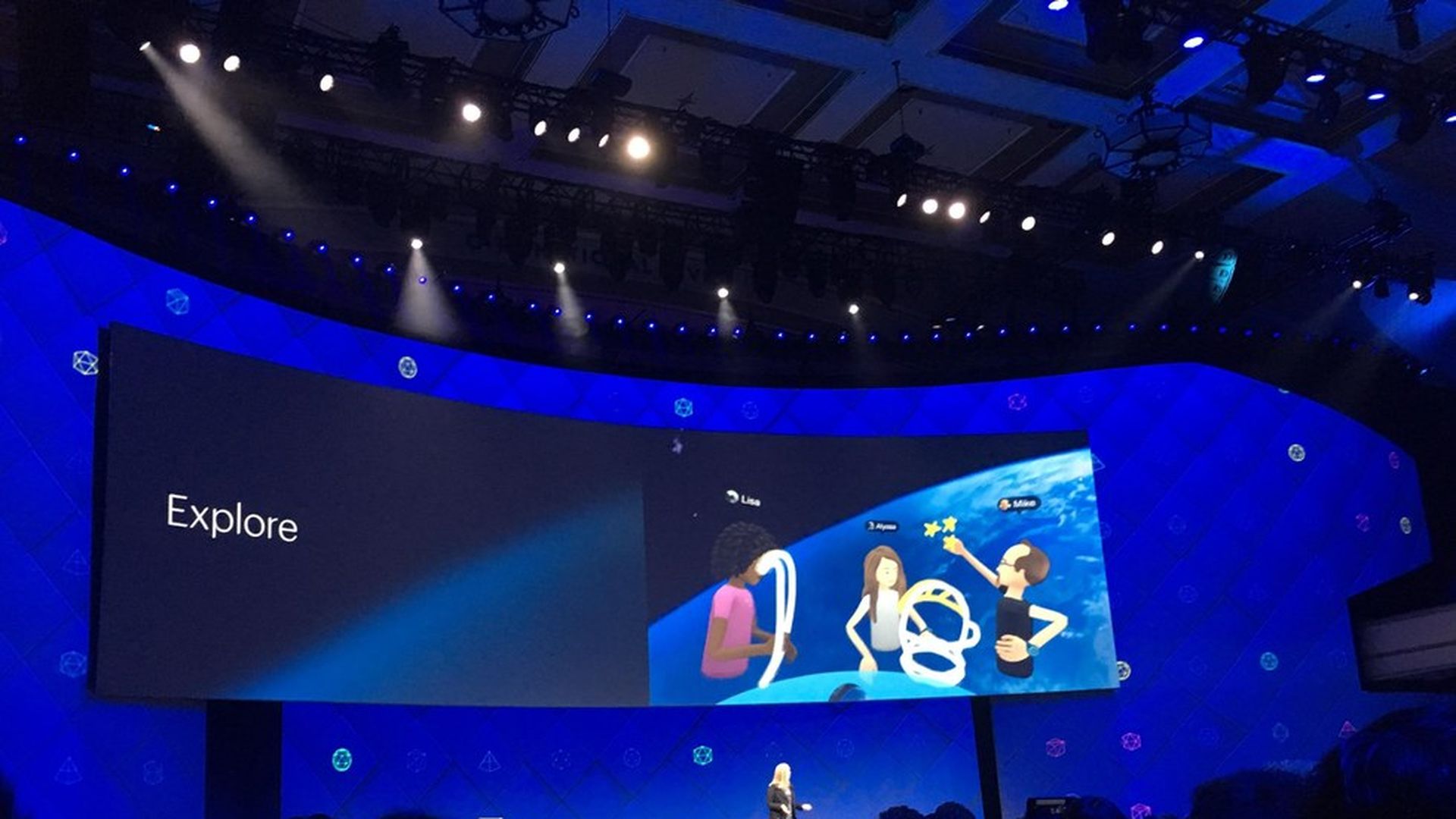
Combining its roots as a social network and its recent interest in virtual reality, Facebook unveiled Spaces for Oculus at its annual developer conference in San Jose, Calif. on Tuesday.
Virtual hanging out: Facebook Spaces lets users create an avatar (using suggested features that resemble their Facebook photos), connect with friends on the social network, and hang out in a virtual environment. The company has been interested in virtual reality socializing for some time: CTO Mike Schroepfer showed off an early version at last year's conference, though it was not a publicly available product at the time.
Tumblr joins video chat app craze

Tumblr, the once-hot blogging network loved by teens, has released Cabana, a standalone app for watching videos with friends—a move that raises questions about the social network's future.
Deja vu: Tumblr, which has been quiet for quite some time, seems to be turning to a strategy once used by its own parent company, Yahoo: Building "hip" mobile apps to convince its younger entrepreneurial employees that it's not stagnating. Last year, Tumblr joined the video broadcasting craze, and today it's latching onto the group video chat trend.
Uncertain future: So what will become of Tumblr, which Yahoo wrote down (twice) last year after paying $1.1 billion for it in 2013? Despite struggling to make money from Trumblr, there's been no sign that it plans to sell it off, so it would have to find ways to keep employees interested. And the same questions apply to Polyvore, the fashion site Yahoo acquired in 2015, whose CEO left last year to become a venture capitalist.
What to watch: The Yahoo-AOL acquisition is set to close this quarter, the company recently said.

Axios Review: Samsung's Galaxy S8 is beautiful, but has incomplete software story

With the Galaxy S8, Samsung was looking to stand out in three key ways. It wanted a futuristic design that looked different from the sea of similar looking devices. It wanted to compete with Apple's Siri and Google's Assistant with its own AI assistant. And of course, it wanted a robust device that wouldn't have the safety issues that cratered the Galaxy Note 7.
Our take: It succeeded on the first, stumbled some on the second and the third remains to be seen.
Many millennials are waiting until today to file taxes

Due to a series of factors, including a D.C. holiday and April 15 falling on the weekend, federal taxes aren't actually due to be filed until today.
Early filers: More people than ever are filing their taxes early this year. Adobe estimates that 59% of online tax returns were filed in January and February this year, with early traffic to online tax sites up 2% from last year.
Procrastinators: The exception is millennials, who are more likely this year than last to file in the last day, according to a survey. Adobe says 12.4% of millennials are expected to wait until the last 24 hours, compared to 6.6% last year.
Uber loses another self-driving car exec
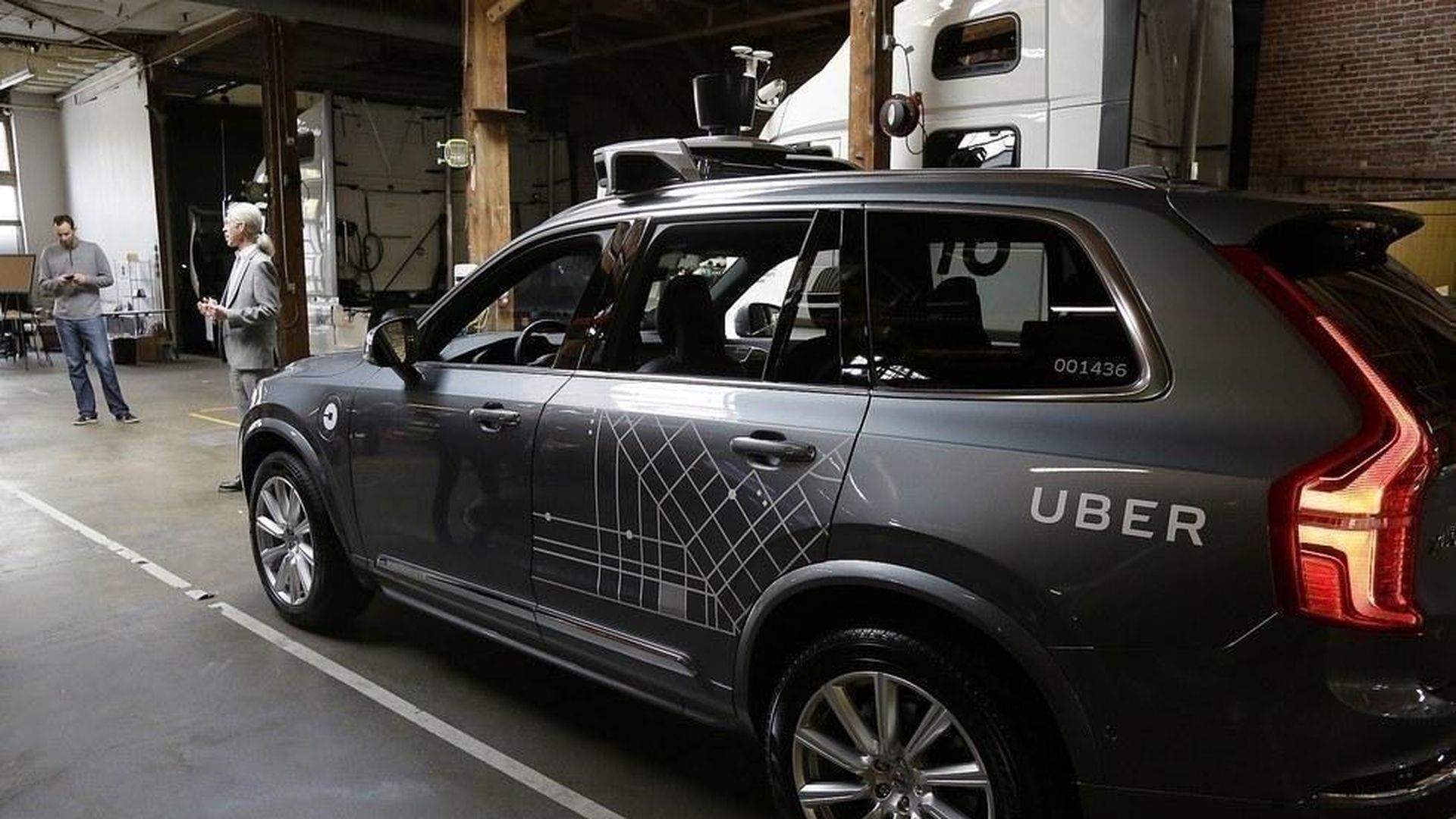
Sherif Marakby, a 25-year Ford veteran who joined Uber last April, is leaving the ride-hailing company, as Automotive News first reported. Marakby came to Uber to focus on the company's self-driving car tech as its as its VP of global vehicle programs.
Bandwagon: Marakby is only the latest high-profile Uber employee to resign in the last couple of months while the company has faced a string of controversies. Other recent departures include the head of its AI labs, its head of product and growth, its president of ride-sharing, its PR chief, and several employees from its self-driving car teams—including Marakby's boss, former head of Google Maps Brian McClendon.