Thursday's technology stories

Amazon outage cost S&P 500 companies $150M
The losses show just how bad Amazon Web Services S3 outage was earlier this week, financially speaking. Cyence, an economic modeling platform, shared some data with Axios that show the ramifications:
- Losses of $150 million for S&P 500 companies
- Losses of $160 million for U.S. financial services companies using the infrastructure
Clearly the four-hour outage was more than just an inconvenience for web publishers.

Europe won't "hesitate" to halt U.S. privacy deal if concerns emerge
European Justice Commissioner Vera Jourova tells Bloomberg that the bloc would consider suspending its Privacy Shield agreement with the United States if it felt the U.S. wasn't standing by its part of the bargain:
"I will not hesitate to do it. There's too much at stake."
Why it matters: The deal calms fears in Europe about privacy violations and eases the way for companies to store user data in a country other than the one where the user lives. But language in one of President Trump's executive orders has some worried that the administration could undermine the privacy rights of foreign nationals.
What's next: Bloomberg reports Jourova has a trip to Washington in the works for later this month. She said it would take a "significant change" to see the deal suspended.

Spotify now has 50 million paid subscribers
Spotify, the Swedish music streaming service, says it now has 50 million paying subscribers, up from 40 million in September. In June, it said it had 100 million total monthly users, including those on the ad-supported free version of its service.
The competition: In contrast, Apple Music (which only offers a paid service) only has 20 million as of December. However, it's important to note that while Spotify has been around since 2008, while Apple Music debuted in June 2015. Other services like SoundCloud and Amazon Prime Music don't disclose specific subscriber numbers.
Uber will apply for a California self-driving car permit
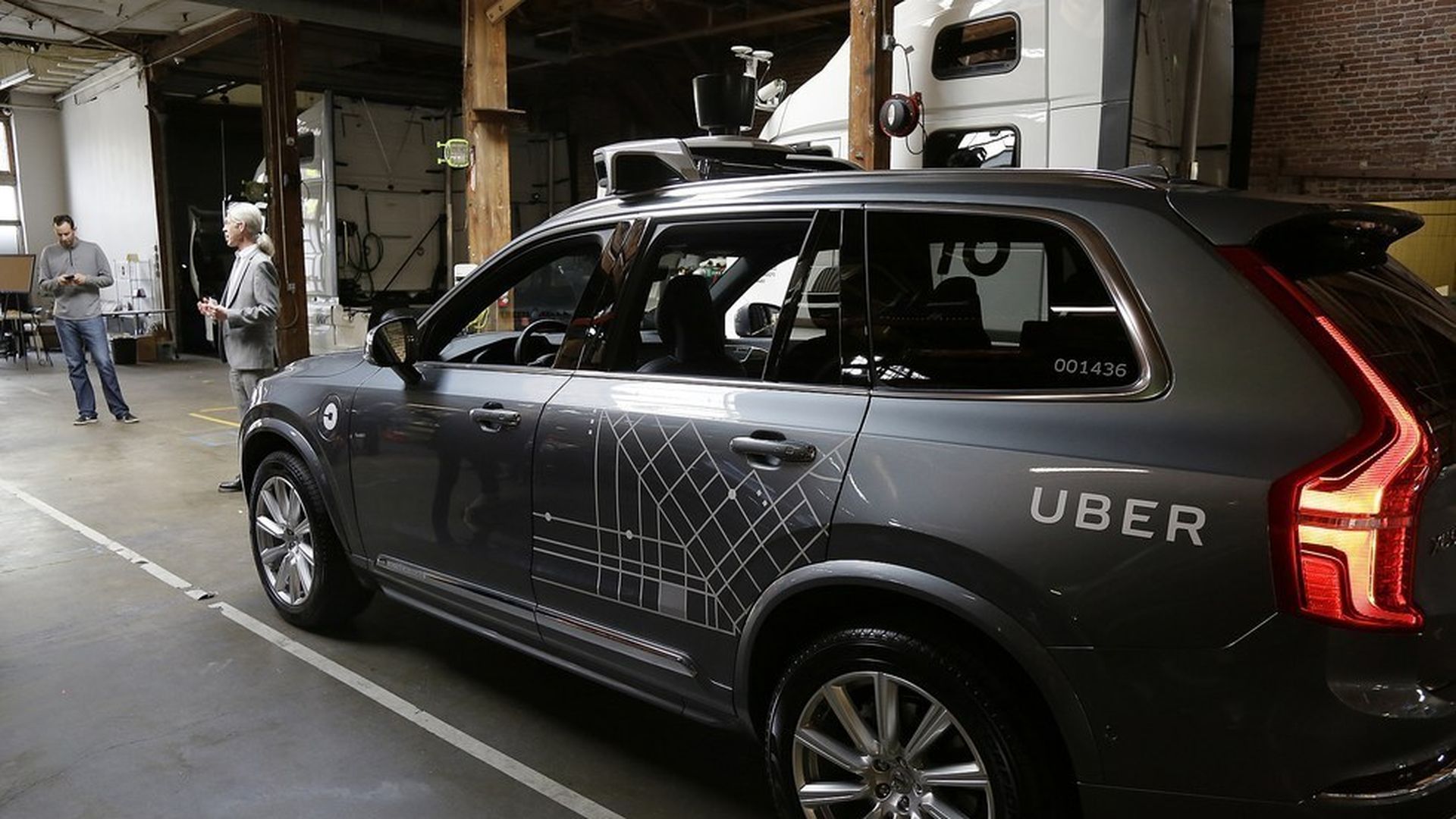
It's been nearly three months since Uber battled with California's Department of Motor Vehicles over the company's lack of a permit to test self-driving cars on public roads. Now Uber will finally apply for one.
In December, when Uber began testing a fleet of autonomous Volvos in San Francisco, the DMV revoked the cars' registration after the ride-hailing giant refused to apply for a permit. At the time, Uber argued that its cars didn't fit the agency's definition of self-driving (because they had human "monitors" in the vehicles) and therefore shouldn't need a permit (the DMV disagrees, of course). The cars' registrations have already been reinstated, although the vehicles won't go into self-driving mode until the permit is issued, Uber tells Axios:
These cars are legally registered and are being driven manually. We are taking steps to complete our application to apply for a DMV testing permit. As we said in December, Uber remains 100 percent committed to California.
Uber also is testing self-driving cars in Pittsburgh and Arizona.

Amazon blames human error for Tuesday's massive AWS outage
Amazon offered up an explanation for this week's major outage in its AWS service, blaming human error and promising to change its procedures to avoid a similar incident.
The outage, Amazon said, was caused while trying to remove a small number of servers. A command was incorrectly entered by an employee, resulting in more servers than expected to be taken offline and requiring the overall system to be fully rebooted.
We want to apologize for the impact this event caused for our customers. While we are proud of our long track record of availability with Amazon S3, we know how critical this service is to our customers, their applications and end users, and their businesses. We will do everything we can to learn from this event and use it to improve our availability even further.
Amazon said it is making a number of changes, including safeguards that should prevent too many servers from being taken offline.
Electric car charger company raises $82M to enter Europe

ChargePoint, a ten-year-old company that provides charging stations for electric cars, has raised $82 million in a first close of a new funding round led by automaker Daimler. The company expects to raise more than $100 million in total.
Existing investors BMW i Ventures, Linse Capital, Rho Capital Partners, and Braemar Energy Ventures also participated in this latest fundraising round, which brings ChargePoint's total funding to more than $255 million.
Trump admin said to oppose reforms to surveillance law
Two reporters at Reuters quote an anonymous administration official saying that the White House doesn't think Congress should reform legal provisions related to foreign surveillance while considering whether to re-approve them this year:
"We support the clean reauthorization and the administration believes it's necessary to protect the security of the nation."
Timing is everything: The blind comment comes as the House Judiciary Committee holds an initial hearing on re-approving one of the more prominent elements of the law in question, which is used to justify the surveillance of foreign targets located abroad. A classified session this morning between lawmakers and government officials ran on for hours.
Why it matters: The provision, known as Section 702, is set to expire at the end of the year unless lawmakers act. That means a battle between privacy advocates and surveillance hawks is coming, since civil libertarians believe the law can be too broadly applied. The White House did not respond to a request for comment.

Facebook cuts price of Oculus Rift amid growing VR pains
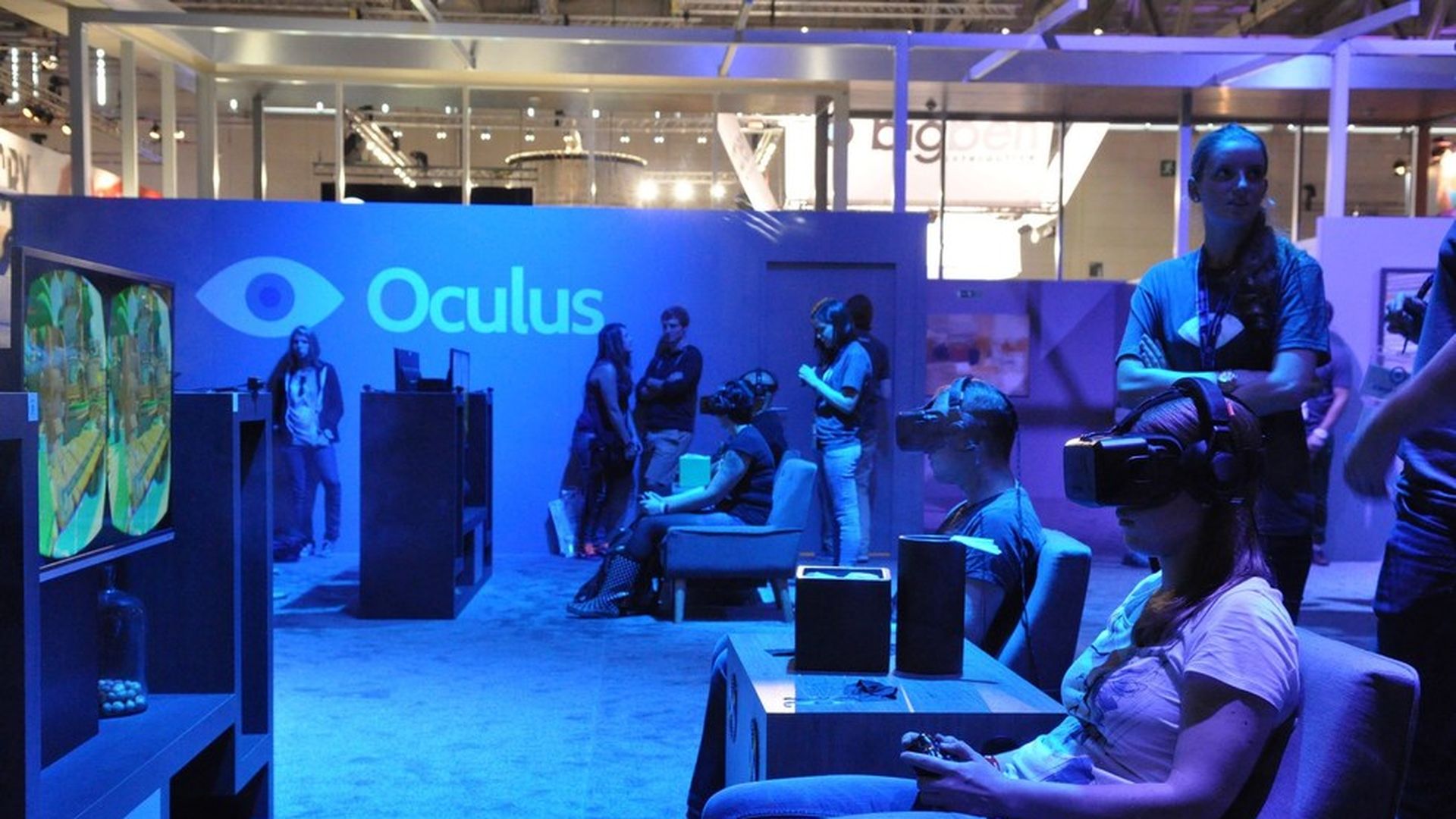
Facebook is slashing prices on its Oculus virtual reality headset and controller by $100 each as it tries to make the device appeal to more people. With the cut, the combined package sells for $598, substantially cheaper than HTC's $799 Vive and closer in price to Sony's $399 PlayStation VR. The Rift can also be purchased, sans controller, for $499.
Facebook paid more than $2 billion for Oculus back in 2014, but has hit a number of struggles along the way, including shipping delays and a $500 million payout to ZeniMax. Virtual Reality remains in its infancy and high-end systems like Oculus and HTC require a top-line computer in addition to the pricey headset. Mobile options — like Google's Daydream and Samsung's Gear VR (developed with Oculus) — allow people to get a taste of VR with a far smaller investment, and have dominated the still-nascent market.
"We are cutting the price to bring VR to more people, and that's always been our goal," Brendan Iribe, Oculus co-founder, told USA Today. "We've said all along making money on the hardware was not our goal," added Jason Rubin, the company's VP.
Google, Facebook opt out of transgender rights case
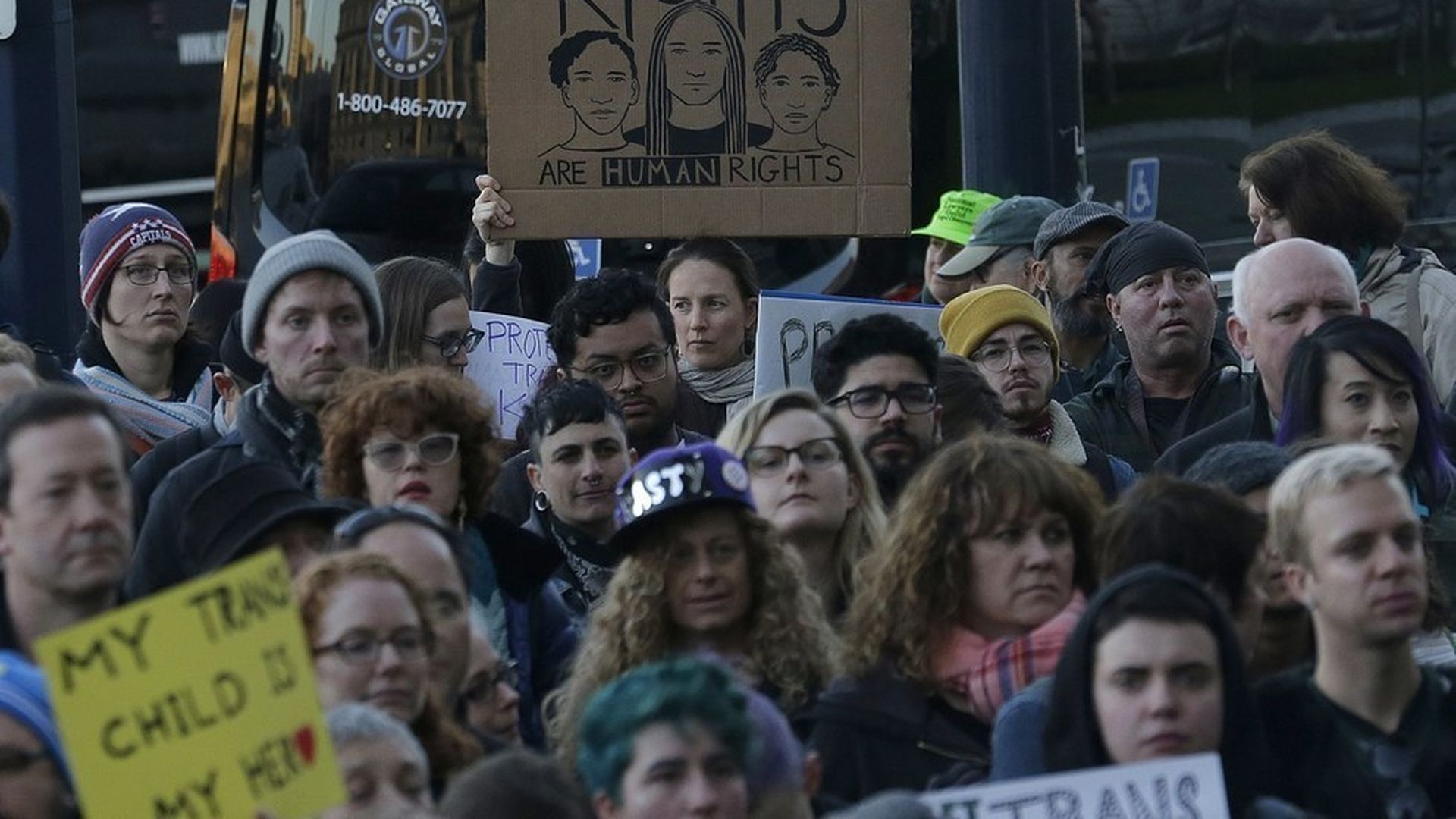
While much of the tech industry has signed on to a Supreme Court brief arguing in favor of transgender rights, several big names are not on the final list, including Facebook and Google.
Both companies issued statements supporting transgender rights after President Trump withdrew federal guidance on the subject, but a source says neither is signing on to a Supreme Court brief in the case of Gavin Grimm, a Virginia high school student at the center of a case coming before the court next month.
Also missing from the list, the source said, are all four major carriers. T-Mobile and AT&T have spoken out about LGBT issues in the past and T-Mobile CEO John Legere marched in Seattle's Pride event. However, as with immigration, the carriers have avoided publicly opposing Trump, likely because all have pending business for which they need government approval.
Who is on board: The list includes Apple, Amazon, eBay, IBM, Intel, Microsoft, PayPal, Salesforce, Slack and Yahoo.
Samsung's bill to take on Apple's Siri topped $200 million
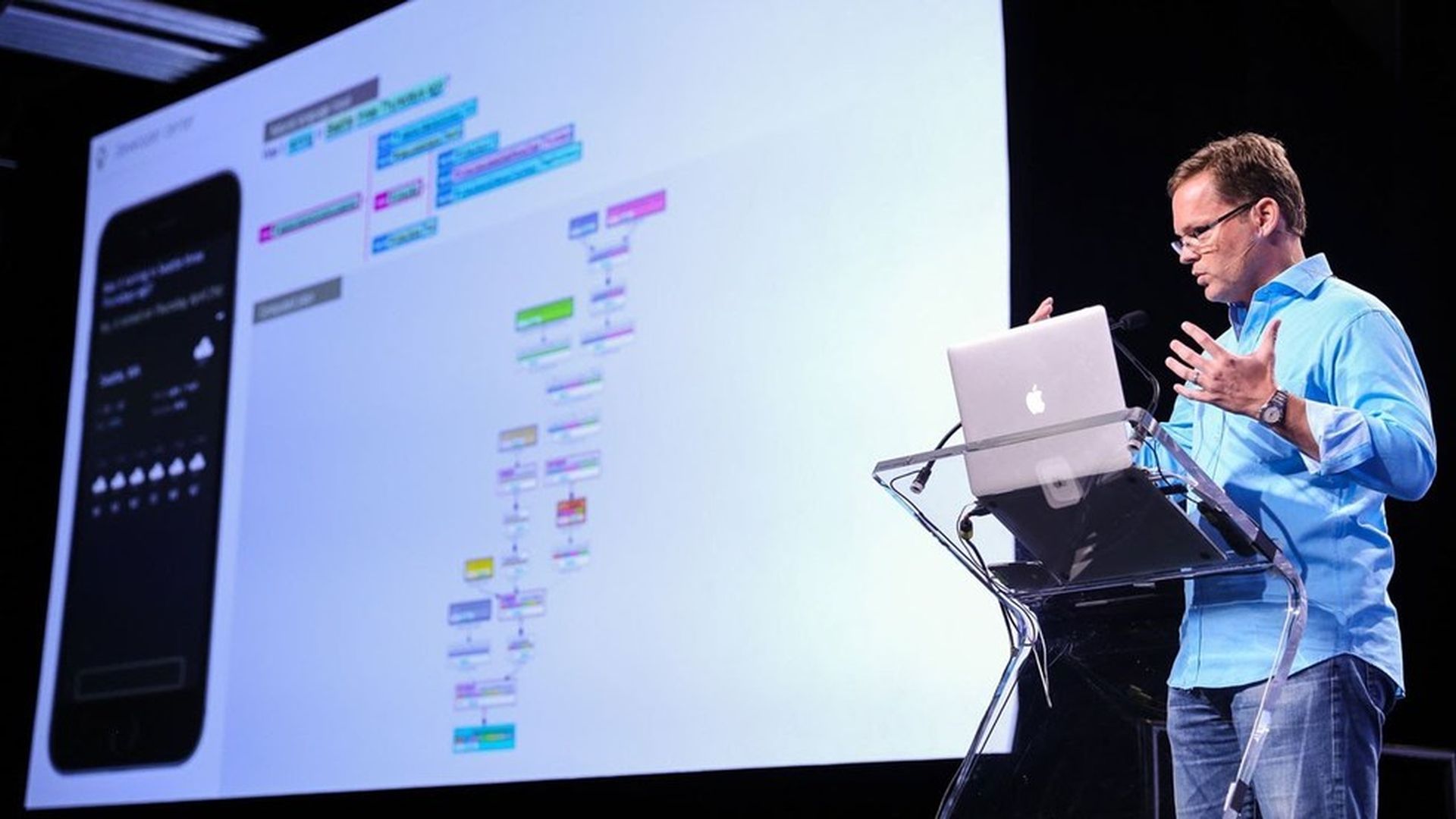
Samsung spent 238.9 billion Korean Won ($209 million) for last year's acquisition of Viv Labs, a 30-person voice AI startup from the creators of Apple's Siri. The figure was confirmed in a regulatory filing this week.
Viv's technology, or at least a version of it, is expected to show up in the Galaxy S8, due to be unveiled in New York next month.
Why it matters: While it relies on Google for the Android OS, Samsung isn't willing to defer to the search giant when it comes to the increasingly high stakes area of an AI-powered assistant.

Why AI is all the rage right now
Tech companies are racing to announce new products, research labs and acquisitions in the AI race. Another sign of the the acceleration of the business world's embrace of all things AI is captured by this Bloomberg chart showing the sharp spike of companies mentioning the technology in their earnings calls.
Business-Focus on Artificial Intelligence Rising: {Analysis on Terminal https://t.co/BoEggN4PY4 } pic.twitter.com/MFm4nVMUBM— Michael McDonough (@M_McDonough) February 28, 2017
Facebook launches new tools to prevent suicide on Live
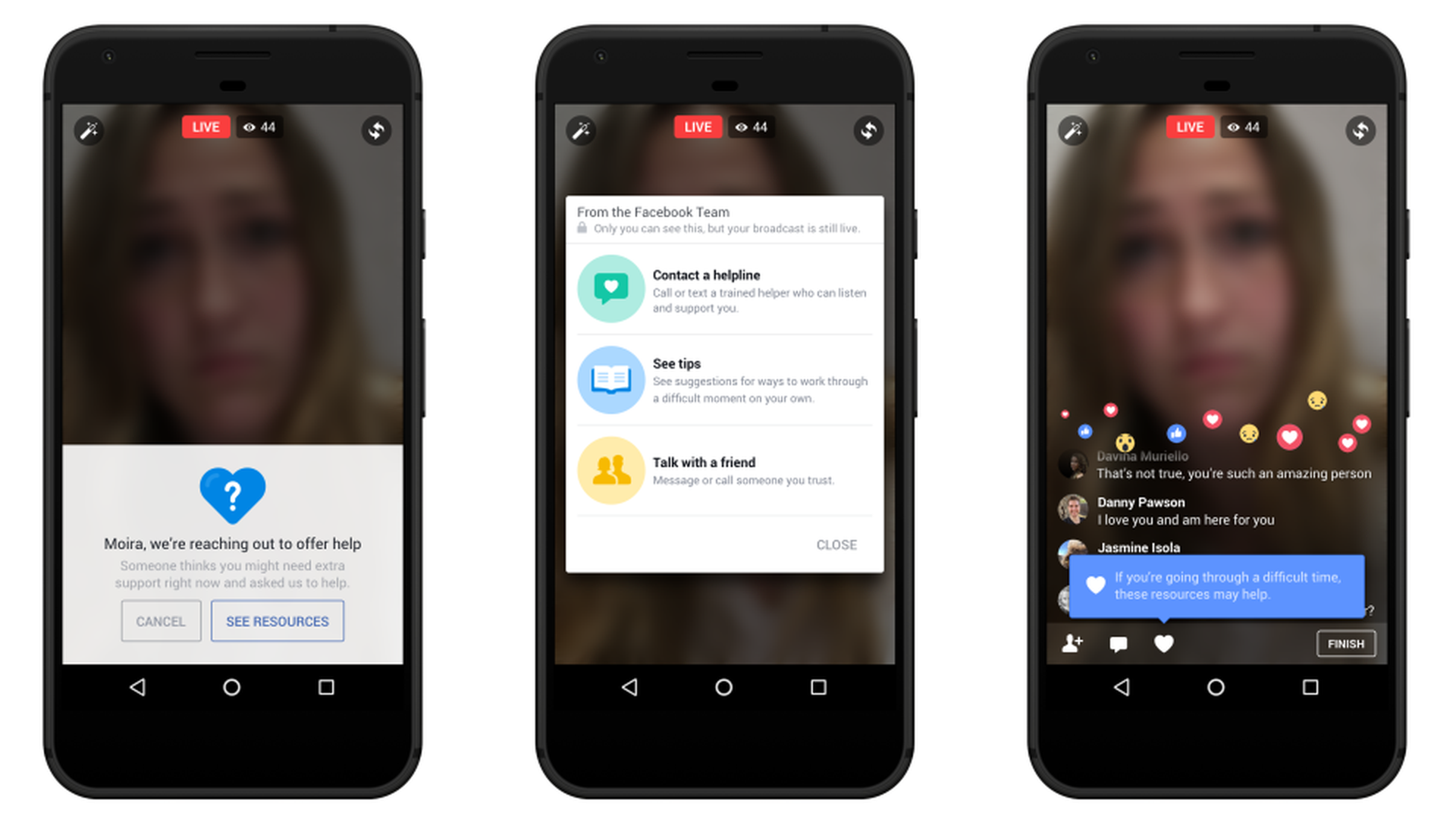
Early Wednesday morning Facebook announced that it is updating the tools and resources they offer to people thinking about attempting suicide, as well as the support they extend to friends and families of suicide victims. The new features include:
- Integrated suicide prevention tools to help people in real time on Facebook Live: People watching a live video have the option to reach out to the person directly and to report the video. Facebook will also provide resources to the person reporting the live video to assist them in helping their friend.
- Live chat support from crisis support organizations through Messenger: Participating organizations include Crisis Text Line, the National Eating Disorder Association, and the National Suicide Prevention Line.
- Streamlined reporting for suicide, assisted by artificial intelligence: The AI tool will make the option to report a post about "suicide or self injury" more prominent for potentially concerning posts.
- Launch of a new video campaign with partner organizations across the globe to raise awareness about ways to help a friend in need.
Why Google didn't tell Uber about alleged employee misconduct
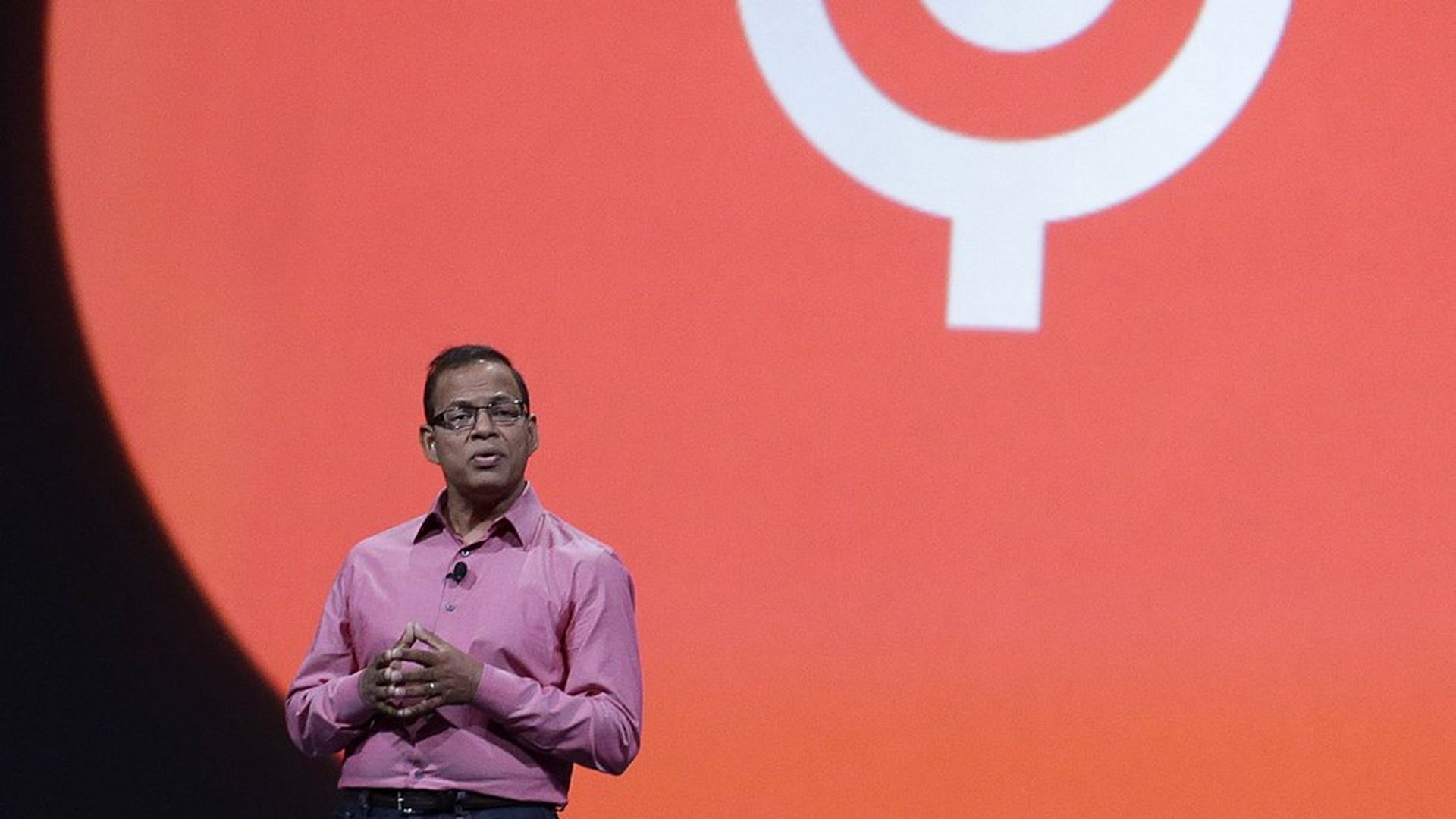
Uber on Monday parted ways with Amit Singhal, who had joined the ride-hailing company just weeks earlier as senior vice president of engineering. The reason: He had been accused of sexual harassment at his prior employer, Google.
Singhal allegedly did not tell Uber the real reason he left Google in early 2016, and the company claims it didn't know until being approached by tech site Recode. So assuming this is true, that leaves us with Google—what is the search giant's role here?
Uber CEO apologizes for rude treatment of driver
On Tuesday, Bloomberg published a video recording showing Uber CEO Travis Kalanick arguing with the driver of his Uber Black ride over the company's pricing strategy. The exchange ended with Kalanick suggesting the driver is blaming others for his financial mistakes before exiting the vehicle.
Later on Tuesday, Kalanick sent the following email to the entire company:
Team -By now I'm sure you've seen the video where I treated an Uber driver disrespectfully. To say that I am ashamed is an extreme understatement. My job as your leader is to lead...and that starts with behaving in a way that makes us all proud. That is not what I did, and it cannot be explained away.It's clear this video is a reflection of me—and the criticism we've received is a stark reminder that I must fundamentally change as a leader and grow up. This is the first time I've been willing to admit that I need leadership help and I intend to get it.I want to profoundly apologize to Fawzi, as well as the driver and rider community, and to the Uber team.Travis