Monday's technology stories

Raftr sells itself as a more civilized social network
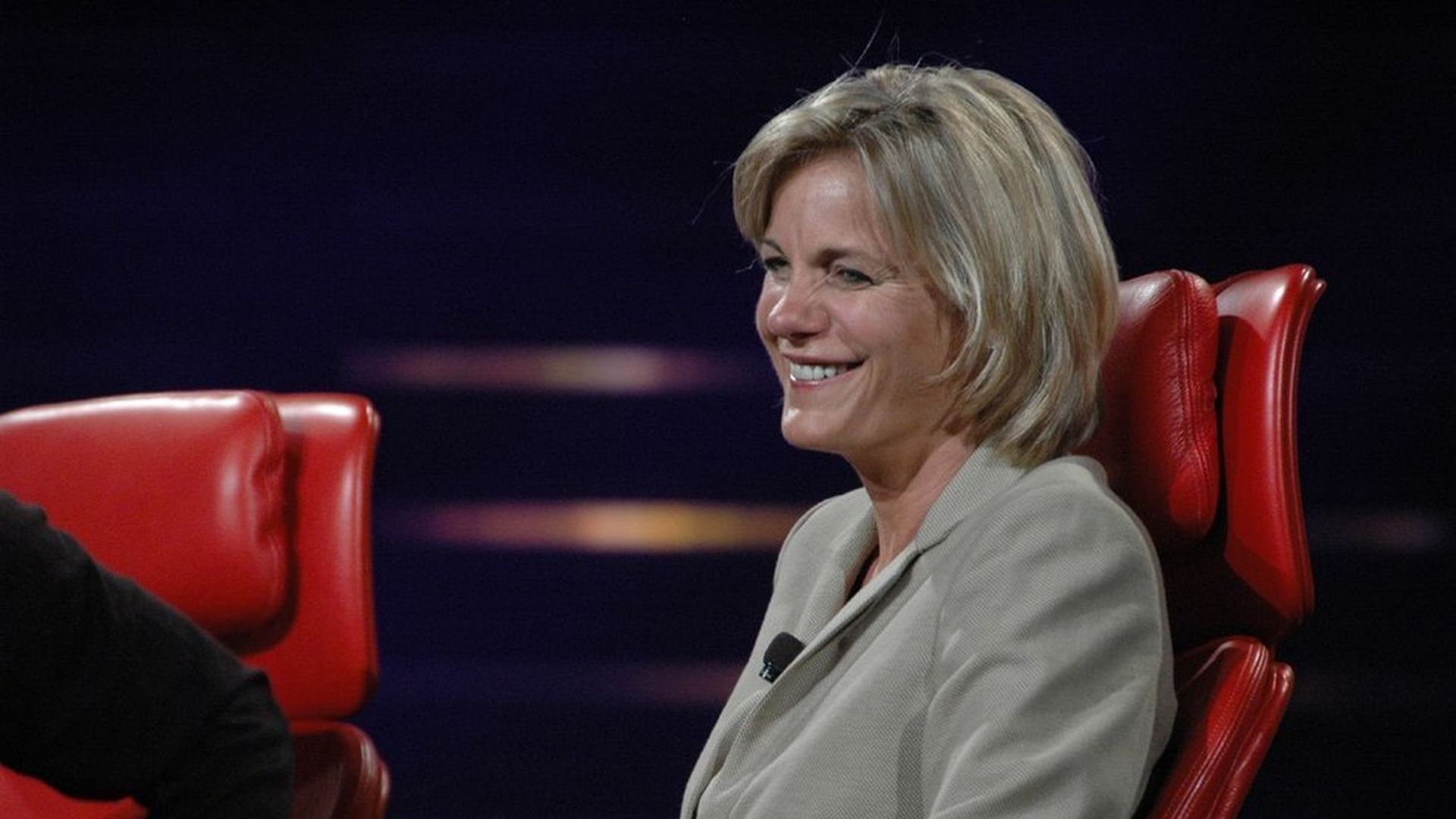
Raftr, a new startup launched by former Yahoo president Sue Decker, is prepared to take on Facebook and Twitter to become your new favorite social network. Decker and one of Raftr's investors, Harrison Metal founder Michael Dearing, told Kara Swisher, host of Recode Decode, that Raftr cuts through the noise by encouraging users to follow topics rather than people, creating a more conversational environment versus the self-promotional experience and one-way dialogue you may get on other sites.
"Using Raftr is like going to a really great dinner party where there's little rooms talking about different topics and you can move from room to room... it's not a shouting fest, it's not megaphones. It's a conversation." — Raftr investor Michael Dearing.
Decker added that the success of sites like Slack and Nextdoor have proved that Facebook and Twitter aren't the "end-all be-all" of social media. Rather Raftr presents a new opportunity for people to find like-minded users they can connect with on a series of subjects.

Uber cans engineering exec over sexual harassment allegations from prior job
Uber CEO Travis Kalanick has asked for, and received, the resignation of Amit Singhal, senior vice president of engineering since last month. The move came after Uber learned that Singhal had not told the company that his departure from Google in early 2016 was related to a sexual harassment allegation, according to Recode.
Uber reportedly failed to uncover the situation during its vetting process when hiring Singhal, who disputed the allegations prior to resigning from Google (and again to Recode on Monday). However, Google's investigation at the time found the employee's allegations to be "credible."
Piling on: Uber's reputation was severely damaged last week when a former engineer alleged sexual harassment and discrimination she experienced while working at the company. Although the circumstances of Singhal's departure from Google are entirely unrelated, Uber's failure to find out about the incident as part of its background check only adds to the narrative. On the other hand, Kalanick's response is in line with his recent stance that Uber will not tolerate harassment—a statement many have been skeptical about. The company also maintains that Singhal did not disclose this as part of his hiring process, and it did not come up through Uber's usual vetting practices for new hires.
The story has been updated with additional details about Singhal's hiring.
YouTube users now watch 1 billion hours per day
YouTube users worldwide are now watching more than one billion hours of videos per day, according to a report from the Wall Street Journal.
This is nearing the 1.25 billion hours of television Americans watch daily, per Nielsen data. In January 2016, Facebook said that its users watched 100 million hours per day, while Netflix said its users watch 116 million hours.
Root cause: Google has its video recommendations engine to thank for this, according to the report. In 2012, the company began building algorithms that come up with personalized recommendations for each user based on what they're watching, which has led to a ten-fold increase since then. And its engine has plenty of content to learn from as 400 hours of video are uploaded to YouTube each minute, or 65 years of video a day, according to the Journal.

Bill Gates is concerned about growing U.S. isolationism
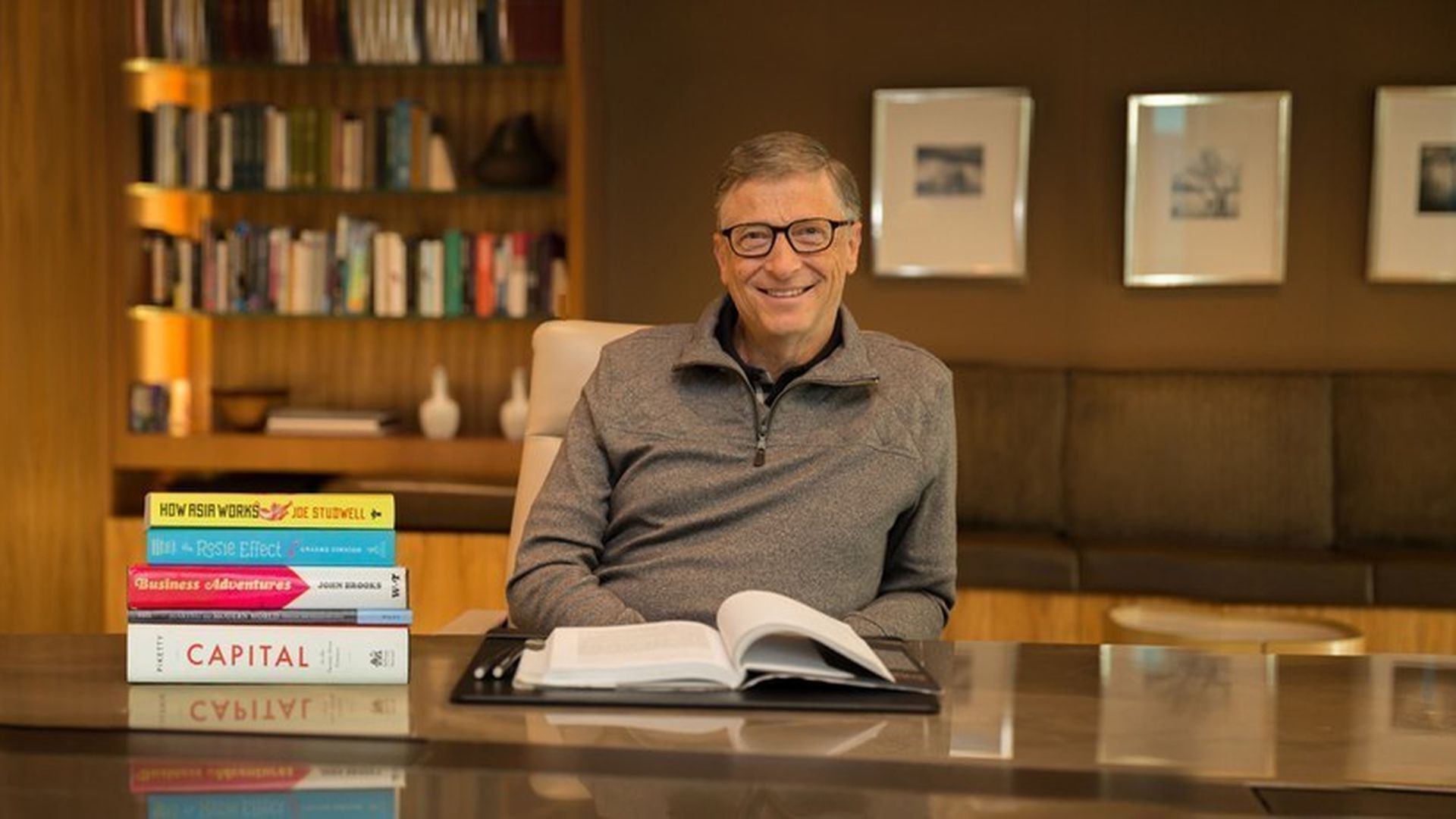
Bill Gates is known for being one of the world's biggest optimists, in addition to one of its largest philanthropists. But Gates is concerned about the impact if the U.S. follows through on plans to cut foreign aid.
"Overall like Warren Buffett I am optimistic about the long run," Gates said during a Reddit AMA (Ask Me Anything) forum. "I am concerned in the short run that the huge benefits of how the US works with other countries may get lost. This includes the aid we give to Africa to help countries there get out of the poverty trap."
Gates, who has said the idea of a "robot tax" is worth exploring to slow the pace at which human jobs are automated, says the notion of a guaranteed basic income probably isn't an option — at least for now.
"Over time countries will be rich enough to do this. However we still have a lot of work that should be done — helping older people, helping kids with special needs, having more adults helping in education. Even the U.S. isn't rich enough to allow people not to work. Some day we will be but until then things like the Earned Income Tax Credit will help increase the demand for labor."
Bill Gates credits Xerox, not Apple, for Windows
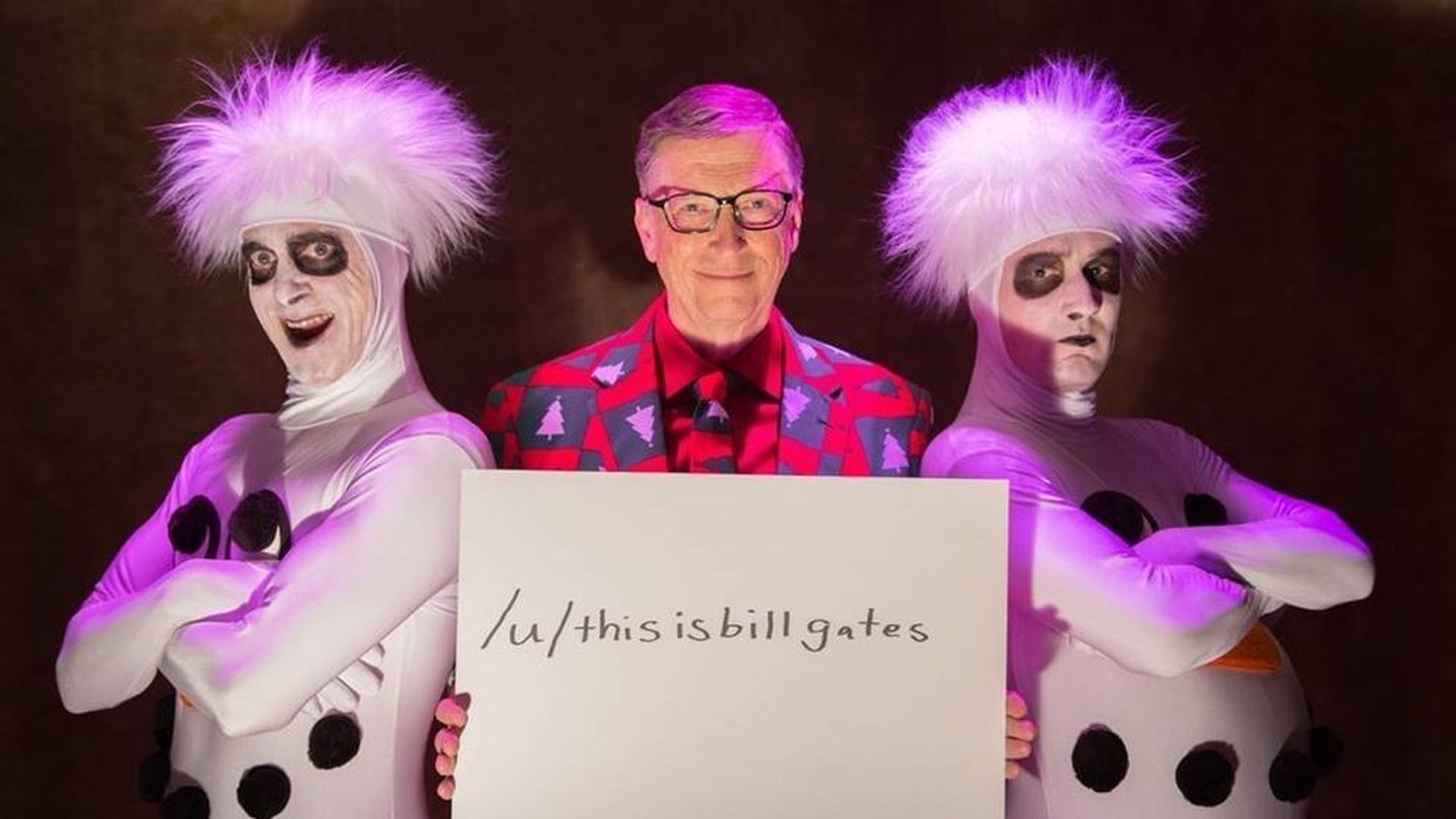
Asked to weigh in on the longtime debate over whether Microsoft copied Apple, Bill Gates said Monday that both companies really cribbed off industry pioneer Xerox, which developed the graphical interface.
"The main 'copying' that went on relative to Steve and me is that we both benefited from the work that Xerox Parc did in creating (the) graphical interface - it wasn't just them but they did the best work," Gates said during an AMA (Ask Me Anything) session on Reddit. "We didn't violate any IP rights Xerox had but their work showed the way that led to the Mac and Windows."
Steve Jobs famously finagled a tour of Xerox's fabled PARC research labs where he saw the company's work on the mouse and graphical user interface.
The AMA session is still going on and there's lots of other good stuff, including how Gates sometimes wears a hat to disguise himself, as well as his advice on parenting and artificial intelligence.
The one surprise from the Mobile World Congress: 5G
There may have been drama at the Oscars on Sunday, but things in Barcelona went pretty much as expected as the global cell phone industry gathered for Mobile World Congress.
- The new goodies: Samsung introduced a pair of tablets, LG debuted its latest flagship, the G6, while China's Huawei introduced a high-end model with dual Leica-branded 20-megapixel cameras.
- The retro thing: There were new BlackBerry and Nokia phones, though BlackBerry isn't making the BlackBerry KeyOne, nor is Nokia making the Android phones that bear its name. Both are licensing deals.
- 5G ahead of schedule: One surprise out of Barcelona was an announcement from about 20 industry players that cell phones running the next generation of cellular technology, known as 5G, could arrive by 2019. It had been expected to take until 2020. AT&T and Verizon plan to test early 5G technologies starting this year, but not for cell phones.
What's next: While most of the big press conferences were on Sunday, Mobile World Congress officially starts Monday, so expect cell phone news to dribble out for most of this week.

Inside the Snap anomaly
Snap's IPO prompts the L.A. Times' Nina Agrawal to dive deep on an anomaly about the company: It has no headquarters building or campus, but instead sprawls among bungalows on or near Venice Beach, just north of LAX.
- From Snap's filing: "This diffuse structure may prevent us from fostering positive employee morale and encouraging social interaction among our employees and different business units. ...[W]e may be unable to adequately oversee employees and business functions.'"
- "In an era when companies such as Google, Facebook and Apple have created an expectation that tech firms will offer sprawling corporate campuses with gyms, chefs preparing organic food and massage services on site, Snap's scattered layout could strengthen its brand as an outsider. ... Snap has ... 2,000 employees; Google has some 60,000."
- Snap culture: "Workers take shuttles or walk between offices, which some say has deepened their desire to volunteer locally. They can eat at beachside cafes and support local businesses, thanks to Snap vouchers. And then there's the aura. 'Venice is younger and grittier.'"

The new Hollywood battle: studios v streamers
Studios today account for less than 10% of their parent companies' profits, per Vanity Fair, and that number is expected to drop to around 5% by 2020. According to Variety, moviegoing audience was at its lowest levels in nearly a century last summer, with significant drop-off in millennial viewership.
Why it matters: In an increasingly saturated movie marketplace, studios have become incentivized to make sequels and build on pre-existing franchises, leaving streaming companies—- like Amazon and Netflix — to make investments on boutique, and often ground-breaking films. Earlier this year, Amazon became the first streaming company to own a film nominated for an Oscar best picture with Manchester by The Sea.
Winners: Amazon only launched their movies business a year ago, and this year they outbid the likes of Fox Searchlight and Universal at Sundance. In a major twist, Martin Scorsese's next big film, The Irishman, will be backed by Netflix, instead of a major studio.
Losers
:
Earlier this year, Sony
announced
a $1 billion write-down on its movie business, just weeks after Sony entertainment president Michael Lynton announced he was stepping down after a 13-year run. Last week, Paramount Pictures Chairman Brad Grey left Viacom after 12 years, after the studio
lost $445 million
in FY 2016 due to box-office flops.