Wednesday's technology stories

Amazon's Alexa gets smarter every hour
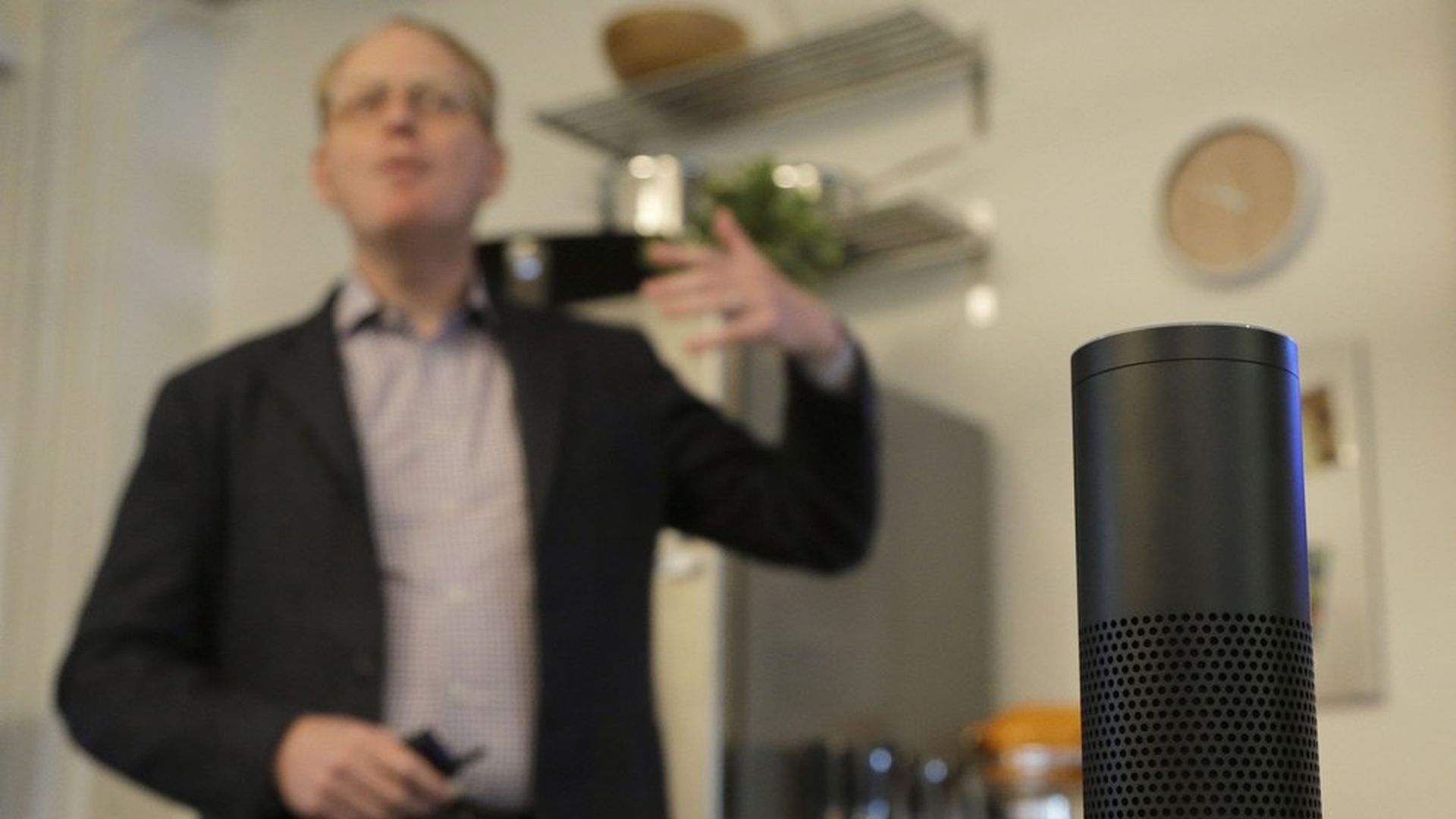
Amazon's Alexa, the voice-recognition digital service, is one of the fastest-growing tools that takes advantage of machine-learning capabilities. In a Deloitte analysis of 2017 tech trends released today , Amazon executives Maria Renz and Toni Reid gave some insight into Alexa's development. Since launching Echo in November 2014, Amazon has added more than 7,000 skills to Alexa, they said.
The original inspiration for the Amazon Echo was the Star Trek computer. We wanted to create a computer in the cloud that's controlled entirely by voice—you can ask it things, ask it to do things for you, find things for you, and it's easy to converse with in a natural way. We're not quite there yet, but that was our vision.
One of the key capabilities of Alexa, the voice and brain behind Echo, is that she's a cloud-based service that is always getting smarter, in both features and natural language understanding and with improved accuracy. Because her brain is in the cloud, she continually learns and adds more functionality, every hour, every day, which only makes it easier to innovate and add features on behalf of customers.
Why it matters: With Alexa and Echo, Amazon is trying to dominate how people interact with all the devices in their homes, cars and eventually offices. Alexa is also a prime example of how machine learning — or the process of automatically discovering patterns in data — are being used in consumer devices. As Deloitte points out, the data created by consumers doubles in size every year. So tools that can effectively sift through and analyze that data will be used in a number of different use cases, from hospitals to schools.

YouTube launches mobile live streaming
YouTube is creating a mobile live-streaming feature that is built directly into the YouTube mobile app, that allows users to make money on their content. This puts YouTube a step ahead of Facebook and Instagram, who haven't launched ways for users to make money on their live streams.

Facebook expands paid family leave
Facebook is extending its bereavement and family sick leave, COO Sheryl Sandberg said in a Facebook post on Tuesday.
New policy: Employees will now get up to 20 days of paid bereavement leave for the loss of an immediate family member, and, up to 10 days for an extended family member. Previously, employees only got half at many days.
Employees will also get up to six weeks of paid time off to care for a sick relative and three days in the case of a relative's short-term illness, such as a child having the flu.
Personal note: For Sandberg, bereavement leave is an especially important subject—her husband, Dave Goldberg, died suddenly in May 2015 while on vacation.
Why it matters: This latest expansion of Facebook's policy follows Sandberg's efforts to champion women's rights in the workplace. She was criticized for not being more openly supportive of the Women's March following Donald Trump's inauguration, something she later said she regrets. Continuing to advocate for benefits for women and families is also an easier way for Sandberg (and Facebook) to push this agenda without directly opposing Trump.
Twitter adds 3 new features to curb online abuse
Last week, Twitter VP of engineering Ed Ho hinted that the company was gearing up to add more features to help curb harassment. Now they're going public:
- New abusive accounts: Twitter will use a number of clues and signals to figure out, as often as possible, when people are creating new accounts for the sole purposes of harassing users. Many have complained that even if they succeed at getting a offending user suspended, that person just creates a new account and gets right back to it. The company declined to share details about how it will do this to avoid tipping off abusers.
- Safer search results: When a user searches, Twitter will hide from the results tweets from accounts they've blocked or muted. Twitter will also filter the content and hide pornography or other things a user doesn't want to see when conducting a search. Users will be able to opt in and out of this search option.
- Hiding abusive replies: Twitter will hide—or "collapse"—replies to tweets that are likely to be abusive. Replies are one area where many users often find mean or harassing tweets, so this should be helpful. Twitter will look at cues, such as the user not having any followers, and hide content it doesn't deem of high quality.
What about Trump? Asked if the company has any plans to suspend or otherwise change Donald Trump's access to the service given recent calls for his account to be shut down, a Twitter spokesman pointed Axios to the service's rules, adding it will "take action" if an account violates them. That is to say, Trump will remain on Twitter until he breaks the rules.
Hot in Silicon Valley: the Crunchies
TechCrunch hosted its annual Crunchies award show on Monday. Highlights:
- Tech leaders who are working with Trump "are on the wrong side of history, no matter what you accomplish, this will be your legacy," said Erica Baker, co-founder of Project Include.
- Jeff Lawson, who co-founded and is the CEO of Twilio, reminded everyone "who the real enemy is"—and it's not fellow Americans.
- Marissa Mayer, CEO of Yahoo, came out to present an award and somehow agreed to a script that poked fun at her company. Yahoo's sale to Verizon is still to be determined following the disclosures of two massive security breaches, but in any event, Mayer will need a new job.
- The team of Otto, a self-driving truck company acquired by Uber last year, showed up to pick up its award for "Hot new Startup" while wearing trucker hats—a nod at the profession Otto's technology will soon eliminate.
Why it matters: For better or worse, the Crunchies have become a public attempt by the tech industry to show off its values. The event now makes a conscious effort not to offend (too much), and award winners are increasingly more diverse—an acknowledgement of the industry's overall lack of diversity. And yet, it might no longer be the "it" event it used to be—winners like Snap didn't even bother to show up and host Chelsea Peretti didn't miss an opportunity to point out the empty seats.