Thursday's technology stories

Amazon sees more robots in its future
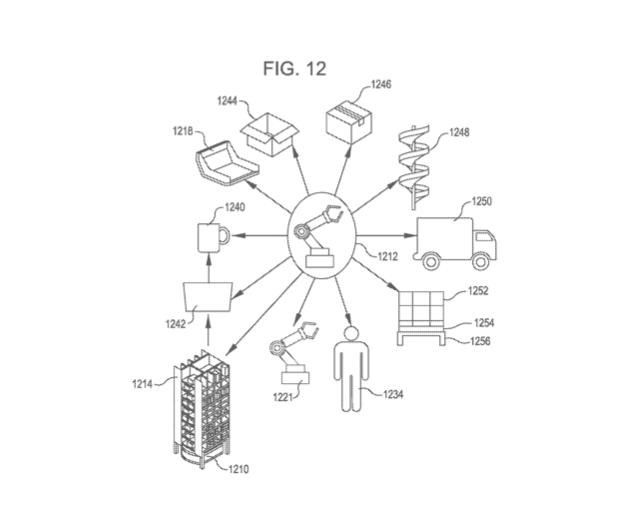
Amazon has been granted a patent for a robot that would pack shipping boxes with goods ordered by its customers. In an example offered by the company, the robotic arm would use suction to grab a coffee mug and place it in a box.
The filing was first spotted on Twitter by Nick Wingfield of the New York Times.
Who currently packs the boxes: Human workers. CNN reported late last year that Amazon warehouse employees only spend a minute on each order, including the 15 seconds it takes to pack an item into a box with bubble wrap, tape it shut and send it off for shipping.
Why this matters: Policymakers are trying to understand the impact that increased automation will have on jobs. Researchers associated with McKinsey found recently that' "scenarios suggest that half of today's work activities could be automated by 2055" but that only a small percentage of jobs could be fully automated.
Here's a graphic of all of the things Amazon envisions the robotic arm interacting with:

Presidential campaign rumors already swirling around Sandberg
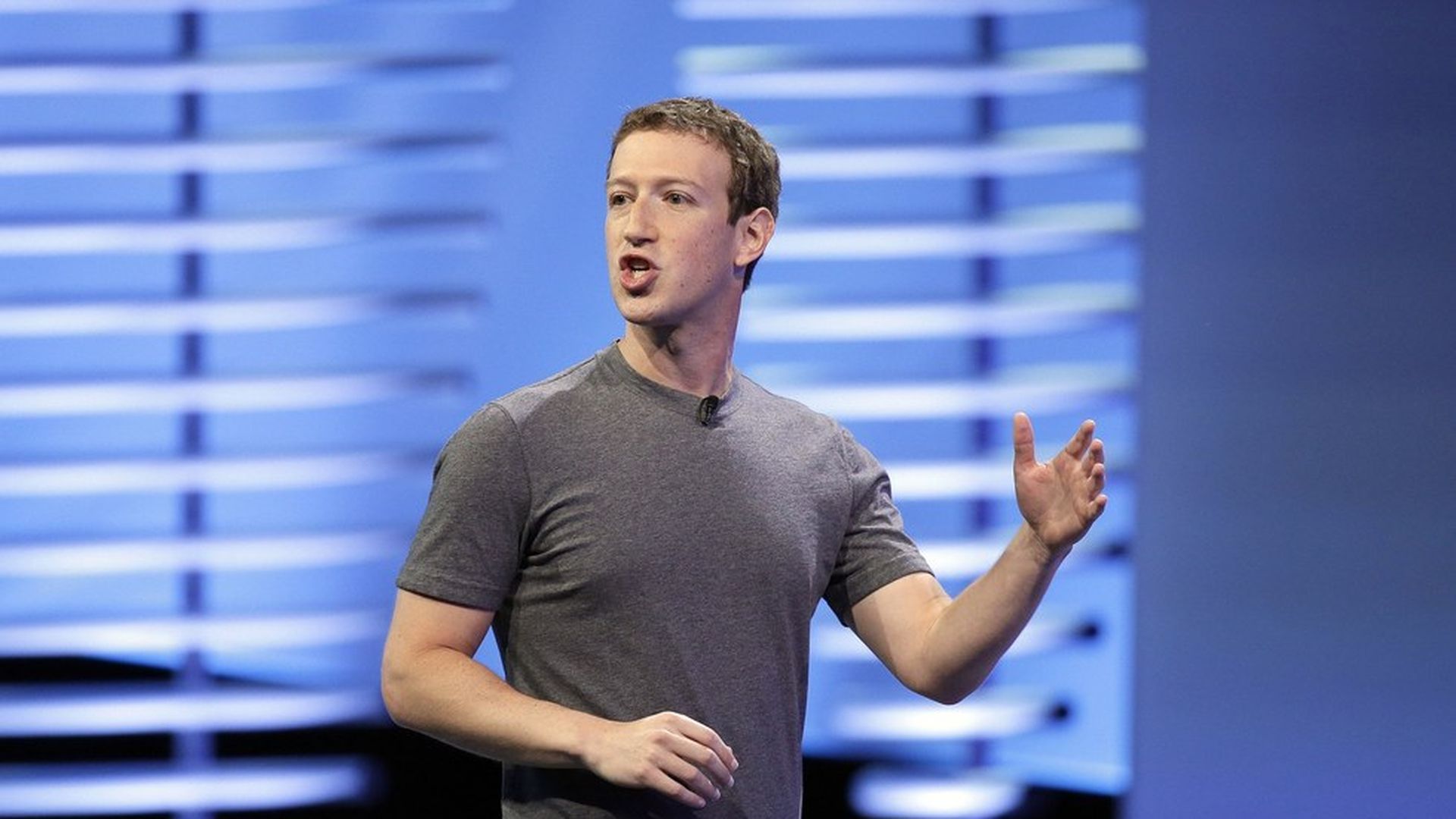
Just days after Facebook's CEO, Mark Zuckerberg, denied that he's planning to run for U.S. president, COO Sheryl Sandberg is already the next target of the same rumors.
The clues, according to Real Clear Politics:
- She's planning a tour to promote her upcoming book "Option B" and is reportedly interviewing potential aides with campaign experience and hired staff with political experience when she arrived in Silicon Valley
- It's reportedly "common knowledge" in Democratic Party circles that she's considering a run.
Counterpoint: Last year, Sandberg dismissed rumors that she would take a job in the Clinton administration, should Hillary Clinton win, and she hasn't publicly said anything about the women's march last weekend. Sources also told BuzzFeed earlier this week that Zuckerberg believes he can have a bigger impact as the leader of Facebook, an argument that could also be made for Sandberg.

How a key liability question for self-driving cars could be answered
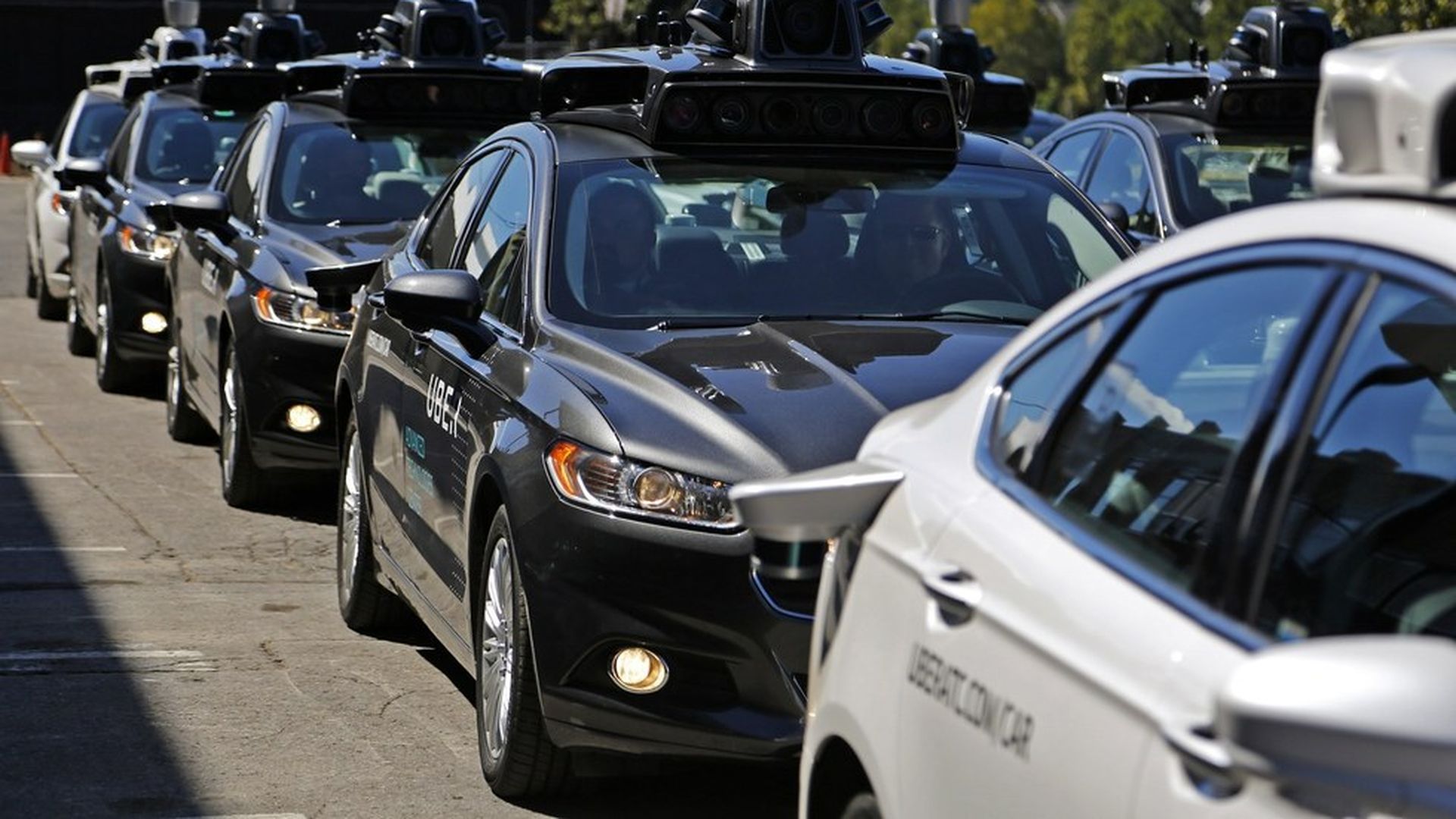
The ascendence of self-driving cars has opened a debate about whether man or machine is liable when there's an accident involving an autonomous vehicle. At a panel discussion in Washington on Thursday, experts highlighted an area where those questions are particularly difficult to answer: the moment when the software in a self-driving vehicle hands off control of the vehicle to the human behind the wheel.
"We're calling it the hot potato situation, right? The car is driving along the road at 60 miles an hour and all of a sudden something doesn't look right to the vehicle and it's a hot potato and just hands the control back to the driver." — Paul Lewis, Vice President of Policy and Finance at the Eno Center
Lewis said that he could see two ways for policymakers to resolve this thorny question:
- Release "very explicit" liability laws at either the federal or state level
- Let the courts decide as they vet lawsuits over the issue
Real world context: Tesla has already had to deal with the potential for lawsuits about its Autopilot feature. Federal officials indicated last year that liability may continue to be regulated at the state level.
The bigger picture: Numerous Silicon Valley firms — Alphabet and Uber included — are throwing their lot in with self-driving cars. And that doesn't include the Detroit automakers who are experimenting with autonomous vehicles. They say that having clear, nationwide regulations for the vehicles would encourage en masse adoption of the technology.

Snap's IPO valuation trap
Yesterday I received two separate calls from Silicon Valley types, taking me (and my media peers) to task for expecting Snap's IPO to be "successful." In short, they don't believe the numbers add up.
"Successful" is a tricky term when it comes to IPOs, particularly since different companies list for different purposes (capital raising, employee liquidity, market cachet, etc.). But these folks were essentially saying that if Snap does manage to price at around a $20 billion valuation (fully diluted), it will have a very difficult time maintaining that past the lock-up period (at least for a while).

Uber was the top business travel expense in 2016
Receipts for Uber rides made up 6% of all business travel transactions—more than any other vendor— last year, according to data on U.S. employers from expense management software company Certify. It was followed by Starbucks and Delta Airlines, each taking 4% of all transactions in 2016.
Other notable data about so-called "on-demand" services:
- Uber makes up 52% of all ground transportation expenses, up from 40% a year ago.
- Lyft now has 4% of all ground transportation expenses, up from 2% a year ago.
- Taxi rides have been halved, down to 11%, from 20% a year ago.
- Airbnb has doubled since 2014, now making up 0.27% of lodging expenses—still a tiny overall fraction.
- But Craigslist is nearly twice as big, with 0.53% of all lodging transactions.
- UberEats now makes up 6% of food delivery expenses.

Facebook updates controversial "Trending" feature
Facebook says they're updating their trending featuring to improve user experience and help prevent hoaxes and fake news from appearing in the trending module.
Updates:
- Trending topics will now feature a publisher headline below each topic name.
- An improved system to determine what is trending.
- Everyone in the same region will see the same topics.
Why it matters: Facebook faced backlash in 2016 for reportedly suppressing conservative news stories in their trending feature. In their statement Wednesday, the company says its curation model will still be algorithmic, but that people do monitor the trending feature.

Amazon taking to high seas
Amazon has shipped at least 150 containers from China to the U.S. since October. The WSJ found the details in shipping documents from ports of entry. Amazon hasn't bought ships, it's just booked space.
Why this matters: Amazon has been trying to take control of all the steps of a product's life from factory to customer's front door. It already plans to lease 40 cargo jets and has bought shipping trucks.

Trump's CEO team is big on automation
Donald Trump has talked far more about global trade's effect on jobs than about how jobs are being lost to automation, even though experts say the latter poses a serious threat to the nature of work in the coming years. Even has he stays quiet on the issue, some of Trump's key advisers are invested in automation:


Cisco spikes AppDynamics IPO
The first tech IPO of 2017 is no more.
AppDynamics, at the 11th hour, has sold to Cisco Systems for a whopping $3.7 billion in cash and assumed equity awards, according to a press release published on Tuesday. The San Francisco-based company, whose tools help businesses spot and fix bugs in their applications, was due to price its IPO on Wednesday night and begin trading on Thursday.
Last minute deal: A source close to the deal says that Cisco and AppDynamics have been in talks for several weeks, but that the final agreement wasn't signed until just a few hours ago. In fact, the senior AppDynamics team was still meeting with IPO investors in Los Angeles as of noon local time this afternoon, at which point they canceled all further meetings and hopped a flight back to San Francisco. At this moment, there are still AppDynamics employees in New York, who had been sent ahead of the Wednesday night pricing.