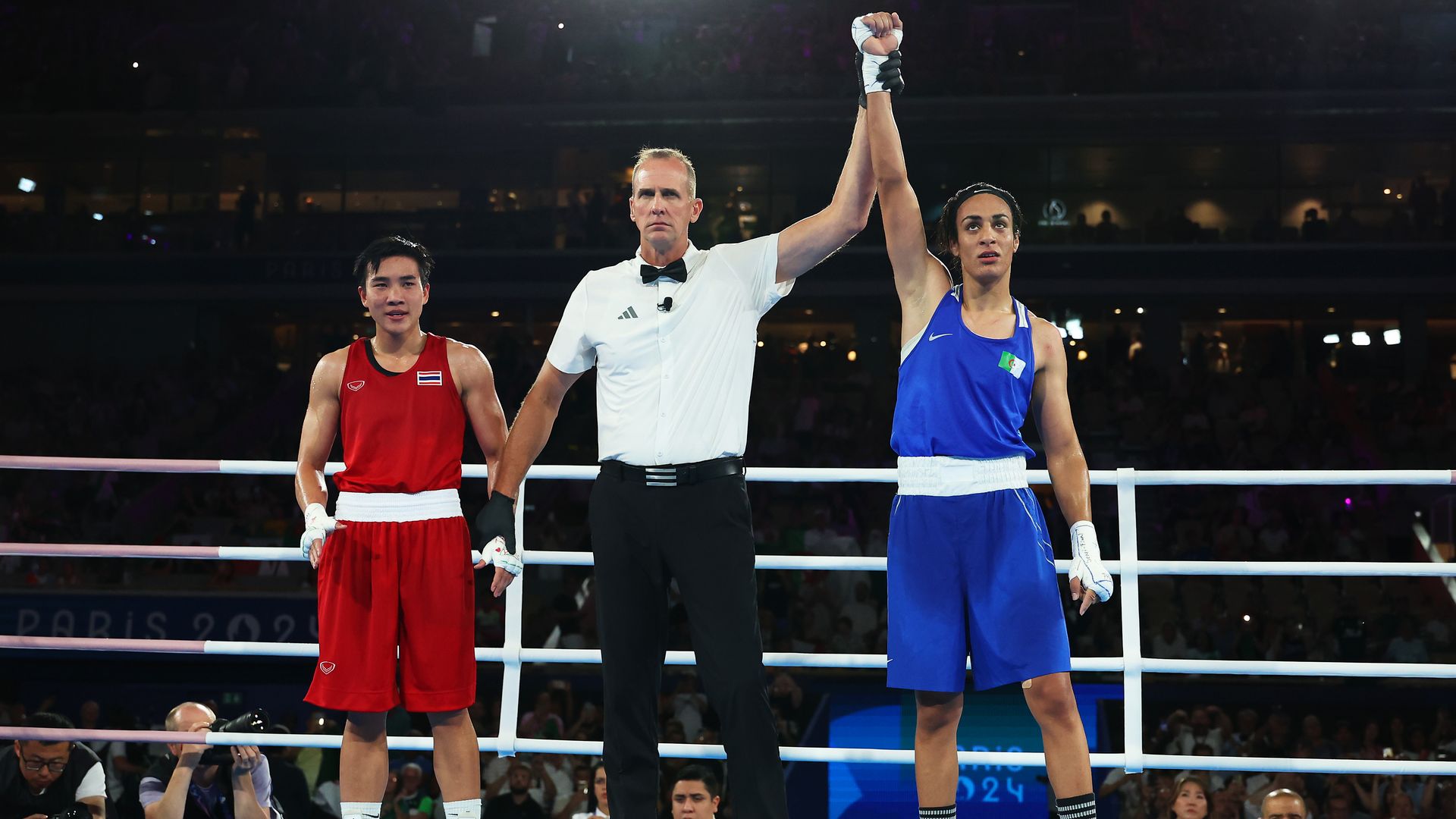
Algerian Imane Khelif won her semifinal match on Tuesday advancing to the gold medal match in the women's welterweight boxing tournament at the Paris Olympics.
Why it matters: Khelif, who is not transgender and has long competed in women's boxing — including at the Tokyo Olympics — has nonetheless found herself the center of an international firestorm amid questions about her gender.
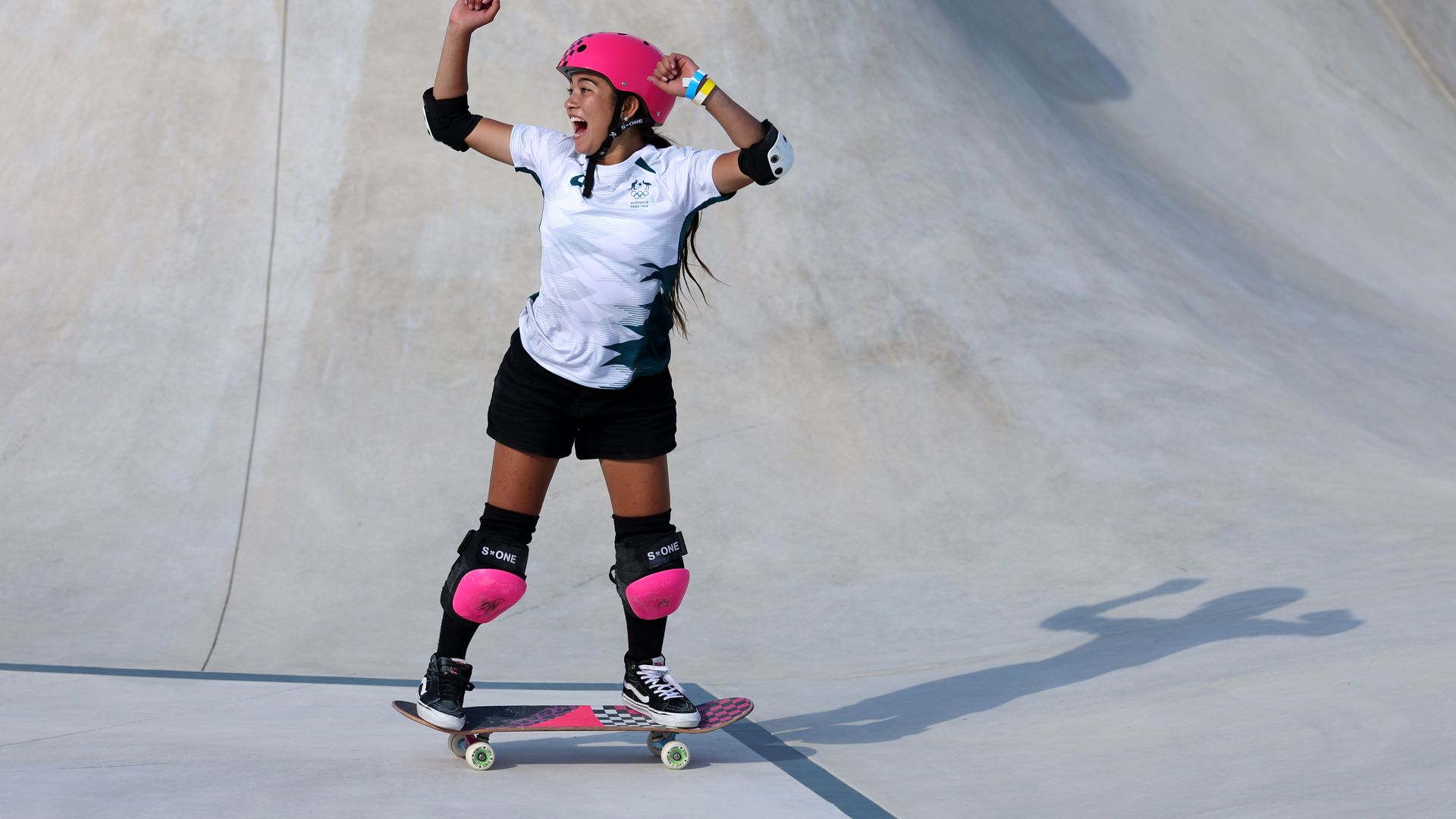
A stellar final round from Australian Arisa Trew allowed the 14-year-old to grab the gold medal in women's park skateboarding, finishing ahead of Japan's Cocona Hiraki and Britain's Sky Brown, who both matched their medal results from Tokyo.
Why it matters: The sport features some of the Olympics' youngest competitors, some of whom aren't yet teenagers.
Team USA runner Nikki Hiltz finished third in their preliminary heat of the 1500-meters on Tuesday, advancing to Thursday's semifinals.
Why it matters: Hiltz, who was assigned female at birth and competes in the women's category, identifies as transgender and nonbinary and is among just a few such athletes competing at the Paris Games.
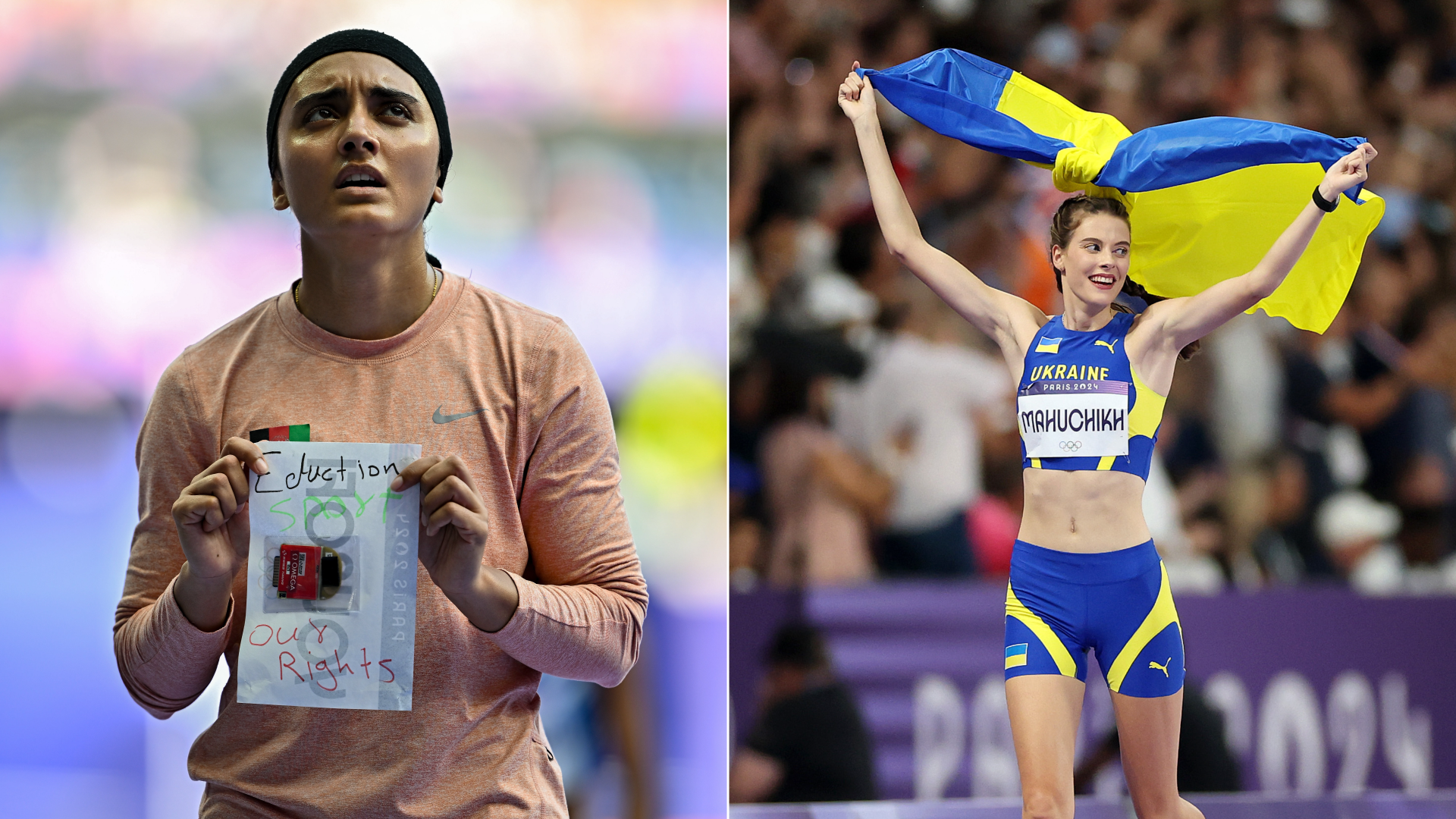
Some Paris Olympics athletes are utilizing the world stage to shed light on conflicts in their home countries.
The big picture: While theInternational Olympic Committee typically steers clear of geopolitics, they have imposed some restrictions regarding world affairs, including a ban on athletes from Russia and Belarus competing under their nation's flags due to Moscow's ongoing invasion of Ukraine.
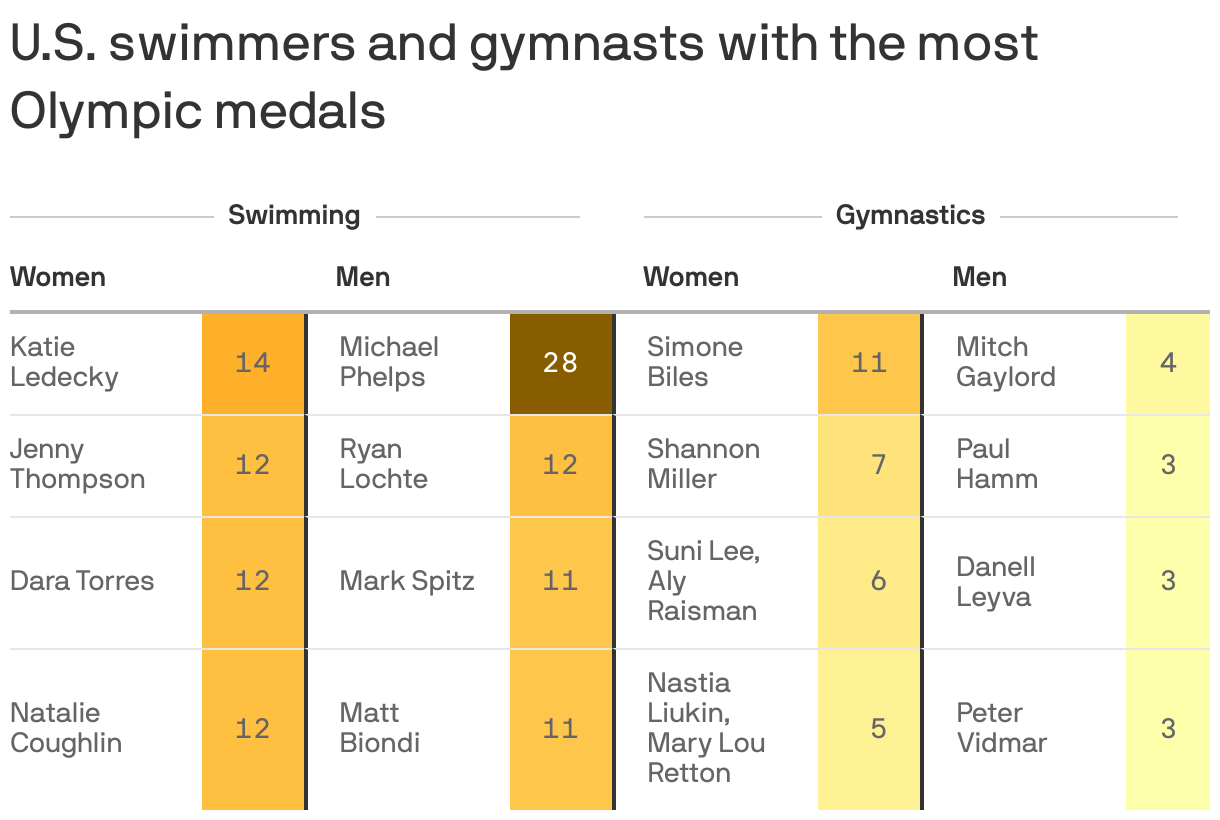
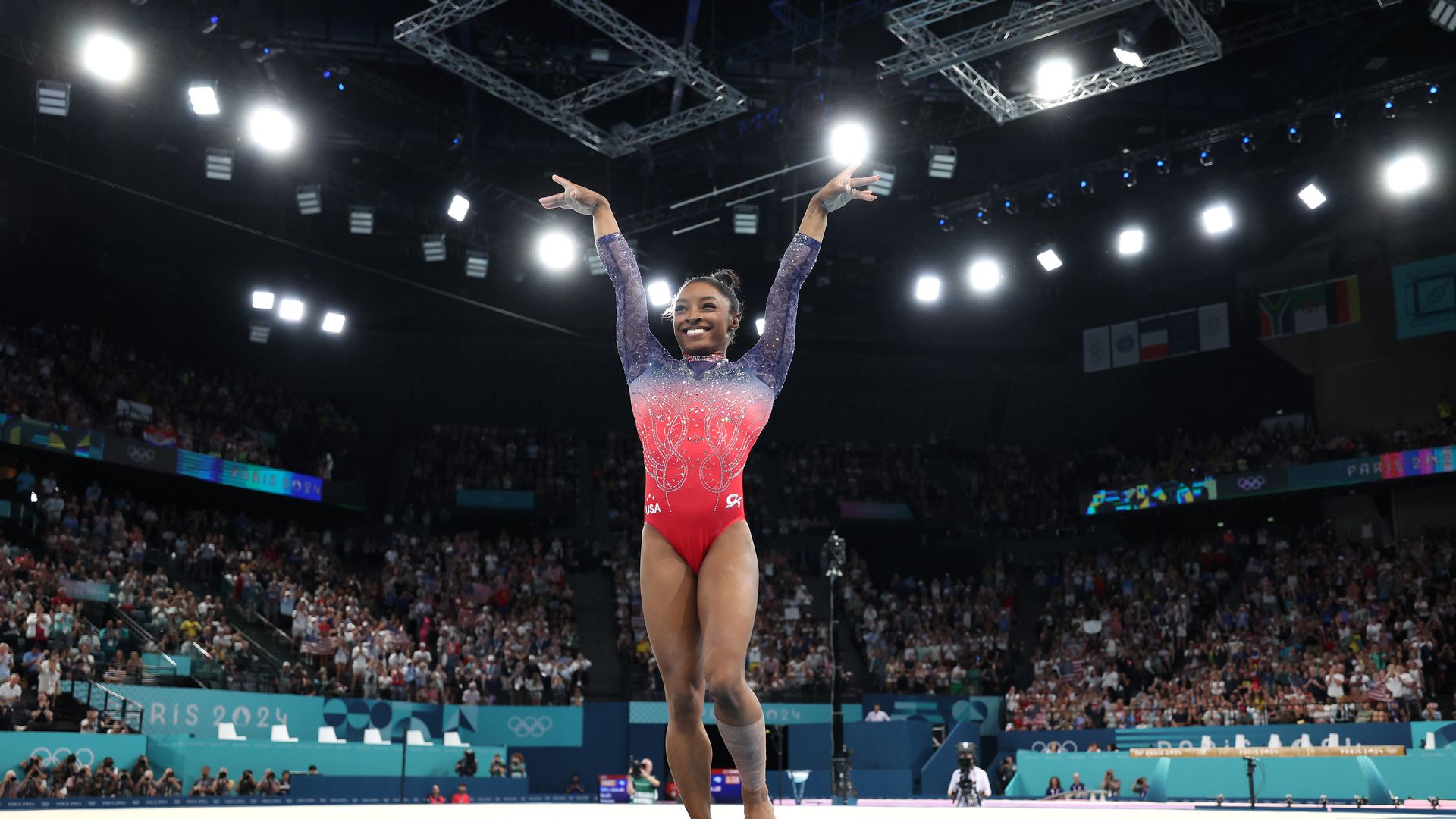
By water and land (and often air), Katie Ledecky and Simone Biles have cemented their status as the G.O.A.T.s of their sports in Paris.
The big picture: Ledecky won her fourteenth medal, a gold, on Saturday in the 800-meter freestyle and extended her record as the most-decorated female American Olympian in history.
Simone Biles captured the silver medal in the women's floor exercise on Monday, the final day of artistic gymnastics competition at Paris' Bercy Arena, with teammate Jordan Chiles grabbing the bronze.
Why it matters: Their floor medals marked the end of a strong, medal-laden performance for Team USA after major challenges in recent years.
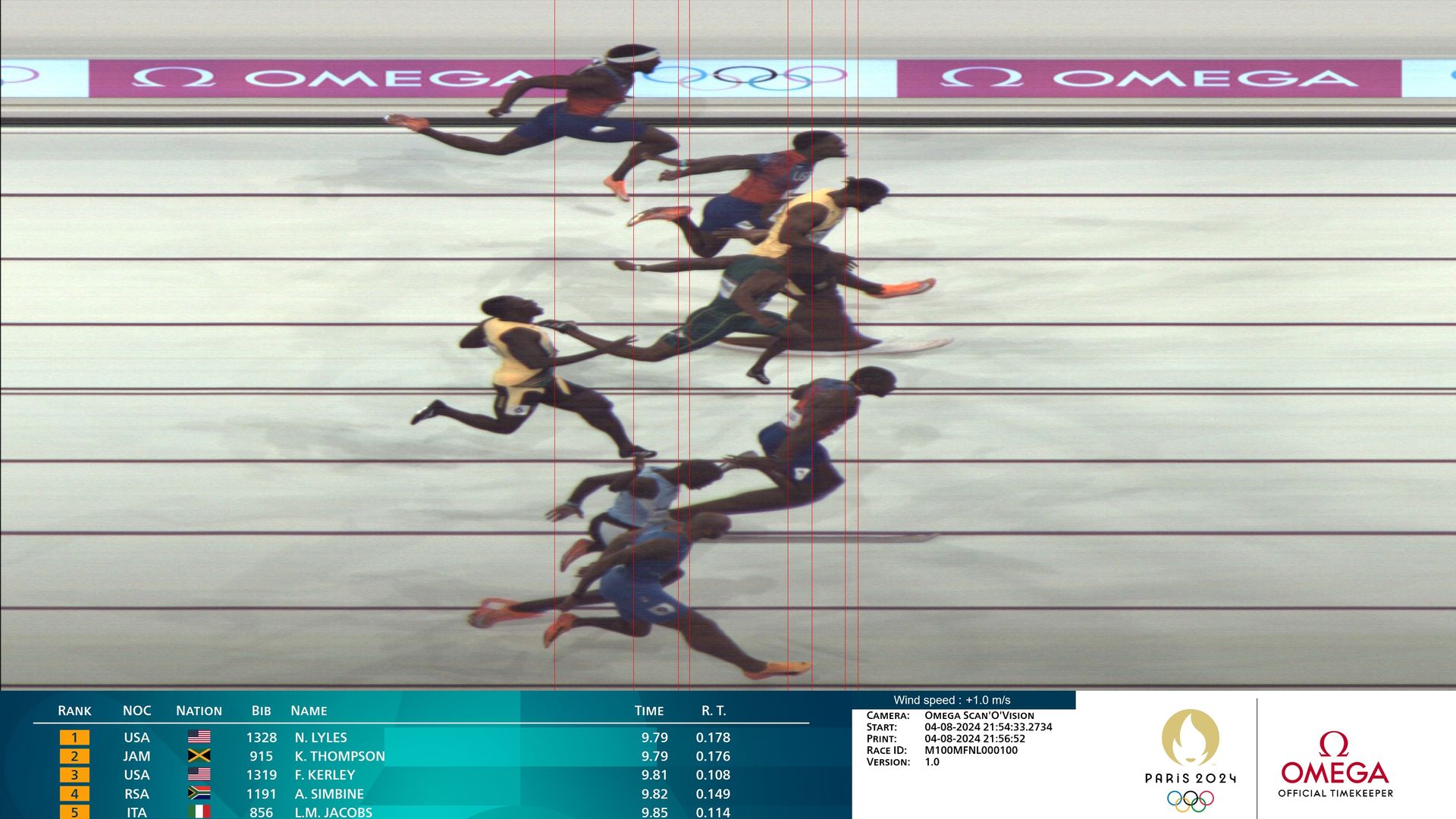
PARIS — When judges needed to determine who won Sunday's Olympic 100-meter race, they drew onsome fancy new technology — a camera from Omega that shoots 40,000 frames per second, aimed right at the race's last few millimeters.
The big picture: Omega, which has been the Olympics' official timekeeper for decades, is constantly looking for new ways to help measure athletes' performance and figure out just who won.