What to know about Russian athletes at the Paris Olympics

Add Axios as your preferred source to
see more of our stories on Google.
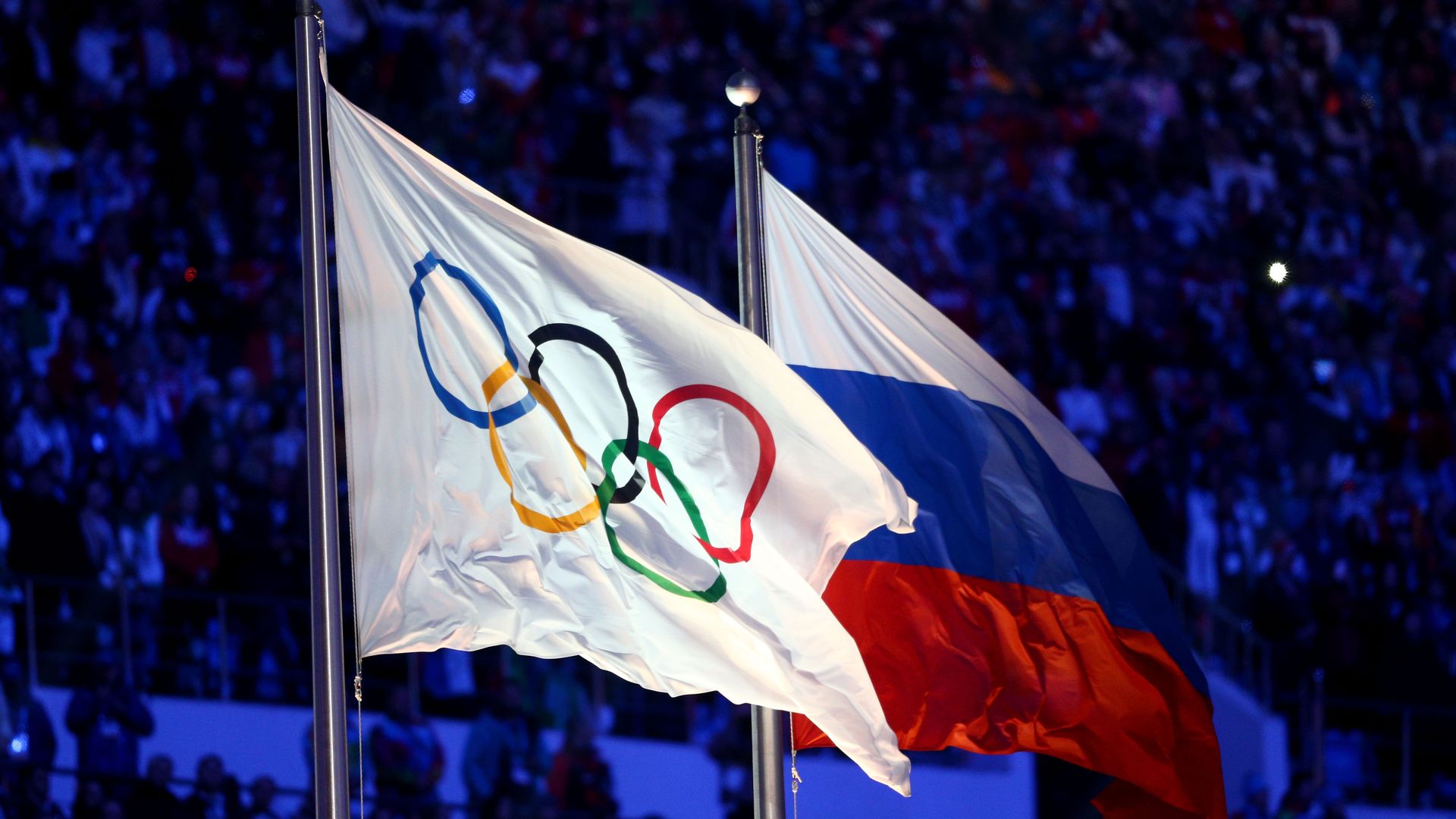
The Olympic flag and Russian flag during the 2014 Sochi Winter Olympics. Photo: Paul Gilham/Getty Images
Russian athletes will be allowed to compete in the 2024 Paris Summer Olympics — but not under their country's flag.
Why it matters: The International Olympic Committee (IOC) imposed strict restrictions on the athletes because of Moscow's ongoing invasion of Ukraine, now in its third year.
- Belarusian athletes will also compete under the same restrictions due to Belarus assisting with the invasion in several different ways, including allowing the Russian army to launch attacks on Ukraine from its territory.
Flashback: The Paris Games will be the first time that Russia or its Olympics committee don't field a significant team since the Soviet Union boycotted the 1984 Los Angeles Summer Olympics.
Context: Russian athletes have not competed under the Russian flag since the 2016 Rio Games.
- After those games, the the full extent of Russia's state-sponsored doping program came to light, leading to dozens of Olympic medals being retroactively stripped from Russian athletes for doping violations.
Catch up quick: The IOC and other sports organizers faced a wave of calls to bar Russian and Belarusian athletes after Russia launched its unprovoked invasion of Ukraine in February 2022.
- The IOC initially urged sports organizations to ban Russian and Belarusian athletes after finding it unfair that their athletes would be allowed to participate while athletes from Ukraine may be prevented from doing so because of the attacks on their country.
- However, the IOC later found that punishing athletes for the actions of their governments could amount to discrimination and instead opted for creating a neutral designation for them called Individual Neutral Athletes (AINs).
How it works: In this category, a limited number of athletes have been invited to compete using a neutral flag and anthem if they met anti-doping requirements and specific qualifications pertaining to the invasion.
- Athletes who "actively" support the Ukraine invasion would not be eligible to compete, nor would athletes who are contracted to the Russian or Belarusian militaries or national security agencies.
- At the end of the games, the medals won by AINs will not be tallied in the official table showing the number of medals won by specific countries because they are competing on an individual basis and do not represent a country.
By the numbers: As of July 20, out of the 60 Russian and Belarusian competitors invited, only about 15 Russian athletes and 17 Belarusian athletes have accepted.
- Russia historically has fielded hundreds of competitors and collected dozens of medals.
The big picture: The heavy restrictions on Russian athletes come after years of Moscow using the Games as cover to prepare for or carry out invasions.
- It's current invasion of Ukraine started on Feb. 24, 2022 — four days after the end of the Winter Olympics in Beijing that year.
- Russia also invaded Ukraine in 2014 just four days after the end of the Olympic Winter Games that year, which Moscow hosted in the city of Sochi.
- During the 2008 Beijing Summer Olympics, Russia was actively conducting a full-scale invasion against neighboring Georgia.
Zoom out: While Russia has said it will not boycott this year's Olympics, Russian propagandists are seeking to discredit the IOC and to incite fears of terrorism around the games, according to the Microsoft Threat Analysis Center.
Go deeper: Heat at Paris Olympics tests future of sporting events in warming world
